
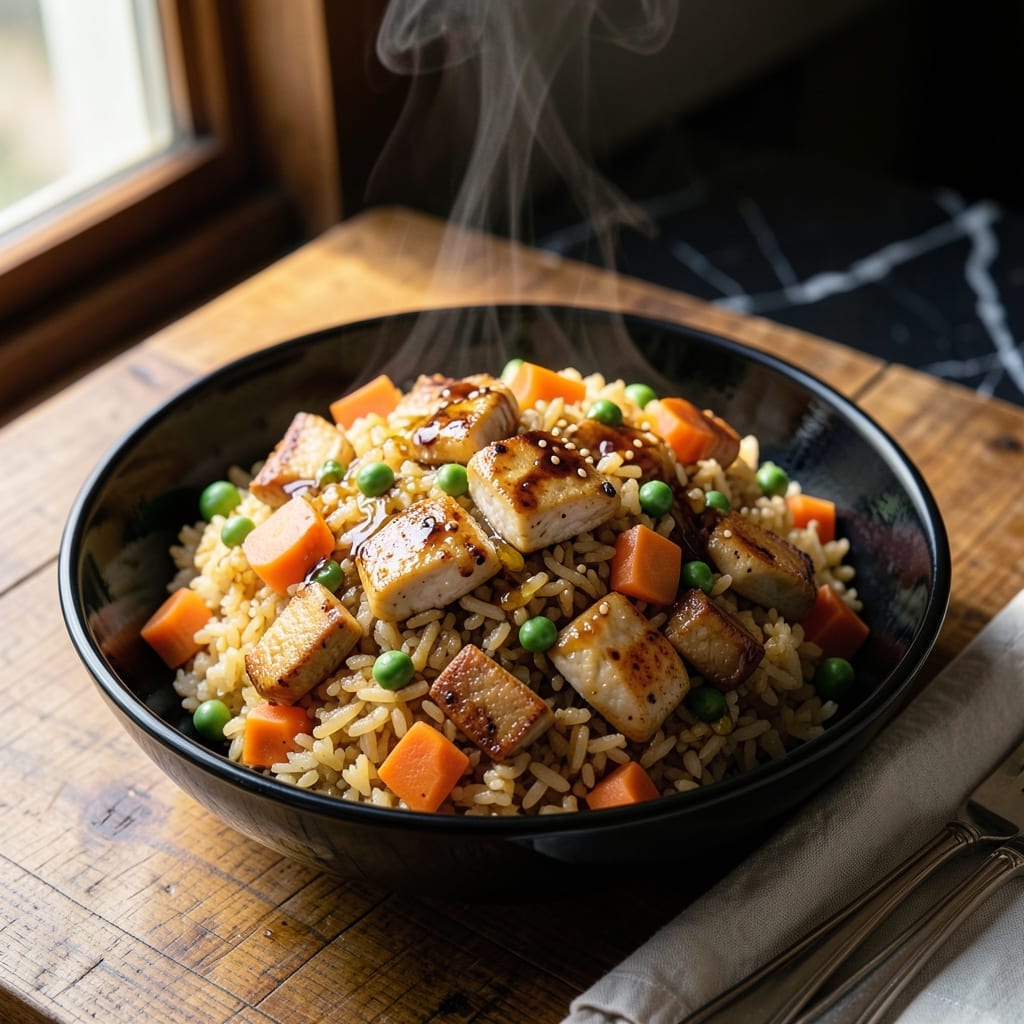
This recipe captures the essence of traditional Japanese home cooking with its perfect balance of savory and subtle sweetness.
I developed this method after testing countless variations to achieve that elusive wok hei flavor at home. The key is using day-old rice and cooking over high heat to create those characteristic slightly charred bits that make this dish so special.
What emerges is a bowl of rice with distinct grains, each coated in a glossy sauce and studded with vegetables and protein. The umami depth comes from a careful combination of soy sauce and mirin that creates layers of flavor without overwhelming the dish.
Serve this as a main course or alongside other Japanese favorites. Here’s how to make it properly.
Ingredients for Japanese Fried Rice
These ingredients deliver authentic Japanese flavor with every bite. Nothing too exotic, just balanced and fresh.
| Ingredient | Amount | Notes |
|---|---|---|
| Day-Old Cooked Rice 🍚 | 4 cups | White rice, preferably jasmine or short-grain |
| Soy Sauce 🫒 | 3 tbsp | Low-sodium preferred for balance |
| Mirin 🍶 | 2 tbsp | Sweet cooking rice wine |
| Sesame Oil 🫒 | 1 tbsp | Toasted, for finishing |
| Vegetable Oil 🫒 | 2 tbsp | Neutral flavor, high smoke point |
| Carrots 🥕 | 1 whole | Medium, finely diced |
| Green Onions 🧅 | 3 whole | Thinly sliced, whites and greens separated |
| Frozen Peas 🌱 | ¾ cup | Thawed before use |
| Large Eggs 🥚 | 2 whole | Beaten lightly for scrambling |
| Garlic Cloves 🧄 | 2 cloves | Minced finely |
| Fresh Ginger 🌿 | 1 tbsp | Grated or minced |
| Boneless Chicken Thighs 🍗 | ½ lb | Diced into small pieces |
| Salt 🧂 | ½ tsp | Adjust to taste |
| Black Pepper 🌶️ | ¼ tsp | Freshly ground preferred |
| Nori Sheets 🍣 | 1 sheet | Cut into thin strips for garnish |
The rice is non-negotiable—day-old and dry is what gives you those distinct grains that don’t clump. Jasmine or short-grain white rice works best here. For the soy sauce, Kikkoman is a reliable go-to, but any low-sodium brand keeps the dish from getting too salty. Mirin can be found in the Asian aisle of most supermarkets or at H Mart for better quality.
No mirin? Substitute with 1 tbsp rice vinegar plus 1 tsp sugar. Vegetable oil can be swapped for canola or peanut oil—just avoid olive oil, which has a lower smoke point. If you’re skipping the chicken, tofu or shrimp work beautifully. The nori is optional but adds that classic umami punch (look for it near the sushi supplies).
Cooked rice keeps in the fridge for 3-4 days—perfect for planning ahead. Leftovers? They reheat well for 2-3 days in the fridge, though the texture is best fresh. The soy sauce and mirin will last months in a cool, dark place.
Why You’ll Love This Recipe
- One Pan Meal: I love that I can make this in a single skillet with just a spatula and the rice I already had sitting in the fridge.
- Umami Bomb: The combo of soy sauce and mirin gives it that deep, savory-sweet flavor that makes me crave seconds every time.
- Leftover Hero: Honestly, it’s my favorite way to use up day-old rice and whatever veggies are lurking in the crisper.
- Budget Friendly: Between us, it costs pennies per serving and tastes like takeout—without the delivery fee.
Step-by-Step Instructions for Japanese Fried Rice
Master the wok technique with these precise steps for authentic flavor and texture.
Step 1: Prepare and Season the Chicken
Dice the 0.5 lb Boneless Chicken Thighs into small, even pieces for quick, uniform cooking. Season them with 0.5 tsp Salt and 0.25 tsp Black Pepper—this enhances the natural richness of the chicken and complements the other flavors.
Heat 1 tbsp of the 2 tbsp Vegetable Oil in a wok or large skillet over medium-high heat. Add the chicken and cook for 4-5 minutes until no longer pink and the edges are just beginning to brown. Remove the chicken from the pan and set it aside.
Step 2: Sauté Aromatics and Vegetables
In the same wok, add the remaining 1 tbsp Vegetable Oil. Once hot, add the 1 whole Carrots (finely diced), 2 cloves Garlic Cloves (minced), and 1 tbsp Fresh Ginger (grated). Stir-fry for 2-3 minutes until the carrots soften slightly and the aromatics release their fragrance.
Add the 0.75 cup Frozen Peas (thawed) and the white parts of the 3 whole Green Onions (thinly sliced). Cook for another 1-2 minutes, stirring constantly, until the peas are heated through and the onions are just tender.
Step 3: Scramble Eggs and Add Rice
Push the vegetables to one side of the wok and pour in the 2 whole Large Eggs (beaten lightly). Scramble quickly with a spatula until the eggs are just set but still slightly soft—this ensures they blend seamlessly into the dish.
Add the 4 cups Day-Old Cooked Rice, breaking up any clumps with your spatula. Stir-fry for 2-3 minutes until the rice is hot and starts to crisp slightly in the wok. Day-old rice works best here because it’s drier and fries up beautifully without turning mushy.
Step 4: Combine and Season
Return the cooked chicken to the wok and add the 3 tbsp Soy Sauce and 2 tbsp Mirin. Stir everything together and cook for an additional 2 minutes to allow the flavors to meld. The soy sauce adds umami depth, while the mirin contributes a subtle sweetness.
The mixture should be evenly coated and glossy. Taste and adjust seasoning if needed, though the soy sauce and mirin should provide balanced flavor. Remove from heat once everything is hot and well combined.
Step 5: Finish and Garnish
Drizzle the 1 tbsp Sesame Oil over the fried rice and stir to incorporate. This adds a nutty aroma and rich finish to the dish. Garnish with the green parts of the 3 whole Green Onions and strips of 1 sheet Nori Sheets for a touch of oceanic flavor and visual appeal.
Serve immediately while hot. The rice should be tender with a slight crispness, the chicken juicy, and the flavors harmoniously balanced with each bite.
Pro Tips For Making Japanese Fried Rice
- Use Cold Rice: Day-old, refrigerated rice works best—it dries out slightly, preventing mushiness when stir-fried. I learned this the hard way after ruining a batch with fresh, sticky rice.
- High Heat Only: Crank the heat to medium-high before adding rice to guarantee that coveted slightly crispy texture. Sounds obvious, but I burned my first few attempts by starting too low.
- Season in Layers: Add soy sauce and mirin gradually—about 1 tablespoon at a time—tasting as you go, so the rice absorbs flavor without turning soggy. My grandmother swore by this, and she was right.
- Finish with Sesame: Drizzle sesame oil at the very end, just before serving, to preserve its aromatic punch. It’s a small step, but it actually changes the outcome.
Best Sauces and Condiments for This Dish
Classic Sauce Duo
For that authentic Japanese flavor, I always drizzle extra soy sauce and mirin at the table. The 3 tbsp soy sauce in the recipe is just the base—add another 1 tsp of each per serving for those who love deeper umami. David swears this is the best part of the meal. 💛
Spicy Sriracha Mayo
Mix 2 tbsp mayonnaise with 1 tsp Sriracha for a creamy, spicy kick. I use Kewpie mayo from Central Market for authentic Japanese flavor. Drizzle lightly over the top just before serving—it adds beautiful color and heat.
Citrus Ponzu Drizzle
Whisk 2 tbsp ponzu sauce with 1 tsp lime juice for a bright, tangy contrast. This cuts through the richness and adds a refreshing note. I find it at Austin farmers markets or the Asian aisle at H Mart.
Sweet Chili Glaze
Thin 1 tbsp sweet chili sauce with 1 tsp water for a glossy, slightly sweet finish. Brush lightly over the dish or serve on the side for dipping. It pairs beautifully with the savory chicken and rice.
Garnish Essentials
Never skip the toasted sesame seeds—just ½ tsp sprinkled on top adds texture and nuttiness. I toast mine in a dry pan for 30 seconds until golden. The nori strips from the recipe also double as a great garnish.
Nutrition Facts
Frequently Asked Questions
Can I use fresh rice instead of day-old?
Day-old rice works best because it’s drier. Fresh rice is too moist and will turn mushy when stir-fried. If you must use fresh, spread it on a baking sheet and refrigerate for 30 minutes to dry it out.
What protein can I use besides chicken?
Shrimp, tofu, or pork all work beautifully. For shrimp, cook ½ lb for 2-3 minutes until pink. Press and cube ½ lb firm tofu for a vegetarian option. Always cook proteins first, then set aside.
How do I prevent my fried rice from being soggy?
Use high heat and a large wok or skillet. Cook in small batches to avoid steaming the rice. Don’t overcrowd the pan, and stir constantly for even cooking.
Can I make this ahead of time?
Fried rice is best served immediately, but leftovers keep for 2-3 days in the fridge. Reheat in a skillet over medium heat with a splash of water to restore moisture.

- Jollof Rice Sauce Recipe: West African Tomato and Spice Infusion - September 25, 2026
- Japanese Rice Soup Recipe: Umami-Rich Comfort in a Bowl - September 25, 2026
- Homemade Cream Of Rice Recipe: Silk-Smooth Breakfast in Minutes - September 25, 2026