
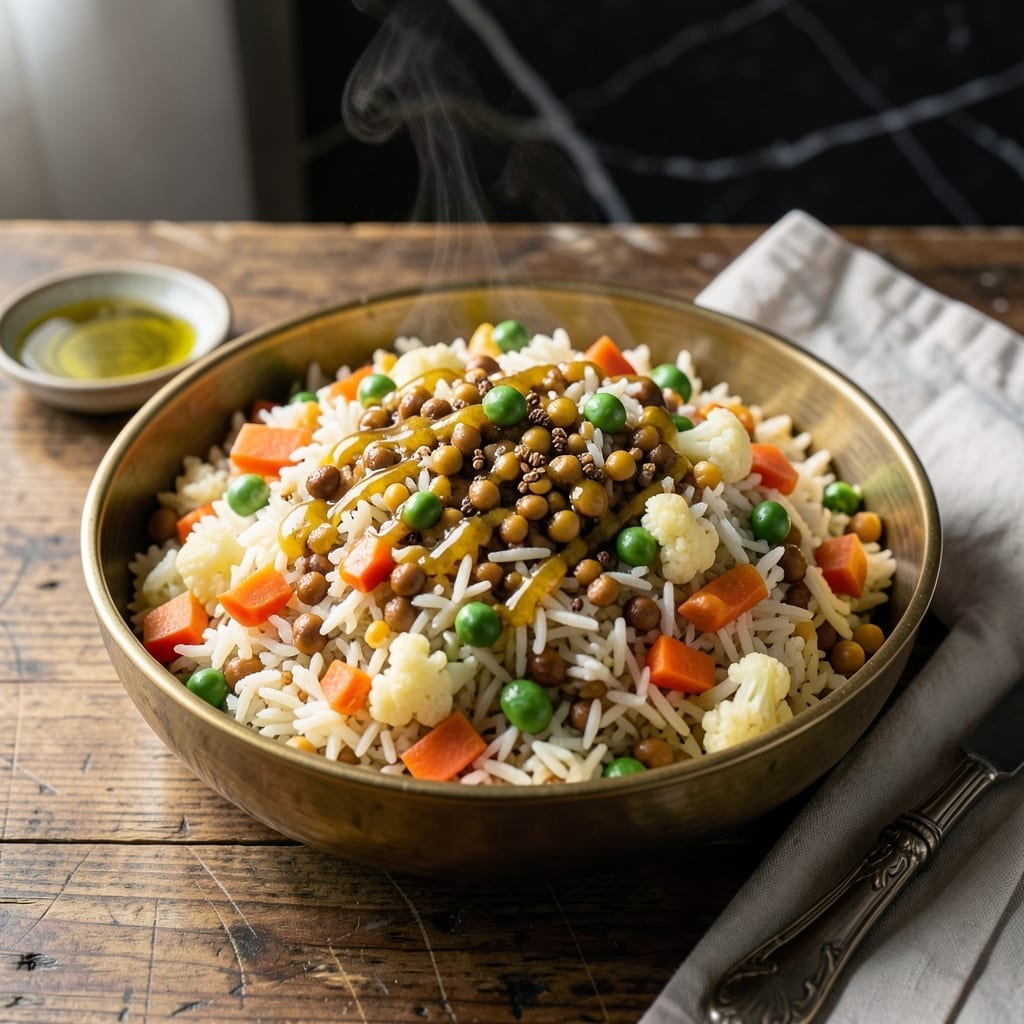
This one-pot South Indian specialty transforms simple ingredients into a fragrant, colorful feast that’s as satisfying as it is impressive. A labor of love from my grandmother’s kitchen, it brings together rice, lentils, and vegetables in perfect harmony.
The beauty lies in its traditional layering method—each ingredient added at just the right moment to build complex flavors. The result is a dish where every grain of rice absorbs the aromatic spices, while the lentils and vegetables maintain their distinct textures.
What emerges is a vibrant, one-pot meal that’s hearty enough for a celebration yet simple enough for a weeknight. The spices bloom into a fragrant symphony, and the final touch of ghee ties everything together.
Serve it with raita or papad for a complete experience. Here’s how to recreate this classic.
Ingredients for Kadamba Rice
Rice, lentils, and vegetables come together with aromatic spices for this traditional one-pot meal.
| Ingredient | Amount | Notes |
|---|---|---|
| Basmati Rice 🌾 | 1 ½ cups | Rinsed until water runs clear |
| Yellow Moong Dal 🥣 | ½ cup | Rinsed and drained well |
| Mixed Vegetables 🥕 | 2 cups | Carrots, peas, beans, diced |
| Ghee 🧈 | 3 tbsp | Clarified butter, divided use |
| Mustard Seeds 🌿 | 1 tsp | Black or brown variety |
| Cumin Seeds 🌿 | 1 tsp | Whole, not ground |
| Chana Dal 🥜 | 1 tbsp | Split chickpeas, optional |
| Urad Dal 🌾 | 1 tsp | Black gram, split |
| Green Chilies 🌶️ | 2 whole | Slit lengthwise, seeds removed |
| Curry Leaves 🍃 | 10 pieces | Fresh preferred, dried acceptable |
| Asafoetida 🌿 | ¼ tsp | Hing, pinch for aroma |
| Turmeric Powder 🌶️ | ½ tsp | For golden color |
| Red Chili Powder 🔥 | ½ tsp | Adjust to spice preference |
| Salt 🧂 | 1 ½ tsp | Adjust to taste |
| Water 💧 | 4 cups | For cooking rice and dal |
The rice quality is paramount here. Patel Brothers or any Indian grocery store carries authentic basmati with the right fragrance and grain length. Yellow moong dal should be bright and free of stones—look for brands like 24 Mantra or Daawat. Ghee is non-negotiable for authentic flavor; Amul or Gowardhan are reliable choices. Fresh curry leaves, available at Indian markets, add an unmistakable aroma that dried simply can’t replicate.
No moong dal? Masoor dal (red lentils) works but cooks faster—adjust water accordingly. Missing curry leaves? Dried bay leaves offer a different but acceptable depth. Asafoetida can be skipped, though it adds a distinctive umami. For the vegetables, frozen mixed veggies (the kind with peas, carrots, and beans) work in a pinch. The ghee can be replaced with neutral oil, but expect a milder flavor profile.
Store the basmati rice and dals in airtight containers in a cool, dark place for up to 6 months. Ghee keeps at room temperature for 3 months or refrigerated for 1 year. Fresh curry leaves can be wrapped in paper towels and stored in the fridge for 1 week.
Why You’ll Love This Recipe
- One-Pot Wonder: I toss everything—basmati, moong dal, veggies—in one pot, and the ghee does the rest.
- Ghee & Mustard Magic: That first crackle of mustard seeds in hot ghee? It fills the kitchen with a smell that makes my family gather before the dish is even done.
- Feeds a Hungry Table: I serve this at potlucks, pack it for lunchboxes, or reheat it for midnight snacks—it’s just as good the next day.
- Stretches the Groceries: A cup of dal and a handful of rice turn into a hearty meal. Honestly, it’s saved me on more than one tight budget week.
Step-by-Step Instructions for Kadamba Rice
Master the one-pot technique for this aromatic South Indian classic with precision timing.
Step 1: Prepare and Temper the Spices
Heat 2 tbsp ghee in a heavy-bottomed pot over medium heat. Add the 1 tsp mustard seeds and wait for them to pop like tiny firecrackers—this should take about 30-45 seconds. The moment they finish popping, add the 1 tsp cumin seeds, 1 tbsp chana dal, and 1 tsp urad dal.
Stir constantly as the dals turn from pale to light golden brown—about 2 minutes. This tempering process releases their nutty aromas. Immediately add the 2 whole green chilies, 10 pieces curry leaves, and 0.25 tsp asafoetida, stirring for another 15 seconds until the curry leaves become crisp and the asafoetida releases its distinctive aroma.
Step 2: Bloom the Spices with Vegetables
Add the 2 cups mixed vegetables to the pot and stir to coat them in the tempered spices. Cook for 3-4 minutes until the vegetables soften slightly but retain their bright color. I keep the heat at medium to prevent burning while allowing the spices to infuse the vegetables.
Sprinkle in the 0.5 tsp turmeric powder and 0.5 tsp red chili powder, stirring immediately to prevent the powders from burning. Cook for 1 minute until the raw smell of the turmeric dissipates and the mixture becomes fragrant. The vegetables should be glossy from the ghee and spices.
Step 3: Combine Rice, Dal, and Water
Add the 1.5 cups basmati rice and 0.5 cup yellow moong dal to the pot, stirring to ensure every grain is coated with the spice mixture. Toast for 1-2 minutes until the rice turns slightly translucent at the edges. This step enhances the nutty flavor of the grains.
Pour in the 4 cups water and add the 1.5 tsp salt. Stir well to distribute all ingredients evenly. The water should appear slightly cloudy from the turmeric, and the rice and dal should be fully submerged. Bring the mixture to a rolling boil over high heat.
Step 4: Cook to Perfection
Once boiling, reduce the heat to low, cover the pot with a tight-fitting lid, and cook for 15 minutes. Resist the urge to lift the lid—steam is crucial for even cooking. After 15 minutes, turn off the heat but leave the pot covered for an additional 10 minutes.
The rice and dal should be tender, with no resistance when pressed between your fingers. If any liquid remains, return the pot to low heat for 2-3 minutes until fully absorbed. Drizzle the remaining 1 tbsp ghee over the top, then gently fluff the rice with a fork to separate the grains.
Pro Tips For Making Kadamba Rice
- Soak the Rice: I learned this the hard way—soak basmati rice for exactly 20 minutes before cooking to prevent it from turning mushy in the kadamba mix.
- Toast the Moong Dal: Dry-roast the yellow moong dal in a pan for 2-3 minutes until fragrant before adding liquids; it deepens the nutty flavor and prevents a raw taste.
- Temper the Mustard Seeds: Heat the ghee first, then add mustard seeds only when it’s hot enough to sizzle immediately—if they sit in cool ghee, they’ll turn bitter.
- Use Warm Water: When mixing the rice and dal with vegetables, use warm water instead of cold to help the moong dal cook evenly and absorb flavors faster.
Flavor Customization for This kadamba rice
Spice Level Adjustments
For milder heat, reduce the green chilies to just 1 and skip the red chili powder entirely. I often do this when cooking for kids. The mustard seeds and cumin seeds still provide plenty of aromatic warmth without overwhelming spice.
Vegetable Variations
Swap the mixed vegetables for 2 cups of your favorites. I love using cauliflower florets and bell peppers for added crunch. For a richer version, add ½ cup diced potatoes—just parboil them first to ensure they cook through. 🌱
Protein Additions
Transform this into a non-vegetarian dish by adding 1 cup cooked chicken or shredded paneer when you add the vegetables. The protein soaks up the spiced ghee beautifully. I recommend boneless chicken thighs for their tenderness.
Ghee Alternatives
If avoiding dairy, use 3 tbsp coconut oil instead of ghee. It provides a similar richness with a subtle coconut aroma. For a lighter option, 2 tbsp neutral oil works, though the flavor depth will be less pronounced.
Herb Infusions
Enhance the aroma by adding 2 sprigs fresh cilantro or 1 tsp dried mint when cooking the rice. Remove the cilantro sprigs before serving. I find fresh herbs brighten the dish significantly.
Citrus Brightness
Finish with a squeeze of 1 tbsp lemon juice just before serving to cut through the richness. This small addition makes all the flavors pop. I always keep a lemon wedge on the side for those who want extra zing. ✨
Nutrition Facts
Frequently Asked Questions
Can I use other rice varieties for this dish?
Basmati is traditional, but jasmine rice works well too. Avoid sticky varieties like sushi rice as they’ll make the dish mushy. 1.5 cups remains the right measurement for most long-grain options.
How do I prevent the rice from turning mushy?
Rinse the rice thoroughly until water runs clear to remove excess starch. Use the exact 4 cups water specified and avoid stirring after adding water. Letting it rest covered for 10 minutes after cooking helps too.
Can I make this in a rice cooker?
Yes! Sauté the spices and vegetables first, then transfer to the cooker with rice, dal, and water. Use the standard 15-minute cycle and let it rest afterward. The texture will be slightly different but still delicious.

- Jollof Rice Sauce Recipe: West African Tomato and Spice Infusion - September 25, 2026
- Japanese Rice Soup Recipe: Umami-Rich Comfort in a Bowl - September 25, 2026
- Homemade Cream Of Rice Recipe: Silk-Smooth Breakfast in Minutes - September 25, 2026