
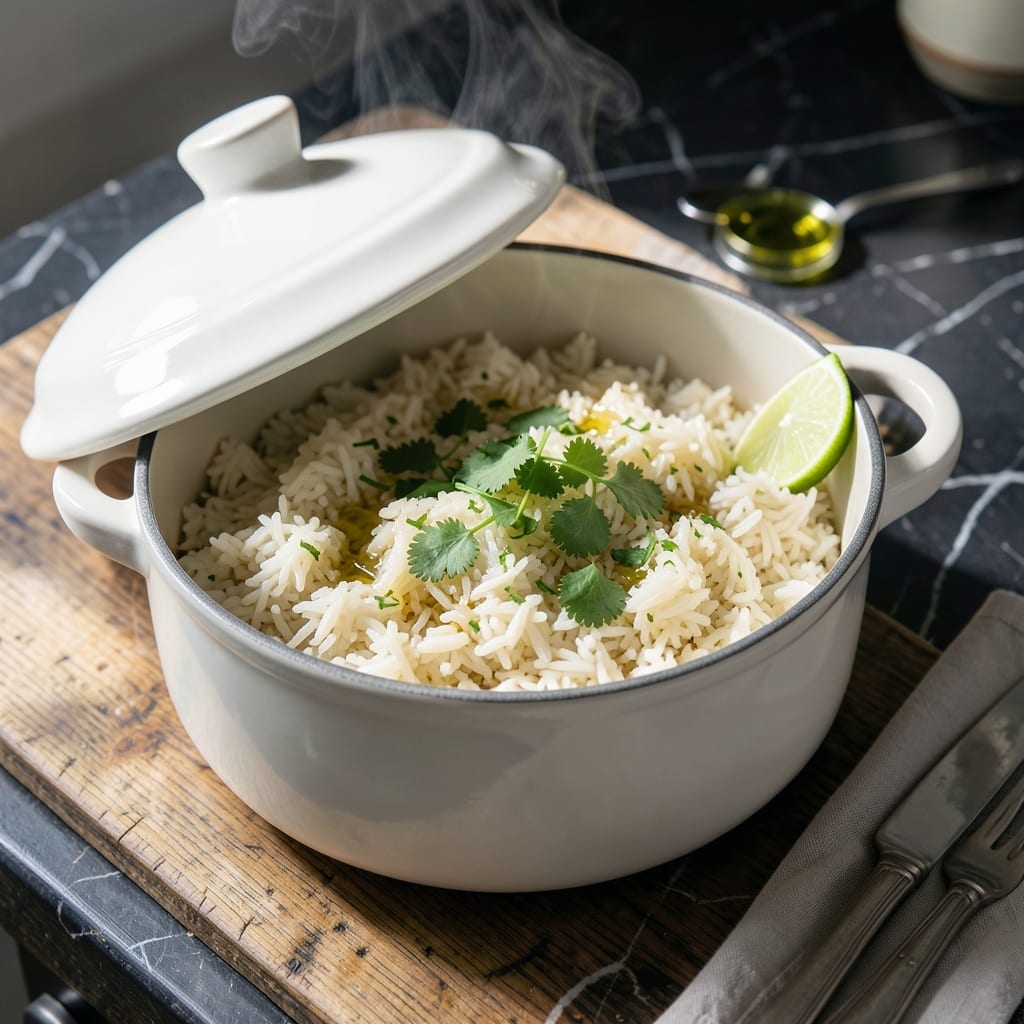
Mastering stovetop jasmine rice is simpler than you think, and the results are always impressive. This method delivers fluffy, separate grains with a natural fragrance that elevates any meal.
The key lies in the precise water ratio and cooking technique. With just a few minutes of hands-on time, you’ll have perfectly cooked rice that’s tender yet firm, never mushy or dry.
What sets this approach apart is the resting period after cooking. This final step allows the steam to redistribute, ensuring every grain achieves that ideal texture and aromatic quality.
Serve this as a base for stir-fries, curries, or enjoy it plain. The versatility makes it a staple for any home cook’s repertoire.
Ingredients for Jasmine Rice on Stove
Pantry staples transform into fragrant, fluffy rice in minutes. Simple as it gets.
| Ingredient | Amount | Notes |
|---|---|---|
| Jasmine Rice 🍚 | 1 ½ cups | Rinsed until water runs clear |
| Water 💧 | 2 ¼ cups | Filtered or bottled preferred |
| Salt 🧂 | ½ tsp | Fine sea salt or kosher |
| Neutral Oil 🫒 | 1 tsp | Optional, for toasting rice |
| Fresh Lime 🍈 | 1 whole | Cut into wedges for serving |
| Fresh Cilantro 🌿 | ¼ cup | Chopped, for garnish |
| Garlic Cloves 🧄 | 2 cloves | Minced, optional for aroma |
| Green Onions 🧅 | 2 whole | Thinly sliced for garnish |
The rice itself matters most here. Look for Thai jasmine rice—it’s got that signature floral aroma regular white rice lacks. I grab mine from Whole Foods or any Asian market (better selection, often cheaper). Rinse it until the water runs clear—this removes excess starch and prevents gummy grains. Don’t skip this step (worth the extra minute).
No jasmine rice? Basmatis at a 1:1.5 rice-to-water ratio works in a pinch, but the flavor won’t be the same. Water ratio is non-negotiable here—1.5 cups water per 1 cup rice. If you’re toasting the rice first (highly recommend), use a neutral oil like avocado or grapeseed. The lime and cilantro are optional but add a bright finish (frozen works in a pinch).
Uncooked rice keeps in a sealed container for 1-2 years. Cooked rice stays fresh in the fridge for 4-5 days or freezes for 3 months. Reheat with a splash of water to fluff it up again.
Why You’ll Love This Recipe
- Set It & Forget It: Honestly, I just rinse the rice, add water, and let the stove do the work—no stirring, no fuss.
- Bright Citrus Lift: That squeeze of fresh lime at the end makes every bite taste fresh and vibrant.
- Pairs With Anything: I serve it with stir-fries, grilled chicken, or even just a fried egg on top.
- Stretches for Days: One batch makes enough for leftovers that actually taste better the next day.
Step-by-Step Instructions for Jasmine Rice on Stove
Here’s the method I use every time for perfectly fluffy, fragrant rice.
Step 1: Rinse and Toast the Jasmine Rice
Place the 1.5 cups jasmine rice in a fine-mesh strainer and rinse under cold water until the water runs completely clear. This removes excess starch, which is what makes rice gummy instead of fluffy. I usually rinse it 3-4 times for best results.
Heat the 1 tsp neutral oil in a pot with a tight-fitting lid over medium heat. Add the drained rice and toast for 1-2 minutes, stirring constantly. You’ll notice the grains become slightly translucent at the edges and emit a nutty aroma. If using, add the 2 cloves minced garlic at this stage for 30 seconds just until fragrant.
Step 2: Add Water and Salt
Pour in the 2.25 cups water and add the 0.5 tsp salt. Stir once to combine and distribute the rice evenly in the pot. The water should be about 1 inch above the rice level—this visual check ensures you’ve added the right amount.
Bring the mixture to a rolling boil over high heat. You’ll see large, vigorous bubbles breaking the surface. This step happens quickly, usually within 3-4 minutes. Watch closely—once it reaches a boil, you’ll need to act fast.
Step 3: Cover and Simmer Gently
As soon as the water boils, reduce the heat to low, cover the pot with the tight-fitting lid, and let it simmer undisturbed for 12-15 minutes. Don’t peek—steam is your friend here, and lifting the lid releases it, which can lead to uneven cooking.
After 12 minutes, check for doneness by tilting the pot slightly. If you see water pooling at the edges, let it cook for another 2-3 minutes. The rice is ready when all the water has absorbed and small steam holes appear on the surface.
Step 4: Rest and Fluff the Rice
Turn off the heat and let the rice rest, covered, for 10 minutes. This crucial step allows the grains to steam in their own moisture, becoming tender and separate. I’ve found this resting period makes the difference between good rice and great rice.
After resting, remove the lid and use a fork to gently fluff the rice from the bottom up. This separates the grains without crushing them. You’ll see the rice has doubled in volume and each grain is distinct and fluffy.
Step 5: Garnish and Serve
Transfer the rice to a serving bowl. Top with the thinly sliced 2 whole green onions and 0.25 cup chopped fresh cilantro. Serve with the 1 whole fresh lime cut into wedges on the side for squeezing over individual portions.
The lime adds a bright, citrusy note that complements the rice’s natural fragrance. The green onions and cilantro add freshness and a pop of color that makes this simple dish look as good as it tastes.
Pro Tips For Making Jasmine Rice On Stove
- Rinse the Rice: Always rinse jasmine rice under cold water until it runs clear—this removes excess starch so your grains stay fluffy instead of gummy. I learned this the hard way after making gluey rice one too many times.
- Use the Right Ratio: For jasmine rice, stick to a 1:1.5 rice-to-water ratio (1 cup rice to 1.5 cups water). Sounds simple, but I was skeptical until I tried it—now my rice is perfect every time.
- Let It Steam: Once the water is absorbed, turn off the heat, cover the pot, and let it sit for 10 minutes. Skipping this step means dense, undercooked rice—your future self will thank you.
- Add Lime Last: Stir in fresh lime juice after cooking, not before. Adding it too early can make the rice bitter. A squeeze at the end brightens the flavor without overpowering it.
Serving Suggestions for This jasmine rice on stove
Asian-Inspired Bowls
Use this as a base for Thai green curry or teriyaki chicken. The fragrant rice pairs perfectly with coconut milk-based sauces. I love adding 1 tbsp fish sauce to the cooking water for extra depth.
Latin American Twist
Serve with black beans, sautéed peppers, and avocado slices for a burrito bowl. The lime wedges brighten up the dish beautifully. A sprinkle of cotija cheese adds a nice salty contrast.
Simple Protein Pairings
This rice works wonderfully with grilled shrimp or baked salmon. The mild flavor lets the seafood shine. I drizzle 1 tsp sesame oil over the rice before serving for extra aroma. 💛
Vegetarian Delight
Combine with stir-fried tofu, roasted vegetables, and a drizzle of peanut sauce. The cilantro and green onions add freshness that cuts through the richness of the sauce.
Breakfast Option
Use leftovers for a savory breakfast bowl with a fried egg on top. The runny yolk mixes beautifully with the fluffy grains. Add sriracha for a spicy kick to start your day. 🔥
Garnish Tips
Always fluff with a fork before serving to separate the grains. The lime should be squeezed fresh at the table, not cooked in. A final sprinkle of toasted sesame seeds adds texture and visual appeal.
Nutrition Facts
Frequently Asked Questions
Why do I need to rinse the rice first?
Rinsing removes excess starch from the surface of the grains. Without this step, your rice may turn out gummy instead of fluffy. Keep rinsing until the water runs completely clear.
Can I use a rice cooker instead?
Yes, use the same 1:1.5 rice-to-water ratio and follow your cooker’s instructions. The stovetop method gives you more control over toasting and resting, though.
How can I fix undercooked rice?
If grains are still hard after cooking, add 2-3 tablespoons water, cover, and steam for another 5 minutes on low heat. Then rest as usual.
What if I don’t have a tight-fitting lid?
Use foil to create a tight seal over the pot. This traps the steam essential for even cooking. Just be careful when removing it to avoid burns.

- Jamaican Jollof Rice Recipe: Island Spice in Every Bite - October 18, 2026
- Hamburger Rice Hot Dish Recipe: Midwest Comfort in One Pan - October 18, 2026
- Iranian Cabbage Rice Recipe: Aromatic Herbs and Spiced Layers - October 18, 2026