
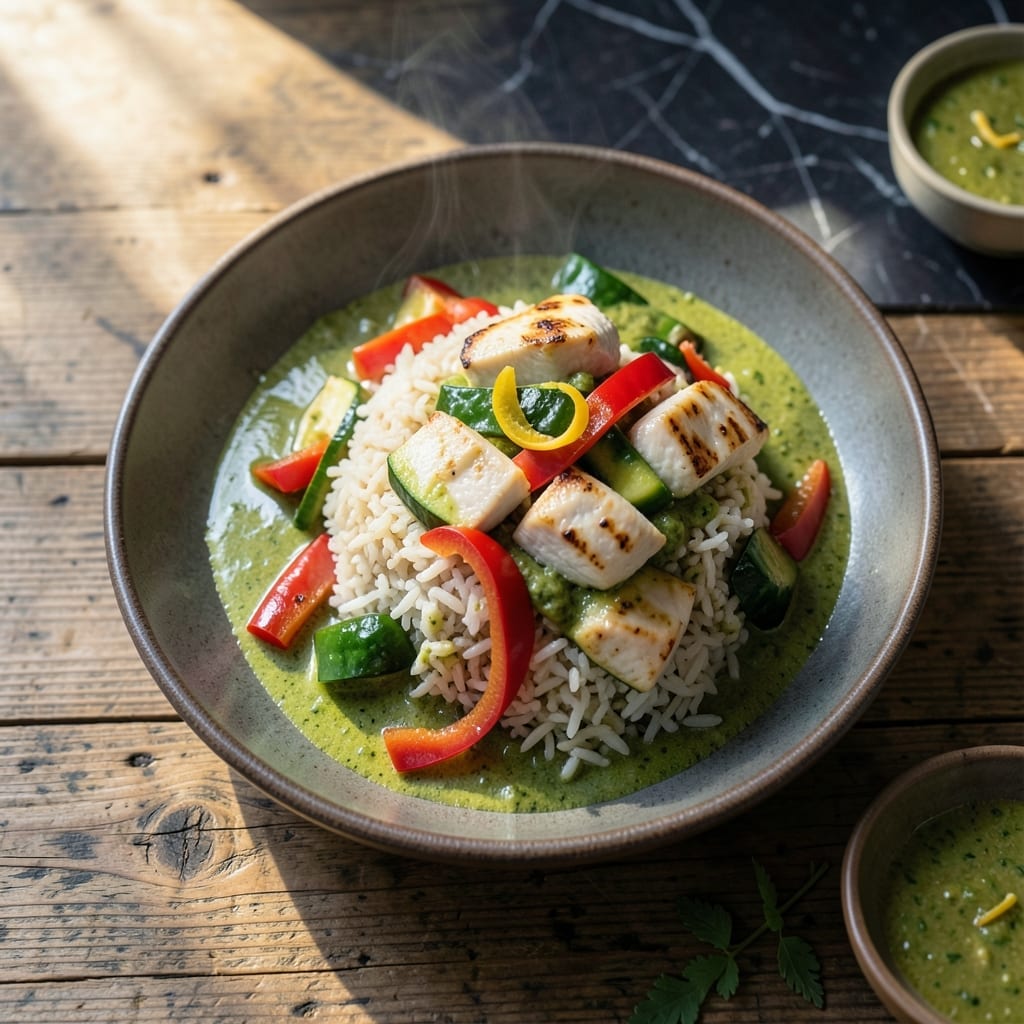
This Thai-inspired dish brings restaurant-quality flavors to your home kitchen. I developed this recipe after testing multiple versions to find the perfect balance of coconut richness and herb brightness.
The secret lies in blooming the curry paste in hot oil before adding the rice and coconut milk. This simple step unlocks layers of authentic flavor that make this dish taste like it came from a Bangkok street vendor.
You’ll end up with fragrant rice infused with creamy coconut and aromatic herbs. Each bite delivers the perfect harmony of spice, sweetness, and umami that defines great green curry.
Ready in under 45 minutes, this one-pot meal is ideal for busy weeknights when you crave something special without the takeout price.
Ingredients for Green Curry Rice
Fragrant jasmine rice meets creamy coconut and bold Thai flavors. Ready in one pot.
| Ingredient | Amount | Notes |
|---|---|---|
| Jasmine Rice 🌾 | 1 ½ cups | Uncooked, rinsed before use |
| Green Curry Paste 🌶️ | 3 tbsp | Thai-style, check for shrimp-free if needed |
| Coconut Milk 🥥 | 1 can | Full-fat for creaminess |
| Chicken Breast 🍗 | 1 lb | Boneless, skinless, diced |
| Bell Pepper 🌶️ | 1 whole | Red or green, sliced thin |
| Zucchini 🥒 | 1 whole | Medium-sized, diced |
| Bamboo Shoots 🌿 | ½ cup | Canned, drained and rinsed |
| Thai Basil 🌿 | ½ cup | Fresh, loosely packed |
| Fish Sauce 🫒 | 1 tbsp | Or soy sauce for vegetarian |
| Brown Sugar 🍯 | 1 tbsp | Light or dark |
| Garlic Cloves 🧄 | 3 cloves | Minced for maximum flavor |
| Shallot 🧅 | 1 whole | Finely chopped |
| Vegetable Oil 🫒 | 2 tbsp | Neutral flavor for blooming paste |
| Lime 🍋 | 1 whole | Juiced and zested for brightness |
| Salt 🧂 | ½ tsp | To taste |
The curry paste is non-negotiable here. Maesri or Thai Kitchen brands are easy to find at most Asian markets or the international aisle. Look for bright green color, not dull—freshness matters. Jasmine rice is traditional (that fragrant, slightly sticky kind), but basmati works too if that’s what you’ve got. The coconut milk? Full-fat only—reduced fat separates and won’t give you that velvety sauce.
No chicken? Shrimp or tofu soak up the curry flavors beautifully. Skip the fish sauce? Soy sauce at the same amount keeps it vegetarian. Thai basil is ideal, but regular basil or cilantro work in a pinch. Bell peppers can swap for eggplant or green beans—whatever veggies you need to use up. The brown sugar balances the heat, but honey (if not vegan) or palm sugar works too.
Leftovers keep 4-5 days in the fridge—actually taste better the next day. Freezes for 3 months (portion before freezing). Reheat gently to avoid breaking the coconut milk. That lime zest? Don’t skip it (worth the extra minute).
Why You’ll Love This Recipe
- I’ll be real: it tastes even better the next day. The rice soaks up all that creamy curry goodness overnight.
- One Pot Wonder: I just toss the jasmine rice, chicken, and bell peppers into a single pot with coconut milk and curry paste—minimal cleanup, maximum flavor.
- Creamy Heat: The coconut milk balances the green curry paste’s spice so well it’s ridiculous. That first bite with tender chicken and fragrant rice? Pure comfort.
- Weeknight Hero: Honestly, it’s my go-to for busy evenings—ready before the kids finish their homework.
Step-by-Step Instructions for Green Curry Rice
Here’s the method I use to layer bold flavors and achieve perfect texture every time.
Step 1: Bloom the Curry Paste with Aromatics
Heat the 2 tbsp vegetable oil in a large pot over medium heat. Add the 3 tbsp green curry paste and stir constantly for 1-2 minutes until it becomes fragrant and the oil turns a vibrant green.
Immediately add the finely chopped shallot and minced 3 cloves garlic cloves, stirring for another 1-2 minutes until they soften. This step builds the foundation of flavor—don’t let the paste burn, or it will turn bitter.
Step 2: Build the Curry Base with Coconut Milk
Pour in the 1 can coconut milk, stirring to fully incorporate the paste and aromatics. Bring to a gentle simmer over medium-high heat, then reduce to medium-low heat.
Add the 1 tbsp brown sugar, 1 tbsp fish sauce, and 0.5 tsp salt, stirring until the sugar dissolves. The mixture should thicken slightly as the coconut milk reduces. This creates a rich, balanced base for the dish.
Step 3: Cook the Chicken and Vegetables
Stir in the 1 lb diced chicken breast and cook for 5-6 minutes until it begins to turn opaque. Then add the thinly sliced bell pepper, diced zucchini, and 0.5 cup bamboo shoots.
Simmer for another 5-7 minutes until the chicken is cooked through and the vegetables are tender-crisp. The chicken should reach an internal temperature of 165°F, and the zucchini should still have a slight bite.
Step 4: Finish with Jasmine Rice and Fresh Herbs
Add the 1.5 cups jasmine rice to the pot, stirring to coat it in the curry sauce. Pour in 2.5 cups water (enough to cover the rice by about ½ inch), and bring to a boil over high heat.
Once boiling, reduce the heat to low, cover, and simmer for 15-18 minutes until the rice is tender and the liquid is absorbed. Remove from heat and stir in the 0.5 cup Thai basil and the juice of the 1 whole lime. Let it sit covered for 5 minutes to allow the flavors to meld.
Step 5: Serve Warm with a Garnish
Fluff the green curry rice gently with a fork to separate the grains. Taste and adjust seasoning if needed—add a splash more lime juice for brightness or a pinch of salt for depth.
Garnish with additional fresh Thai basil leaves and a lime wedge for serving. The rice should be fragrant, slightly sticky, and infused with the rich, creamy curry sauce in every bite.
Pro Tips For Making Green Curry Rice
- Simmer the Curry: Let the green curry bubble gently in the coconut milk for at least 10 minutes—I learned this the hard way after my first few batches tasted raw and harsh.
- Slice Chicken Thin: Cut the chicken breast into ¼-inch strips so it cooks through in 3-4 minutes without turning rubbery, even in the thick curry sauce.
- Rinse the Rice: Wash the jasmine rice until the water runs clear to remove excess starch, or you’ll end up with a gummy, sticky mess instead of fluffy grains.
- Bloom the Paste: Cook the green curry paste in a little oil for 1-2 minutes before adding liquids—sounds fussy, but it deepens the flavor way more than just dumping it in.
Regional Styles of This Recipe
Thai Street Vendor
In Bangkok, this dish would be made with fresh green curry paste pounded daily, not the store-bought version. Street vendors use a mortar and pestle to create a vibrant paste with lemongrass, galangal, and kaffir lime leaves. The rice is often cooked in the curry itself, soaking up all those bold flavors. 🗺️
Northern Thai Style
In Chiang Mai, they add peanut sauce and serve it with sticky rice instead of jasmine. The curry tends to be milder, with more emphasis on herbs like Thai basil and mint. I love this version for its nutty depth and aromatic complexity.
Southern Thai Heat
The southern regions amp up the spice significantly, often using 10-15 green chilies in their paste. They also incorporate turmeric for color and earthiness. This version packs serious heat but balances it with extra coconut milk. I always keep water handy when testing this style. 🔥
Malaysian Influence
Across the border in Malaysia, they add kerisik (toasted coconut) to their green curry. It adds a smoky, nutty dimension that pairs beautifully with the coconut milk. The rice is often served as a side rather than cooked in the curry.
Western Adaptation
In the US, we often see this dish with broccoli or snap peas added for crunch. Some restaurants serve it as a curry over rice rather than cooking the rice in it. This makes it more approachable for those new to Thai flavors.
Vegetarian Bangkok
Many Bangkok vendors offer a vegetarian version using tofu and eggplant instead of chicken. The key is using a shrimp-free curry paste to keep it fully vegetarian. I find adding mushrooms gives it that meaty texture without the meat.
Nutrition Facts
Frequently Asked Questions
Can I use basmati rice instead of jasmine?
Yes, basmati works in a pinch, though jasmine’s floral notes complement the curry best. Adjust water to 2¼ cups for basmati, as it absorbs less. The texture will be slightly less sticky but still delicious.
How do I make this vegetarian?
Swap chicken for 14 oz extra-firm tofu or 2 cups diced eggplant. Use shrimp-free curry paste and replace fish sauce with soy sauce. Add mushrooms for meaty texture.
Why did my curry turn out bitter?
Most likely the curry paste burned when blooming. Always cook it over medium heat (not high) and stir constantly for just 1-2 minutes. Burnt paste creates bitterness that’s hard to fix.
Can I prepare this ahead of time?
The flavors deepen overnight. Store in an airtight container for up to 5 days in the fridge or freeze for 3 months. Reheat gently with a splash of water.

- Ground Beef Rice and Beans Recipe: Slow-Simmered Savory Harmony - October 17, 2026
- Guyanese Fried Rice Recipe: Caribbean Spice With Wok-Charred Aromatics - October 17, 2026
- Hakka Thunder Tea Rice Recipe: Wok-Charred Herbal Infusion - October 17, 2026