
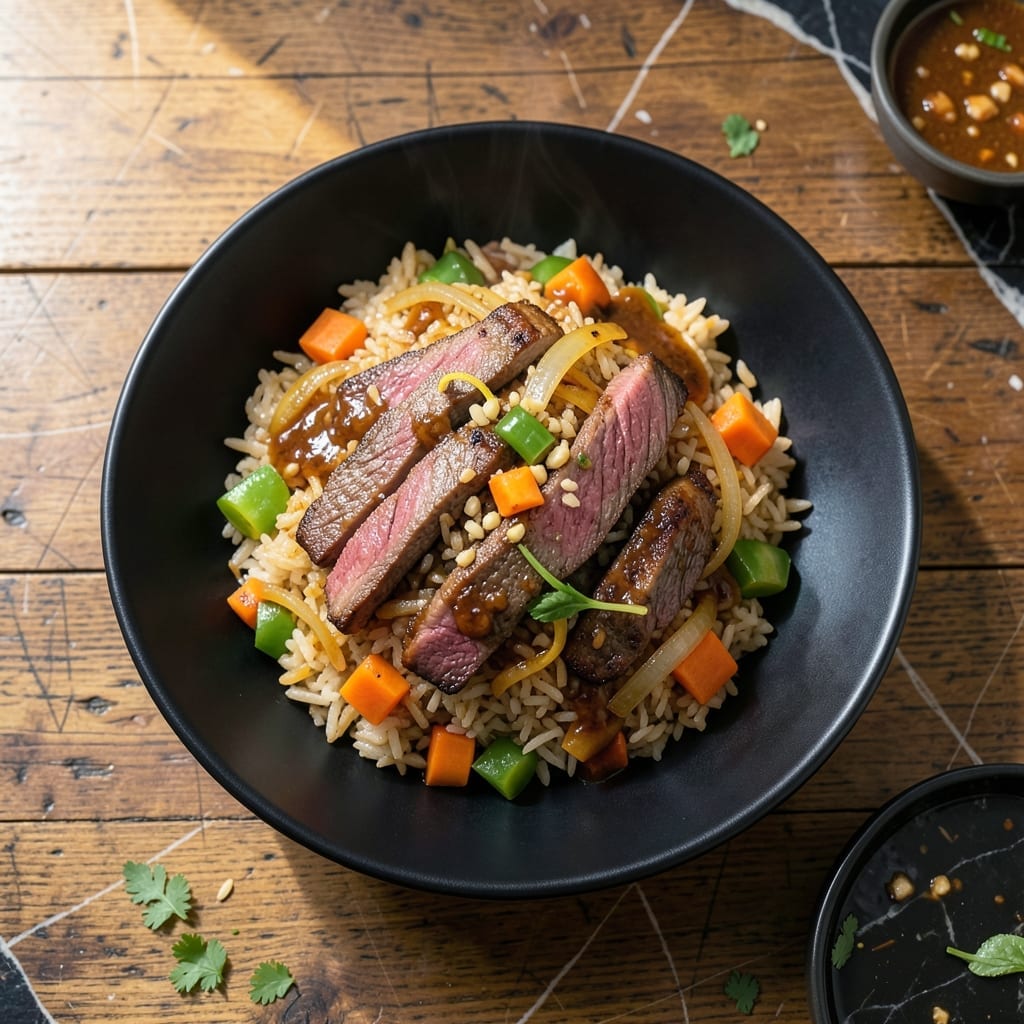
This Japanese-style fried rice transforms leftover rice into something extraordinary with tender beef and rich umami flavors. The dish builds depth through careful layering of ingredients and precise timing.
What makes this recipe special is the balance of textures—tender beef, soft rice, and crisp vegetables—all tied together with a savory sauce. It’s a complete meal that comes together quickly once the prep work is done.
Ingredients for Hayashi Fried Rice
Transform leftover rice with tender beef, crisp vegetables, and rich umami sauce for this Japanese-style dish.
| Ingredient | Amount | Notes |
|---|---|---|
| Cooked White Rice 🍚 | 4 cups | Day-old, chilled preferred |
| Ribeye Steak 🥩 | ¾ lb | Thinly sliced against grain |
| Yellow Onion 🧅 | 1 whole | Finely diced for even cooking |
| Carrots 🥕 | 2 whole | Julienned or finely diced |
| Green Bell Pepper 🌶️ | 1 whole | Seeds removed, thinly sliced |
| Garlic Cloves 🧄 | 3 cloves | Minced for maximum flavor |
| Fresh Ginger 🌿 | 1 tbsp | Peeled and grated fine |
| Hayashi Sauce 🫕 | ¾ cup | Store-bought or homemade |
| Worcestershire Sauce 🫕 | 1 tbsp | Adds depth to umami profile |
| Soy Sauce 🫕 | 2 tbsp | Low-sodium preferred for control |
| Neutral Oil 🫒 | 2 tbsp | Vegetable or canola for frying |
| Large Eggs 🥚 | 2 whole | Beaten lightly for scrambling |
| Green Onions 🧅 | 3 whole | Thinly sliced for garnish |
| Sesame Oil 🫒 | 1 tsp | Toasted, for finishing aroma |
| Black Pepper 🌶️ | ½ tsp | Freshly ground preferred |
The ribeye is non-negotiable for texture—look for well-marbled cuts at Whole Foods or Costco. Day-old rice (chilled overnight) prevents mushiness, a pro tip for authentic fried rice. The hayashi sauce is the soul here; S&B Golden Curry makes a great store-bought version. Thinly slicing the beef against the grain ensures tenderness, while the ginger and garlic should be freshly grated for peak aroma.
No ribeye? Flank steak or sirloin work in a pinch, but avoid pre-ground beef. Short on hayashi sauce? Demiglace with Worcestershire approximates the flavor. Fresh ginger can be swapped for ground ginger at one-third the amount, though fresh is superior. The vegetables can flex—substitute zucchini or snap peas if bell peppers aren’t available.
Store cooked beef separately until assembly to maintain texture. Leftover fried rice keeps 3-4 days refrigerated. For best results, reheat in a skillet with a splash of water to restore moisture. The dish doesn’t freeze well due to the rice texture.
Why You’ll Love This Recipe
- One Pan Dinner: I love that everything cooks together—steak, veggies, and rice—so cleanup is a breeze.
- Rich Umami Bomb: The ribeye and hayashi sauce create this deep, savory flavor that’s way better than takeout.
- Weeknight Hero: Honestly, it’s my go-to for busy evenings when I need something hearty fast.
- Leftovers? Even Better: Between us, the flavors meld overnight, so tomorrow’s lunch is something to look forward to.
Step-by-Step Instructions for Hayashi Fried Rice
Master this technique and you’ll achieve perfectly tender beef with rich, savory rice every time.
Step 1: Prepare and Marinate the Ribeye
Thinly slice the 0.75 lb ribeye steak against the grain into ¼-inch thick strips. This cross-grain slicing ensures each piece remains tender during the high-heat cooking process. Place the sliced beef in a bowl and toss with 1 tbsp Worcestershire sauce, 2 tbsp soy sauce, and 0.5 tsp black pepper.
The soy and Worcestershire create a flavor base while the pepper adds subtle heat. Let this marinate while you prep the vegetables—this short rest allows the flavors to penetrate the meat without over-tenderizing it into mush.
Step 2: Sauté Aromatics and Vegetables
Heat 2 tbsp neutral oil in a large wok or skillet over high heat until shimmering. Add the finely diced yellow onion, julienned carrots, and thinly sliced green bell pepper. Stir-fry for 3-4 minutes until the vegetables begin to soften but retain some bite.
Push the vegetables to one side of the pan and add the minced garlic cloves and 1 tbsp grated fresh ginger to the cleared space. Cook for 30-45 seconds until fragrant—this prevents burning while allowing the aromatics to infuse the oil. The scent should be pungent and inviting, not acrid.
Step 3: Cook the Beef and Integrate the Sauce
Add the marinated ribeye to the pan in a single layer, ensuring each piece contacts the hot surface. Sear undisturbed for 1-2 minutes until the edges brown. The beef should release easily from the pan when ready to flip. Stir-fry for another 1-2 minutes until just cooked through but still tender.
Pour in the 0.75 cup Hayashi sauce and stir to coat all ingredients evenly. The sauce should sizzle and thicken slightly as it reduces. If the mixture appears dry, add a splash of water to prevent burning and help distribute the sauce.
Step 4: Incorporate Rice and Finish
Add the 4 cups cooked white rice, breaking up any clumps with your spatula. Stir-fry for 2-3 minutes until the rice is heated through and evenly coated with the sauce. The grains should be separate and slightly crisp at the edges, not mushy.
Push the rice mixture to one side and pour the 2 beaten large eggs into the cleared space. Scramble quickly until just set, then fold into the rice. This technique creates ribbons of egg throughout rather than distinct curds.
Step 5: Garnish and Serve
Remove from heat and drizzle with 1 tsp sesame oil. Stir to incorporate, then taste and adjust seasoning if needed. The sesame oil adds a nutty aroma that complements the umami depth.
Transfer to serving plates and garnish with thinly sliced green onions. Each serving should feature the tender beef pieces distributed throughout the rice, with visible flecks of egg and vibrant vegetable color. Serve immediately while hot.
Pro Tips For Making Hayashi Fried Rice
- Chill the Rice: Use day-old, cold rice straight from the fridge—fresh rice turns mushy when stir-fried. I learned this the hard way after ending up with a pan of wet, clumpy mess.
- Slice Against the Grain: Cut the ribeye into thin strips against the grain for tender bites that melt in your mouth. Sounds fussy, but it actually changes the outcome.
- Skip the Overcrowding: Cook the veggies and steak in batches—tossing everything in at once steams instead of sears. After burning three batches, I finally figured out why my peppers stayed soggy.
- Deglaze with Demiglace: If you have hayashi sauce or store-bought demiglace, splash a tablespoon into the pan after cooking the meat—it adds depth without extra effort. My grandmother swore by this, and she was right.
Common Mistakes When Making Great hayashi fried rice
Overcrowding the Pan
Using a pan that’s too small causes steaming instead of stir-frying. I recommend a 14-inch wok or 12-inch skillet for proper heat distribution. Cook in batches if needed—this prevents soggy rice and ensures each ingredient gets direct heat contact. 🔥
Fresh Rice Mistake
Freshly cooked rice contains too much moisture and will turn mushy. Always use day-old rice that’s been chilled in the fridge. Spread it on a baking sheet to dry out slightly before cooking if you’re in a hurry.
Overcooking the Beef
The ribeye should be tender, not tough. Sear it just until browned on the edges—about 1-2 minutes per side. Remove it from the pan if it finishes cooking before the rice is added, then add it back at the end.
Skipping the Marinade
Don’t skip marinating the beef in soy sauce and Worcestershire. Even 10 minutes makes a difference in flavor penetration. This step ensures every bite of beef is seasoned throughout, not just on the surface.
Sauce Timing
Adding the 0.75 cup Hayashi sauce too early can make the dish watery. Wait until the beef is cooked and the vegetables are tender before introducing the sauce. This allows it to thicken properly and coat the ingredients evenly.
Egg Overcooking
Scramble the eggs separately in the pan before mixing into the rice. Cook them just until set—about 30 seconds—to maintain soft, creamy texture. Overcooked eggs become rubbery and ruin the dish’s delicate balance. 💡
Nutrition Facts
Frequently Asked Questions
Can I use a different cut of beef?
Yes, but choose well-marbled cuts like flank steak or sirloin. Avoid pre-ground beef as it won’t stay tender. Slice thinly against the grain for best results.
What if I don’t have day-old rice?
Spread freshly cooked rice on a baking sheet and refrigerate for 30-60 minutes to dry it out. This prevents mushiness when stir-frying.
How can I make this vegetarian?
Swap beef for tofu or mushrooms. Use soy sauce and Worcestershire for umami, and add extra veggies like snap peas or zucchini.
Can I use frozen vegetables?
Yes, but thaw and drain them first to avoid excess moisture. Stir-fry a bit longer to remove all water before adding the rice.

- Ground Beef Rice and Beans Recipe: Slow-Simmered Savory Harmony - October 17, 2026
- Guyanese Fried Rice Recipe: Caribbean Spice With Wok-Charred Aromatics - October 17, 2026
- Hakka Thunder Tea Rice Recipe: Wok-Charred Herbal Infusion - October 17, 2026