
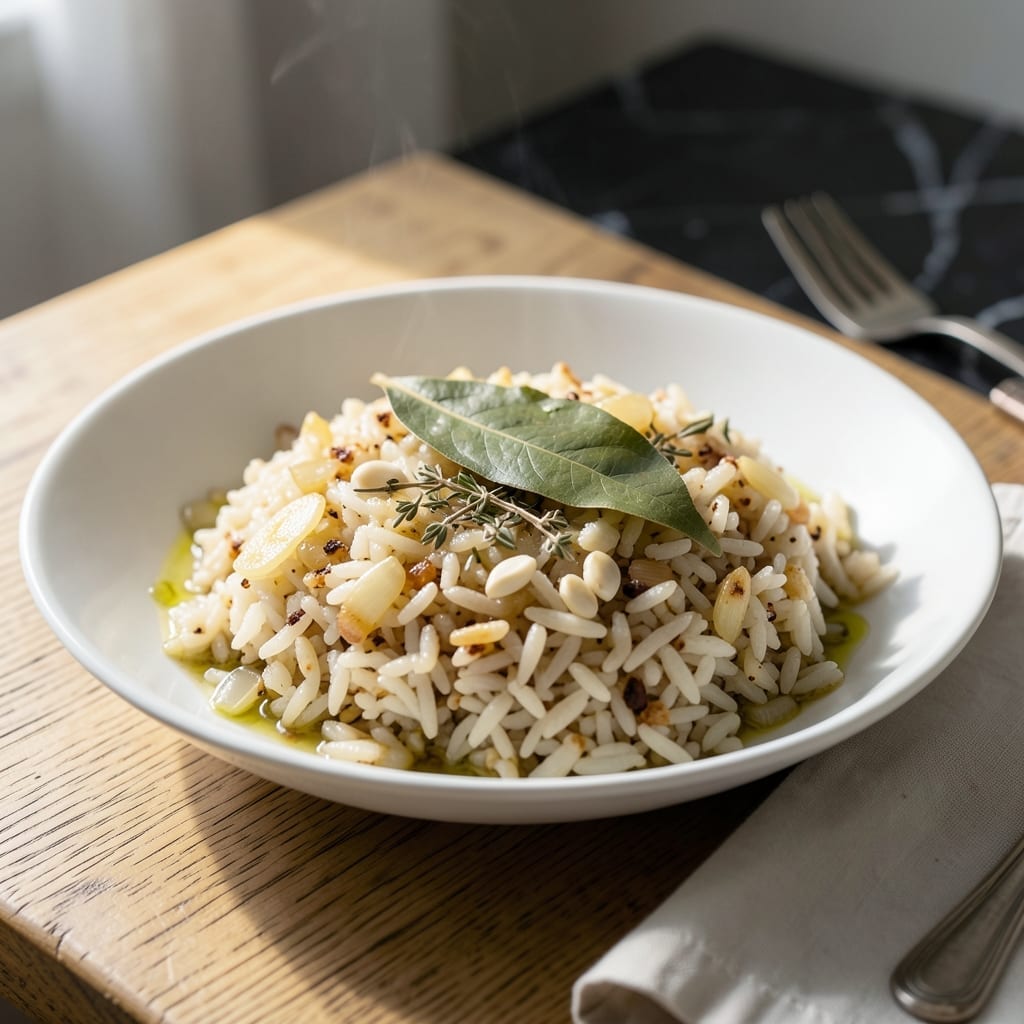
This jasmine rice pilaf brings restaurant-quality results to your home kitchen with minimal effort. The secret lies in toasting the rice briefly before cooking, which enhances its natural nutty flavor.
What emerges is fragrant, fluffy grains with a subtle aroma that pairs perfectly with any main dish. The technique ensures each bite stays separate and light, never sticky or mushy.
Ingredients for Jasmine Rice Pilaf
Fragrant jasmine rice and a few pantry staples create this light, elegant pilaf.
| Ingredient | Amount | Notes |
|---|---|---|
| Jasmine Rice 🌾 | 2 cups | Long-grain, rinsed well |
| Vegetable Broth 🥫 | 3 ½ cups | Low-sodium preferred |
| Olive Oil 🫒 | 2 tbsp | Extra-virgin for toasting |
| Shallot 🧅 | 1 whole | Finely diced for aroma |
| Garlic Cloves 🧄 | 3 cloves | Minced for depth |
| Bay Leaf 🍃 | 1 whole | Dried, removed before serving |
| Dried Thyme 🌿 | ½ tsp | Crumbled for flavor |
| Salt 🧂 | 1 tsp | Kosher or sea salt |
| Black Pepper 🌶️ | ½ tsp | Freshly ground |
| Lemon Zest 🍋 | 1 tsp | Freshly grated for brightness |
| Fresh Parsley 🌿 | ¼ cup | Chopped for garnish |
| Sliced Almonds 🥜 | ¼ cup | Toasted for crunch |
The rice quality is non-negotiable here. Jasmine rice from Thai brands like Elephant or Three Ladies gives the best fragrance and texture. Look for unbroken grains with a vibrant white color. Most Asian markets carry it in bulk, but standard grocery stores usually have it in the rice aisle. Rinse it well—this removes excess starch and prevents clumping.
No shallots? Sweet onion or red onion works fine, though shallots add a milder, more delicate flavor. Swap dried thyme for fresh at one-third the amount. Out of vegetable broth? Water with a splash of soy sauce adds depth. The almonds can be omitted, but they add a nice crunch—cashews or pine nuts are great alternatives.
Store uncooked jasmine rice in an airtight container in a cool, dark place for up to 1 year. Cooked pilaf keeps in the fridge for 4-5 days and reheats well. Freeze portions for up to 3 months if making ahead.
Why You’ll Love This Recipe
- Set and Forget: I dump everything in one pot, simmer, and walk away—no stirring, no fuss.
- Garlic & Shallot Magic: The shallots caramelize in olive oil while the garlic infuses every grain with deep, savory warmth.
- Feeds My Week: I make a big batch Sunday and it pairs with everything from roasted chicken to stir-fry all week long.
- Budget Hero: Jasmine rice plus pantry staples stretch into a filling side that costs pennies per serving.
Step-by-Step Instructions for Jasmine Rice Pilaf
This method ensures perfectly fluffy grains with vibrant flavor in every bite.
Step 1: Toast the Aromatics and Rice
Heat the 2 tbsp olive oil in a medium saucepan over medium heat. Add the finely diced shallot and cook for 2-3 minutes until translucent and fragrant. Stir frequently to prevent browning.
Add the 2 cups jasmine rice to the pan and toast for 2 minutes, stirring constantly. The rice should turn slightly opaque and smell nutty. This step enhances the rice’s natural aroma and prevents sticking during cooking.
Step 2: Build the Flavor Base
Stir in the minced garlic cloves, 0.5 tsp dried thyme, and 1 whole bay leaf. Cook for 30 seconds until the garlic becomes fragrant but not browned. Browning garlic adds bitterness, so keep the heat moderate.
Add the 1 tsp salt, 0.5 tsp black pepper, and 1 tsp lemon zest. The lemon zest adds a bright note that balances the richness. Stir to coat the rice evenly with the aromatics and spices.
Step 3: Add Liquids and Simmer
Pour in the 3.5 cups vegetable broth and stir to combine. Increase the heat to high and bring the mixture to a boil. Once boiling, reduce the heat to low, cover the pan, and let it simmer for 15 minutes.
Resist the urge to lift the lid during this time. The steam trapped inside is crucial for even cooking. You’ll know it’s working when you see gentle steam escaping from under the lid and hear a soft simmer.
Step 4: Rest and Fluff the Pilaf
After 15 minutes, remove the pan from heat and let it rest, covered, for 10 minutes. This resting period allows the rice to absorb any remaining liquid and finish cooking gently. The grains will become tender and separate easily.
Remove the bay leaf and discard it. Use a fork to fluff the rice gently, breaking up any clumps. The grains should be light and separate, with a slight sheen from the olive oil and broth.
Step 5: Garnish and Serve
Toast the 0.25 cup sliced almonds in a dry skillet over medium heat for 2-3 minutes until golden brown and fragrant. Watch closely—they burn quickly once they start to color.
Sprinkle the toasted almonds and 0.25 cup fresh parsley over the pilaf just before serving. The almonds add a satisfying crunch, while the parsley provides a fresh, herbal note that complements the citrusy brightness of the dish.
Pro Tips For Making Jasmine Rice Pilaf
- Rinse the Rice: Always give jasmine rice a quick rinse under cold water before cooking—this removes excess starch so your pilaf stays light and fluffy, not gummy.
- Sauté the Aromatics: Cook the shallot and garlic in olive oil until just translucent, about 2-3 minutes—any longer and they’ll burn, turning bitter in your pilaf.
- Use Warm Broth: I learned this the hard way—adding cold vegetable broth shocks the rice and slows cooking; warm it first for even absorption and perfectly cooked grains.
- Rest Before Serving: After cooking, let the pilaf sit covered for 5-10 minutes—this lets the steam redistribute, so every bite is tender, not wet or uneven.
Essential Equipment for This Dish
The Right Pot
I always use a heavy-bottomed saucepan with a tight-fitting lid for this dish. A 3-quart size works perfectly for 2 cups of rice. My go-to is All-Clad Stainless Steel—it distributes heat evenly and prevents hot spots that can burn the rice. 🔥
Quality Rice Matters
Invest in good jasmine rice for the best results. I recommend Thai brands like Elephant or Three Ladies, which you can find at most Asian markets. Avoid pre-rinsed or instant varieties—they lack the fragrance and texture you want.
Precision Measuring
A liquid measuring cup is essential for accurate broth portions. I use a Pyrex 4-cup for the 3.5 cups vegetable broth. For dry ingredients like rice, a standard 1-cup measure works perfectly.
Toasting Tools
Use a wooden spoon to stir the rice while toasting—it won’t scratch your pan. For toasting almonds, a small nonstick skillet gives you better control. I like Scanpan for its even heating.
Finishing Touches
A microplane makes quick work of the lemon zest, and kitchen shears are perfect for snipping fresh parsley. These small tools make prep faster and more precise. ✨
For serving, a rice paddle or wide spatula helps fluff the grains without crushing them.
Nutrition Facts
Frequently Asked Questions
Can I use water instead of broth?
Yes, but the flavor will be milder. Use 3.5 cups water and add 1 tsp salt plus a splash of soy sauce for depth. Broth adds richness, but water works in a pinch.
Why toast the rice first?
Toasting enhances the nutty aroma and prevents sticking. Cook for 2 minutes over medium heat until opaque. This step is key for fluffy, separate grains.
How do I store leftovers?
Keep in an airtight container in the fridge for 4-5 days. Reheat with a splash of water to restore moisture. Avoid freezing, as it can make the rice mushy.
Can I skip rinsing the rice?
No—rinsing removes excess starch, which prevents clumping. Rinse until the water runs clear for the best texture. Skipping this can result in sticky rice.

- Mujadara Rice and Lentils Recipe: Earthy Spiced Lentils With Caramelized Onions - November 1, 2026
- Naija Fried Rice Recipe: Street-Style Spice With Veggie Crunch - November 1, 2026
- Mushy Rice Recipe: Fluffy Grains Transformed in Minutes - November 1, 2026