
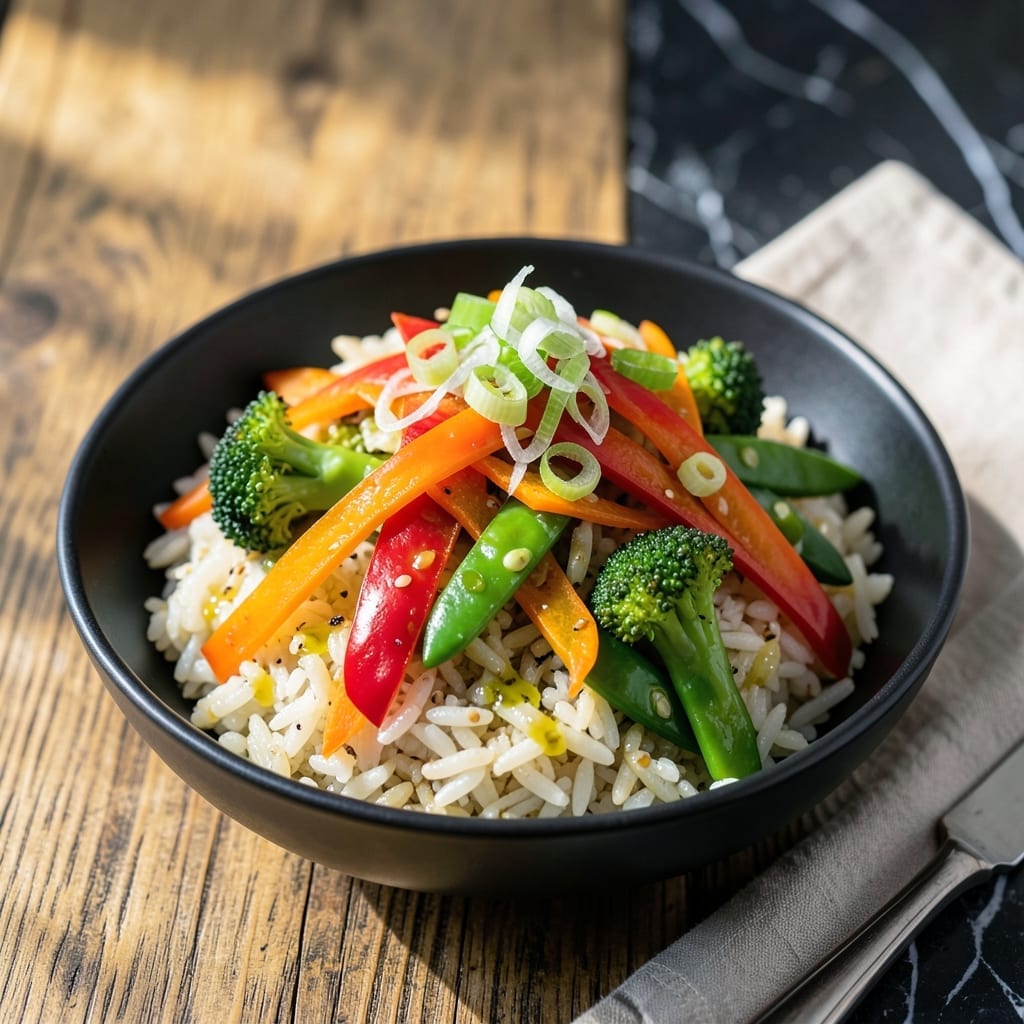
There’s a reason jasmine rice is the foundation of great stir fry—its delicate fragrance and slightly sticky texture soak up flavors beautifully. This dish brings together that aromatic base with crisp, vibrant vegetables for a balance of soft and crunchy in every bite.
The key is high heat and quick cooking, which locks in the freshness of the produce while creating that signature wok-charred aroma. A simple sauce ties everything together without overpowering the natural taste of the ingredients.
You’ll end up with a dish that’s light yet satisfying, with each grain of rice infused with the flavors of the stir fry. The vegetables retain their bright color and snap, making it as pleasing to the eye as it is to the palate.
Perfect as a side or a light main, this recipe delivers restaurant-quality results with minimal effort. Here’s how to make it.
Ingredients for Jasmine Rice Stir Fry
Aromatic jasmine rice meets crisp vegetables in this vibrant stir fry. Simple yet flavorful ingredients.
| Ingredient | Amount | Notes |
|---|---|---|
| Jasmine Rice 🍚 | 2 cups | Uncooked, rinsed before cooking |
| Bell Peppers 🌶️ | 2 whole | Assorted colors, thinly sliced |
| Broccoli Florets 🥦 | 3 cups | Cut into bite-sized pieces |
| Carrots 🥕 | 2 whole | Julienned or thinly sliced |
| Snap Peas 🌱 | 1 ½ cups | Trimmed, fresh or frozen |
| Green Onions 🧅 | 4 whole | Thinly sliced, whites and greens separated |
| Garlic Cloves 🧄 | 3 cloves | Minced finely |
| Fresh Ginger 🌿 | 1 tbsp | Peeled and grated |
| Soy Sauce 🫒 | ¼ cup | Low-sodium preferred |
| Oyster Sauce 🫒 | 2 tbsp | Vegetarian oyster sauce for strict vegetarians |
| Sesame Oil 🫒 | 1 tbsp | Toasted for depth of flavor |
| Vegetable Oil 🫒 | 3 tbsp | High smoke point for stir-frying |
| Rice Vinegar 🫒 | 1 tbsp | For brightness in sauce |
| Brown Sugar 🍚 | 1 tsp | Balances the savory notes |
| Sesame Seeds 🌾 | 1 tsp | Toasted, for garnish |
The jasmine rice is non-negotiable here—look for Thai brands at Asian markets or the international aisle. Rinsing the rice removes excess starch, which keeps the grains separate and fluffy. For the vegetables, freshness is key. I prefer organic bell peppers and carrots for their consistent texture and flavor. Most supermarkets carry these year-round, but farmers markets often have superior quality in season.
No jasmine rice? Basmati works in a pinch but lacks the fragrance. Swap snap peas for snow peas or green beans. For a strictly vegetarian version, use vegetarian oyster sauce (available at Whole Foods). The soy sauce can be tamari for gluten-free needs. Brown sugar can be substituted with coconut sugar if preferred. Don’t skip the fresh ginger—it’s essential for that authentic wok flavor.
Cooked rice keeps in the fridge for 3-4 days, but it’s best fresh. The stir fry itself reheats well for 2-3 days. Store leftovers in airtight containers. Sesame seeds can be toasted in advance and stored at room temperature for up to 2 weeks. Always keep ginger in the freezer—it grates perfectly frozen.
Why You’ll Love This Recipe
- One Pan Wonder: I toss everything—the jasmine rice, bell peppers, even the snap peas—into a single pan and let the wok do the work.
- That Crunch Though: The carrots stay slightly crisp while the broccoli soaks up all the savory garlic and soy sauce.
- Meal Prep MVP: I make a big batch on Sunday and it tastes just as good reheated for lunch all week.
- Stretches a Dollar: A bag of jasmine rice and whatever veggies are on sale feed my family for days.
Step-by-Step Instructions for Jasmine Rice Stir Fry
Master the wok technique with this straightforward method for perfectly charred vegetables and fragrant rice.
Step 1: Cook and Cool the Jasmine Rice
Rinse the 2 cups Jasmine Rice under cold water until the water runs clear. This removes excess starch and prevents clumping. Cook the rice according to package instructions, then spread it on a baking sheet to cool completely.
Using cold rice is essential for stir-frying—it fries up separate and crisp rather than turning mushy. I recommend preparing the rice at least 2 hours in advance, or even the day before. The grains should be dry to the touch before hitting the wok.
Step 2: Prep All Vegetables and Aromatics
Thinly slice the 2 whole Bell Peppers into uniform strips. Cut the 3 cups Broccoli Florets into even, bite-sized pieces. Julienne the 2 whole Carrots into matchsticks for consistent cooking. Trim the 1.5 cups Snap Peas and remove any strings.
Thinly slice the 4 whole Green Onions, separating the whites from the greens. Mince the 3 cloves Garlic Cloves finely and peel and grate the 1 tbsp Fresh Ginger. Having everything prepped and within reach is crucial for the fast cooking process ahead.
Step 3: Stir-Fry Vegetables in Batches
Heat 2 tbsp of the 3 tbsp Vegetable Oil in a wok or large skillet over high heat until shimmering. Add the bell peppers, carrots, and snap peas first, as they take longer to cook. Stir-fry for 2-3 minutes until the vegetables are crisp-tender and slightly charred at the edges.
Push the vegetables to one side, add the remaining 1 tbsp Vegetable Oil to the empty space, then add the broccoli florets. Stir-fry for another 2 minutes until all vegetables are bright in color and just tender. Remove the vegetables from the wok and set aside.
Step 4: Combine Rice, Aromatics, and Sauce
In the same wok, add the 1 tbsp Sesame Oil, then the minced garlic and grated ginger. Stir-fry for 30 seconds until fragrant—don’t let the garlic burn. Add the cold rice, breaking up any clumps with your spatula. Stir-fry for 2-3 minutes until the rice is heated through.
Pour in the 0.25 cup Soy Sauce, 2 tbsp Oyster Sauce, 1 tbsp Rice Vinegar, and 1 tsp Brown Sugar. Stir well to evenly coat the rice and vegetables. Cook for another 1-2 minutes until everything is well combined and the sauce has slightly thickened.
Step 5: Finish and Garnish
Return the cooked vegetables to the wok and toss everything together. Cook for an additional 1-2 minutes to heat through. The stir fry should have a glossy sheen from the sauce, with vegetables that retain a slight crispness.
Transfer to a serving platter and garnish with the sliced green onions and 1 tsp Sesame Seeds. Serve immediately while hot, with the vegetables still vibrant and the rice grains distinct and flavorful.
Pro Tips For Making Jasmine Rice Stir Fry
- Use Day-Old Rice: Freshly cooked jasmine rice turns to mush in a stir fry—spread leftover rice on a tray and refrigerate overnight so it dries out and fries up separate and fluffy.
- Cut Veggies Evenly: Slice bell peppers, carrots, and broccoli into uniform, bite-sized pieces so everything cooks at the same rate and no one’s stuck with crunchy carrots while the peas are overdone.
- Skip the Overcrowding: I learned this the hard way—tossing all the veggies in at once steams them instead of stir-frying. Cook in batches if your pan isn’t huge, or you’ll end up with soggy snap peas.
- Prep Before Firing Up: Have all your ingredients chopped, rice broken up, and sauce mixed before the wok hits high heat—stir-fries move fast, and you won’t have time to mince garlic mid-cook.
Common Mistakes When Making Perfect Results
Overcrowding the Wok
Trying to cook all your vegetables at once will steam them instead of stir-frying. I cook in 2-3 batches to maintain high heat and achieve that beautiful char. Crowding lowers the temperature, resulting in soggy, pale veggies. 🌡️
Skipping Rice Prep
Using freshly cooked rice is a common mistake—it turns mushy in the wok. Always use day-old, cold rice or spread hot rice on a tray to cool completely. The grains should be dry and separate for perfect texture.
Low Heat Cooking
Stir-fry requires high heat throughout the entire process. If your oil isn’t shimmering or vegetables aren’t sizzling loudly, your heat isn’t high enough. I set my burner to its maximum setting before adding any ingredients.
Premature Sauce Addition
Adding sauce too early creates a watery mess. Always cook your rice and vegetables first, then add the sauce mixture (soy sauce, oyster sauce, vinegar) in the final 2 minutes. This lets the flavors concentrate properly.
Neglecting Aromatics
Garlic and ginger need just 30 seconds to release their fragrance—any longer and they’ll burn. I mince them finely and keep them moving constantly. Burnt aromatics add bitterness that ruins your dish.
Inconsistent Cutting
Uniform pieces ensure even cooking. Slice your bell peppers and carrots into matchstick-sized pieces. This way, everything finishes cooking at the same time without some pieces turning mushy while others stay raw. 💡
Nutrition Facts
Frequently Asked Questions
Can I use fresh rice instead of day-old?
No, fresh rice is too moist and will turn mushy. Spread hot rice on a tray to cool and dry for 1-2 hours before stir-frying. The grains need to be separate and dry for the best texture.
What’s the best oil for stir-frying?
Use an oil with a high smoke point like vegetable or peanut oil. These can handle high heat without burning, which is essential for achieving that perfect wok char.
How do I keep vegetables crisp?
Cook in small batches over high heat for 2-3 minutes max. Overcrowding steams instead of stir-fries, making veggies soggy. Always prep all ingredients before starting.
Can I make this gluten-free?
Yes! Swap regular soy sauce for tamari and use a gluten-free oyster sauce. All other ingredients are naturally gluten-free, so the dish will still be just as flavorful.

- Mujadara Rice and Lentils Recipe: Earthy Spiced Lentils With Caramelized Onions - November 1, 2026
- Naija Fried Rice Recipe: Street-Style Spice With Veggie Crunch - November 1, 2026
- Mushy Rice Recipe: Fluffy Grains Transformed in Minutes - November 1, 2026