
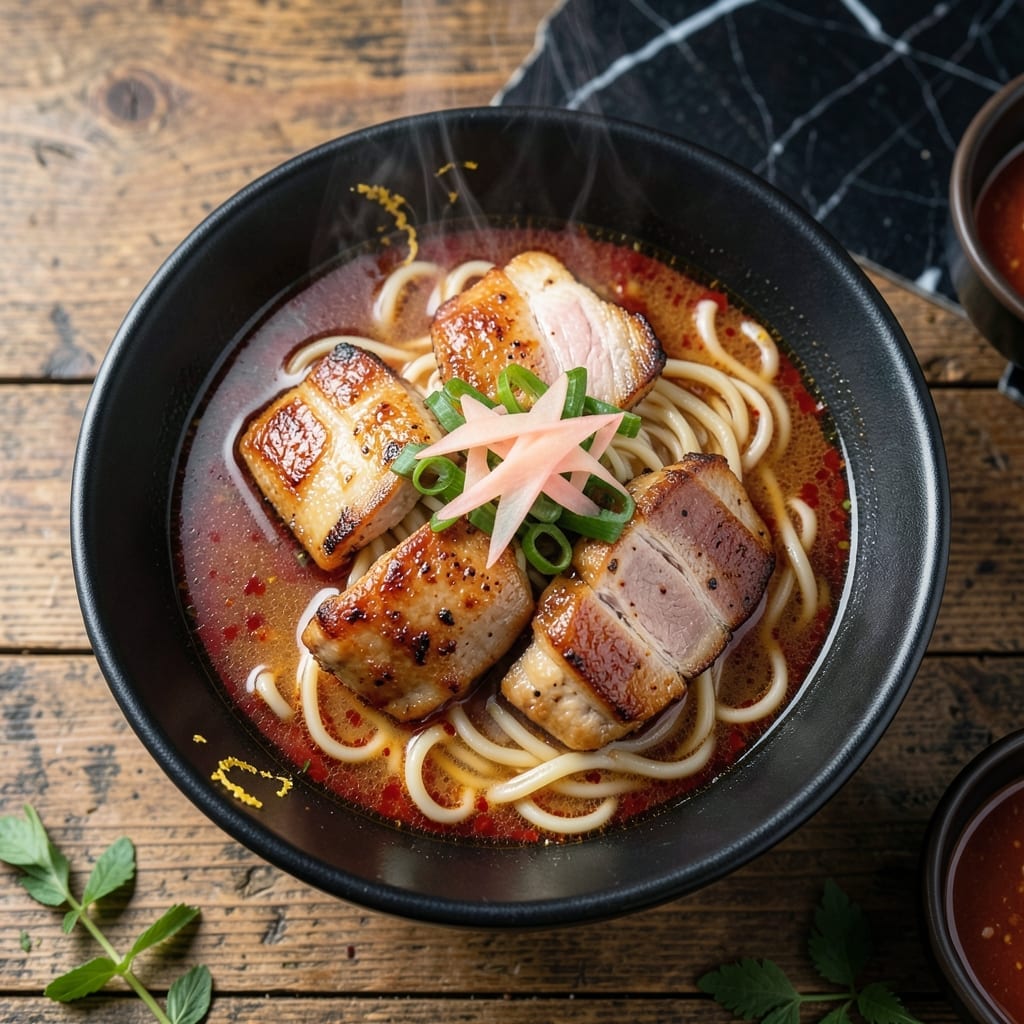
This recipe brings the bold flavors of Jinya’s signature ramen to your kitchen with an authentic touch.
I developed this version after countless bowls at the restaurant, recreating their spicy chicken broth with precise layers of umami and heat. The secret lies in the balance between rich tonkotsu and fiery chili oil.
You’ll achieve that perfect slurpable texture with chewy noodles, tender chicken, and a broth that’s both complex and spicy. Every element works together just like the original.
The result is a bowl that rivals the restaurant version, with customizable heat levels to suit your taste. Here’s how to make it.
Ingredients for Jinya Spicy Chicken Ramen
Rich broth, chewy noodles, and bold spices bring this iconic bowl to life at home.
| Ingredient | Amount | Notes |
|---|---|---|
| Chicken Thighs 🍗 | 1 ½ lb | Boneless, skin-on preferred |
| Ramen Noodles 🍜 | 4 packages | Fresh or dried, discard seasoning |
| Chicken Stock 🥘 | 8 cups | Low-sodium preferred |
| Pork Belly 🥓 | ½ lb | For tonkotsu richness |
| Garlic Cloves 🧄 | 6 cloves | Minced for depth |
| Fresh Ginger 🌿 | 2 tbsp | Grated for brightness |
| Soy Sauce 🥢 | ½ cup | Low-sodium if available |
| Miso Paste 🍛 | ¼ cup | White or red miso |
| Chili Oil 🌶️ | ⅓ cup | Adjust for heat preference |
| Sesame Oil 🫒 | 1 tbsp | Toasted for aroma |
| Green Onions 🧅 | 4 whole | Thinly sliced for garnish |
| Soft-Boiled Eggs 🥚 | 4 whole | Marinated optional |
| Nori Sheets 🌊 | 2 sheets | Cut into strips |
| Bok Choy 🥬 | 4 whole | Baby or Shanghai variety |
| Corn 🌽 | 1 cup | Fresh or frozen kernels |
The chicken thighs are non-negotiable for that fall-off-the-bone texture—boneless, skin-on gives you both flavor and ease. For the pork belly, ask your butcher to slice it thin (or freeze it briefly for easier slicing at home). Most Asian markets carry pre-sliced pork belly if you want to skip the prep. The stock should be high-quality, low-sodium so you can control the seasoning. I always grab Kettle & Fire or Bonafide Provisions at Whole Foods.
No pork belly? Thick-cut bacon works in a pinch (but it won’t be as authentic). Swap the chili oil for sriracha plus sesame oil if that’s what you’ve got. Fresh ramen noodles are ideal, but dried works fine—just don’t overcook them. If you can’t find miso, doubanjiang (spicy fermented bean paste) adds a similar umami kick. The eggs can be skipped, but they’re a must for that classic texture.
Broth keeps for 3-4 days in the fridge or 3 months frozen. The noodles and toppings are best fresh, though—cook them just before serving. Prep the garnishes ahead (the green onions, bok choy, corn) so assembly is quick. Leftovers? Don’t freeze the noodles—they turn to mush.
Why You’ll Love This Recipe
- One Pot Wonder: I toss everything in—chicken thighs, pork belly, garlic—and let the stock do the work. No fancy techniques, just big flavor.
- Garlic Bomb: The garlic cloves infuse the broth with this deep, aromatic punch that makes the noodles irresistible.
- Weeknight Hero: Honestly, it’s my go-to when I need something hearty fast. Filling, warming, and ready before takeout would arrive.
- Stretches Far: Leftovers taste even better the next day, and the pork belly makes it feel like a restaurant meal at home.
Step-by-Step Instructions for Jinya Spicy Chicken Ramen
Here’s my tested method for building authentic Japanese ramen layers of flavor at home.
Step 1: Build the Rich Broth Base
In a large pot over medium-high heat, combine the 8 cups Chicken Stock, 1.5 lb Chicken Thighs, and 0.5 lb Pork Belly. Bring to a gentle boil, then reduce to a simmer. The chicken should cook through in about 20-25 minutes while the pork belly adds unctuous richness.
Remove the chicken and pork belly with a slotted spoon, reserving the broth. Shred the chicken into bite-sized pieces, discarding bones. Slice the pork belly into thin strips. This dual-protein approach gives you the authentic tonkotsu depth with tender meat for serving.
Step 2: Create the Spicy Aroma Oil
While the broth simmers, heat the 0.33 cup Chili Oil and 1 tbsp Sesame Oil in a small saucepan over low heat. Add the 6 cloves Garlic Cloves (minced) and 2 tbsp Fresh Ginger (grated). Cook for 2-3 minutes until fragrant but not browned.
Strain this aromatic oil through a fine mesh sieve directly into your broth. The residual heat will bloom the flavors, infusing the entire pot with that signature Jinya spice profile. Don’t skip this step—it’s what makes the broth truly special.
Step 3: Season and Finish the Broth
Whisk the 0.5 cup Soy Sauce and 0.25 cup Miso Paste into the broth until fully dissolved. Let it simmer for 10 minutes so the flavors meld. Taste and adjust—you want a balance of salty, umami, and heat that coats your tongue.
The miso should create a silky texture, while the soy sauce deepens the savory notes. Keep the heat low to prevent the miso from separating or becoming grainy. This simmering time allows the flavors to develop fully.
Step 4: Assemble the Bowls
Cook the 4 packages Ramen Noodles according to package instructions (discard any seasoning packets). Divide the noodles among four large bowls. Ladle the hot broth over the noodles, ensuring each bowl gets plenty of the flavorful liquid.
Arrange the shredded chicken, pork belly slices, 4 whole Bok Choy (halved and blanched), and 1 cup Corn in each bowl. The corn adds a touch of sweetness that balances the spice perfectly.
Step 5: Add the Final Garnishes
Top each bowl with 1 whole Soft-Boiled Egg (halved), thinly sliced Green Onions, and strips of 2 sheets Nori Sheets. The egg yolk should be runny, ready to mix into the broth for extra richness.
Serve immediately while piping hot. The nori will soften slightly in the steam, adding its oceanic depth to every spoonful. Encourage everyone to mix all the components together for the full Jinya experience.
Pro Tips For Making Jinya Spicy Chicken Ramen
- Brown the Pork Belly: Sear the pork belly on medium-high until crispy—about 4-5 minutes per side. I learned this the hard way: undercooked pork belly turns chewy in the broth.
- Toast the Garlic: Smash the garlic cloves and toast them in oil until golden before adding liquids. Sounds weird, but it works: it removes the harsh bite and fills the broth with deep, nutty flavor.
- Skip Pre-Boiling Noodles: Add dry ramen noodles directly to the broth for the last 2 minutes of cooking. After overcooking them once, I finally figured out they soak up too much broth and turn mushy otherwise.
- Use Thigh Meat Twice: Shred half the cooked chicken thighs for the bowl and blend the rest into the broth for extra body. My grandmother swore by this, and she was right: it makes the stock richer without extra effort.
Common Mistakes When Making jinya spicy chicken ramen
Overcooking the Noodles
Fresh ramen noodles cook in 2-3 minutes—dried in 4 minutes max. I’ve ruined many bowls by walking away. Test 1 minute early for that perfect chewy bite. Overcooked noodles turn mushy and absorb too much broth. 🌡️
Skipping the Aroma Oil
The chili-garlic oil is non-negotiable for authentic flavor. Many home cooks dump chili oil directly into broth, but blooming it with garlic and ginger first releases essential oils. This step takes 5 minutes but makes all the difference.
Boiling the Broth
A gentle simmer preserves the delicate flavors. I maintain 190-200°F after adding miso to prevent separation. Vigorous boiling emulsifies fat unevenly and can make the broth cloudy rather than rich and silky.
Underseasoning the Broth
Tonkotsu broth needs bold seasoning to stand up to noodles and toppings. I taste after adding soy and miso, then adjust with more soy sauce in 1 tbsp increments. The flavors should be pronounced but balanced.
Skipping the Pork Belly
While tempting to skip, pork belly adds the signature unctuous mouthfeel. If unavailable, use 2 extra chicken thighs with skin on, but render the fat first. The collagen breakdown during simmering creates that luxurious texture.
Cold Ingredients
Adding cold miso or soy sauce shocks the broth. I always bring these to room temperature first. Cold ingredients can cause the broth to seize slightly, creating a grainy texture instead of the desired velvety finish.
Nutrition Facts
Frequently Asked Questions
Can I use chicken breast instead of thighs?
Thighs are recommended for their rich flavor and tenderness, but you can use boneless, skin-on chicken breast. Cook for 15-18 minutes to avoid drying out. The texture won’t be as succulent, but it’ll still work.
How do I adjust the spice level?
Start with 2 tbsp chili oil for mild heat, or add up to 1/2 cup for extra spice. Taste the broth after simmering and adjust gradually. Remember, the heat intensifies as it sits.
Can I make the broth ahead of time?
Yes! The broth keeps for 3-4 days in the fridge or 3 months frozen. Reheat gently before assembling bowls. Avoid freezing cooked noodles—they’ll turn mushy.
What if I don’t have pork belly?
Use thick-cut bacon as a substitute, or add 2 extra chicken thighs with skin on. Render the fat first for best results. It won’t be identical, but the richness will still shine.

- Jollof Rice Sauce Recipe: West African Tomato and Spice Infusion - September 25, 2026
- Japanese Rice Soup Recipe: Umami-Rich Comfort in a Bowl - September 25, 2026
- Homemade Cream Of Rice Recipe: Silk-Smooth Breakfast in Minutes - September 25, 2026