
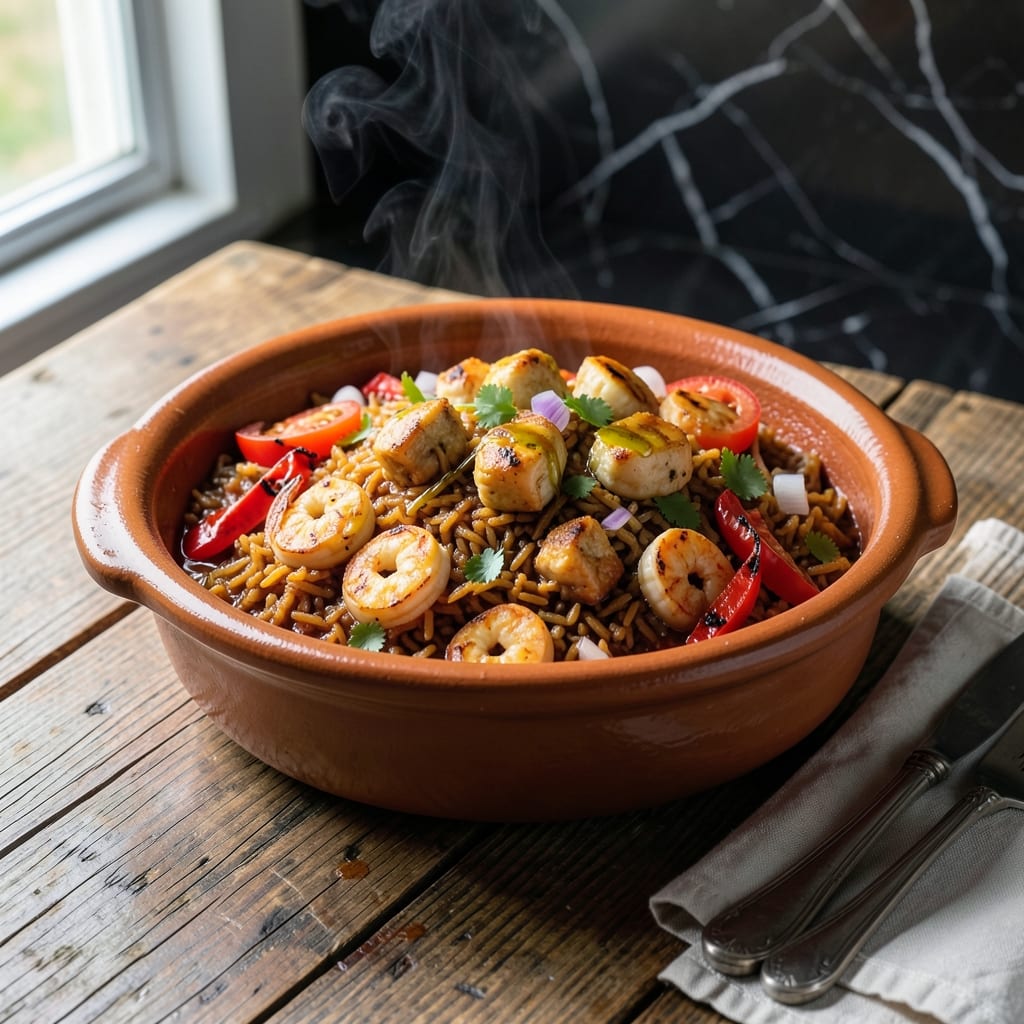
Nigerian jollof rice embodies the vibrant spirit of West African cooking with its rich, tomato-infused flavor and aromatic spices. This dish brings authentic taste to your kitchen with traditional techniques.
I’ve tested this method extensively to ensure it delivers the signature deep red color and bold seasoning that defines true Nigerian jollof. The key lies in properly caramelizing the tomato base before adding the rice.
The result is fluffy grains saturated with a complex, slightly smoky sauce. Each bite offers layers of spice, sweetness, and umami that’s impossible to resist.
Serve this at gatherings or enjoy it as a comforting weeknight meal. Here’s everything you need to make it perfectly.
Ingredients for Jollof Rice Recipe Nigeria
Authentic West African flavors start with fresh tomatoes, bold spices, and quality rice.
| Ingredient | Amount | Notes |
|---|---|---|
| Long-Grain Parboiled Rice 🍚 | 2 cups | Uncooked, rinsed until clear |
| Fresh Tomatoes 🍅 | 6 whole | Ripe Roma or vine-ripened |
| Tomato Paste 🍅 | ½ cup | Double-concentrated preferred |
| Red Bell Pepper 🌶️ | 2 whole | Seeds and ribs removed |
| Onion 🧅 | 1 whole | Yellow or white, diced |
| Scotch Bonnet Pepper 🌶️ | 1 whole | Seeds removed for less heat |
| Garlic Cloves 🧄 | 4 cloves | Minced for depth |
| Fresh Ginger 🌿 | 1 tbsp | Peeled and grated |
| Thyme 🌿 | 1 tsp | Dried or 1 tbsp fresh |
| Curry Powder 🌶️ | 2 tsp | Mild or hot variety |
| Ground Cumin 🌿 | 1 tsp | Toasted for warmth |
| Bay Leaves 🍃 | 2 pieces | Whole, for aromatic depth |
| Vegetable Stock 💧 | 2 ½ cups | Low-sodium preferred |
| Vegetable Oil 🫒 | ½ cup | Neutral-flavored for frying |
| Salt 🧂 | 1 ½ tsp | Adjust to taste gradually |
The tomatoes are everything here. Farmers market tomatoes or San Marzano canned (drained well) work if fresh are out of season. Roma tomatoes have less water, so they caramelize better—ideal for that signature deep red color. For the rice, long-grain parboiled holds up to the long cooking time without turning mushy. I grab mine from African markets when I can—they often stock the right variety.
No Scotch bonnet? Habanero works in a pinch (same heat level, slightly different flavor). Out of fresh ginger? Ground ginger at half the amount—but fresh is better. The bell pepper can be green if that’s what you’ve got, but red gives the best color. For the stock, chicken stock is traditional in some versions, but vegetable keeps it widely adaptable. No curry powder? Mix cumin, coriander, and turmeric for a DIY version.
Leftovers taste even better the next day once flavors meld. Keeps 4-5 days in the fridge, freezes for 3 months. The tomato base can be prepped ahead—just store it separately and mix with rice when ready to cook (worth the extra minute).
Why You’ll Love This Recipe
- One Pot Wonder: I throw everything in together—tomatoes, peppers, onions—and let it simmer while I set the table.
- Smoky Rich Blend: The tomato paste and bell peppers create this deep, slightly sweet flavor that’s honestly hard to resist.
- Feeds a Crowd: I made it for my cousin’s birthday and everyone went back for seconds—even the picky eaters.
- Budget Stretch: A big batch costs less than takeout and tastes better the next day, which I’ll be real: is a win in my book.
Step-by-Step Instructions for Jollof Rice
This authentic method brings West African flavors to life with rich, aromatic results.
Step 1: Blend the Vegetable Base
Start by blending the 6 whole fresh tomatoes, 2 whole red bell pepper, 1 whole onion, 1 whole scotch bonnet pepper, 4 cloves garlic cloves, and 1 tbsp fresh ginger into a smooth puree. I always remove the seeds from the scotch bonnet for controlled heat—this keeps the dish flavorful without overwhelming spiciness.
This blend forms the foundation of your jollof, so take your time. The mixture should be vibrant red and free of large chunks. Pour it into a large pot and set aside while you prepare the remaining ingredients.
Step 2: Toast the Spices and Tomato Paste
Heat the 0.5 cup vegetable oil in the same pot over medium heat. Add the 0.5 cup tomato paste and cook for 5-7 minutes, stirring constantly until it darkens slightly and develops a deep, rich aroma. This step removes the raw taste and intensifies the tomato flavor.
Stir in the 2 tsp curry powder, 1 tsp ground cumin, and 1 tsp thyme. Toast for 1-2 minutes until fragrant—this wakes up the spices and ensures their flavors infuse the dish completely. Be careful not to burn them; the mixture should smell warm and inviting, not bitter.
Step 3: Combine and Simmer the Sauce
Pour the blended vegetable mixture into the pot with the tomato paste and spices. Add the 2 pieces bay leaves and 1.5 tsp salt. Stir well and let it simmer uncovered over medium-low heat for 15-20 minutes until the sauce thickens and deepens in color.
You’ll notice the mixture reducing and the oil separating slightly at the edges. This is exactly what you want. Taste and adjust the salt gradually—remember, the 2.5 cups vegetable stock will add more seasoning later. Stir occasionally to prevent sticking.
Step 4: Cook the Rice to Perfection
Rinse the 2 cups long-grain parboiled rice until the water runs clear, then add it to the pot. Stir to coat the rice completely in the sauce. Pour in the 2.5 cups vegetable stock and mix well. The liquid should cover the rice by about ½ inch.
Cover the pot and cook over low heat for 20-25 minutes. Avoid lifting the lid during this time—steam is crucial for even cooking. The rice is done when it’s tender and the liquid has been absorbed. If the top looks dry but the rice isn’t fully cooked, add ¼ cup of water and let it steam for another 5 minutes.
Step 5: Rest and Serve
Once the rice is cooked, turn off the heat and let it sit covered for 5-10 minutes. This resting period allows the grains to firm up and absorb any remaining liquid. Fluff the rice gently with a fork before serving.
The finished jollof should have a vibrant red-orange hue and a rich, aromatic scent. Each grain should be tender but not mushy, with a hint of spice and depth from the toasted spices. Remove the bay leaves before presenting your dish.
Pro Tips For Making Jollof Rice Recipe Nigeria
- Fry the Paste First: Cook the tomato paste in oil for 5-7 minutes until it darkens—this kills the raw taste and deepens the color. I learned this the hard way after my first few batches tasted bitter.
- Blend the Base Smooth: Puree the tomatoes, red bell pepper, and onion together until completely smooth to avoid chunky sauce. Sounds tedious, but it makes the rice absorb flavors evenly.
- Use Parboiled Rice Only: Skip regular long-grain—parboiled holds up to the long cooking time without turning mushy. After ruining two pots with the wrong rice, I finally got the memo.
- Add Stock, Not Water: Replace half the cooking liquid with chicken or beef stock for richer flavor. I was skeptical until I tried it, but now I can’t make jollof any other way.
Storing and Reheating jollof rice recipe nigeria
Fridge Storage Tips
Let your jollof cool completely before storing—this prevents condensation from making it soggy. I use glass containers with tight lids to preserve the vibrant flavors. It stays fresh in the fridge for 4-5 days, and honestly, it tastes even better the next day. 💛
Freezer Guidelines
For longer storage, portion into freezer-safe bags or containers, leaving 1-inch headspace for expansion. It freezes beautifully for up to 3 months without losing its rich tomato depth. Biscuit always knows when I’ve got jollof in the freezer—he hovers near the kitchen!
Stovetop Reheating
My preferred method is gentle reheating in a pot with a splash of vegetable stock or water—about 2 tbsp per cup of rice. Heat over low-medium heat for 8-10 minutes, stirring occasionally to prevent sticking. The steam revives the grains perfectly.
Microwave Method
For quick meals, microwave individual portions covered with a damp paper towel. Use 50% power for 2-3 minutes, stir, then heat in 30-second bursts until hot. Add a splash of water if it seems dry.
Serving After Storage
Once reheated, let it sit covered for 5 minutes to redistribute moisture. Fluff with a fork and garnish with fresh herbs or a squeeze of lime to brighten the flavors. This dish always brings a smile to my family’s faces. ✨
Nutrition Facts
Frequently Asked Questions
Can I use basmati rice instead of parboiled?
Basmati works but may turn softer. Parboiled holds up better to the long cooking time and absorbs flavors without getting mushy. If using basmati, reduce stock by ¼ cup and check 5 minutes early.
Why does my jollof turn out pale?
The deep red comes from caramelizing the tomato paste. Cook it 5-7 minutes on medium heat until it darkens before adding other ingredients. Also, Roma tomatoes give better color than watery varieties.
How do I fix overly spicy jollof?
Stir in 1-2 tbsp of tomato paste or a splash of stock to dilute the heat. Adding a spoonful of sugar can balance the spice too. Next time, remove all scotch bonnet seeds before blending.
Can I make this in a rice cooker?
Yes! Sauté the tomato paste and spices in a pot first, then transfer everything to the rice cooker. Use the standard rice setting but add 10 minutes extra steaming time for proper absorption.

- Jollof Rice Sauce Recipe: West African Tomato and Spice Infusion - September 25, 2026
- Japanese Rice Soup Recipe: Umami-Rich Comfort in a Bowl - September 25, 2026
- Homemade Cream Of Rice Recipe: Silk-Smooth Breakfast in Minutes - September 25, 2026