
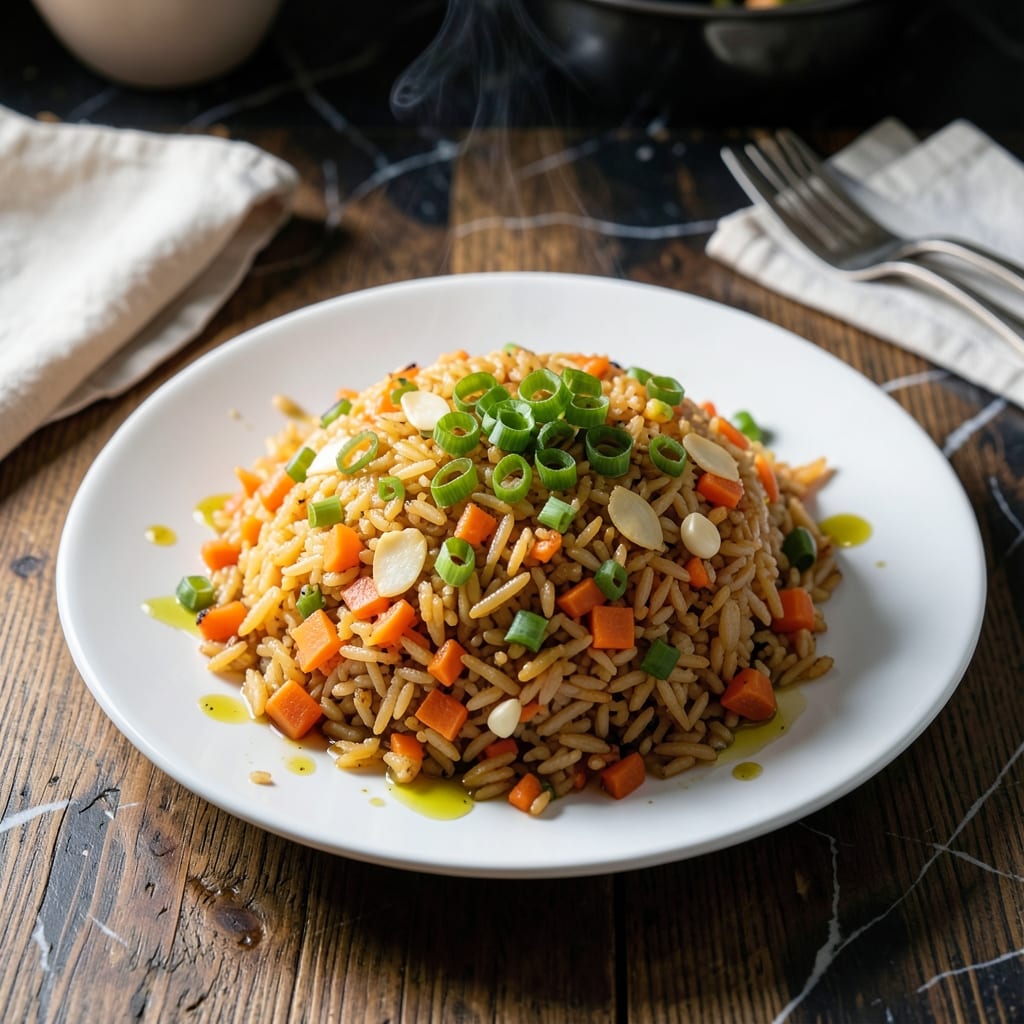
This recipe brings genuine Japanese flavor to your kitchen with a dish that has stood the test of time.
Kabuki-style fried rice relies on high heat and quick tossing to achieve its signature wok hei flavor. The technique ensures each grain stays separate while absorbing the rich seasonings.
You’ll notice the difference in every bite—the delicate balance of soy, the subtle sweetness, and the perfectly tender texture that defines authentic preparation.
Serve it as a main course or alongside your favorite proteins for a complete meal.
Ingredients for Kabuki Fried Rice
Day-old rice and a handful of Asian pantry staples bring this dish to life.
| Ingredient | Amount | Notes |
|---|---|---|
| Jasmine Rice 🍚 | 3 cups | Day-old, cooked and cooled |
| Vegetable Oil 🫒 | 3 tbsp | High smoke point preferred |
| Garlic Cloves 🧄 | 4 cloves | Minced finely for even flavor |
| Fresh Ginger 🌿 | 1 tbsp | Grated, peeled first |
| Green Onions 🧅 | 4 whole | Thinly sliced, whites and greens separated |
| Carrot 🥕 | 1 whole | Small dice for quick cooking |
| Frozen Peas 🌱 | ¾ cup | No need to thaw |
| Large Eggs 🥚 | 3 whole | Beaten lightly for soft curds |
| Soy Sauce 💧 | 3 tbsp | Low-sodium for control |
| Oyster Sauce 🍶 | 1 tbsp | Or vegetarian oyster sauce |
| Sesame Oil 🫒 | 1 tsp | Toasted, for finishing |
| White Pepper 🧂 | ¼ tsp | Freshly ground for best aroma |
| Mirin 🍶 | 1 tbsp | For subtle sweetness |
| Nori Seaweed Sheets 🌊 | 1 sheet | Thinly sliced for garnish |
The rice is non-negotiable here. Day-old jasmine rice (cold, dry, preferably from the fridge) fries up with separate grains—fresh rice turns to mush. Koshihikari is the gold standard if you can find it, but any jasmine works. For the oyster sauce, Kikkoman or Lee Kum Kee are reliable brands. The wok hei comes from high heat, so use an oil with a high smoke point like peanut or avocado oil if you have it.
No oyster sauce? Hoisin or fish sauce can stand in, but go light—both are saltier. Want it vegetarian? Mushroom-based oyster sauce (like Vegetarian Stir-Fry Sauce) works perfectly. The nori is optional but adds that authentic touch—sushi-grade sheets at Whole Foods or any Asian market. Fresh ginger is key, but ground ginger at half the amount in a pinch.
Leftovers? They’ll keep 3-4 days in the fridge, but the texture changes—best eaten fresh. Freezes for 2 months if you must. Reheat in a skillet with a splash of water to bring it back to life. Always slice the nori fresh (don’t store it pre-cut) or it’ll get chewy.
Why You’ll Love This Recipe
- One Pan Wonder: I toss everything together in a single wok—jasmine rice, sizzling garlic, and ginger—minimal cleanup, maximum flavor.
- Aroma Bomb: The garlic and fresh ginger hit the oil and fill my kitchen with this warm, savory scent that makes my stomach growl before the first bite.
- Weeknight Hero: Honestly, it’s my go-to for busy evenings—ready faster than takeout and way more satisfying.
- Budget Stretcher: Jasmine rice and a handful of green onions make this dish cheap to whip up, and leftovers taste even better the next day.
Step-by-Step Instructions for Kabuki Fried Rice
Here’s the authentic wok-tossed method that delivers perfect texture and flavor every time.
Step 1: Prepare the Aromatics and Protein
Heat 2 tbsp Vegetable Oil in a wok or large skillet over high heat until it shimmers. Add the minced 4 cloves Garlic Cloves and grated 1 tbsp Fresh Ginger, stirring constantly for 30 seconds until fragrant but not browned. The oil should be hot enough to sizzle when the aromatics hit the pan.
Push the aromatics to one side and pour in the 3 whole Large Eggs. Scramble quickly with a spatula, breaking them into soft, fluffy curds. Cook for 1-2 minutes until just set but still slightly runny—they’ll finish cooking when combined with the rice. Remove from the wok and set aside.
Step 2: Stir-Fry the Vegetables
Add the remaining 1 tbsp Vegetable Oil to the wok. Toss in the diced 1 whole Carrot and cook for 2 minutes until the edges start to soften. Add the 0.75 cup Frozen Peas and the white parts of the 4 whole Green Onions, stir-frying for another 2 minutes until the carrots are tender-crisp.
The peas will thaw quickly in the hot oil, releasing their sweetness. Keep the vegetables moving constantly to prevent burning—the wok should be hot enough to create a slight sear on the carrots without charring them.
Step 3: Combine Rice and Sauces
Add the 3 cups Jasmine Rice to the wok, breaking up any clumps with your spatula. The rice should be day-old and cold, which prevents it from turning mushy. Drizzle the 3 tbsp Soy Sauce, 1 tbsp Oyster Sauce, and 1 tbsp Mirin evenly over the rice.
Stir-fry for 3-4 minutes until the rice is heated through and the sauces are evenly distributed. The grains should be separate and slightly glossy from the sauces. Add the scrambled eggs back into the wok and toss everything together.
Step 4: Finish and Garnish
Sprinkle the 0.25 tsp White Pepper over the fried rice and drizzle with the 1 tsp Sesame Oil. Toss one final time to incorporate. The white pepper adds a subtle earthiness that’s traditional in Japanese fried rice.
Transfer to a serving dish and garnish with the green parts of the 4 whole Green Onions and thinly sliced 1 sheet Nori Seaweed Sheets. The nori adds a briny depth that perfectly complements the umami-rich dish. Serve immediately while hot.
Pro Tips For Making Kabuki Fried Rice
- Use Day-Old Rice: Fresh rice turns to mush in the wok—I learned this the hard way after three sad, sticky batches. Cook your jasmine rice the night before and refrigerate it uncovered so it dries out just right.
- Prep Ginger Small: Grate or finely mince the fresh ginger so it distributes evenly and doesn’t leave chewy bits. About 1 tablespoon for every 2 cups of rice is the sweet spot.
- High Heat Only: Crank your wok or skillet to smoking hot before adding the oil, then keep it there. Anything less and your garlic and ginger will steam instead of sizzle.
- Separate the Greens: Slice the green onions thin and keep the whites separate from the greens. Toss the whites in early for flavor, save the greens for a fresh finish at the end.
Wine and Beer Pairings for This Recipe
Japanese Beer Pairings
Crisp, clean Sapporo Premium Beer cuts through the umami richness of this creation beautifully. Its light body and subtle sweetness complement the soy and mirin without overpowering. I also love Asahi Super Dry for its dry finish that refreshes your palate. 🍺
Sake Recommendations
A dry Junmai sake like Dassai 39 enhances the dish’s complexity with its clean, slightly fruity notes. For a budget-friendly option, Gekkeikan Horin offers a smooth, versatile profile that pairs wonderfully with the wok-tossed flavors.
White Wine Options
Surprisingly, Riesling works well here—its bright acidity balances the savory elements. I recommend a slightly off-dry Dr. Loosen Blue Slate for its mineral notes. Avoid heavily oaked whites; they clash with the dish’s delicate seasoning. 🍷
Non-Alcoholic Choices
Genmaicha tea (green tea with roasted brown rice) mirrors the toasty flavors in the rice beautifully. For a refreshing option, Calpico mixed with sparkling water offers a sweet-tart contrast that cleanses your palate between bites.
Nutrition Facts
Frequently Asked Questions
Why use day-old rice for this?
Day-old rice is drier and firmer, preventing mushiness when stir-fried. Fresh rice contains too much moisture, leading to clumpy results. Keep it refrigerated overnight for best texture.
Can I substitute the oyster sauce?
Yes! Use 1 tbsp hoisin or 1 tsp fish sauce for a similar depth. For vegetarians, mushroom-based oyster sauce works perfectly without altering the flavor profile.
How do I prevent the eggs from overcooking?
Cook the eggs separately first, then set aside. Add them back at the end just to warm through. This keeps them soft and fluffy rather than rubbery.
What’s the best way to store leftovers?
Store in an airtight container in the fridge for up to 3-4 days. Reheat in a skillet with a splash of water to restore moisture and texture.

- Mujadara Rice and Lentils Recipe: Earthy Spiced Lentils With Caramelized Onions - November 1, 2026
- Naija Fried Rice Recipe: Street-Style Spice With Veggie Crunch - November 1, 2026
- Mushy Rice Recipe: Fluffy Grains Transformed in Minutes - November 1, 2026