
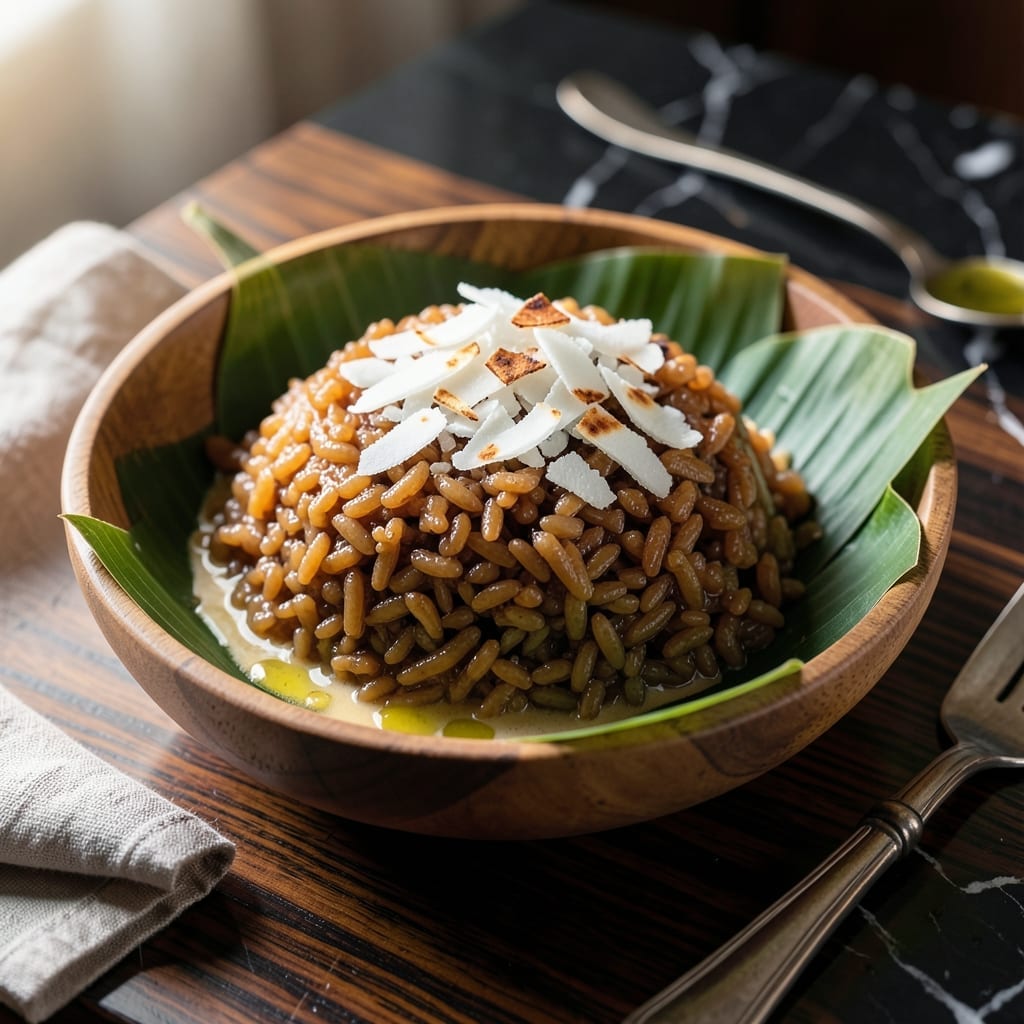
This traditional Filipino dessert transforms simple glutinous rice into a sweet, coconut-infused treat that’s impossible to resist. The process is straightforward yet rewarding, yielding a sticky, chewy texture that defines authentic kalamay.
What sets this version apart is the balance of rich coconut milk and just enough sugar to enhance the rice’s natural sweetness. A touch of pandan or vanilla adds depth, while a sprinkle of toasted coconut flakes finishes it beautifully.
The result is a golden-brown delight with a slightly crisp top layer and a soft, gooey center. It’s perfect for celebrations or as a comforting snack any day of the week.
Serve warm for the best experience, and watch it disappear in minutes. Here’s how to make it at home.
Ingredients for Kalamay Glutinous Rice
Sweet rice meets coconut richness in this authentic Filipino dessert with minimal ingredients.
| Ingredient | Amount | Notes |
|---|---|---|
| Glutinous Rice 🌾 | 2 cups | Sweet or sticky rice variety |
| Coconut Milk 🥥 | 2 cups | Full-fat for creaminess |
| Brown Sugar 🍚 | 1 cup | Packed, for sweetness |
| Pandan Extract 🌿 | 1 tsp | Or substitute vanilla extract |
| Toasted Coconut Flakes 🥥 | ½ cup | For topping and garnish |
| Water 💧 | 1 ½ cups | For soaking rice |
| Salt 🧂 | ¼ tsp | Balances sweetness |
| Vegetable Oil 🫒 | 1 tbsp | For greasing the pan |
| Vanilla Extract 🌿 | 1 tsp | Pure extract preferred |
| Lime Leaves 🍈 | 2 whole | Optional for aroma |
Glutinous rice is non-negotiable here—Asian grocery stores carry authentic varieties like Thai sweet rice. Coconut milk quality matters; Thai Kitchen or Native Forest brands deliver the richest flavor. Avoid light coconut milk, as it lacks the necessary fat content. Brown sugar can be swapped for coconut sugar (same amount), but avoid granulated white—it won’t deliver the same depth.
No pandan extract? Vanilla extract at 1:1 ratio works, though the flavor profile shifts. If using fresh pandan leaves, tie 2-3 leaves in cheesecloth and steep in the coconut milk. Toasted coconut flakes can be swapped for fresh grated coconut (unsweetened). For extra richness, add a splash of coconut cream at the end.
Store glutinous rice in an airtight container for up to 6 months. Coconut milk keeps 1 week unopened, 3 days once opened. Toasted coconut flakes stay fresh for 2 weeks at room temperature. Leftovers reheat beautifully in the microwave with a splash of water.
Why You’ll Love This Recipe
- One Pot Wonder: I just dump the glutinous rice, coconut milk, and brown sugar in a pot and let it simmer—no fancy techniques.
- Pure Comfort: That mix of sticky rice, sweet coconut, and pandan’s floral note hits different every single time.
- Feeds a Crowd: Between us, I’ve served this at potlucks and family dinners, and it’s always the first to disappear.
- Leftovers? Yes Please: Honestly, it tastes even better the next day—if there’s any left to begin with.
Step-by-Step Instructions for Kalamay Glutinous Rice
Master the technique for this traditional dessert with precise timing and layering for ideal texture.
Step 1: Soak and Prepare the Glutinous Rice
Begin by thoroughly rinsing the 2 cups glutinous rice under cold water until the water runs clear. This removes excess starch that could make the final product gummy rather than perfectly sticky.
Transfer the rice to a bowl and cover with the 1.5 cups water. Let it soak for at least 4 hours or preferably overnight. The grains should double in size and become slightly translucent when properly hydrated. Drain completely before cooking.
Step 2: Create the Coconut-Sugar Mixture
In a saucepan, combine the 2 cups coconut milk, 1 cup brown sugar, 0.25 tsp salt, 1 tsp pandan extract, and 1 tsp vanilla extract. Place over medium heat and stir constantly until the sugar fully dissolves and the mixture just begins to simmer.
At this point, add the 2 whole lime leaves if using—they’ll infuse a subtle citrus aroma that complements the pandan beautifully. Remove from heat after 2 minutes and let the leaves steep while you prepare the rice.
Step 3: Steam the Rice to Perfect Tenderness
Line a steamer basket with cheesecloth or parchment paper (poke holes for steam circulation) and brush lightly with 1 tbsp vegetable oil to prevent sticking. Spread the soaked and drained glutinous rice evenly in the prepared steamer.
Steam over boiling water for 25-30 minutes until the rice is tender but still holds its shape. Check by pressing a grain between your fingers—it should be soft with no hard center. Remove the lime leaves from the coconut mixture at this stage.
Step 4: Combine and Set the Kalamay
Carefully transfer the steamed rice to a heatproof dish or the same saucepan. Pour the warm coconut-sugar mixture over the rice and gently fold with a silicone spatula to ensure even coating. The liquid should be absorbed almost completely, leaving the grains glossy and slightly sticky.
Cover the dish with plastic wrap pressed directly onto the surface to prevent a skin from forming. Allow it to set at room temperature for 1 hour—this resting period lets the flavors meld and the texture become perfectly cohesive.
Step 5: Serve with Toasted Coconut Garnish
Once set, cut the kalamay into squares or scoop into portions. Sprinkle generously with the 0.5 cup toasted coconut flakes just before serving for added texture and visual appeal. The contrast between the creamy rice and crispy coconut is essential.
The finished dessert should have a slightly chewy texture with a balanced sweetness from the coconut and brown sugar. Serve at room temperature for the best experience, as chilling can make it too firm.
Pro Tips For Making Kalamay Glutinous Rice
- Soak the Rice: Cover glutinous rice in water for at least 4 hours—overnight if possible. I learned this the hard way after ending up with undercooked, crunchy kalamay more times than I’d like to admit.
- Simmer Low and Slow: Keep the coconut milk mixture at a gentle simmer, not a rolling boil, or the brown sugar will caramelize too fast and burn. Sounds tedious, but it’s the difference between smooth, creamy kalamay and a burnt mess.
- Strain the Coconut Milk: Always strain your coconut milk before adding it to the rice—those little bits of pulp can make the texture grainy instead of silky. My grandmother swore by this, and she was right.
- Toast Flakes Fresh: Toast the coconut flakes in a dry pan over medium heat for 2-3 minutes until golden, then let them cool before sprinkling. I was skeptical until I tried it—freshly toasted flakes add a crunch and aroma that store-bought can’t match.
Wine and Beer Pairings for This kalamay glutinous rice
Tropical White Wines
A slightly off-dry Riesling from Germany or Washington State pairs beautifully with the coconut and pandan flavors. The wine’s honeyed notes and bright acidity cut through the dessert’s richness. I chilled mine to 45°F for the best contrast. 🍷
Sparkling Options
For a celebratory touch, try a Prosecco or Moscato d’Asti—their light effervescence lifts the sticky texture of kalamay. The peach and apricot undertones in Moscato complement the brown sugar perfectly. Serve in chilled flute glasses.
Asian-Inspired Beers
A crisp Japanese lager like Sapporo or Asahi offers a clean palate cleanser between bites. The beer’s subtle sweetness and low bitterness won’t compete with the dessert’s delicate flavors. 🍺
Rich Dessert Wines
For a decadent pairing, Sauternes from Bordeaux delivers apricot and honey notes that echo the coconut and brown sugar. A 3.5 oz pour is perfect for sharing. I found Château d’Yquem works exceptionally well.
Non-Alcoholic Pairings
Sparkling lychee juice or coconut water with lime provides a refreshing contrast. Chill to 35°F and serve in wine glasses for an elegant touch. The lychee’s floral notes enhance the pandan extract beautifully.
Nutrition Facts
Frequently Asked Questions
Can I use regular rice instead of glutinous rice?
No, regular rice won’t give the right sticky texture. Glutinous rice is essential for achieving the signature chewy consistency that defines this dessert. Other varieties will turn out dry or crumbly.
How do I fix kalamay that’s too runny?
Return it to low heat and cook uncovered for 5-10 minutes, stirring constantly until thickened. If it’s still too loose, mix 1 tbsp cornstarch with water and stir in gradually.
Why does my kalamay have a hard crust on top?
This happens when it’s exposed to air while setting. Press plastic wrap directly onto the surface before letting it rest to prevent a skin from forming.
Can I make this ahead of time?
Yes! Prepare it up to 2 days in advance. Store covered at room temperature, then reheat briefly in the microwave with a splash of water to restore its soft texture.

- Mujadara Rice and Lentils Recipe: Earthy Spiced Lentils With Caramelized Onions - November 1, 2026
- Naija Fried Rice Recipe: Street-Style Spice With Veggie Crunch - November 1, 2026
- Mushy Rice Recipe: Fluffy Grains Transformed in Minutes - November 1, 2026