
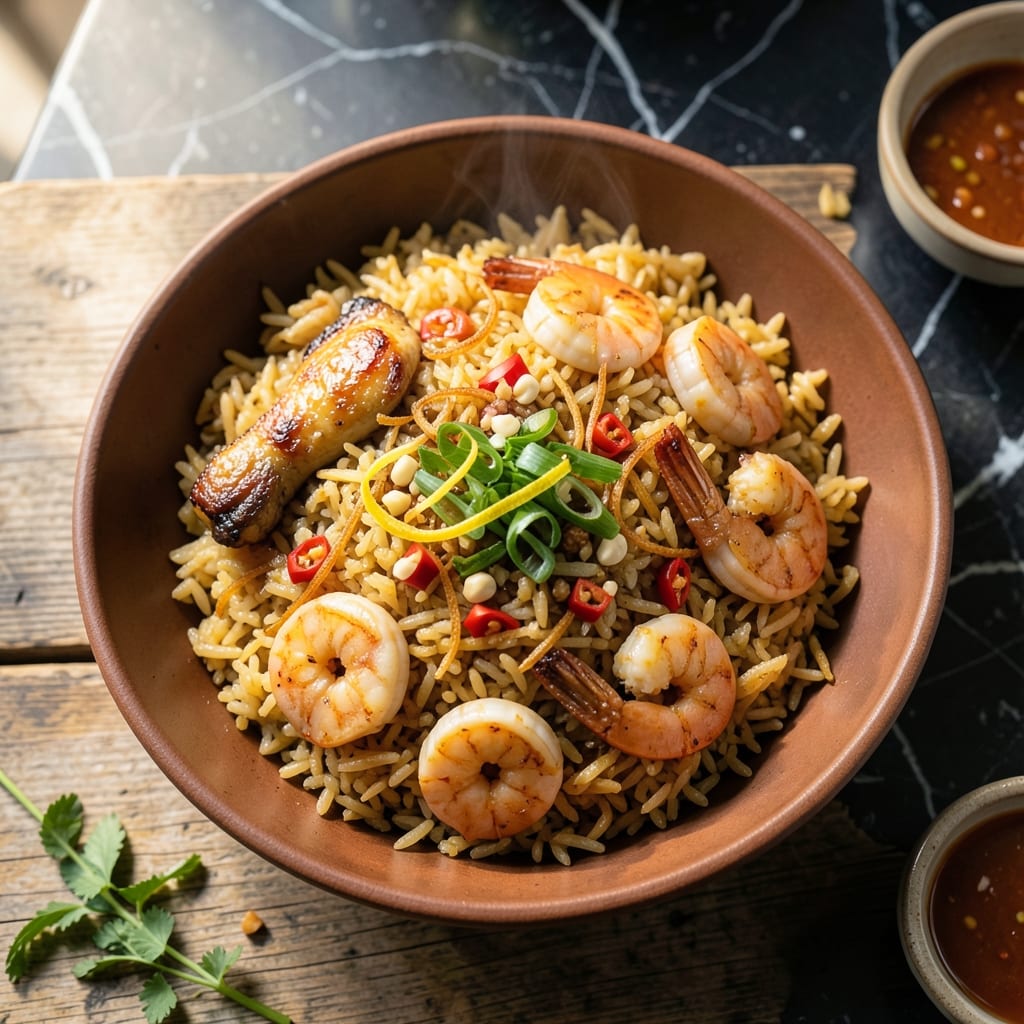
There’s a reason village-style fried rice remains a beloved tradition across Southeast Asia. This dish captures the essence of home cooking with its smoky wok hei and balanced flavors.
I’ve refined this recipe to work in a home kitchen while preserving the authentic taste. The key is high heat, proper prep, and letting the rice develop that signature charred aroma.
Every bite delivers tender grains, savory protein, and subtle sweetness from caramelized shallots. The result is a restaurant-quality dish that’s surprisingly simple to make.
Perfect for using up leftovers, this version stays true to its humble origins while delivering bold, satisfying flavors.
Ingredients for Kampung Fried Rice
Day-old rice, fresh aromatics, and bold umami come together for this village-style dish.
| Ingredient | Amount | Notes |
|---|---|---|
| Jasmine Rice 🍚 | 3 cups | Day-old, cooked and chilled |
| Chicken Thighs 🍗 | 1 lb | Boneless, skinless, diced |
| Shrimp 🦐 | ½ lb | Peeled, deveined, chopped |
| Shallots 🧅 | 2 whole | Thinly sliced for caramelizing |
| Garlic Cloves 🧄 | 4 cloves | Minced finely for aroma |
| Red Chili Peppers 🌶️ | 2 whole | Seeded, sliced thin |
| Fish Sauce 🐟 | 2 tbsp | Quality Thai brand preferred |
| Soy Sauce 🫒 | 2 tbsp | Light or all-purpose variety |
| Oyster Sauce 🦪 | 1 tbsp | Vegetarian version if needed |
| Eggs 🥚 | 2 whole | Beaten for scrambling |
| Green Onions 🧅 | 4 whole | Sliced thin for garnish |
| Vegetable Oil 🫒 | ¼ cup | High smoke point for wok frying |
| White Pepper 🌶️ | ½ tsp | Freshly ground preferred |
| Salt 🧂 | ½ tsp | To taste for seasoning |
| Cilantro 🌿 | ¼ cup | Chopped, for fresh garnish |
The rice is critical—jasmine rice cooked the day before (and chilled) prevents mushiness and achieves the right texture. For authentic flavor, Thai fish sauce like Red Boat or Tiparos is non-negotiable. The protein here is flexible: chicken thighs stay juicy, while shrimp adds a delicate sweetness. Most Asian markets carry all the sauces, but well-stocked supermarkets like H-E-B or Whole Foods usually have them too.
No shrimp? Firm tofu or Chinese sausage (lap cheong) works well. For a vegetarian twist, mushroom oyster sauce replaces both oyster and fish sauce. The chili peppers can be adjusted—bird’s eye for heat, bell peppers for sweetness. If you’re missing shallots, yellow onions caramelized longer will do, though the flavor profile shifts slightly. Always taste as you go—saltiness varies by sauce brand.
This keeps 3-4 days in the fridge, though it’s best fresh. Reheat in a wok or skillet with a splash of water to revive the texture. For meal prep, store components separately and combine when reheating. Leftovers make a killer fried rice omelet the next morning.
Why You’ll Love This Recipe
- I’ll be real: leftovers taste even better the next day, and it feeds my family of four with zero stress.
- One Pan Wonder: I just toss the jasmine rice, chicken, shrimp, and aromatics in together—no fancy techniques, no extra dishes.
- Garlic & Shrimp Magic: The shallots and garlic fry up into this fragrant base that makes every bite ridicously good, especially with the juicy shrimp.
- Weeknight Hero: Between us, this is my go-to for busy evenings when I need something hearty and fast.
Step-by-Step Instructions for Kampung Fried Rice
Here is the method. Tested, precise, and designed to capture authentic wok hei character.
Step 1: Prepare the Protein and Aromatics
Dice the 1 lb Chicken Thighs into ½-inch pieces and chop the 0.5 lb Shrimp into similar sizes. This uniform cut ensures even cooking and proper integration with the 3 cups Jasmine Rice. Keep both proteins in separate bowls and pat them dry with paper towels to prevent steaming in the wok.
Thinly slice the 2 whole Shallots into rings for even caramelization. Mince the 4 cloves Garlic Cloves finely to release maximum aroma, and slice the 2 whole Red Chili Peppers thin after removing seeds. Have all these aromatics ready in small bowls—this mise en place approach is crucial for the fast cooking process ahead.
Step 2: Velouting the Eggs and Building the Base
Heat 2 tablespoons of the 0.25 cup Vegetable Oil in a wok over high heat until it shimmers. Add the beaten 2 whole Eggs and scramble quickly with a spatula until just set but still slightly runny. Remove the eggs and set aside—they’ll finish cooking when combined with the other ingredients later.
In the same wok, add another 2 tablespoons of Vegetable Oil and heat until nearly smoking. Add the sliced Shallots and stir-fry for 1-2 minutes until they turn translucent and begin to caramelize at the edges. Add the minced Garlic Cloves and sliced Red Chili Peppers, stirring for 30 seconds until fragrant. This builds the aromatic foundation of the dish.
Step 3: Cook the Proteins and Rice
Increase the heat to maximum and add the diced Chicken Thighs. Stir-fry for 3-4 minutes until the pieces are lightly browned and cooked through. Push the chicken to one side of the wok and add the chopped Shrimp. Cook for 2-3 minutes until the shrimp turn opaque and pink.
Add the chilled 3 cups Jasmine Rice, breaking up any clumps with your spatula. Stir-fry for 2-3 minutes until the rice is heated through and begins to develop a slight char. This step is critical for achieving the smoky wok hei flavor characteristic of kampung fried rice.
Step 4: Season and Finish
Drizzle the 2 tbsp Fish Sauce, 2 tbsp Soy Sauce, and 1 tbsp Oyster Sauce evenly over the rice. Sprinkle with 0.5 tsp White Pepper and 0.5 tsp Salt. Toss everything together vigorously for 2-3 minutes, ensuring the rice is evenly coated and the flavors are well distributed.
Return the scrambled Eggs to the wok and incorporate them into the rice. Taste and adjust seasoning if needed. The rice should be fragrant, slightly charred, and glossy from the sauces. Remove from heat and stir in the sliced 4 whole Green Onions.
Garnish with the chopped 0.25 cup Cilantro just before serving to preserve its fresh aroma. Serve immediately while hot to fully appreciate the layers of flavor and texture.
Pro Tips For Making Kampung Fried Rice
- Use Day-Old Rice: Fresh rice turns mushy—spread leftover jasmine rice on a tray and refrigerate overnight so the grains dry out and fry up separate and firm.
- Velvet the Chicken: Toss the chicken thighs with 1 tsp cornstarch and 1 tsp soy before cooking; it keeps them juicy and stops them from turning rubbery in the wok.
- Shallots Low and Slow: Fry the sliced shallots in 1/4 inch of oil on medium-low for 8-10 minutes until golden and crisp, then drain—rushing this on high heat burns them bitter.
- Shrimp Last: Add the shrimp in the final 2 minutes of stir-frying so they just turn opaque; if they go in earlier they shrink up and get tough.
Regional Styles of These Flavors
Malaysian Style
In Malaysia, this dish often features sambal belacan for extra heat and dried shrimp for deeper umami. I add 1 tbsp sambal when stir-frying the aromatics. The dried shrimp get rehydrated and chopped before cooking. 🗺️
Singaporean Approach
Singapore versions frequently include lap cheong (Chinese sausage) or char siu pork. I use ½ cup diced lap cheong for its sweet-savory flavor. Some cooks also add tomato ketchup for a touch of tanginess.
Indonesian Twist
Indonesian nasi goreng kampung often incorporates kecap manis (sweet soy sauce). Replace 1 tbsp soy sauce with 1 tbsp kecap manis for a caramel-like sweetness. Top with a fried egg for extra richness.
Thai Variation
Thai versions might use pork instead of chicken and add Thai basil at the end. I swap the chicken for ½ lb ground pork and finish with ¼ cup Thai basil leaves. A squeeze of lime brightens all the flavors.
Filipino Style
Filipino sinangag often includes garlic rice as a base. I add 2 extra cloves minced garlic to the oil before cooking the rice. Some versions also include longganisa sausage for a local touch.
Vietnamese Adaptation
Vietnamese cooks might add lemongrass and fish sauce to the marinade. I bruise 1 stalk lemongrass and cook it with the shallots. The result has a wonderful citrusy aroma that complements the wok hei perfectly.
Nutrition Facts
Frequently Asked Questions
Can I use freshly cooked rice?
No, day-old chilled rice works best. Fresh rice contains too much moisture, causing the dish to turn mushy instead of achieving that desirable wok hei char.
What can I substitute for fish sauce?
Use soy sauce or coconut aminos for a similar umami kick. For vegetarians, mushroom oyster sauce adds depth without animal products.
How do I get that smoky flavor at home?
Crank the heat to maximum and let the rice sit undisturbed for 30-60 seconds to char slightly. A well-seasoned carbon steel wok helps too.
Can I make this ahead of time?
It’s best served immediately, but leftovers keep 3-4 days refrigerated. Reheat in a wok with a splash of water to restore texture.

- Mujadara Rice and Lentils Recipe: Earthy Spiced Lentils With Caramelized Onions - November 1, 2026
- Naija Fried Rice Recipe: Street-Style Spice With Veggie Crunch - November 1, 2026
- Mushy Rice Recipe: Fluffy Grains Transformed in Minutes - November 1, 2026