
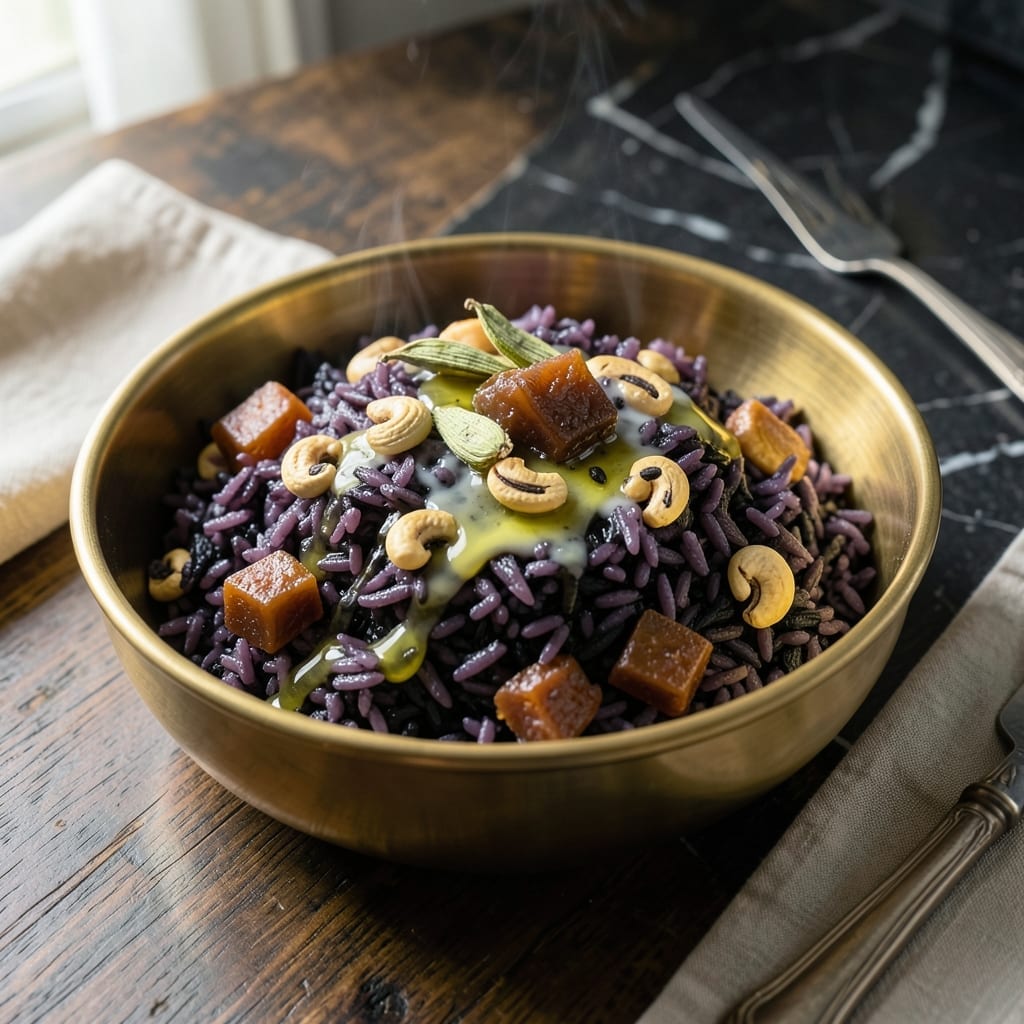
This traditional Tamil Nadu dessert transforms black rice into a creamy, fragrant pudding that’s been cherished for generations. The deep purple hue comes from the unique grain, while coconut milk adds rich, velvety texture.
I’ve refined this method to balance sweetness and spice, using just a handful of ingredients like jaggery, cardamom, and ghee. The slow cooking process allows the rice to absorb all the flavors, creating a dish that’s both comforting and elegant.
What emerges is a pudding with a natural earthy sweetness, lightly spiced and topped with fried cashews and raisins. It’s often served at festivals and special occasions, symbolizing prosperity and celebration.
Perfect warm or chilled, this recipe honors its cultural roots while fitting seamlessly into modern kitchens.
Ingredients for Karuppu Kavuni Rice
A handful of traditional ingredients creates this rich, fragrant Tamil Nadu pudding with deep cultural roots.
| Ingredient | Amount | Notes |
|---|---|---|
| Black Rice 🍚 | 1 cup | Rinsed thoroughly until water runs clear |
| Coconut Milk 🥥 | 2 cups | Full-fat for creaminess |
| Jaggery 🍯 | ¾ cup | Grated or powdered |
| Ghee 🧈 | 2 tbsp | Clarified butter, vegetarian |
| Cardamom Pods 🌿 | 6 whole | Lightly crushed to release seeds |
| Cashews 🌰 | ¼ cup | Raw, for frying |
| Raisins 🍇 | ¼ cup | Golden or black variety |
| Whole Milk 🥛 | 1 cup | Optional for adjusted consistency |
| Water 💧 | 2 cups | For cooking rice |
| Saffron Strands 🌼 | ¼ tsp | Optional for garnish and aroma |
The black rice is essential here. Look for heirloom Forbidden Rice at Indian grocery stores or Whole Foods—its deep purple color is a sign of high anthocyanin content. Coconut milk should be full-fat for that luxurious texture; Thai Kitchen or Native Forest brands are reliable. Cardamom pods should be green (not black) and plump—if they feel hollow, they’re old.
No jaggery? Dark brown sugar or palm sugar can substitute, though the flavor profile will differ slightly. Vegan butter works instead of ghee if avoiding dairy, but traditional recipes use ghee for its aromatic depth. For the cashews, almonds or pistachios add a nice variation—just toast them until golden. The saffron is optional but adds a beautiful aroma (a pinch is plenty).
Store uncooked black rice in an airtight container for up to 6 months. Once prepared, the pudding keeps in the fridge for 4-5 days. It actually tastes better the next day as the flavors meld. Reheat gently on the stove with a splash of milk if it thickens too much.
Why You’ll Love This Recipe
- One Pot Magic: I just dump everything in, let the coconut milk and jaggery work their magic, and it practically cooks itself.
- Sweet Earthy Comfort: The black rice soaks up the cardamom and ghee for this deep, caramel-like richness that feels like dessert and dinner at once.
- Festival Ready: I make a big batch for Pongal or just a regular Tuesday—it disappears either way.
- Budget Stretch: A cup of black rice feeds four, and leftovers taste even better the next day with a drizzle of warm ghee.
Step-by-Step Instructions for Black Rice Pudding with Coconut
This traditional method ensures a rich, creamy pudding with perfectly cooked grains and balanced sweetness.
Step 1: Prepare and Cook the Black Rice
Rinse the 1 cup Black Rice thoroughly under cold water until the water runs completely clear. This removes excess starch and prevents a gummy texture in the finished pudding. I find that 4-5 rinses are typically sufficient for black rice.
In a heavy-bottomed pot, combine the rinsed black rice with 2 cups Water. Bring to a boil over medium-high heat, then reduce to a gentle simmer. Cover and cook for 30-35 minutes until the rice is tender but still holds its shape. The water should be mostly absorbed with just a slight moisture remaining—this creates the ideal base for the pudding.
Step 2: Infuse the Coconut Milk with Spices
While the rice cooks, heat 2 tbsp Ghee in a separate pan over medium heat. Add the 6 whole Cardamom Pods that have been lightly crushed to release their aromatic seeds. Toast for 30 seconds until fragrant, being careful not to burn them.
Pour in the 2 cups Coconut Milk and warm gently for 3-4 minutes without boiling. This gentle heating allows the cardamom to infuse the coconut milk with its distinctive floral notes. The mixture should be steaming but not simmering—you want to preserve the delicate coconut flavor.
Step 3: Combine and Sweeten the Pudding
Once the rice is cooked, add the infused coconut milk mixture to the pot. Stir in the 0.75 cup Jaggery, ensuring it dissolves completely. The jaggery should melt into a smooth syrup that coats the rice. If using grated jaggery, this will dissolve more quickly than solid pieces.
Cook the mixture over medium-low heat for 10-12 minutes, stirring frequently. The pudding will thicken slightly as the coconut milk reduces. You’re looking for a creamy consistency where the rice grains are suspended in a rich, slightly thick liquid. If the mixture appears too thick, add the 1 cup Whole Milk gradually until reaching your desired texture.
Step 4: Finish with Fried Nuts and Raisins
In a small pan, heat a small amount of the remaining ghee over medium heat. Add the 0.25 cup Cashews and fry for 2-3 minutes until they turn golden brown. Remove with a slotted spoon and set aside. In the same pan, quickly fry the 0.25 cup Raisins for 30-45 seconds until they plump up and become slightly translucent.
Stir most of the fried cashews and raisins into the pudding, reserving a small portion for garnish. For an optional aromatic touch, steep the 0.25 tsp Saffron Strands in 2 tablespoons of warm milk for 5 minutes before stirring into the pudding. This adds a beautiful golden hue and subtle floral notes that complement the cardamom.
Serve the pudding warm or at room temperature, topped with the reserved nuts and raisins. The texture should be creamy with visible rice grains, and the flavors should be a perfect balance of coconut, spice, and sweetness from the jaggery.
Pro Tips For Making Karuppu Kavuni Rice
- Soak the Rice: I learned this the hard way—black rice needs at least 4-6 hours in water to soften enough, or you’ll end up with a chewy, undercooked mess.
- Toast the Rice: Before adding liquids, dry-toast the drained black rice in ghee for 2-3 minutes until it smells nutty—it removes the raw starch and deepens the flavor.
- Use Full-Fat Coconut Milk: Skip the light version; the fat in full-fat coconut milk is what gives karuppu kavuni rice its rich, creamy texture that balances the jaggery.
- Dissolve the Jaggery: My grandmother swore by this: melt the jaggery in warm water first and strain it to remove impurities, so your rice doesn’t end up gritty.
Serving Suggestions for This Dish
Traditional Presentation
Serve this pudding in small clay bowls for an authentic touch—the earthy vessel complements the deep purple hue beautifully. I love the contrast of the dark rice against the terracotta. For special occasions, use banana leaves as a natural, fragrant liner. 💛
Garnish Ideas
Top each serving with a sprinkle of the reserved fried cashews and raisins. A few saffron strands add a golden pop of color. For extra richness, drizzle 1 tsp warm ghee over the top just before serving.
Temperature Options
This pudding shines served warm, but it’s also delicious chilled after 4 hours in the fridge. The flavors deepen as it rests. If serving cold, let it sit at room temperature for 15-20 minutes to take the chill off.
Pairing Suggestions
A cup of strong South Indian filter coffee balances the sweetness perfectly. For a lighter option, serve with chilled rose milk or cardamom tea. The warmth of the spices in the drink enhances the pudding’s flavors. 🍵
Portion Sizes
This rich dessert is best served in small portions—I recommend ½ cup per serving. The richness of the coconut milk and jaggery makes it satisfying in modest amounts. For a crowd, prepare individual shot glasses for elegant bite-sized servings.
Festive Touches
For weddings or celebrations, add edible silver leaf or a sprinkle of rose petals. These traditional garnishes elevate the dish for special occasions while honoring its cultural significance.
Nutrition Facts
Frequently Asked Questions
What can I use if I don’t have jaggery?
Dark brown sugar or palm sugar work well as substitutes. They’ll give a slightly different flavor but maintain the sweetness.
How do I know when the rice is perfectly cooked?
The grains should be tender but still hold their shape after 30-35 minutes of simmering. The water should be mostly absorbed with just a slight moisture remaining.
Can I make this ahead of time?
Yes! The pudding actually tastes better the next day as the flavors meld. Store it in the fridge for up to 4-5 days and reheat gently with a splash of milk.
Why is my pudding too thin?
This usually happens if the coconut milk wasn’t reduced enough. Cook it for an additional 5-7 minutes on medium-low heat to thicken.

- Mujadara Rice and Lentils Recipe: Earthy Spiced Lentils With Caramelized Onions - November 1, 2026
- Naija Fried Rice Recipe: Street-Style Spice With Veggie Crunch - November 1, 2026
- Mushy Rice Recipe: Fluffy Grains Transformed in Minutes - November 1, 2026