
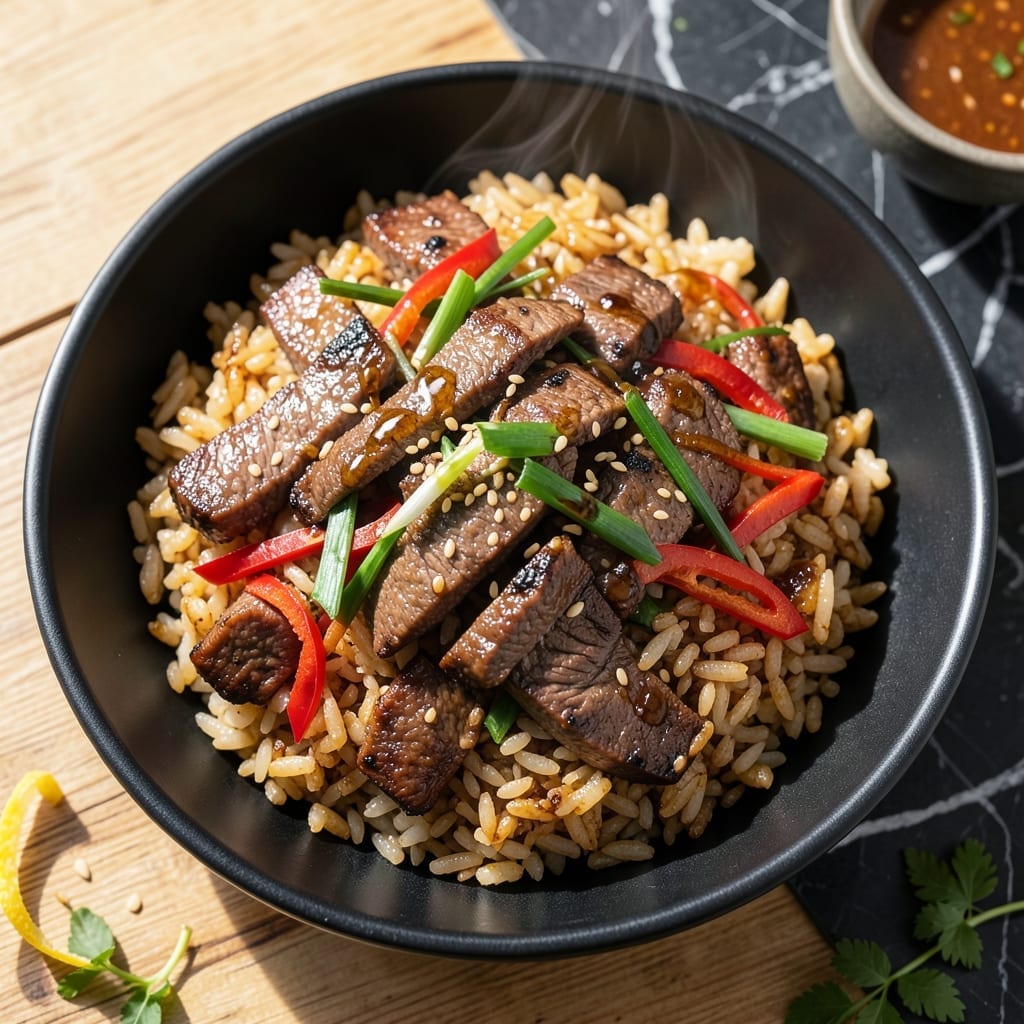
This Korean beef fried rice delivers bold, umami-packed flavors with minimal effort. The secret lies in using day-old rice and high heat to create that signature wok-charred texture.
Thinly sliced beef marinated in soy, garlic, and sesame oil cooks quickly and stays tender. Each grain of rice absorbs the savory sauce, while a scallion finish adds freshness.
What you get is a dish with perfect balance—sweet, salty, and slightly smoky notes in every bite. The beef stays juicy, and the rice develops that coveted crispiness.
Ready in 20 minutes, this recipe transforms leftovers into a meal that tastes better than takeout. Here’s how to make it at home.
Ingredients for Korean Beef Fried Rice
Day-old rice, tender beef, and bold Korean flavors come together for this wok-charred dish.
| Ingredient | Amount | Notes |
|---|---|---|
| Day-Old Cooked Rice 🍚 | 4 cups | Cold, preferably overnight |
| Ribeye Steak 🥩 | 1 lb | Thinly sliced against grain |
| Soy Sauce 🫒 | ⅓ cup | Low-sodium preferred |
| Brown Sugar 🍚 | 2 tbsp | Packed, for sweetness |
| Sesame Oil 🫒 | 1 tbsp | Toasted, for aroma |
| Garlic Cloves 🧄 | 4 cloves | Minced finely |
| Vegetable Oil 🫒 | 3 tbsp | High smoke point |
| Large Eggs 🥚 | 2 whole | Lightly beaten |
| Scallions 🧅 | 4 whole | Thinly sliced for finish |
| Frozen Peas and Carrots 🥕 | 1 cup | Thawed, optional |
| Ground Black Pepper 🌶️ | ½ tsp | Freshly ground preferred |
| Kosher Salt 🧂 | ½ tsp | Adjust to taste |
| Gochujang 🌶️ | 1 tbsp | Korean chili paste |
| Toasted Sesame Seeds 🌰 | 1 tbsp | For garnish |
The ribeye is non-negotiable here. Look for well-marbled cuts at Whole Foods or your local butcher—the fat keeps the beef juicy during high-heat cooking. Day-old rice (jasmine or short-grain) is key for that crispy texture; fresh rice will steam instead of fry. Sushi rice works beautifully if you have it.
No ribeye? Flank steak or sirloin are solid backups—just slice thinly against the grain. Gochujang adds the signature Korean heat, but sriracha in a pinch works (use half the amount). Brown sugar can be swapped for honey or maple syrup. For a vegetarian version, replace beef with tofu or mushrooms.
Store leftover rice in the fridge for up to 5 days. The cooked dish keeps for 3-4 days refrigerated but is best fresh. Freeze portions for up to 3 months—reheat in a skillet to revive the crispy texture.
Why You’ll Love This Recipe
- One Pan Dinner: I just toss the day-old rice, sliced ribeye, and the sauce together—no extra pots, no fuss.
- Sweet-Savory Magic: The brown sugar caramelizes with the soy sauce, and the sesame oil finishes it with that nutty depth I can’t get enough of.
- Weeknight Hero: Honestly, it’s my go-to for busy evenings when I need something hearty on the table fast.
- Leftovers Upgraded: Between us, last night’s rice tastes even better today with the ribeye and that sticky-sweet glaze coating every bite.
Step-by-Step Instructions for Korean Beef Fried Rice
Master the wok technique for perfectly charred rice with tender beef and vibrant seasoning.
Step 1: Marinate and Cook the Ribeye
Combine the 1 lb Ribeye Steak with 0.33 cup Soy Sauce, 2 tbsp Brown Sugar, 1 tbsp Sesame Oil, 4 cloves Garlic Cloves, 0.5 tsp Ground Black Pepper, and 0.5 tsp Kosher Salt in a bowl. Let it marinate for 15 minutes while you prep the remaining ingredients.
Heat 1 tbsp Vegetable Oil in a wok or large skillet over high heat until shimmering. Add the marinated ribeye and cook for 3-4 minutes until browned and cooked through. Remove the beef from the wok and set aside, leaving the flavorful oil behind.
Step 2: Scramble the Eggs and Cook Vegetables
In the same wok, add 1 tbsp Vegetable Oil and heat over medium-high heat. Pour in the 2 whole Large Eggs and scramble quickly until just set but still slightly runny. Remove the eggs and set aside with the beef.
Add the remaining 1 tbsp Vegetable Oil to the wok. Stir in the 1 cup Frozen Peas and Carrots and cook for 2-3 minutes until tender and slightly caramelized. Push the vegetables to one side of the wok to make room for the rice.
Step 3: Char the Rice and Incorporate Gochujang
Add the 4 cups Day-Old Cooked Rice to the wok, breaking up any clumps with your spatula. Press the rice into the hot surface and let it sit undisturbed for 1-2 minutes to develop a slight char. This creates that signature wok-hei flavor.
Stir in the 1 tbsp Gochujang, distributing it evenly throughout the rice. The gochujang will coat each grain, adding a subtle heat and depth of flavor. Cook for an additional 2 minutes to allow the flavors to meld together.
Step 4: Combine All Ingredients and Finish
Return the cooked ribeye and scrambled eggs to the wok. Stir everything together gently to avoid breaking up the rice grains too much. Cook for another 2 minutes until everything is heated through and the beef is fully incorporated.
Taste and adjust seasoning if needed, though the soy sauce and gochujang should provide ample flavor. The rice should be slightly crispy in spots, with each bite offering a mix of tender beef, fluffy egg, and vibrant vegetables.
Step 5: Garnish and Serve
Transfer the fried rice to a serving platter or individual bowls. Garnish with the 4 whole Scallions, thinly sliced, and sprinkle with 1 tbsp Toasted Sesame Seeds for added texture and aroma.
Serve immediately while hot, ensuring each portion has a good mix of beef, egg, and vegetables. The scallions add a fresh, bright finish that balances the rich, umami-packed flavors of the dish.
Pro Tips For Making Korean Beef Fried Rice
- Chill the Rice: I learned this the hard way—use day-old, cold rice straight from the fridge. Fresh rice turns mushy when stir-fried, but chilled grains hold their shape and get that perfect slightly chewy texture.
- Slice Against Grain: Cut your ribeye into thin strips against the grain before cooking. This shortens the muscle fibers, making the beef more tender and easier to eat in every bite.
- Skip the Overcrowding: After burning three batches, I finally figured out—cook the beef in a single layer with space between pieces. This ensures it sears properly instead of steaming in its own juices.
- Toast the Rice First: Sounds weird, but it works: spread the rice in your hot pan for 1-2 minutes before adding other ingredients. This removes excess moisture and gives you that coveted slightly crispy texture.
Perfect Pairings for These Flavors
Side Dish Pairings
Serve with kimchi for a tangy, spicy contrast that cuts through the richness. I love adding 1 cup of chopped kimchi to the side for texture and probiotics. Quick-pickled cucumbers with rice vinegar and a pinch of sugar offer a refreshing crunch. 🥗
Fresh Salad Options
A simple Asian slaw with shredded cabbage, carrots, and a sesame-ginger dressing complements the dish beautifully. Toss 3 cups of shredded veggies with 2 tbsp rice vinegar and 1 tbsp sesame oil for a crisp, bright side.
Beverage Pairings
An ice-cold Korean lager like Hite or OB Beer balances the bold flavors. For non-alcoholic options, barley tea (boricha) or green tea cleanses the palate. I always keep a pitcher of iced barley tea in my fridge for fried rice nights. 🍺
Extra Toppings
Set out a small bowl of extra gochujang for guests who want to add more heat. A side of crispy fried shallots adds a delicious crunch—sprinkle 2 tbsp over the top just before serving. These little touches elevate the meal to restaurant quality.
Nutrition Facts
Frequently Asked Questions
Can I use fresh rice instead of day-old?
Fresh rice contains too much moisture and will turn mushy. Day-old rice is drier, allowing it to crisp up in the wok. If in a pinch, spread freshly cooked rice on a tray and refrigerate for 1-2 hours to dry it out.
What’s the best way to slice the beef?
Freeze the ribeye for 20-30 minutes to firm it up, then slice thinly against the grain. This creates tender, bite-sized pieces that cook quickly. Thin slices also absorb the marinade better.
How do I adjust the heat level?
Reduce or omit the gochujang if you prefer mild flavors. For extra spice, add 1/2 tsp of red pepper flakes or an extra 1 tbsp of gochujang. Taste as you cook and adjust gradually.
Can I make this recipe without a wok?
A large, heavy skillet works fine—just ensure it’s very hot before adding ingredients. Cast iron is ideal for achieving that charred texture. Cook in batches if needed to avoid overcrowding.

- Mujadara Rice and Lentils Recipe: Earthy Spiced Lentils With Caramelized Onions - November 1, 2026
- Naija Fried Rice Recipe: Street-Style Spice With Veggie Crunch - November 1, 2026
- Mushy Rice Recipe: Fluffy Grains Transformed in Minutes - November 1, 2026