
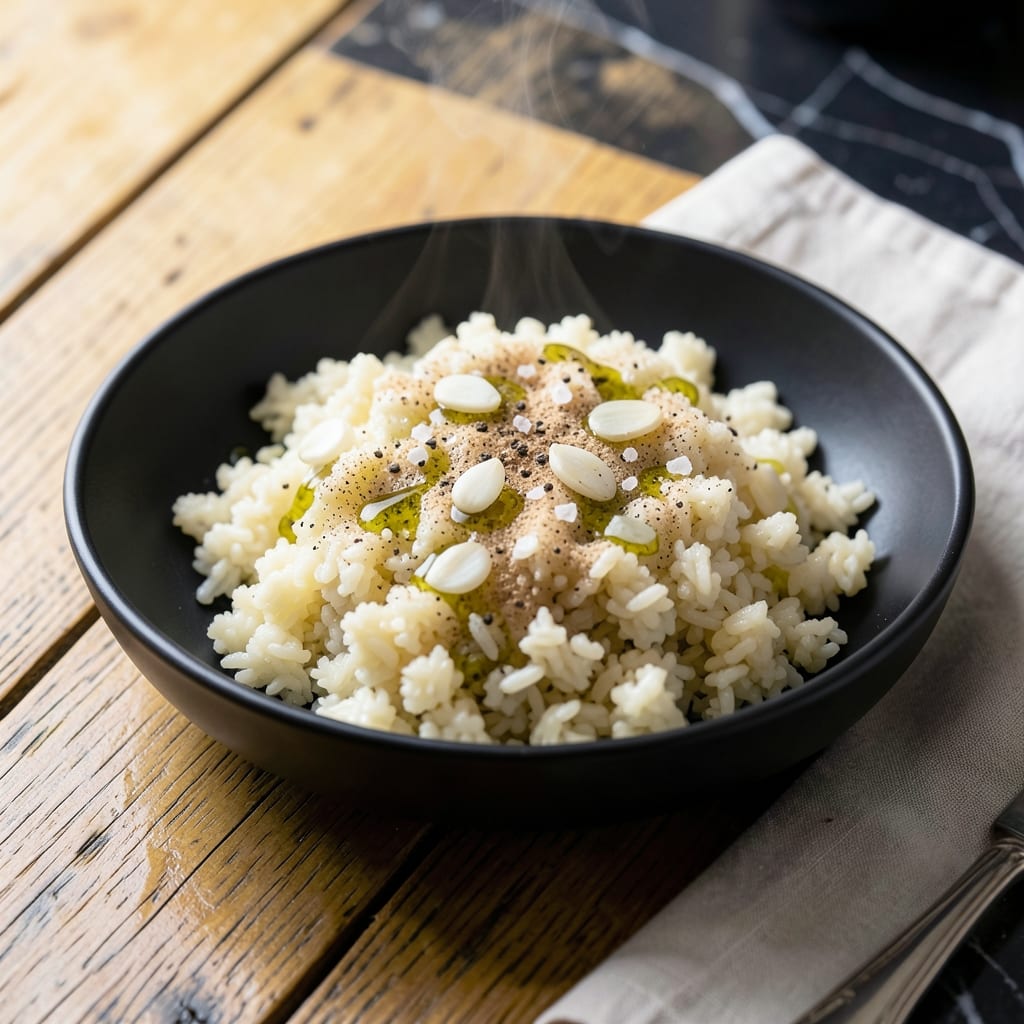
This simple method transforms cauliflower into light, fluffy rice that’s perfect for low-carb meals. No complicated steps—just fresh cauliflower and a few minutes in the pan.
You’ll get a texture so close to real rice, it’s hard to tell the difference. Ideal for keto diets or anyone cutting carbs without sacrificing flavor or satisfaction.
Ingredients for Keto Cauliflower Rice
Transform fresh cauliflower into light, fluffy rice with these simple, keto-friendly ingredients. Nothing complicated here.
| Ingredient | Amount | Notes |
|---|---|---|
| Fresh Cauliflower 🥬 | 1 whole | Medium head, about 2 lbs |
| Extra-Virgin Olive Oil 🫒 | 2 tbsp | Divided, for cooking |
| Garlic Cloves 🧄 | 3 cloves | Minced, for aroma |
| Sea Salt 🧂 | ½ tsp | Fine grain, adjust to taste |
| Black Pepper 🌶️ | ¼ tsp | Freshly ground preferred |
| Onion Powder 🧅 | ½ tsp | For depth of flavor |
| Turmeric Powder 🌿 | ¼ tsp | Optional, for color |
| Fresh Parsley 🍃 | 2 tbsp | Chopped, for garnish |
| Lemon Juice 🍋 | 1 tbsp | Freshly squeezed, for brightness |
| Nutritional Yeast 🧀 | 2 tbsp | For cheesy flavor boost |
The cauliflower is the star. Look for firm heads with tight florets—avoid any with brown spots or softness. Fresh is ideal, but frozen riced cauliflower works in a pinch (thaw and drain well). I grab mine from Whole Foods or Trader Joe’s for consistent quality. A medium head yields about 4 cups of rice, perfect for a family meal.
No fresh cauliflower? Frozen works at a 1:1 ratio but squeeze out excess moisture first. Want more flavor? Add a pinch of cumin or smoked paprika. The nutritional yeast is optional but adds a subtle cheesy note without dairy. If you’re missing garlic, garlic powder at half the amount gets you close. The lemon juice brightens everything up—don’t skip it.
Store fresh cauliflower in a paper bag in the fridge for up to 1 week. Cooked rice keeps in an airtight container for 4-5 days. Freeze in portions for up to 3 months (spread on a tray first to prevent clumping).
Why You’ll Love This Recipe
- 20-Minute Meal: I can pulse fresh cauliflower in my food processor and have it sizzling with garlic in olive oil faster than delivery arrives.
- Garlic Infused: The smell of minced garlic toasting in that olive oil makes my kitchen feel like a bistro.
- Meal Prep MVP: I make a big batch Sunday and it reheats beautifully for lunches all week—no soggy leftovers here.
Step-by-Step Instructions for Keto Cauliflower Rice
This method transforms the fresh cauliflower into light, fluffy rice with minimal effort and maximum flavor.
Step 1: Prepare the Cauliflower Base
Remove the outer leaves from the fresh cauliflower and trim off the stem so it sits flat. Cut the head into quarters to create manageable pieces. Using a box grater with the largest holes, grate each quarter into rice-sized granules. I prefer this to a food processor for better texture control.
You should end up with about 4-5 cups of raw cauliflower rice. This size head yields the perfect amount for four servings. Place the grated cauliflower in a clean kitchen towel and squeeze out as much moisture as possible—this prevents a watery final dish.
Step 2: Sauté Aromatics for Depth
Heat 1 tablespoon Extra-Virgin Olive Oil in a large skillet over medium heat. Add the 3 cloves Garlic Cloves and sauté for 30-45 seconds until fragrant but not browned. Garlic burns quickly, so keep it moving.
Immediately add the grated cauliflower to the skillet. Stir in the 0.5 tsp Sea Salt, 0.25 tsp Black Pepper, 0.5 tsp Onion Powder, and 0.25 tsp Turmeric Powder. The turmeric adds a subtle golden hue while the onion powder provides savory depth.
Step 3: Cook to Perfect Tenderness
Cook the cauliflower rice for 6-8 minutes, stirring occasionally, until it’s tender but still has a slight bite. The rice should be bright white or pale yellow throughout with no raw crunch. If it starts to brown too quickly, reduce heat slightly.
Drizzle the remaining 1 tablespoon Extra-Virgin Olive Oil over the rice and stir well. This second addition ensures all the granules get coated without making the dish greasy. The cauliflower will release more moisture as it cooks—this is normal and actually helps steam the rice to perfection.
Step 4: Finish with Bright, Cheesy Notes
Remove the skillet from heat. Stir in the 2 tbsp Nutritional Yeast—this adds a subtle cheesy flavor that complements the keto profile beautifully. The rice will plump slightly as it absorbs the last of the moisture.
Finally, add the 1 tbsp Lemon Juice and half the 2 tbsp Fresh Parsley. The acidity from the lemon brightens all the flavors and cuts through any richness. Taste and adjust seasoning if needed, though the initial measurements should be perfect.
Transfer to a serving bowl and garnish with the remaining fresh parsley. The final dish should be light, fluffy, and fragrant with visible flecks of parsley throughout.
Pro Tips For Making Keto Cauliflower Rice
- Dry the Cauliflower: After grating or pulsing the cauliflower, spread it on a towel and press out excess moisture—this prevents soggy rice and guarantees proper browning.
- Hot Pan First: Heat the olive oil in the pan until shimmering before adding garlic or cauliflower; I learned this the hard way after too many batches turned out pale and greasy.
- Grate, Don’t Chop: Use the large holes of a box grater or a food processor for even, rice-like pieces—chopping by hand gives uneven bits that cook inconsistently.
- Season Twice: Add half the salt to the raw cauliflower right after grating, then the rest at the end; sounds weird, but it works and layers in flavor better than a single sprinkle.
Common Mistakes When Making This Dish
Over-Squeezing the Cauliflower
It’s tempting to squeeze every last drop of moisture from the grated cauliflower, but this can lead to a dry, crumbly final product. I aim for 80% moisture removal—just enough to prevent a soggy pan but leave some natural dampness for steam. 💡
Skipping the Pre-Cook
Raw cauliflower rice has a strong, bitter taste that mellows beautifully when sautéed. Always cook it for at least 6-8 minutes to develop sweetness and remove the raw edge. Undercooking leaves it grainy and harsh.
Using the Wrong Heat
Medium heat is ideal—too high burns the garlic and dries out the rice, while too low leaves it mushy. I use a heavy-bottomed skillet like Lodge cast iron for even heat distribution. Watch for hot spots that can scorch the garlic.
Overcrowding the Pan
Cauliflower releases moisture as it cooks. If your pan is too crowded, the rice steams instead of sautés, becoming mushy. Cook in batches if needed—I never exceed 4 cups of raw rice in my 12-inch skillet. 🔥
Forgetting to Season
Cauliflower is mild, so it needs bold seasoning. Don’t skip the sea salt and onion powder—they’re essential for depth. I taste as I cook and adjust, but the recipe’s ½ tsp salt is my proven starting point.
Ignoring the Garnish
The lemon juice and fresh parsley aren’t just pretty—they add brightness and freshness that balance the dish. Always finish with them off-heat to preserve their vibrant flavors and colors.
Nutrition Facts
Frequently Asked Questions
Can I use frozen cauliflower rice instead?
Yes, but thaw and drain it well first. Squeeze out excess moisture to prevent a watery dish. Frozen works at a 1:1 ratio with fresh.
How do I get rid of the bitter taste?
Cook it for the full 6-8 minutes over medium heat. Undercooking leaves a raw, bitter edge. Adding a pinch of salt or lemon juice also helps balance flavors.
Can I make this ahead and reheat?
Store in an airtight container for up to 5 days. Reheat in a skillet with a splash of oil or microwave for 1-2 minutes.
What can I add for extra flavor?
Try cumin, smoked paprika, or a dash of soy sauce. For heat, add red pepper flakes. Nutritional yeast gives a cheesy boost.

- Mujadara Rice and Lentils Recipe: Earthy Spiced Lentils With Caramelized Onions - November 1, 2026
- Naija Fried Rice Recipe: Street-Style Spice With Veggie Crunch - November 1, 2026
- Mushy Rice Recipe: Fluffy Grains Transformed in Minutes - November 1, 2026