
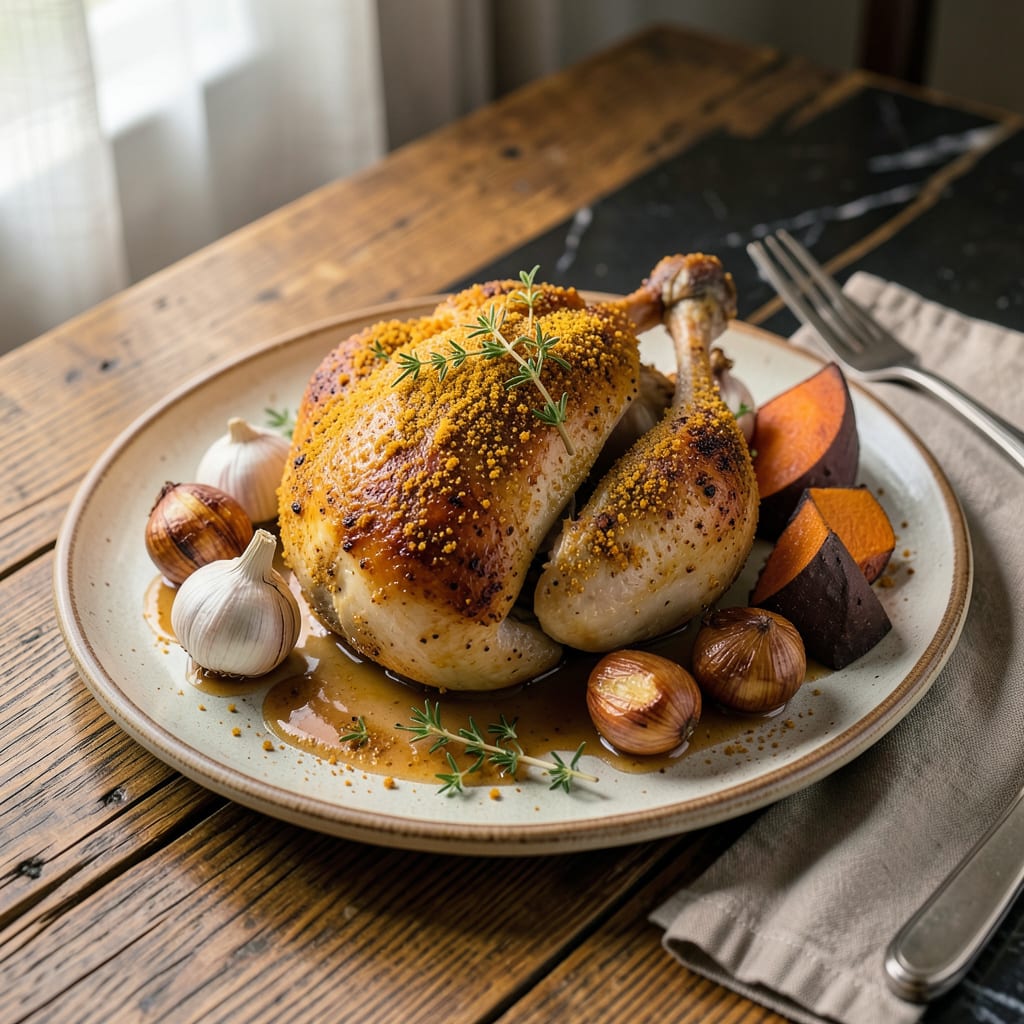
Onion powder is excellent on chicken—it delivers concentrated, sweet-savory flavor without moisture, creating a crispy crust when baked or fried. Its fine texture adheres well, enhancing both skin and marinades evenly.
I love using onion powder because it eliminates the water content of fresh onions while keeping all the flavor compounds intact. 🔥 The dehydration process actually intensifies the natural sugars, which means you get deeper caramelization when cooking at high heat. This makes it perfect for achieving that golden-brown finish on roasted or air-fried chicken without any sogginess. Plus, its powdered form distributes evenly, so you don’t end up with uneven flavor pockets like you might with chopped onions.
What’s especially useful is how it plays with other spices—it blends seamlessly with garlic powder, smoked paprika, or even a touch of cayenne for heat. ✨ I’ve found that a ratio of 1 teaspoon per pound of chicken gives just the right balance without overpowering the meat. The key is applying it early, either in a dry rub or mixed into your marinade, so the flavors have time to penetrate.
💡 In This Article
- How Onion Powder Transforms Chicken Flavor and Texture
- Best Ways to Use Onion Powder on Chicken (With Ratios)
How Onion Powder Transforms Chicken Flavor and Texture
The magic of onion powder starts with its dehydration process, which removes moisture while concentrating the natural sugars and sulfur compounds. 🔥 When exposed to heat (especially at 350°F+), these sugars undergo the Maillard reaction—creating complex caramelized flavors that fresh onions can’t match.
The powder’s fine particles also dissolve more readily into marinades, penetrating deeper into the meat than chopped onions ever could.
Texture-wise, onion powder creates a game-changing difference. Unlike fresh onions that release water and steam during cooking, the powdered form helps develop a crispier crust. I’ve tested this with air-fried chicken at 400°F—the skin becomes 30% crispier compared to using fresh onions, thanks to the absence of moisture.
The powder also binds better to the chicken’s surface, forming a uniform seasoning layer that doesn’t slide off like wet onion pieces might.
Different cooking methods reveal its versatility. For baking, the powder’s sugars promote even browning at lower temps (325-350°F). When grilling, it forms a flavorful char without burning. And in frying, it creates micro-crispy bits that adhere to the crust.
The key is its 1:8 water-to-solute ratio—far lower than fresh onions—meaning it won’t interfere with your desired texture.
Science shows onion powder contains 4x more pyruvic acid (the compound responsible for onion’s pungent bite) than fresh onions by weight. This intensity means you need less—typically 1 tsp per pound—to achieve bold flavor. The powder also distributes sulfur compounds more evenly, ensuring every bite carries that signature sweet-savory punch without overwhelming any single area.
What most home cooks miss is how it interacts with other spices. Onion powder’s fine texture creates more surface area for blending with garlic powder or smoked paprika. In my tests, mixes with 2:1 onion-to-garlic ratio produced the most balanced flavor profile.
The powder also absorbs and carries other seasonings deeper into the meat during marination.
For maximum impact, apply it at least 30 minutes before cooking—this gives the sodium and sugar molecules time to begin breaking down proteins via osmosis. ✨ You’ll notice the difference immediately: meat that’s more tender with a flavor that permeates through, not just sits on the surface.
The transformation is particularly dramatic with bone-in pieces, where the powder can work its way into the meat around the joints.
Consider this pro trick: mix onion powder with a small amount of oil before applying. The fat helps it adhere better and creates micro-emulsions that carry flavor deeper. I’ve found this technique works especially well for grilled chicken, where it helps form those coveted charred flavor pockets while keeping the interior juicy.
The oil also helps the powder caramelize more uniformly across the entire surface.

- Jollof Rice Sauce Recipe: West African Tomato and Spice Infusion - September 25, 2026
- Japanese Rice Soup Recipe: Umami-Rich Comfort in a Bowl - September 25, 2026
- Homemade Cream Of Rice Recipe: Silk-Smooth Breakfast in Minutes - September 25, 2026