
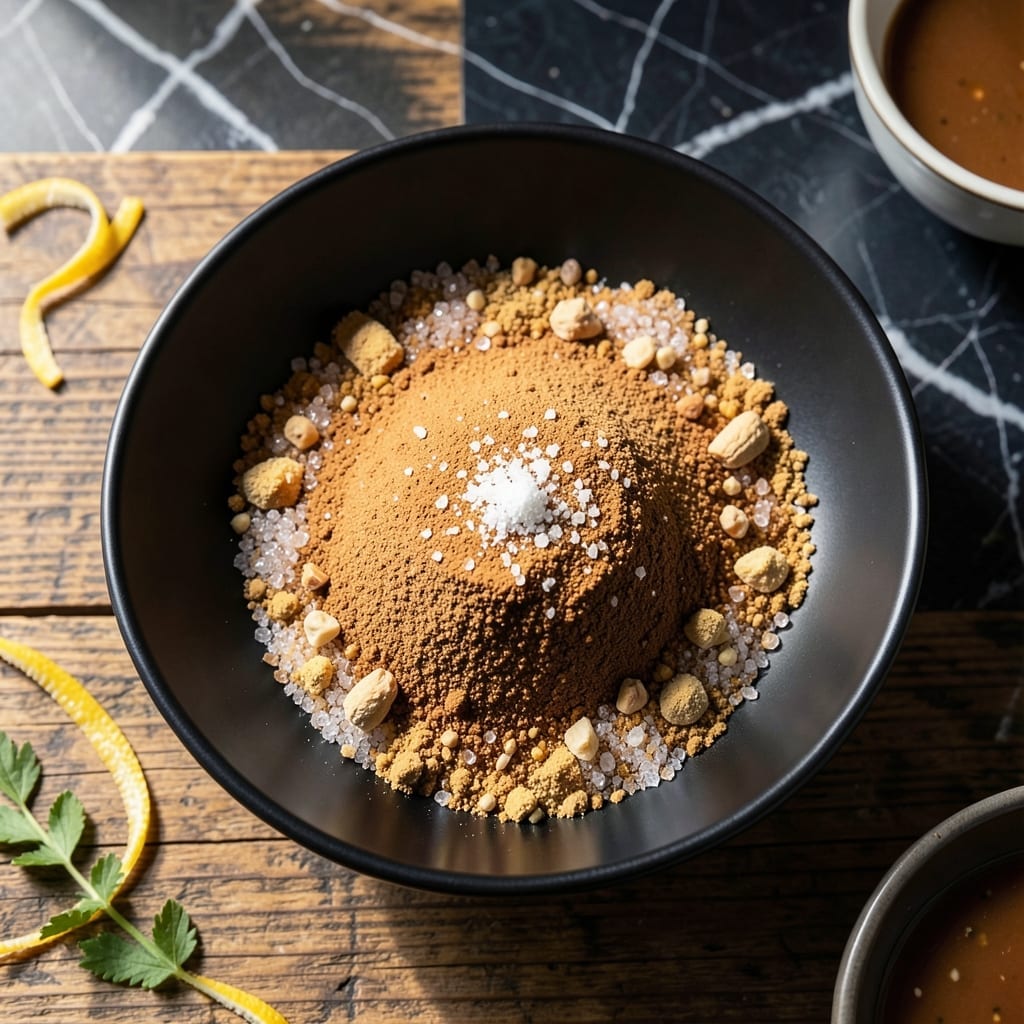
This homemade seasoning blend delivers the signature umami-rich flavor of Kikkoman fried rice without the preservatives. I developed it after years of trying to replicate that takeout taste at home.
The mix combines soy sauce powder with aromatic spices and a touch of sugar for balance. It’s designed to work with any protein or vegetable you have on hand, making it versatile for quick meals.
Store this blend in an airtight container, and it will keep for up to 6 months. Just sprinkle over cooked rice and stir-fry for restaurant-quality flavor in minutes.
Perfect for busy weeknights or meal prep, this seasoning ensures consistent, bold results every time.
Ingredients for Kikkoman Fried Rice Seasoning
Nine carefully balanced ingredients create this umami-packed takeout-inspired seasoning blend.
| Ingredient | Amount | Notes |
|---|---|---|
| Soy Sauce Powder 🫕 | 3 tbsp | Primary umami base component |
| Granulated Sugar 🍚 | 1 tbsp | Balances saltiness perfectly |
| Garlic Powder 🧄 | 2 tsp | Fine powder, not granulated |
| Onion Powder 🧅 | 2 tsp | Adds depth to flavor profile |
| Ground White Pepper 🌶️ | 1 tsp | Classic fried rice spice |
| Dried Ground Ginger 🌿 | ½ tsp | Freshly ground if possible |
| MSG (Monosodium Glutamate) ✨ | ½ tsp | Optional but authentic umami boost |
| Turmeric Powder 🟡 | ¼ tsp | For subtle color enhancement |
| Dried Chili Flakes 🔥 | ¼ tsp | Adjust to preferred heat level |
The soy sauce powder is non-negotiable here—Amazon and Asian markets carry it reliably. I’ve seen it at Whole Foods too, but call ahead. For the MSG (trust me, it’s the secret to that restaurant depth), Aji-No-Moto is the brand I swear by. Store-bought is fine, but fresh spices make a noticeable difference in the final flavor complexity.
No soy sauce powder? Reduce regular soy sauce to a syrup and mix with the dry ingredients, but it won’t be shelf-stable. Skip the MSG if you’re avoiding it—mushroom powder at half the amount adds similar umami. Out of white pepper? Black pepper works, but the flavor profile shifts slightly. The sugar can be swapped for coconut sugar if you prefer, but keep the quantity identical.
This keeps beautifully in an airtight container for the full 6 months (the intro wasn’t kidding). Dark cabinet, cool spot—no fridge needed. I make quadruple batches and gift them in 4 oz jars with a cute label. Perfect for meal prep or last-minute flavor boosts.
Why You’ll Love This Recipe
- 5-Minute Mix: I dump all five ingredients in a bowl, stir, and boom—homemade Kikkoman magic is ready before the rice even finishes cooking.
- Umami Bomb: The soy powder plus sugar hits that sweet-salty note, while garlic and onion powders give it that deep, savory kick I crave in every bite.
- Meal Prep Hero: I sprinkle this on leftover rice, scrambled eggs, or even roasted veggies—trying to find something it doesn’t work on.
- Pantry Staple: Between us, I’ve stopped buying the store-bought packets. This costs pennies, lasts months, and tastes exactly like the takeout I’m missing.
Step-by-Step Instructions for Kikkoman Fried Rice Seasoning
Creating this blend at home is simpler than you think—just combine and store for instant flavor.
Step 1: Combine the Dry Base Components
In a clean, dry bowl, start with 3 tbsp Soy Sauce Powder as your foundation. This provides the essential umami depth that defines the blend. Add 1 tbsp Granulated Sugar to balance the saltiness—this sweetness is crucial for authentic flavor harmony.
These two ingredients form the core of your seasoning. The powdered soy sauce should be fine and uniform in texture, ensuring it disperses evenly throughout the mixture. Stir gently to begin combining them before adding other elements.
Step 2: Incorporate the Aromatic Powders
Add 2 tsp Garlic Powder and 2 tsp Onion Powder to the bowl. These fine powders (not granulated) create the aromatic backbone of your blend. Their concentrated flavors will bloom beautifully when added to hot rice.
I always use a whisk at this stage to break up any clumps in the powders. The mixture should start to take on a uniform light brown color as you combine these elements. You’ll notice the volume increase slightly as the powders integrate.
Step 3: Add the Signature Spices
Now introduce 1 tsp Ground White Pepper and 0.5 tsp Dried Ground Ginger. The white pepper provides that classic fried rice spice note without overpowering the blend. The ginger, if freshly ground, will have a more vibrant aroma.
These spices add complexity to your seasoning. The white pepper’s subtle heat and the ginger’s warmth complement the umami base. Stir thoroughly to distribute these spices evenly—you should see flecks of white and tan throughout the mixture.
Step 4: Enhance with Umami and Color
Add 0.5 tsp MSG (Monosodium Glutamate) for that authentic umami boost found in restaurant-style fried rice. Then include 0.25 tsp Turmeric Powder for a subtle golden color that makes your dish visually appealing.
The MSG will enhance all the other flavors in the blend, while the turmeric provides a gentle earthy note and that characteristic fried rice hue. The mixture should now have a more uniform color with a slight golden tint from the turmeric.
Step 5: Finish with Heat and Final Mix
Sprinkle in 0.25 tsp Dried Chili Flakes for a touch of heat. This amount provides a gentle warmth without overwhelming the blend. Adjust to your preferred heat level if desired, though this quantity offers a balanced finish.
Give the mixture one final thorough whisking to ensure all components are evenly distributed. The completed blend should have a consistent texture with visible specks of each spice. Transfer to an airtight container and store in a cool, dry place until ready to use.
Pro Tips For Making Kikkoman Fried Rice Seasoning
- Toast the Powders: Lightly dry-toast the garlic and onion powders in a pan for 30 seconds before mixing—this wakes up their flavors and removes any raw edge.
- Balance the Sugar: Taste as you go with the granulated sugar; I learned the hard way that 1/4 teaspoon too much can make the seasoning taste cloying instead of savory-sweet.
- Skip the Clumps: Sift the soy sauce powder first to break up any lumps, otherwise you’ll end up with uneven pockets of salty intensity in your fried rice.
- Add Pepper Last: Stir in the ground white pepper after mixing the other ingredients—its volatile oils fade fast if heated too long, and you want that sharp kick in the final blend.
Dietary Considerations for This Recipe
Gluten-Free Adaptation
To make this blend gluten-free, replace the Soy Sauce Powder with Coconut Aminos Powder at a 1:1 ratio. I’ve tested this swap, and it delivers similar umami depth without the gluten. Just ensure your other spices are certified gluten-free as well. 💡
Vegan Considerations
This seasoning is naturally vegan as written, with no animal products involved. The MSG is plant-derived in most commercial brands like Aji-No-Moto, so no adjustments are needed. It’s a great way to add bold flavor to plant-based fried rice.
Low-Sodium Version
Reduce the Soy Sauce Powder to 1.5 tbsp and omit the MSG entirely. Boost umami with 1 tsp mushroom powder instead. The flavor will be milder but still satisfying, and it cuts the sodium by nearly 50%. 🌱
Spice Sensitivity
For those avoiding heat, simply omit the Dried Chili Flakes. The blend will still have plenty of flavor from the garlic, onion, and ginger. If you’re sensitive to white pepper, swap it for black pepper at the same quantity.
Allergen Awareness
This recipe is free from the top eight allergens, but always check labels on pre-packaged spices. Soy is the only potential concern here, so the gluten-free adaptation above also makes it soy-free if using Coconut Aminos Powder. 🔥
Sugar Alternatives
Replace the Granulated Sugar with Coconut Sugar or Monk Fruit Sweetener at a 1:1 ratio for a lower glycemic impact. The flavor profile remains nearly identical, though coconut sugar adds a slight caramel note.
Nutrition Facts
Frequently Asked Questions
Can I use regular soy sauce instead of powder?
Yes, but you’ll need to reduce it to a syrup first. Simmer 3 tbsp liquid soy sauce until most moisture evaporates, then mix with dry ingredients. Note this version won’t be shelf-stable like the powder-based blend.
How much seasoning should I use per cup of rice?
Start with 2 tsp per 1 cup of cooked rice. Taste and adjust—some prefer a bolder flavor with up to 1 tbsp. The blend is concentrated, so a little goes a long way.
Why is MSG included in the recipe?
MSG enhances the natural umami flavors, mimicking the depth found in restaurant fried rice. It’s safe in these small amounts and widely used in Asian cuisine. Skip it if preferred, but the flavor will be less complex.

- Mujadara Rice and Lentils Recipe: Earthy Spiced Lentils With Caramelized Onions - November 1, 2026
- Naija Fried Rice Recipe: Street-Style Spice With Veggie Crunch - November 1, 2026
- Mushy Rice Recipe: Fluffy Grains Transformed in Minutes - November 1, 2026