
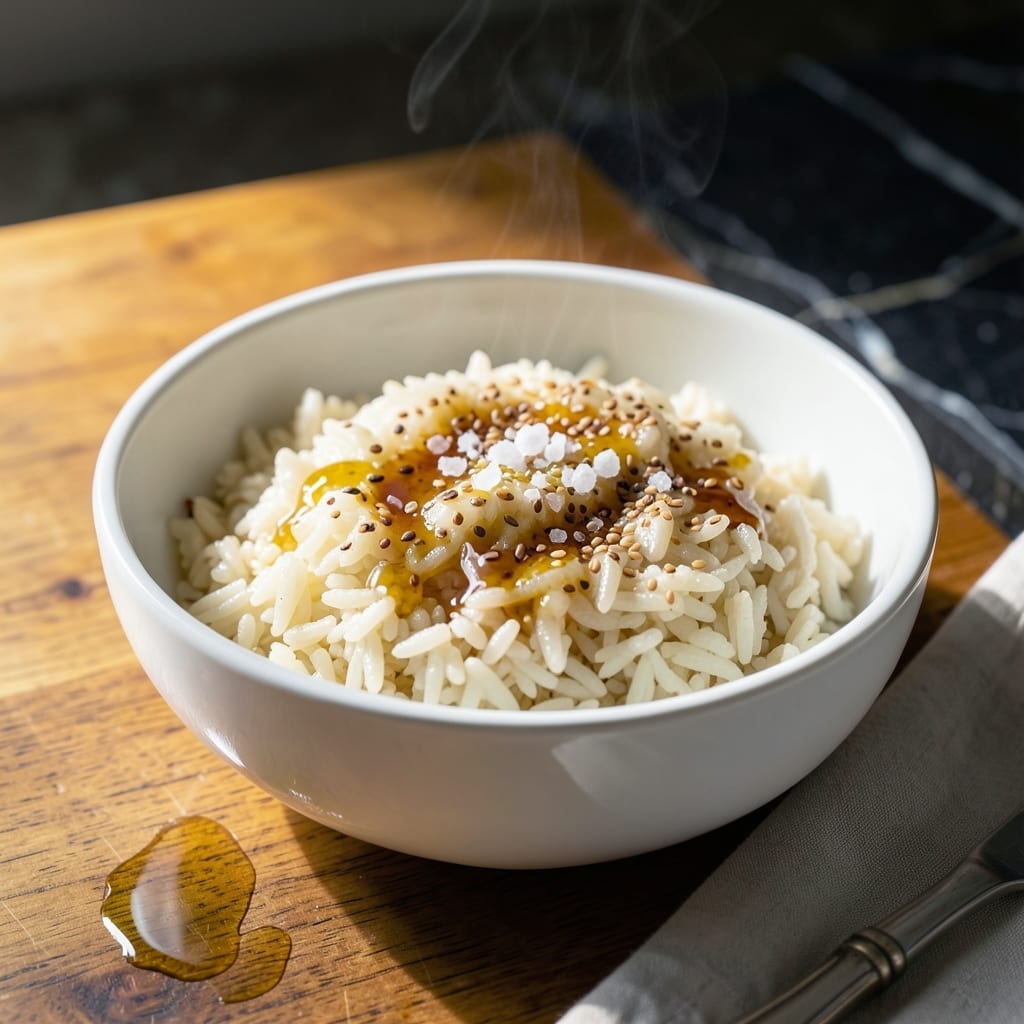
This sesame-infused rice forms the heart of authentic kimbap, delivering the perfect balance of flavor and texture needed for ideal rolls. The secret lies in properly seasoned short-grain rice that sticks together without being mushy.
I’ve refined this method to ensure the rice remains tender yet firm enough to hold fillings securely. The addition of toasted sesame oil and a touch of salt enhances the grain’s natural sweetness without overpowering it.
What results is a base that complements every ingredient—from pickled radish to bulgogied beef—while maintaining its structure. The rice should be warm when used, as it binds better to the nori.
Follow these steps precisely, and you’ll achieve kimbap that looks as impressive as it tastes.
Ingredients for Kimbap Rice
Short-grain rice and sesame oil form the foundation for authentic, flavorful kimbap rolls that hold together beautifully.
| Ingredient | Amount | Notes |
|---|---|---|
| Short-Grain White Rice 🍚 | 2 cups | Rinsed until water runs clear |
| Water 💧 | 2 ½ cups | For cooking rice |
| Toasted Sesame Oil 🫒 | 2 tbsp | Korean or pure variety preferred |
| Kosher Salt 🧂 | 1 tsp | Diamond Crystal brand recommended |
| White Sugar 🍚 | ½ tsp | Fine granulated for even distribution |
| Sesame Seeds 🌰 | 2 tbsp | Toasted for nuttier flavor |
| Rice Vinegar 🍶 | 1 tbsp | Or substitute apple cider vinegar |
| Nori Sheets 🍱 | 4 sheets | For rolling kimbap (7×8 inch) |
| Korean Red Pepper Flakes 🌶️ | ½ tsp | Optional, for subtle heat |
| Minced Garlic 🧄 | 1 tsp | Freshly minced preferred |
The rice quality is non-negotiable here. Short-grain white rice—specifically Japanese or Korean varieties—delivers the sticky texture essential for kimbap. H Mart or Korean grocery stores carry the best selections. Look for brands like CJ or Sajo for consistent results. Rinse the rice thoroughly; the starch is what makes it cling, but excess can lead to mushiness.
No sesame oil? Perilla oil offers a similar nutty depth in a pinch. Brown sugar can replace white in equal measure, though the flavor profile shifts slightly. For vinegar, rice vinegar is ideal, but any mild vinegar works. If omitting the red pepper flakes, consider a dash of soy sauce for umami balance. The sesame seeds must be toasted—raw ones lack the aromatic depth.
Prepared rice keeps 2-3 days refrigerated in an airtight container. Reheat with a damp paper towel to restore moisture. For longer storage, freeze in portions for up to 1 month. Always use warm rice for rolling—cold rice cracks the nori and won’t adhere properly.
Why You’ll Love This Recipe
- Set and Forget: I toss the rice in the cooker, add water, and walk away—no stirring, no stress.
- Sweet-Savory Balance: That touch of sugar and sesame oil gives it a subtle sweetness that pairs perfectly with salty fillings.
- Meal Prep Hero: Honestly, I make a big batch on Sunday and use it for kimbap, fried rice, or even grain bowls all week.
- Pocket-Friendly Staple: Short-grain rice costs pennies per serving, and a little sesame oil goes a long way.
Step-by-Step Instructions for Kimbap Rice
Master the foundation for flawless rolls with this tested method for seasoned, aromatic rice.
Step 1: Rinse and Prepare the Rice
Place the 2 cups short-grain white rice in a fine-mesh strainer and rinse under cold running water. Agitate the grains gently with your hand, watching as the water turns cloudy. Continue rinsing until the water runs completely clear—this removes excess starch that could make the rice gummy.
I’ve found that 3-4 rinses are typically sufficient for most brands. After the final rinse, drain thoroughly and let the rice sit in the strainer for 10 minutes to remove any residual water. This ensures the grains cook evenly and maintain their individual texture, which is crucial for kimbap that holds its shape.
Step 2: Cook the Rice to Perfect Tenderness
Combine the rinsed rice with the 2.5 cups water in a heavy-bottomed pot or rice cooker. If using a stovetop method, bring to a boil over high heat, then immediately reduce to low, cover, and simmer undisturbed for 15 minutes.
After 15 minutes, turn off the heat and let the rice steam, covered, for an additional 10 minutes. The grains should be tender yet firm, with no chalky center. Avoid lifting the lid during cooking—released steam affects the cooking temperature and can lead to unevenly cooked rice. For rice cookers, use the standard white rice setting.
Step 3: Season the Rice While Warm
Transfer the cooked rice to a large, shallow bowl. In a small saucepan, gently warm the 2 tbsp toasted sesame oil, 1 tbsp rice vinegar, 1 tsp kosher salt, 0.5 tsp white sugar, 1 tsp minced garlic, and 0.5 tsp Korean red pepper flakes over low heat for 1-2 minutes to meld the flavors.
Drizzle this warm seasoning mixture evenly over the hot rice. Using a rice paddle or silicone spatula, gently fold the rice from the bottom up with cutting motions to distribute the seasoning without mashing the grains. The rice should glisten slightly and have a faint sheen—this indicates proper absorption of the sesame oil.
Step 4: Incorporate Sesame Seeds and Cool Slightly
Sprinkle the 2 tbsp sesame seeds evenly over the seasoned rice. Fold gently once more to incorporate. The seeds should be visible throughout but not clustered in any one area. This step adds texture and a nutty aroma that defines authentic kimbap rice.
Allow the rice to cool at room temperature for 10-15 minutes before using. It should be warm but not hot—hot rice can tear the nori sheets and make rolling difficult. Test the temperature by pressing a small amount between your fingers; it should feel comfortable to touch. This cooling period also lets the flavors fully develop.
Pro Tips For Making Kimbap Rice
- Rinse the rice: Wash the short-grain rice 3-4 times until the water runs clear—this removes excess starch so your kimbap rice isn’t gummy.
- Use hot rice: Mix the toasted sesame oil, salt, and sugar into the rice while it’s still steaming hot, so the seasoning absorbs evenly.
- Skip the overcook: I learned this the hard way—short-grain rice for kimbap should be tender but still hold its shape, not mushy. Aim for 1:1 rice-to-water ratio and check at 10 minutes.
- Sweeten lightly: White sugar balances the salt, but add just 1 teaspoon per cup of uncooked rice—any more and the filling flavors get lost.
Troubleshooting This Recipe
Rice Too Sticky
If your rice clumps excessively, you likely over-rinsed or used too much water. Stick to 3-4 rinses and measure water precisely—2.5 cups for 2 cups rice. Also, let it steam 10 minutes after cooking to firm up the grains. 💡
Rice Too Dry
Dry rice usually means insufficient water or overcooking. Verify your rice-to-water ratio is 1:1.25. If using a pot, ensure it’s heavy-bottomed to prevent scorching. Cover tightly during the entire 15-minute simmer.
Seasoning Uneven
For even flavor distribution, drizzle the seasoning mixture over the rice while folding gently with a rice paddle. I recommend warming the sesame oil and rice vinegar mixture first—this helps it incorporate better into the warm grains.
Rice Tears Nori
Hot rice can tear the delicate sheets. Always cool your rice for 10-15 minutes before rolling. Test by pressing a bit between your fingers—it should feel warm but not scalding. This prevents cracking and ensures tight rolls.
Bland Flavor
If your rice lacks depth, you may have under-seasoned. Taste before adding sesame seeds and adjust with more kosher salt or a dash of toasted sesame oil. The 1 tsp salt and 2 tbsp sesame oil are baseline—adjust to your preference.
Grainy Texture
Grainy rice often results from insufficient rinsing or old rice. Always rinse until water runs clear to remove excess starch. Use fresh short-grain rice—older grains lose moisture and cook unevenly. Storing rice in the freezer can extend its shelf life.
Nutrition Facts
Frequently Asked Questions
Can I use other rice types?
Stick to short-grain white rice for authentic texture. Jasmine or basmati won’t work—they lack the necessary stickiness to hold kimbap together. Japanese or Korean brands like CJ are ideal.
Why does my rice fall apart when rolling?
This usually means the rice is too dry or cold. Use warm rice and ensure it’s properly seasoned with 2 tbsp sesame oil. Also, don’t overfill the rolls—keep fillings centered.
How long can I store prepared rice?
Keep in an airtight container in the fridge for 2-3 days. For longer storage, freeze for up to 1 month. Reheat with a damp paper towel to restore moisture before using.
What if I don’t have rice vinegar?
Substitute with apple cider vinegar or white vinegar in equal amounts. The mild acidity helps balance the sesame oil’s richness without altering the flavor significantly.

- Jollof Rice Sauce Recipe: West African Tomato and Spice Infusion - September 25, 2026
- Japanese Rice Soup Recipe: Umami-Rich Comfort in a Bowl - September 25, 2026
- Homemade Cream Of Rice Recipe: Silk-Smooth Breakfast in Minutes - September 25, 2026