
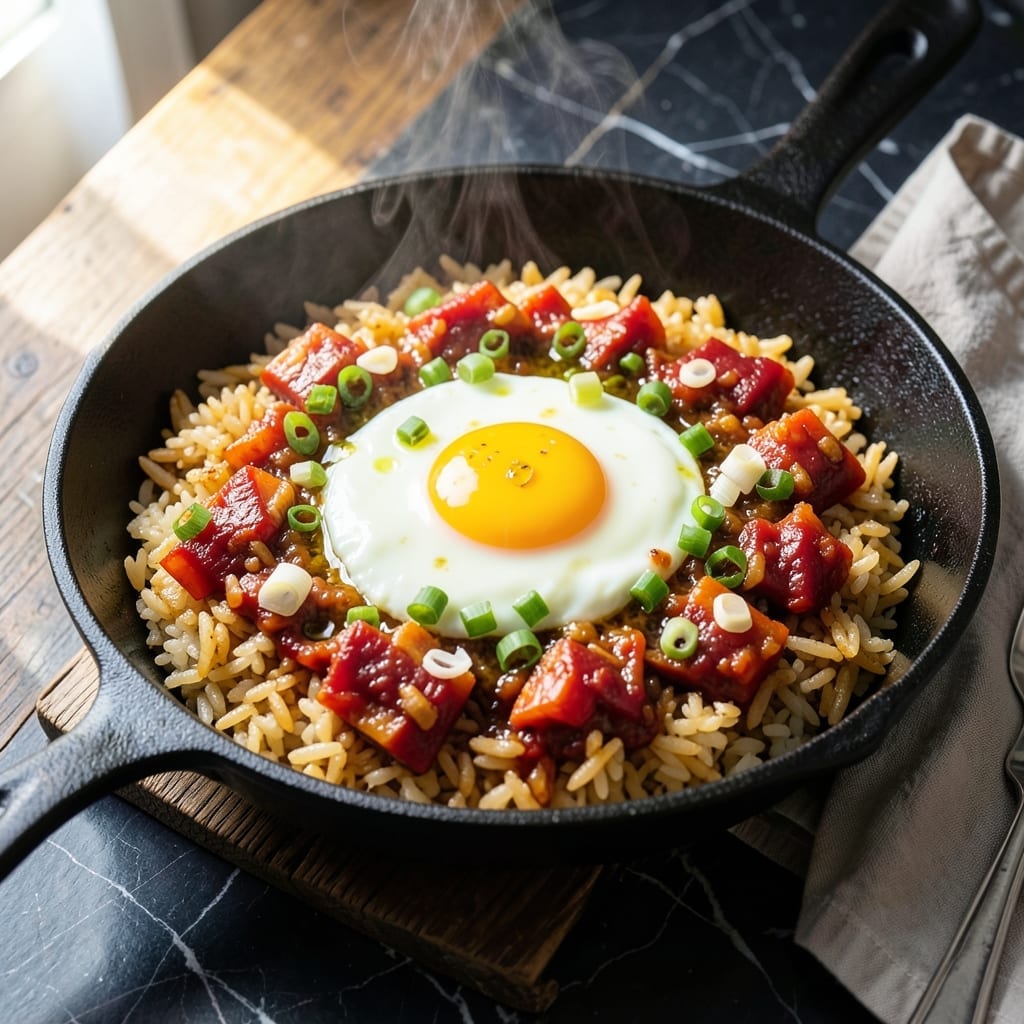
This Korean-inspired dish transforms leftover rice into something extraordinary. The combination of spicy kimchi and rich eggs creates a flavor explosion that’s both comforting and bold.
I’ve perfected this recipe to balance the tangy heat of fermented kimchi with the creaminess of scrambled eggs. Cooked in a single pan, it comes together in under 15 minutes with minimal effort.
The key is using well-aged kimchi for maximum depth and crisping the rice slightly in hot oil. Each bite delivers chewy grains, savory eggs, and a spicy kick.
Serve it hot with a drizzle of sesame oil for an authentic finish. This is one dish that proves simple ingredients can create restaurant-worthy results.
Ingredients for Kimchi Egg Fried Rice
Transform leftover rice with bold Korean flavors and simple pantry staples for this dish.
| Ingredient | Amount | Notes |
|---|---|---|
| Cooked White Rice 🍚 | 4 cups | Day-old, chilled preferred |
| Kimchi 🥬 | 1 ½ cups | Well-aged, chopped with juice |
| Large Eggs 🥚 | 4 whole | Beaten lightly |
| Green Onions 🧅 | 4 whole | Thinly sliced, whites and greens separated |
| Garlic Cloves 🧄 | 3 cloves | Minced finely |
| Vegetable Oil 🫒 | 2 tbsp | High smoke point preferred |
| Sesame Oil 🫒 | 1 tbsp | Toasted, for finishing |
| Soy Sauce 🥫 | 2 tbsp | Low-sodium recommended |
| Gochujang 🌶️ | 1 tbsp | Korean chili paste, optional for extra heat |
| Sugar 🍚 | 1 tsp | Balances kimchi acidity |
| Sesame Seeds 🌰 | 1 tsp | Toasted, for garnish |
| Salt 🧂 | ½ tsp | Adjust to taste |
| Black Pepper 🌶️ | ¼ tsp | Freshly ground |
The kimchi quality is non-negotiable here. Seek out well-aged, fermented kimchi from a Korean market or the refrigerated section at Whole Foods—it has the tangy depth this dish demands. Avoid fresh, unfermented kimchi (it lacks the sour complexity). The rice should be day-old and chilled to prevent mushiness. For gochujang, Sempio or CJ brands are reliable and widely available.
No kimchi? Sauerkraut with a pinch of chili flakes offers a similar tangy crunch (though less authentic). Substitute bacon for the eggs if you’re feeling indulgent. Missing gochujang? Sriracha plus a dash of miso gets close. The soy sauce can be swapped for tamari (gluten-free) or coconut aminos. Fresh ginger (1 tsp grated) adds another layer if you have it.
Leftovers keep 3-4 days in the fridge—reheat in a skillet with a splash of water to revive. The flavors deepen overnight. Freeze without eggs for up to 3 months (add fresh eggs when reheating). Always store kimchi separately to maintain its fermented punch.
Why You’ll Love This Recipe
- One Pan Wonder: I toss everything into a single skillet—rice, kimchi, eggs—and it’s done in 15 minutes.
- Umami Bomb: The tangy kimchi and garlic make every bite so flavorful I never need extra sauce.
- Weeknight Hero: Between us, this is my go-to for busy evenings when I need dinner fast.
- Budget Friendly: A handful of pantry staples and leftover rice turn into a meal that feeds my family for pennies.
Step-by-Step Instructions for Kimchi Egg Fried Rice
Master this technique for perfectly balanced flavors and textures with minimal effort.
Step 1: Prepare the Aromatics and Rice Base
Heat 2 tbsp Vegetable Oil in a large wok or skillet over medium-high heat until it shimmers. Add the minced 3 cloves Garlic Cloves and the white parts of the 4 whole Green Onions, stirring constantly for 30-45 seconds until fragrant but not browned.
Immediately add the 1.5 cups Kimchi with its juice, breaking up any large pieces with your spatula. Cook for 2-3 minutes until the kimchi softens and the liquid reduces slightly. This builds the foundational spicy-sour flavor that defines this dish.
Step 2: Incorporate the Rice and Seasonings
Add the 4 cups Cooked White Rice to the skillet, using your spatula to break up any clumps. The chilled rice should sizzle on contact—a sign it will develop that coveted slight crispiness. Stir-fry for 2-3 minutes until the rice is thoroughly coated and heated through.
Create a well in the center of the rice mixture. Add the 2 tbsp Soy Sauce, 1 tbsp Gochujang, 1 tsp Sugar, 0.5 tsp Salt, and 0.25 tsp Black Pepper. Stir vigorously for 1 minute to ensure even distribution of the seasonings, which should transform the rice to a consistent pinkish hue.
Step 3: Cook the Eggs to Silky Perfection
Push the rice mixture to one side of the skillet, creating a clear space. Pour the beaten 4 whole Large Eggs into the empty area. Let them sit undisturbed for 20-30 seconds until the edges begin to set, then gently scramble with your spatula until just cooked but still moist.
Fold the scrambled eggs into the rice mixture, combining thoroughly. The eggs should create ribbons throughout the dish rather than forming large curds. Cook for an additional 1-2 minutes to allow the flavors to meld completely.
Step 4: Finish and Garnish for Maximum Impact
Remove the skillet from heat and drizzle the 1 tbsp Sesame Oil over the fried rice. This final addition should create a noticeable gloss on the surface. Toss gently to incorporate without breaking up the rice grains.
Transfer to a serving dish and garnish with the green parts of the 4 whole Green Onions and 1 tsp Sesame Seeds. The green onions should add a fresh contrast to the rich, spicy flavors, while the sesame seeds provide a nutty crunch and visual appeal. Serve immediately while hot.
Pro Tips For Making Kimchi Egg Fried Rice
- Use Cold Rice: Always start with day-old, cold rice from the fridge—it fries up fluffier and absorbs the kimchi flavor better. Freshly cooked rice turns to mush in the pan.
- Drain the Kimchi: Squeeze out excess liquid from the kimchi before chopping, or your fried rice will end up soggy instead of crisp. I learned this the hard way after a few watery batches.
- High Heat, Quick Cook: Crank the heat to medium-high and keep the ingredients moving—this gives you those coveted crispy edges on the rice and perfectly set eggs without overcooking.
- Add Eggs Last: Push the rice to one side of the pan, pour in the beaten eggs, and scramble them lightly before mixing everything together. This keeps the eggs soft and distinct instead of disappearing into the rice.
Health Benefits of kimchi egg fried rice
Gut Health Boost
This dish is packed with probiotics from fermented kimchi, which supports a healthy gut microbiome. A ½ cup serving of kimchi provides billions of beneficial bacteria that aid digestion and strengthen your immune system. I notice I feel lighter after eating it. 💪
Rich in Nutrients
Kimchi is loaded with vitamins A, B, and C, while eggs contribute high-quality protein and choline for brain health. The combination gives you a balanced meal with 18g of protein per serving and essential amino acids.
Antioxidant Power
Garlic and green onions in this recipe are packed with antioxidants that combat oxidative stress. The kimchi’s fermentation process also creates additional antioxidant compounds, like capsaicin from the chili, which may reduce inflammation.
Low-Calorie Energy
At about 350 calories per serving, this dish is a nutrient-dense option that keeps you full. The fiber from kimchi and protein from eggs help stabilize blood sugar, preventing energy crashes. It’s my go-to for a quick, satisfying meal.
Heart-Healthy Fats
Sesame oil adds polyunsaturated fats, which support heart health, while eggs provide omega-3s if you use pasture-raised varieties. Together, they help lower bad cholesterol levels. A little oil goes a long way for flavor and nutrition. ✨
Metabolism Support
The capsaicin in kimchi can slightly boost metabolism, while the B vitamins from eggs help convert food into energy. I love how this dish keeps me energized without feeling heavy afterward. It’s comfort food with benefits!
Nutrition Facts
Frequently Asked Questions
Can I use fresh rice instead of day-old?
Fresh rice tends to turn mushy. Day-old, chilled rice holds its shape better and fries up with that perfect slightly crisp texture. Spread hot rice on a tray to cool quickly if you’re in a hurry.
How do I make it less spicy?
Rinse the kimchi under cold water to remove some of the chili heat before cooking. You can also reduce or omit the gochujang and add a pinch of sugar to balance the flavors.
What protein can I add besides eggs?
Try diced spam, tofu, or leftover bulgogi beef for extra heartiness. Add proteins after cooking the kimchi so they heat through without overcooking.
How long will leftovers keep in the fridge?
Store in an airtight container for up to 3-4 days. Reheat in a skillet with a splash of water to restore moisture and prevent drying out.

- Mujadara Rice and Lentils Recipe: Earthy Spiced Lentils With Caramelized Onions - November 1, 2026
- Naija Fried Rice Recipe: Street-Style Spice With Veggie Crunch - November 1, 2026
- Mushy Rice Recipe: Fluffy Grains Transformed in Minutes - November 1, 2026