
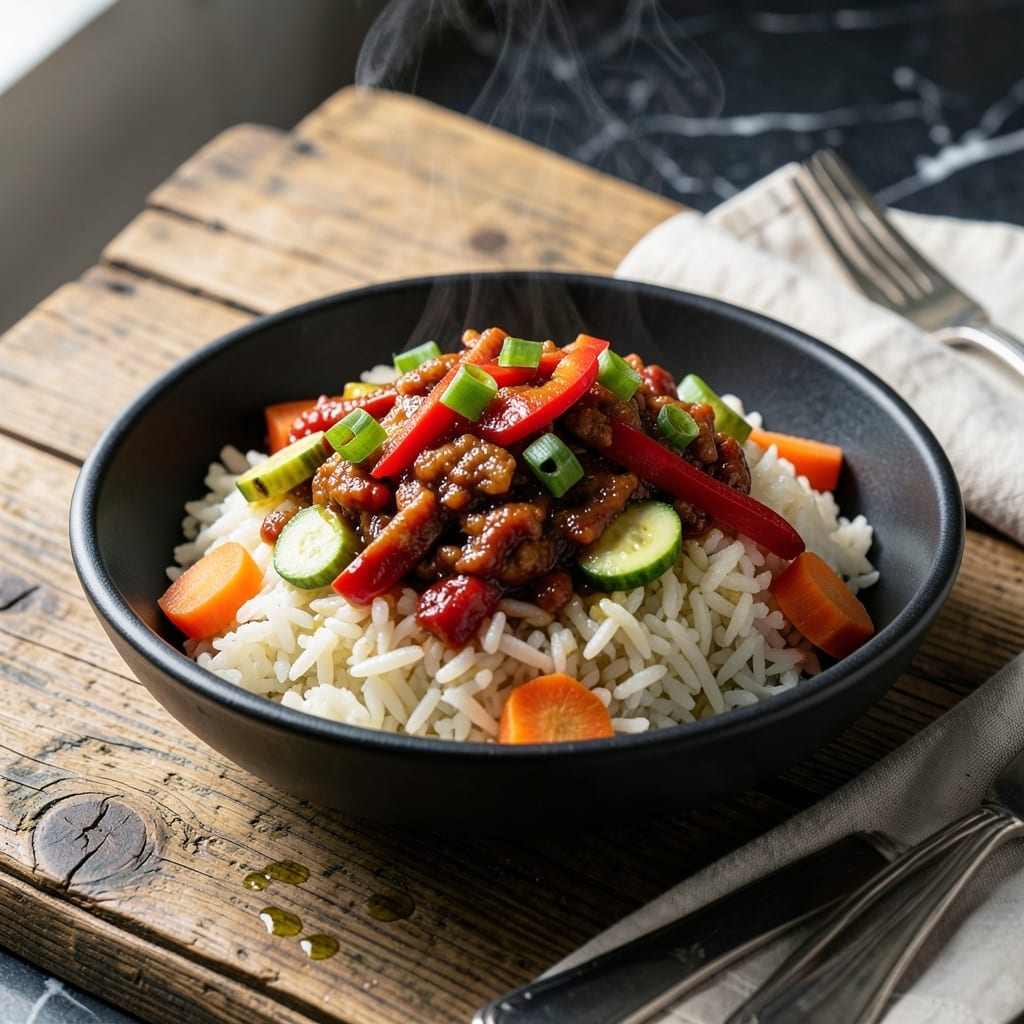
This vegetarian kimchi rice dish transforms simple ingredients into a bold, flavorful meal that satisfies every time. The wok-charred vegetables add depth and texture that elevate the dish beyond ordinary fried rice.
I developed this recipe to maximize flavor while keeping the process streamlined and efficient. A hot pan and quick cooking ensure the vegetables stay crisp-tender, and the kimchi adds a tangy, spicy kick that ties everything together.
The result is a vibrant, restaurant-quality power bowl with layers of taste and texture. Each bite delivers the umami richness of kimchi, the freshness of vegetables, and the comforting warmth of perfectly cooked rice.
Ready in under 30 minutes, this dish is perfect for busy weeknights when you want something exciting without the fuss.
Ingredients for Kimchi Rice Recipe Vegetarian
Transform simple pantry staples into a vibrant, restaurant-quality power bowl with these bold ingredients.
| Ingredient | Amount | Notes |
|---|---|---|
| Kimchi 🥬 | 2 cups | Well-fermented for maximum flavor |
| Cooked White Rice 🍚 | 4 cups | Day-old, chilled preferred |
| Vegetable Oil 🫒 | 2 tbsp | High smoke point preferred |
| Carrots 🥕 | 2 whole | Julienned or diced small |
| Zucchini 🥒 | 1 whole | Diced into small cubes |
| Red Bell Pepper 🌶️ | 1 whole | Thinly sliced for quick cooking |
| Garlic Cloves 🧄 | 4 cloves | Minced finely for even distribution |
| Fresh Ginger 🌿 | 1 tbsp | Peeled and grated |
| Soy Sauce 💧 | 2 tbsp | Low-sodium preferred |
| Sesame Oil 🫒 | 1 tsp | Toasted for depth |
| Green Onions 🧅 | 4 whole | Thinly sliced for garnish |
| Sesame Seeds 🌾 | 1 tbsp | Toasted for garnish |
| Large Eggs 🥚 | 2 whole | Optional for protein boost |
| Gochujang 🌶️ | 1 tbsp | Korean chili paste for heat |
The kimchi is the soul of this dish. Seek out well-fermented napa cabbage kimchi from a Korean market or H-Mart for authentic flavor. The rice should be day-old and chilled—freshly cooked rice will turn mushy. For the vegetables, organic produce from your local market ensures the best texture and flavor. A high-smoke-point oil like avocado or peanut oil works well for achieving that wok-charred effect.
No kimchi on hand? Sauerkraut plus a dash of sriracha can mimic the tang and heat in a pinch. For a gluten-free version, swap soy sauce for tamari. The gochujang adds depth, but miso paste plus chili flakes gets you close. If eggs aren’t your thing, crumbled tofu or edamame offers a similar protein punch. The sesame oil is non-negotiable though—it’s the finishing touch that ties everything together.
Store kimchi in the fridge for up to 1 month after opening. Cooked rice keeps for 3-4 days in the fridge. This dish reheats beautifully—just add a splash of water and stir-fry briefly. Leftovers taste even better the next day as the flavors meld.
Why You’ll Love This Recipe
- One Pot Wonder: I just dump everything in a pan—rice, kimchi, veggies—and it’s done in 15 minutes.
- Umami Bomb: The fermented kimchi and crisp zucchini create this deep, tangy flavor that’s honestly addictive.
- Meal Prep Hero: I make a big batch on Sunday and it tastes even better reheated for lunch all week.
- Pantry Savior: Between us, it’s my cheap, last-minute dinner when I’ve got rice and kimchi in the fridge.
Step-by-Step Instructions for Kimchi Rice
Master the wok technique to achieve perfectly charred vegetables and deeply flavored rice every time.
Step 1: Prepare and Sauté Aromatics
Heat a large wok or skillet over medium-high heat until a drop of water sizzles and evaporates immediately. Add the 2 tbsp Vegetable Oil and swirl to coat the surface evenly. The oil should shimmer but not smoke.
Add the 4 cloves Garlic Cloves and 1 tbsp Fresh Ginger, stirring constantly for 30-45 seconds until fragrant. Be vigilant—garlic burns quickly at this temperature. The mixture should turn light golden but not dark brown.
Immediately add the 2 whole Carrots, 1 whole Zucchini, and 1 whole Red Bell Pepper. Stir-fry for 4-5 minutes until the vegetables begin to soften and develop light char marks.
Step 2: Incorporate Kimchi and Seasonings
Push the vegetables to one side of the wok and add the 2 cups Kimchi with its juices to the cleared space. Cook the kimchi for 2-3 minutes until it sizzles and the edges begin to caramelize. This intensifies its tangy, umami flavor.
Combine the kimchi with the vegetables, then add the 4 cups Cooked White Rice. Break up any clumps with a spatula and press the rice firmly against the hot surface for 1-2 minutes to develop a light crust. The rice should absorb the kimchi juices and turn a vibrant pinkish hue.
Drizzle the 2 tbsp Soy Sauce and 1 tbsp Gochujang over the mixture. Stir thoroughly to ensure even distribution and cook for an additional 2 minutes until the rice is heated through and the seasonings are fully incorporated.
Step 3: Finish with Eggs and Garnishes
Create two small wells in the rice mixture and crack the 2 whole Large Eggs into them. Cover the wok and cook for 3-4 minutes until the egg whites are set but the yolks remain runny. The steam from the rice will gently cook the eggs to perfect doneness.
Drizzle the 1 tsp Sesame Oil over the entire dish, then sprinkle with 4 whole Green Onions and 1 tbsp Sesame Seeds. The sesame oil adds a nutty aroma, while the green onions and sesame seeds provide a fresh crunch and visual contrast.
Remove from heat and let sit for 1 minute to allow the flavors to meld. The eggs should be nestled into the rice, with the yolks still slightly jiggly when gently shaken.
Step 4: Serve and Enjoy
Divide the kimchi rice among four bowls, ensuring each serving includes a portion of the eggs. The eggs should be served whole or lightly broken to allow the yolk to mix with the rice. Each bite should deliver a balance of spicy, tangy, and savory flavors.
The vegetables should be tender with a slight char, and the rice should be infused with the bold flavors of kimchi and gochujang. Garnish with additional green onions or sesame seeds if desired for added texture and visual appeal.
Pro Tips For Making Kimchi Rice Recipe Vegetarian
- Drain the Kimchi: Squeeze out excess liquid from the kimchi before cooking—about 30 seconds per handful—to prevent soggy rice. I learned this the hard way after my first few batches turned into kimchi soup.
- Precook the Veggies: Sauté the carrots and zucchini for 3-4 minutes before adding rice so they soften but keep their bite. Raw veggies release too much water and dilute the flavor.
- Use Day-Old Rice: Fresh rice turns mushy; cold, leftover rice holds its shape and fries up perfectly. Spread it on a tray for 10 minutes if you’re in a rush.
- Crisp the Bottom: Press the rice down firmly in the pan and resist stirring for 2-3 minutes to get that coveted golden crust. Sounds weird, but it works.
Essential Equipment for kimchi rice recipe vegetarian
Wok Essentials
A carbon steel wok is my top choice for this dish—it heats quickly and develops that perfect wok hei (breath of the wok) flavor. I use a 14-inch flat-bottom wok from Made In for my home kitchen. The flat bottom works well on standard stovetops. 🔥
High Heat Tools
You’ll need a high-BTU burner to get that searing heat—aim for at least 12,000 BTUs. If your stove isn’t powerful, use a cast iron skillet as a backup. A fish spatula with thin edges helps flip ingredients without breaking them.
Prep Gear
A good chef’s knife and cutting board make quick work of the vegetables. I swear by my 8-inch Wüsthof for precise julienning. Keep a microplane handy for ginger—it extracts maximum flavor with minimal effort.
Finishing Touches
A small saucepan helps warm your rice if using day-old. For garnishes, I use kitchen shears to snip green onions directly over the dish. A fine-mesh strainer is perfect for draining kimchi if it’s particularly juicy.
Safety First
Always have a splatter screen nearby—kimchi can pop when it hits hot oil. Keep a damp towel folded nearby to smother any flares. And never leave the wok unattended at high heat—this dish moves fast!
Pantry Staples
Stock your kitchen with toasted sesame oil and low-sodium soy sauce for authentic flavor. I keep Kadokawa brand gochujang in my fridge—it’s consistently spicy and fermented. These small bottles last months and transform simple ingredients. 💡
Nutrition Facts
Frequently Asked Questions
Can I use fresh rice instead of day-old?
Fresh rice will turn mushy when stir-fried. Use day-old, chilled rice for the best texture. If needed, spread freshly cooked rice on a tray and refrigerate for 30 minutes to dry it out.
What if I don’t have gochujang?
Substitute with 1 tbsp sriracha plus ½ tsp miso paste for a similar spicy, umami kick. Adjust to taste as you cook.
How do I make this dish gluten-free?
Swap soy sauce for tamari or coconut aminos. Check kimchi labels, as some brands contain wheat. Most other ingredients are naturally gluten-free.
Can I skip the eggs?
Add ½ cup crumbled tofu or edamame for protein instead. Cook them with the vegetables for even flavor distribution.

- Mujadara Rice and Lentils Recipe: Earthy Spiced Lentils With Caramelized Onions - November 1, 2026
- Naija Fried Rice Recipe: Street-Style Spice With Veggie Crunch - November 1, 2026
- Mushy Rice Recipe: Fluffy Grains Transformed in Minutes - November 1, 2026