
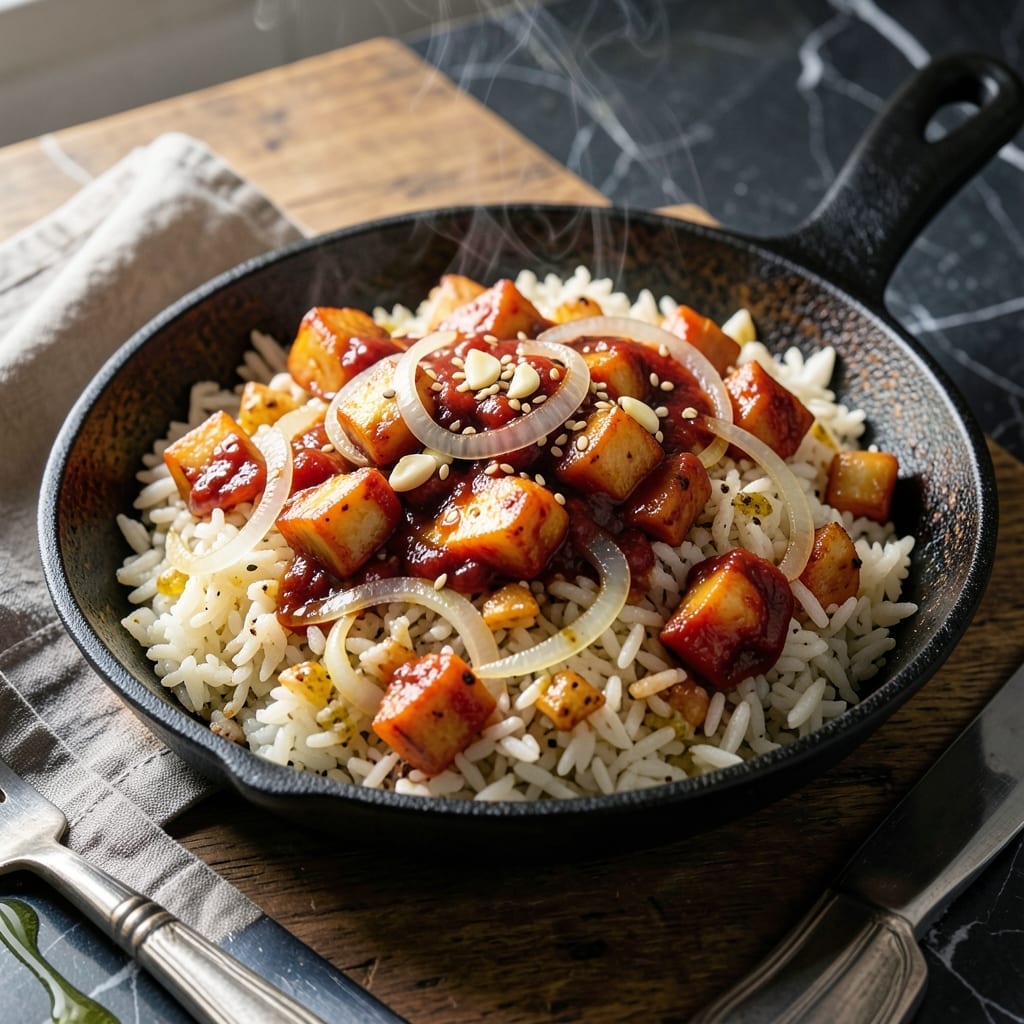
This skillet dish transforms humble ingredients into a deeply satisfying meal that warms from the first bite. The combination of fermented kimchi and crispy rice creates a perfect balance of textures and flavors.
I developed this method after years of experimenting with heat levels and cooking times to achieve restaurant-quality results at home. The key is using well-fermented kimchi and letting it caramelize in the pan for maximum flavor development.
The final result delivers comfort in every bite—spicy, tangy, and slightly smoky with that signature crispy rice texture. It’s the kind of dish that improves as it sits, with flavors melding together beautifully.
Serve it straight from the skillet with a fried egg on top for the ultimate experience. This creation brings Korean flavors to your table with minimal effort.
Ingredients for Kimchi Rice
Transform humble pantry staples into a deeply satisfying skillet meal with bold Korean flavors.
| Ingredient | Amount | Notes |
|---|---|---|
| Cooked White Rice 🍚 | 4 cups | Day-old, chilled preferred |
| Kimchi 🥬 | 2 cups | Well-fermented, chopped |
| Vegetable Oil 🫒 | 2 tbsp | Or sesame oil for aroma |
| Garlic Cloves 🧄 | 4 cloves | Minced for depth |
| Small Onion 🧅 | 1 whole | Diced for texture |
| Gochujang 🌶️ | 1 tbsp | Korean chili paste |
| Soy Sauce 🫙 | 2 tbsp | Low-sodium preferred |
| Sesame Seeds 🌿 | 1 tsp | Toasted for garnish |
| Green Onions 🧅 | 3 whole | Thinly sliced for freshness |
| Large Eggs 🥚 | 4 whole | For topping each serving |
| Sesame Oil 🫒 | 1 tsp | For finishing drizzle |
| Sugar 🍚 | 1 tsp | Balances kimchi acidity |
The kimchi is non-negotiable here. Well-fermented, sour kimchi (the kind that’s been aging for weeks) delivers the tangy depth this dish needs. Find it at H Mart or any Asian grocery—look for the vibrant red color and strong aroma. Day-old rice is ideal (fresh rice turns mushy), but par-cooked and chilled rice works in a pinch. The gochujang adds layers—Sempio or CJ brands are widely available and reliable.
No kimchi? Sauerkraut with extra gochujang can work, though the flavor won’t be the same. Out of gochujang? Sriracha plus a pinch of miso paste gets you close. Skip the eggs for a vegan version, or swap in crumbled tofu for similar protein. The sesame oil is worth splurging on—Kadoya or Ottogi are excellent. Sugar balances the kimchi’s acidity, but a pinch of honey works too.
This tastes even better the next day once flavors meld. Stores in the fridge for 3-4 days—reheat in a skillet to revive the crispy rice. Leftovers freeze well for up to 3 months, though the rice texture softens slightly. Always top with a fresh egg when serving.
Why You’ll Love This Recipe
- One Pan Wonder: I just toss the kimchi, garlic, and onion into the pan with the rice—no fancy techniques, no extra dishes.
- Umami Bomb: The fermented kimchi and sizzling garlic create this deep, tangy flavor that hits all the right notes.
- Weeknight Hero: I make a big batch on Sunday and reheat portions all week—still tastes amazing with a fried egg on top.
- Budget Stretcher: Honestly, it’s my go-to when the fridge is almost empty. A little kimchi turns plain rice into a full meal.
Step-by-Step Instructions for Kimchi Rice
This method delivers all the comforting spice and depth this dish is known for.
Step 1: Sauté Aromatics in Oil
Heat the 2 tbsp Vegetable Oil in a large skillet or wok over medium-high heat until it shimmers. Add the diced Small Onion and cook for 3-4 minutes until it softens and turns translucent at the edges.
Stir in the minced 4 cloves Garlic Cloves and cook for 30 seconds until fragrant. You’ll smell the garlic’s sweetness bloom—that’s your signal to move quickly to the next step. The onion should be tender but not browned, maintaining a gentle sweetness to balance the kimchi’s tang.
Step 2: Add Kimchi and Seasonings
Add the chopped 2 cups Kimchi (with its juices) to the skillet. Stir well to combine with the aromatics and cook for 4-5 minutes until the kimchi softens slightly and the liquid reduces by half. This concentrates the fermented flavor.
Push the kimchi to one side of the pan and add the 1 tbsp Gochujang, 2 tbsp Soy Sauce, and 1 tsp Sugar. Stir the sauces into the kimchi first, then mix everything together. The sugar tempers the kimchi’s acidity, creating a well-rounded base.
Step 3: Incorporate Rice and Heat Through
Add the 4 cups Cooked White Rice to the skillet, breaking up any clumps with your spatula. Stir-fry for 5-6 minutes over medium heat until the rice is fully coated in the kimchi mixture and heated through. Day-old rice works best here—it absorbs the flavors without turning mushy.
Taste and adjust seasoning if needed. The rice should be slightly crispy in spots, with each grain glistening from the sauces. You’ll notice the kimchi’s vibrant red color deepening as it melts into the dish.
Step 4: Finish with Eggs and Garnishes
Make four small wells in the rice mixture and crack a Large Egg into each. Cover the skillet and cook for 4-5 minutes until the egg whites are set but yolks remain runny. The steam from the rice helps cook the tops gently.
Remove from heat and drizzle with the 1 tsp Sesame Oil. Sprinkle with the thinly sliced 3 whole Green Onions and 1 tsp Sesame Seeds. Serve immediately, letting each person break their egg yolk into the rice for extra richness.
Pro Tips For Making Kimchi Rice
- Fry the Rice Cold: Use day-old, refrigerated rice—fresh rice turns mushy. I learned this the hard way after making soggy kimchi rice more times than I care to admit.
- Squeeze the Kimchi: Drain excess liquid from the kimchi before adding it to the pan, or your dish will be watery instead of crisp. About 30 seconds of squeezing does the trick.
- Crisp the Garlic: Cook the minced garlic in oil over medium-high until just golden—pull it back from the heat if it browns too fast. Burnt garlic ruins the flavor.
- Add Rice Last: Sauté the onion and kimchi first until soft and fragrant, then stir in the cold rice. This prevents the rice from steaming instead of frying.
Best Sauces and Condiments for kimchi rice
Spicy Gochujang Drizzle
Mix 2 tbsp gochujang with 1 tbsp honey and 1 tsp rice vinegar for a sweet-spicy drizzle. Thin with 1-2 tsp warm water to reach your desired consistency. I love this on top of the eggs for extra depth. 🔥
Sesame-Soy Sauce
Combine 3 tbsp soy sauce, 1 tbsp sesame oil, and 1 tsp toasted sesame seeds for a nutty, savory boost. Drizzle lightly over the finished dish—this adds a restaurant-quality finish without overpowering the kimchi.
Quick Pickled Onions
Thinly slice ½ red onion and soak in ¼ cup rice vinegar with 1 tsp sugar for 15 minutes. The bright acidity cuts through the richness beautifully. I always keep a batch in my fridge for kimchi dishes.
Sriracha Mayo
Blend ¼ cup mayonnaise with 1 tbsp sriracha and a squeeze of lime juice. This creamy, spicy condiment adds a cooling contrast to the heat. Perfect for those who love extra kick. ✨
Furikake Seasoning
Sprinkle 2 tsp furikake (Japanese rice seasoning) over each serving for umami depth. The seaweed and sesame combo enhances the Korean flavors surprisingly well. Find it at H Mart or any Asian grocery.
Extra Crispy Bits
For texture lovers, fry 1 cup diced bacon or pancetta until crispy and use as a topping. The smoky saltiness pairs wonderfully with the tangy kimchi. I use thick-cut bacon for maximum crunch.
Nutrition Facts
Frequently Asked Questions
Can I use fresh rice instead of day-old?
Day-old rice works best as it’s drier and fries up crispier. Fresh rice can turn mushy. If using fresh, spread it on a tray to cool and dry for 30 minutes first.
How do I make it less spicy?
Reduce or omit the gochujang, and rinse the kimchi briefly to remove some heat. Adding a pinch of sugar or a drizzle of honey can also balance the spice.
Can I skip the eggs?
The dish is delicious without them. For extra protein, top with crumbled tofu or avocado slices instead.
How long will leftovers keep?
Store in an airtight container in the fridge for 3-4 days. Reheat in a skillet to restore the crispy texture.

- Jollof Rice Sauce Recipe: West African Tomato and Spice Infusion - September 25, 2026
- Japanese Rice Soup Recipe: Umami-Rich Comfort in a Bowl - September 25, 2026
- Homemade Cream Of Rice Recipe: Silk-Smooth Breakfast in Minutes - September 25, 2026