
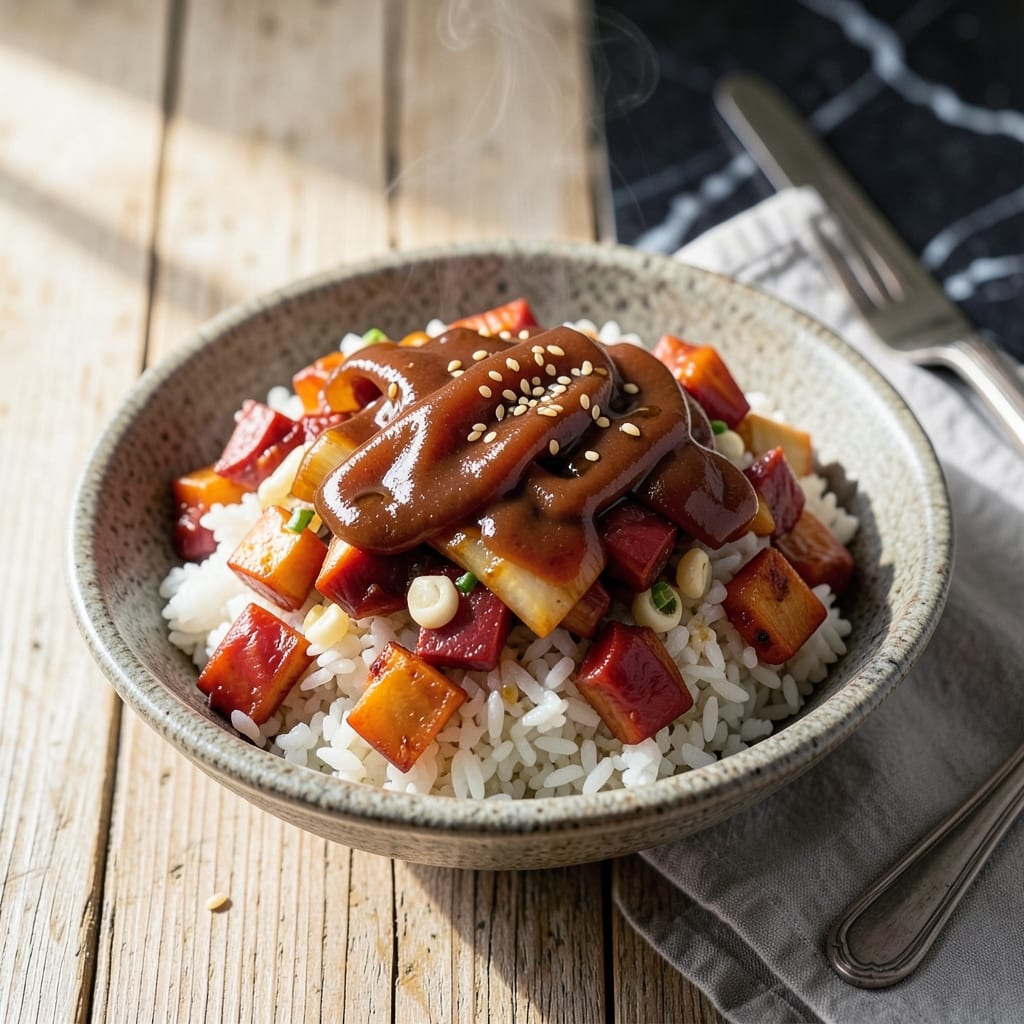
This Korean-inspired fried rice transforms leftover rice into a bold, spicy meal with minimal effort. The key lies in using well-fermented kimchi for maximum depth of flavor.
I’ve perfected this dish by sautéing kimchi with gochujang, creating a rich base that coats every grain. A touch of sesame oil adds aromatic complexity without overpowering.
The result is a dish with crispy edges, tender bits of kimchi, and a heat level that’s adjustable to taste. Topped with a fried egg, it’s comfort food at its best.
Ready in under 20 minutes, it’s ideal for a quick weeknight dinner. Here’s how to make it right.
Ingredients for Kimgaru Rice
Cold rice, fermented kimchi, and a few pantry staples make this dish sing.
| Ingredient | Amount | Notes |
|---|---|---|
| Cooked White Rice 🍚 | 4 cups | Day-old, cold, for best texture |
| Kimchi 🥬 | 1 ½ cups | Well-fermented, chopped with juices |
| Gochujang 🌶️ | 2 tbsp | Korean red chili paste |
| Sesame Oil 🫒 | 1 tbsp | Toasted variety preferred |
| Vegetable Oil 🫒 | 2 tbsp | Neutral flavor for frying |
| Garlic Cloves 🧄 | 3 cloves | Minced for aromatic base |
| Small Onion 🧅 | 1 whole | Diced for savory depth |
| Green Onions 🧅 | 4 whole | Thinly sliced for garnish |
| Soy Sauce 💧 | 2 tbsp | Low-sodium if preferred |
| Sesame Seeds 🌰 | 1 tsp | Toasted for garnish |
| Large Eggs 🥚 | 4 whole | Fried for topping |
| Kosher Salt 🧂 | ½ tsp | Adjust to taste |
| Black Pepper 🌶️ | ¼ tsp | Freshly ground preferred |
| Sugar 🍚 | 1 tsp | Balances acidity and heat |
| Optional Protein 🥩 | ½ lb | Spam or bacon, diced |
The kimchi is non-negotiable here. Look for well-fermented, sour-smelling napa cabbage kimchi—the kind with a good tang. H Mart or Korean grocery stores have the best selection, but most Whole Foods carry decent options now. Gochujang adds that deep, spicy-sweet base; Sempio or Chung Jung One are reliable brands. The rice must be cold and dry (day-old works perfectly) or it’ll turn mushy.
No gochujang? Miso paste plus extra chili flakes gets you close, but it’s not the same. Fresh kimchi only? Add a splash of rice vinegar to mimic the fermented tang. Swap the eggs for tofu if you want it vegetarian. The protein is optional—Spam is traditional (yes, really), but diced bacon or even leftover bulgogi works too. For extra crisp, press the rice into the pan and let it form a crust.
Leftovers keep 3-4 days in the fridge, but the egg is best fresh. Reheat in a skillet with a splash of water to revive the texture. Freezes for 2 months—just omit the egg until reheating. (Pro tip: fry the egg separately and add it on top when serving.)
Why You’ll Love This Recipe
- I’ll be real: a little kimchi and rice feeds me for days without breaking the bank.
- One Pot Wonder: I just dump cooked rice, kimchi, and gochujang in a pan with a splash of sesame oil—no fancy steps.
- Flavor Bomb: The tangy kimchi and spicy gochujang hit differently every time, with that nutty sesame oil finish.
- Lunchbox Hero: Honestly, it’s my go-to for meal prep—tastes even better the next day, cold or microwaved.
Step-by-Step Instructions for Spicy Korean-Style Kimchi Fried Rice
Here’s how I nail this dish every time—quick, fiery, and packed with umami.
Step 1: Prep Aromatics and Protein
Start by dicing the small onion into small, even pieces so they soften quickly. Mince the 3 cloves garlic cloves finely—they’ll melt into the rice for maximum flavor. If using the 0.5 lb optional protein, dice it into small cubes so it cooks fast and distributes evenly.
Thinly slice the 4 whole green onions, separating the white and green parts. You’ll use the whites for cooking and reserve the greens for garnish. Having everything prepped before cooking ensures you won’t burn the garlic or overcook the protein while chopping mid-process.
Step 2: Sauté the Base for Maximum Flavor
Heat 2 tbsp vegetable oil in a large skillet or wok over medium-high heat. Add the diced small onion and cook for 2-3 minutes until translucent and slightly softened. Toss in the minced garlic cloves and cook for 30 seconds until fragrant—don’t let it brown or it’ll turn bitter.
If using, add the 0.5 lb optional protein and cook until lightly browned and crispy, about 4-5 minutes. This step builds the foundation of flavor, so take your time. The onions should be sweet, the garlic aromatic, and the protein perfectly rendered.
Step 3: Combine Rice, Kimchi, and Sauce
Add the 1.5 cups kimchi (with its juices) to the skillet and cook for 2 minutes to mellow its sharpness. Break up the 4 cups cooked white rice with your hands or a spoon—day-old, cold rice works best because it fries up fluffy instead of mushy.
Stir in the 2 tbsp gochujang, 2 tbsp soy sauce, 1 tsp sugar, 0.5 tsp kosher salt, and 0.25 tsp black pepper. Mix everything together and press the rice into the pan. Let it sit undisturbed for 2-3 minutes to develop a lightly crispy bottom layer—this is the texture you’re after.
Step 4: Finish with Sesame Oil and Eggs
Drizzle the 1 tbsp sesame oil over the rice and toss to coat evenly. The toasted sesame oil adds depth and a nutty aroma that ties all the flavors together. Push the rice to one side of the pan and crack the 4 whole large eggs into the empty space.
Scramble the eggs lightly and cook until just set but still creamy, about 1-2 minutes. Fold them into the rice, then taste and adjust seasoning if needed. The eggs should be soft and silky, not dry or rubbery.
Step 5: Garnish and Serve Immediately
Transfer the fried rice to serving bowls and garnish with the reserved green onion slices and 1 tsp sesame seeds. The contrast of the cool, crisp greens and nutty sesame seeds against the hot, spicy rice is what makes this dish sing.
Serve right away while the rice is hot and the bottom is still slightly crisp. Each bite should deliver a balance of heat from the gochujang, tang from the kimchi, and umami from the soy sauce, all tied together with the rich, creamy eggs.
Pro Tips For Making Kimgaru Rice
- Use Day-Old Rice: Fresh rice turns mushy—leftover, cold rice holds its grain structure better when stir-frying. I learned this the hard way after ending up with a gluey mess more than once.
- Squeeze Out Kimchi: Drain and squeeze the kimchi before chopping to remove excess liquid, otherwise your dish will be watery instead of nicely coated.
- Bloom the Gochujang: Heat the gochujang in a little vegetable oil for 30 seconds before adding rice—this deepens the flavor and prevents clumping.
- Finish with Sesame Oil: Drizzle the sesame oil at the very end, off the heat, to preserve its nutty aroma. Adding it too early makes it bitter.
Health Benefits of This Recipe
Gut Health Boost
Kimchi is packed with probiotics like lactobacillus that support your digestive system. One serving of this dish provides billions of beneficial bacteria that improve gut flora balance. I notice better digestion when I eat kimchi regularly. 💪
Rich in Antioxidants
The fermented napa cabbage in kimchi contains vitamin C and beta-carotene, powerful antioxidants that combat oxidative stress. Gochujang adds capsaicin, which has anti-inflammatory properties and may boost metabolism.
Low-Calorie Nutrition
A 1-cup serving of this rice contains about 300 calories without optional proteins. It’s packed with fiber from vegetables and complex carbs from rice, keeping you full while supporting steady energy levels throughout your day.
Vitamin-Rich Profile
This dish delivers vitamin A from kimchi, B vitamins from rice, and vitamin K from green onions. The eggs add vitamin D and choline, essential for brain health and cell function. It’s a complete nutritional package in one bowl.
Immune Support
Garlic and kimchi combine to create a powerful immune-boosting duo. The allicin in garlic and probiotics in kimchi work synergistically to strengthen your body’s natural defenses. I always feel more resilient during cold season when eating this regularly. ✨
Heart-Healthy Fats
Sesame oil provides polyunsaturated fats that support heart health. When used in moderation as in this recipe (1 tbsp), it contributes to a balanced lipid profile while adding that characteristic nutty flavor we all love.
Nutrition Facts
Frequently Asked Questions
Can I use fresh rice instead of day-old?
Fresh rice has too much moisture and will turn mushy when fried. For best texture, use cold, day-old rice that’s had time to dry out in the fridge. Spread it on a tray to speed up the process if needed.
How do I adjust the spice level?
Reduce the gochujang to 1 tbsp for mild heat or add 1 tsp chili flakes for extra kick. Sour kimchi also increases spiciness, so taste it first. Balance heat with a pinch of sugar.
What if my kimchi isn’t sour enough?
Add 1 tbsp rice vinegar or 1 tsp lemon juice to mimic the tang. Let it sit for 10 minutes before cooking. The acidity is key for authentic flavor.
Can I make this vegetarian?
Skip the optional protein and use tofu instead. Press and cube ½ lb firm tofu, then pan-fry until crispy. The dish stays flavorful with just kimchi, rice, and eggs.

- Machboos Rice Recipe: Bahraini Spiced One-Pot Tradition - September 25, 2026
- Recipe For Zucchini Rice Casserole: Cheesy Bake With Garden Freshness - September 25, 2026
- Somali Banana and Rice Recipe: Sweet and Spiced East African Tradition - September 25, 2026