
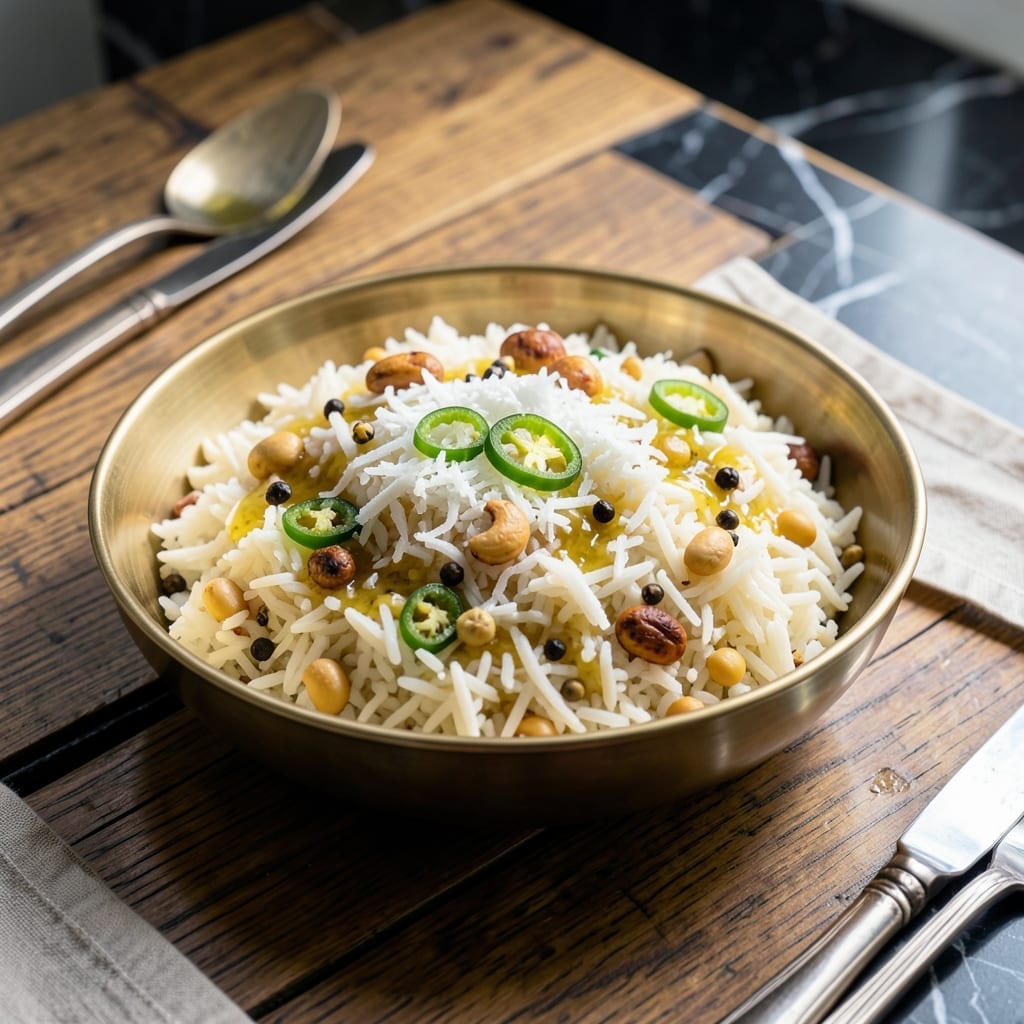
This traditional coconut rice brings authentic South Indian flavors to your kitchen with minimal effort.
The dish combines fresh grated coconut with fragrant spices and fluffy rice for a perfectly balanced meal. I’ve adapted this method to work with standard ingredients while maintaining true Telugu-style taste.
What emerges is a lightly spiced, subtly sweet rice with the rich aroma of toasted coconut in every bite. The technique ensures each grain stays separate while absorbing all the flavors.
Serve it with yogurt or a simple vegetable curry for a complete meal that honors tradition.
Ingredients for Kobbari Rice Recipe in Telugu
Traditional South Indian ingredients create this aromatic coconut-infused rice dish with ease.
| Ingredient | Amount | Notes |
|---|---|---|
| Basmati Rice 🍚 | 2 cups | Rinsed until water runs clear |
| Fresh Grated Coconut 🥥 | 1 ½ cups | Unsweetened, tightly packed |
| Green Chilies 🌶️ | 3 whole | Slit lengthwise, seeds removed |
| Mustard Seeds 🌿 | 1 tsp | Black or yellow variety |
| Chana Dal 🌾 | 1 tbsp | Split Bengal gram lentils |
| Urad Dal 🌾 | 1 tbsp | Black gram lentils, split |
| Curry Leaves 🍃 | 12 pieces | Fresh, roughly torn |
| Asafoetida 🧂 | ¼ tsp | Hing, pinch for aroma |
| Turmeric Powder 🌶️ | ½ tsp | Ground, for color |
| Salt 🧂 | 1 ½ tsp | Adjust to taste |
| Cashew Nuts 🌰 | ¼ cup | Broken into pieces |
| Ghee 🧈 | 3 tbsp | Clarified butter, vegetarian |
| Water 💧 | 4 cups | For cooking rice |
The coconut is non-negotiable here. Freshly grated from a mature coconut delivers the authentic texture and flavor—avoid desiccated or sweetened shredded varieties. Indian grocery stores often carry pre-grated fresh coconut in the refrigerated section. For the dals, Patel Brothers or local Indian markets stock high-quality chana and urad dal. Asafoetida (hing) must be pure and food-grade for the best aroma.
No fresh coconut? Frozen grated coconut (thawed and drained) works in a pinch. Out of curry leaves? Dried curry leaves at half the quantity provide some flavor, though fresh is ideal. For a nut-free version, skip the cashews or replace with sunflower seeds. The ghee can be substituted with neutral coconut oil, but clarified butter adds a depth that’s hard to replicate.
Store fresh grated coconut in an airtight container in the fridge for up to 3 days. The dals keep indefinitely in a cool, dry place. Prepared rice stays fresh for 2-3 days refrigerated, though it’s best enjoyed immediately for the fluffiest texture.
Why You’ll Love This Recipe
- One-Pot Wonder: I toss everything in a single pot—mustard seeds sizzling, chana dal toasting, coconut adding its sweet crunch. Cleanup is a breeze.
- That Coconut Crunch: Fresh grated coconut gives this rice a nutty richness that pairs perfectly with the heat of green chilies. Honestly, it’s the texture I crave.
- Feeds a Crowd: Whether it’s a lazy Sunday lunch or a quick weeknight dinner, this dish stretches effortlessly. My family asks for seconds every time.
Step-by-Step Instructions for Coconut-Infused Rice
This traditional method ensures perfectly fluffy rice with rich coconut flavor in every bite.
Step 1: Prepare and Temper the Aromatics
Heat 3 tbsp Ghee in a heavy-bottomed pot over medium heat. Add 1 tsp Mustard Seeds and let them splutter until they pop and release their aroma. Immediately add 1 tbsp Chana Dal, 1 tbsp Urad Dal, and 0.25 cup Cashew Nuts, stirring constantly.
Cook for 2-3 minutes until the dals turn light golden brown and the cashews are lightly toasted. Add 0.25 tsp Asafoetida, 12 pieces Curry Leaves, and 3 whole Green Chilies, then sauté for 30 seconds until the curry leaves become fragrant. This tempering process builds the flavor foundation for the dish.
Step 2: Toast the Coconut and Spices
Add 1.5 cups Fresh Grated Coconut to the pot and stir continuously for 3-4 minutes on medium-low heat. The coconut should turn slightly golden and release its natural oils. Watch carefully to prevent burning.
Sprinkle in 0.5 tsp Turmeric Powder and 1.5 tsp Salt, stirring to coat the coconut evenly. The turmeric will turn the mixture a vibrant yellow, signaling that the spices are properly incorporated. The aroma at this stage should be rich and nutty with a hint of spice from the chilies.
Step 3: Cook the Rice to Perfection
Add the 2 cups Basmati Rice (already rinsed until water runs clear) to the pot and stir for 1-2 minutes to coat the grains with the coconut mixture. This toasting step enhances the rice’s natural fragrance and prevents it from turning mushy.
Pour in 4 cups Water and stir gently. Bring to a boil, then reduce heat to low, cover the pot with a tight-fitting lid, and simmer for 15-18 minutes. The water should be fully absorbed and the rice should be fluffy and tender when done.
Step 4: Rest and Fluff for Optimal Texture
Turn off the heat and let the rice sit covered for 10 minutes. This resting period allows the steam to redistribute, ensuring even cooking and preventing the rice from becoming sticky.
Gently fluff the rice with a fork, taking care not to break the grains. The final dish should have distinct, separate grains with a rich coconut aroma and a subtle crunch from the cashews and toasted dals. Serve warm for the best experience.
Pro Tips For Making Kobbari Rice Recipe In Telugu
- Toast the Coconut: Dry roast the fresh grated coconut on medium-low heat until it turns light golden—about 4-5 minutes. I learned this the hard way: raw coconut can taste bland and leave the dish watery.
- Soak the Rice: Give your basmati rice a 20-minute soak in cold water before cooking. My grandmother swore by this, and she was right: it keeps the grains separate and fluffy, not mushy.
- Temper the Dal: When tempering chana dal with mustard seeds, wait until the dal turns light brown—about 2 minutes after the seeds start popping. Resist the urge to rush; undercooked dal tastes chalky.
- Slit the Chilies: Slit green chilies lengthwise instead of chopping them. Sounds weird, but it works: it releases just enough heat without overpowering the coconut flavor.
Serving Suggestions for This Dish
Traditional Pairings
This dish shines alongside cooled cucumber raita—the creamy yogurt with ½ tsp cumin and fresh mint balances the coconut’s richness. I also love serving it with tamarind chutney for a sweet-tangy contrast that cuts through the richness. 💛
Vegetable Companions
A simple stir-fried cabbage with mustard seeds and turmeric complements the rice beautifully. For a heartier meal, add steamed green beans tossed with a pinch of salt and a squeeze of lemon.
Protein Additions
For a non-vegetarian twist, serve with spicy chicken curry or fish fry. The coconut in the rice pairs wonderfully with the bold spices of Andhra-style chicken or tangy fish preparations.
Fresh Accompaniments
Garnish with fresh cilantro and a wedge of lime for brightness. A side of pickled onions or mango pickle adds a zesty kick that elevates the meal.
Beverage Choices
Serve with sweet lassi or masala chai to complement the flavors. For a refreshing contrast, coconut water or a cooling mint lemonade works perfectly. 🍵
Serving Style
Present the rice on a banana leaf for an authentic touch, or use a wide bowl to showcase its fluffy texture. I always serve it family-style, letting everyone dig in together.
Nutrition Facts
Frequently Asked Questions
Can I use desiccated coconut instead of fresh?
Fresh grated coconut is ideal for authentic flavor and texture. Desiccated coconut can work in a pinch, but rehydrate it in warm water for 10 minutes and drain well before using.
Why do we temper mustard seeds first?
Tempering mustard seeds in hot ghee releases their nutty aroma and enhances the dish’s depth. This step, called tadka, is crucial for building traditional South Indian flavors.
How can I prevent the rice from turning mushy?
Rinse the rice until water runs clear to remove excess starch. Toast it briefly in the coconut mixture and use the exact 2:1 water-to-rice ratio. Rest covered for 10 minutes after cooking.
What’s the best way to serve leftover rice?
Reheat gently with a splash of water in a covered pan over low heat. Leftovers make great fried rice or can be shaped into coconut rice balls for a fun twist.

- Mujadara Rice and Lentils Recipe: Earthy Spiced Lentils With Caramelized Onions - November 1, 2026
- Naija Fried Rice Recipe: Street-Style Spice With Veggie Crunch - November 1, 2026
- Mushy Rice Recipe: Fluffy Grains Transformed in Minutes - November 1, 2026