
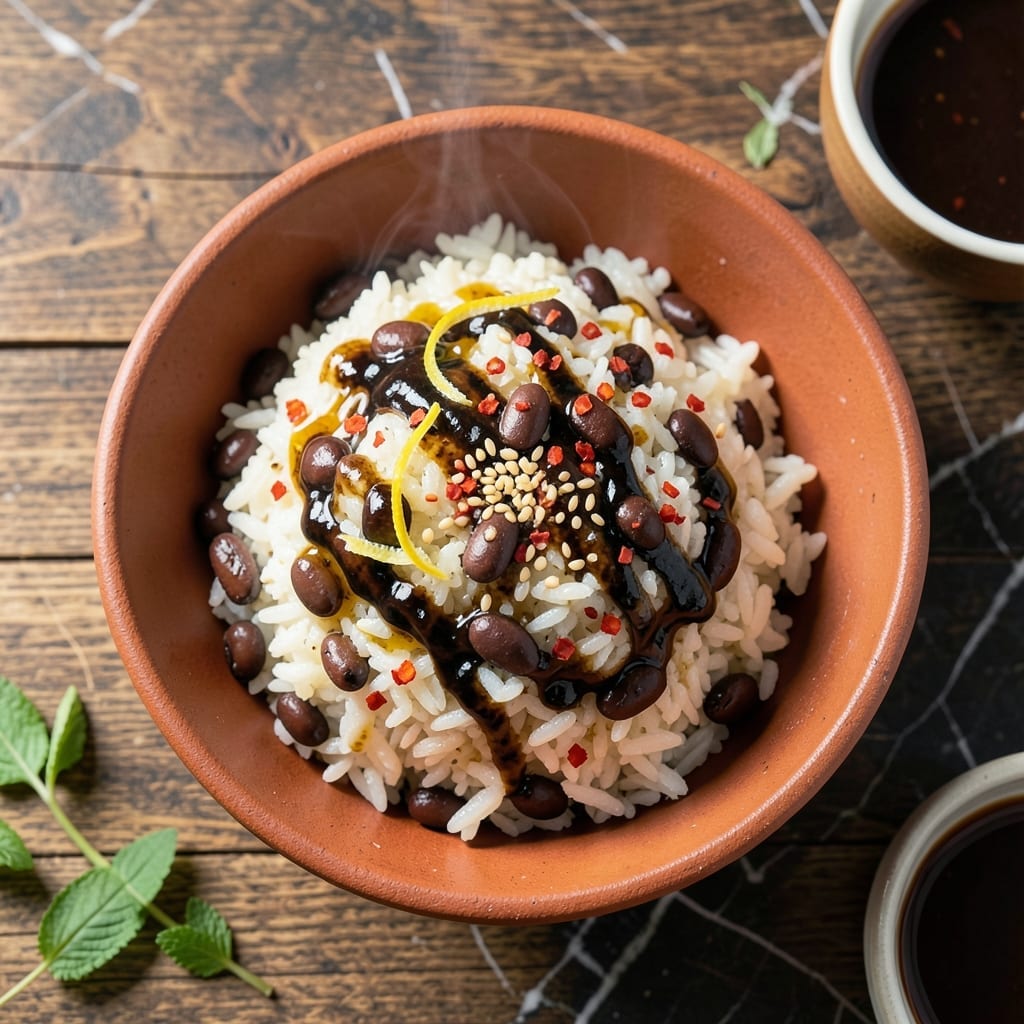
This Korean dish transforms simple rice into a flavor-packed meal with minimal effort. The combination of beans and fermented spice creates a nutty depth that’s both comforting and complex.
I’ve perfected the balance of textures—soft grains with slight bean resistance—while keeping the method straightforward. The fermented spice adds a subtle tang that elevates each bite without overpowering.
What results is a savory, aromatic rice dish that works as a main or side. The beans contribute protein, making it hearty enough for any meal.
Traditional techniques ensure authentic flavor in under 45 minutes. Here’s how to achieve it at home.
Ingredients for Korean Bean Rice
Transform simple rice and beans into this savory, aromatic Korean dish with fermented depth.
| Ingredient | Amount | Notes |
|---|---|---|
| Short-Grain White Rice 🍚 | 2 cups | Rinsed until water runs clear |
| Dried Black Beans 🫘 | 1 cup | Soaked overnight or quick-soaked |
| Korean Fermented Soybean Paste 🍛 | 3 tbsp | Doenjang preferred for authentic flavor |
| Korean Red Pepper Flakes 🌶️ | 1 tbsp | Gochugaru for mild heat |
| Sesame Oil 🫒 | 1 tbsp | Toasted for depth of flavor |
| Vegetable Broth 🥫 | 2 ½ cups | Low-sodium preferred for control |
| Garlic Cloves 🧄 | 4 cloves | Minced for even distribution |
| Fresh Ginger 🌿 | 1 tbsp | Finely grated for maximum infusion |
| Green Onions 🧅 | 4 whole | Thinly sliced for garnish |
| Sesame Seeds 🌰 | 1 tbsp | Toasted for garnish |
| Soy Sauce 🥫 | 2 tbsp | Low-sodium or tamari for gluten-free |
| Rice Vinegar 🍚 | 1 tbsp | Balances richness of fermented paste |
| Mushroom 🍄 | ½ cup | Shiitake preferred, sliced thin |
| Zucchini 🥒 | 1 whole | Diced into small cubes |
The fermented soybean paste is non-negotiable for authenticity. Doenjang from Korean markets or H Mart delivers the correct funky depth (avoid Japanese miso—it’s different). Black beans must be soaked overnight for the right texture; canned beans work in a pinch but lack the firm bite. Use short-grain rice—jasmine or sushi rice—long-grain won’t absorb the flavors properly.
No doenjang? Miso paste plus extra gochugaru gets you 80% there, but the flavor profile shifts. Substitute adzuki or mung beans for black beans if needed. Vegetable broth can be water in a bind, but you’ll lose depth. For heat adjustments, reduce or omit gochugaru—the doenjang carries enough complexity on its own.
Leftovers keep 4-5 days refrigerated and freeze beautifully for 3 months. The flavors deepen overnight, making it perfect for meal prep. Reheat with a splash of water to revive the rice’s texture (microwave works, but stovetop is gentler).
Why You’ll Love This Recipe
- One Pot Wonder: I just toss everything in my rice cooker and let it do the work—no babysitting required.
- Umami Bomb: The fermented soybean paste and sesame oil create this deep, savory richness that hits all the right notes.
- Meatless Marvel: Honestly, it’s my go-to for Meatless Mondays and still satisfies even the biggest meat lovers at the table.
- Budget Stretcher: A cup of dried beans and rice feeds my family for days, and the leftovers taste even better the next day.
Step-by-Step Instructions for Korean Bean Rice
Master the technique for perfectly balanced flavors and textures in this traditional dish.
Step 1: Prepare and Soak the Black Beans
Begin by rinsing the 1 cup Dried Black Beans under cold water to remove any debris. Place them in a large bowl and cover with 3 cups of water for an overnight soak. This softens the beans and reduces cooking time significantly.
If you’re short on time, use the quick-soak method: cover the beans with water, bring to a boil for 2 minutes, then remove from heat and let stand for 1 hour. Drain and rinse before using—this ensures even cooking and prevents any bitter aftertaste.
Step 2: Cook the Rice and Beans Together
Rinse the 2 cups Short-Grain White Rice until the water runs clear. In a rice cooker or heavy pot, combine the drained beans, rice, 2.5 cups Vegetable Broth, 3 tbsp Korean Fermented Soybean Paste, and 1 tbsp Sesame Oil. Stir gently to distribute the paste evenly.
Cook according to your rice cooker’s standard setting or on the stovetop: bring to a boil, then reduce to a simmer, cover, and cook for 25-30 minutes. The rice and beans should absorb all the liquid, and the grains should be tender with a slight chew.
Step 3: Prepare the Aromatic Vegetable Mix
While the rice cooks, heat a small pan over medium heat. Add the 1 tbsp Sesame Oil, then sauté the 4 cloves Garlic Cloves (minced), 1 tbsp Fresh Ginger (finely grated), 0.5 cup Mushroom (sliced thin), and 1 whole Zucchini (diced) for 5-7 minutes until the vegetables soften and the mushroom releases its moisture.
Stir in the 1 tbsp Korean Red Pepper Flakes, 2 tbsp Soy Sauce, and 1 tbsp Rice Vinegar. Cook for another 2 minutes until the mixture becomes fragrant and the liquid reduces slightly. This builds a flavorful base to mix into the rice.
Step 4: Combine and Finish the Dish
Once the rice and beans are cooked, fluff them gently with a fork. Pour the aromatic vegetable mixture over the rice and fold everything together carefully to avoid breaking the grains. The Korean Fermented Soybean Paste should coat the rice evenly, giving it a rich, umami depth.
Cover and let the dish sit for 5-10 minutes to allow the flavors to meld. The rice should be glossy and slightly sticky, with the beans tender throughout. Taste and adjust seasoning if needed, though the soybean paste and soy sauce typically provide enough saltiness.
Step 5: Garnish and Serve
Just before serving, sprinkle the top with 4 whole Green Onions (thinly sliced) and 1 tbsp Sesame Seeds (toasted). The green onions add a fresh, sharp contrast, while the sesame seeds provide a nutty crunch and visual appeal.
Serve warm in bowls, ensuring each portion has a good mix of rice, beans, and vegetables. The dish should have a harmonious balance of earthy, spicy, and umami flavors with a satisfying, slightly chewy texture.
Pro Tips For Making Korean Bean Rice
- Soak the Beans: I learned this the hard way—dried black beans need at least 4 hours in water, or they’ll stay rock-hard no matter how long you cook the rice.
- Toast the Paste: Before mixing the fermented soybean paste into the rice, give it a quick sauté in sesame oil for 1-2 minutes to deepen the flavor.
- Skip the Rinse: Resist the urge to rinse the short-grain rice too much—you’ll wash away the starch that makes the dish creamy and slightly sticky.
- Finish with Oil: After cooking, drizzle a teaspoon of sesame oil over the top and let it sit covered for 5 minutes to lock in the aroma.
Common Mistakes When Making korean bean rice
Over-Soaking Beans
Soaking beans for more than 12 hours can make them too soft, causing them to turn mushy during cooking. I’ve found 8-10 hours is the sweet spot for black beans to maintain their shape while becoming tender. Drain and rinse them thoroughly afterward to remove excess starch. 💡
Skipping the Rinse
Failing to rinse the short-grain rice until the water runs clear leaves behind excess starch, resulting in a gummy texture. Use cold water and agitate the rice with your hand, changing the water 3-4 times until it’s nearly transparent. This ensures fluffy, separate grains.
Undercooking the Beans
Adding under-soaked beans directly to the rice cooker leads to uneven cooking. If using the quick-soak method, ensure the beans have fully rehydrated and expanded. They should be slightly tender before combining with rice, or they’ll remain hard in the center. 🔥
Overpowering the Paste
Using too much Korean Fermented Soybean Paste can make the dish overly salty or bitter. Stick to 3 tbsp for 2 cups of rice, as the paste concentrates during cooking. Taste before serving and adjust with a pinch of sugar if needed.
Neglecting the Aromatics
Skipping the garlic, ginger, and vegetables in the aromatic mix robs the dish of its depth. Sauté them in sesame oil for 5-7 minutes until fragrant—this builds the flavor foundation that defines the meal. Don’t rush this step.
Improper Resting Time
Serving immediately after cooking prevents the flavors from melding. Let the dish rest covered for 5-10 minutes off the heat. This allows the rice to absorb any remaining liquid and the doenjang to fully infuse every bite.
Nutrition Facts
Frequently Asked Questions
Can I use canned beans instead of dried?
Yes, but rinse them well and reduce broth to 2 cups. Canned beans are softer, so add them halfway through cooking to prevent mushiness.
What rice works best?
Short-grain white rice is ideal for its sticky texture. Avoid long-grain varieties, as they won’t absorb the fermented flavors as well.
How spicy is this dish?
Mild by default—the 1 tbsp gochugaru adds subtle heat. Reduce or omit it for no spice, or add extra for more kick.
Can I make this ahead?
Flavors deepen overnight. Store in an airtight container for up to 5 days or freeze for 3 months.

- Mujadara Rice and Lentils Recipe: Earthy Spiced Lentils With Caramelized Onions - November 1, 2026
- Naija Fried Rice Recipe: Street-Style Spice With Veggie Crunch - November 1, 2026
- Mushy Rice Recipe: Fluffy Grains Transformed in Minutes - November 1, 2026