
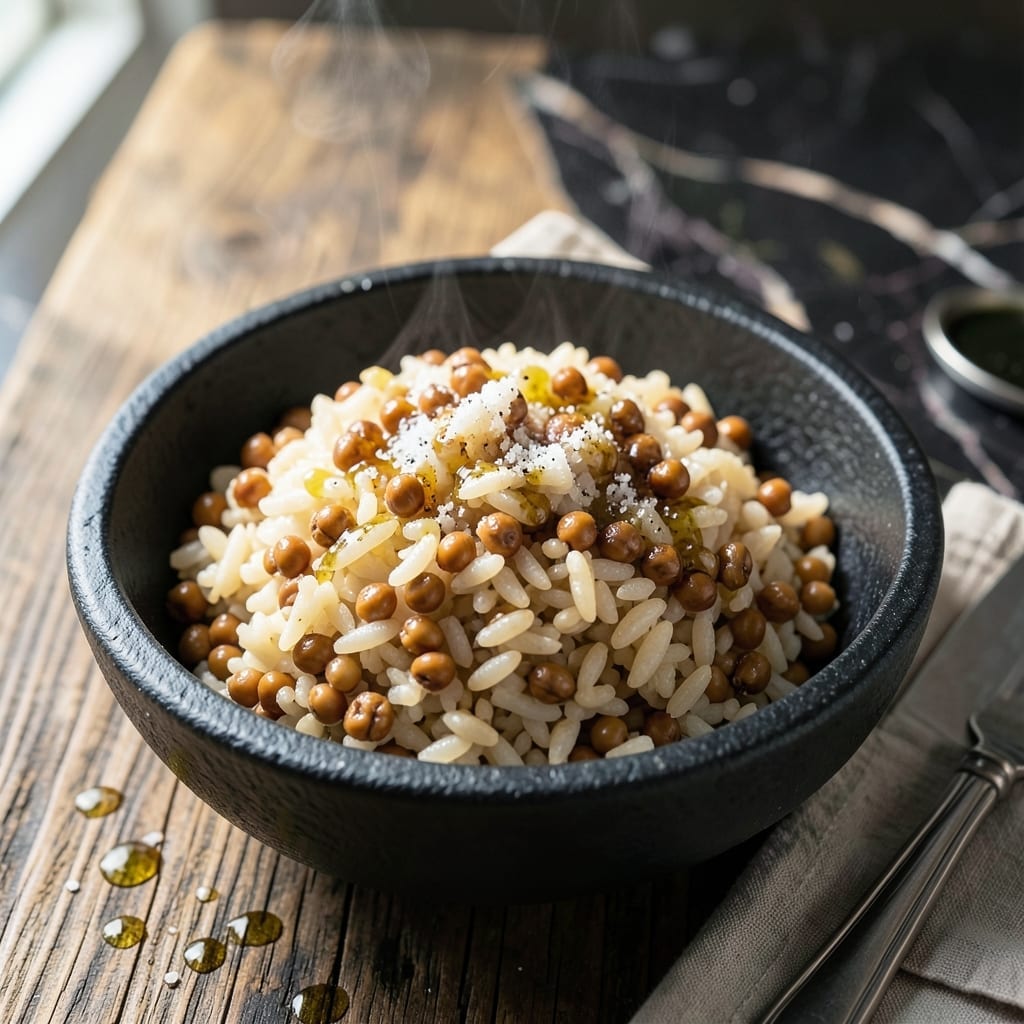
This traditional dish combines short-grain rice with barley for a satisfying texture that’s both chewy and nutty. The grains cook together, absorbing flavors while maintaining their distinct characters.
Using a simple ratio and 30 minutes of simmering, you’ll achieve a perfectly balanced side that pairs beautifully with any Korean meal. The technique is straightforward yet delivers authentic results.
Ingredients for Korean Barley Rice
Short-grain rice and barley create this dish’s signature chewy, nutty texture together effortlessly.
| Ingredient | Amount | Notes |
|---|---|---|
| Short-Grain White Rice 🍚 | 1 ½ cups | Rinsed until water runs clear |
| Pearl Barley 🌾 | ½ cup | Rinsed thoroughly before cooking |
| Water 💧 | 3 ½ cups | Or use vegetable broth for extra flavor |
| Kosher Salt 🧂 | 1 tsp | Diamond Crystal preferred for even distribution |
| Toasted Sesame Oil 🫒 | 1 tbsp | Added after cooking for aroma |
| Vegetable Oil 🛢️ | 1 tsp | For toasting grains lightly |
| Garlic Cloves 🧄 | 2 cloves | Minced finely for even flavor |
| Green Onions 🧅 | 3 whole | Thinly sliced for garnish |
| Sesame Seeds 🌰 | 1 tbsp | Toasted for garnish |
| Soy Sauce 🥄 | 1 tbsp | Low-sodium variety recommended |
The rice and barley ratio is critical for authentic texture. Short-grain white rice (like Calrose) provides the necessary stickiness, while pearl barley adds the chew. Look for these at Korean markets or well-stocked Whole Foods locations. The grains should be rinsed separately until the water runs completely clear—this removes excess starch and prevents gummy results.
No pearl barley? Hulled barley at 1:1 ratio works but increases cooking time by 15 minutes. For extra depth, toast the grains in vegetable oil for 2 minutes before adding liquid. Soy sauce can be swapped for tamari (gluten-free) or coconut aminos. The sesame oil is non-negotiable for authentic flavor—Kadoya or Ottogi brands are ideal.
Cooked barley rice keeps 4-5 days refrigerated in an airtight container. Freeze for up to 3 months in portions. Reheat with a splash of water to restore moisture. The grains separate easily when cold, making this perfect for meal prep.
Why You’ll Love This Recipe
- One Pot Wonder: I just toss the rice and barley into a pot with water, salt, and a drizzle of sesame oil—no fuss, no extra dishes.
- Nutty Comfort: The barley adds this subtle chew and toasty depth that makes every bite feel hearty and satisfying.
- Meal Prep Hero: Honestly, it keeps beautifully for days, so I make a big batch for lunches or lazy dinners.
- Pantry Friendly: Between us, pearl barley and short-grain rice are cheap staples I always have on hand.
Step-by-Step Instructions for Korean Barley Rice
Master the technique for perfectly cooked grains with distinct texture and rich flavor.
Step 1: Rinse and Prep the Grains
Place the 1.5 cups Short-Grain White Rice in a fine-mesh strainer and rinse under cold water, swirling with your hand, until the water runs completely clear. This removes excess starch that could make the rice gummy.
In a separate bowl, rinse the 0.5 cup Pearl Barley thoroughly under cold water. These grains absorb differently, so keeping them separate during rinsing ensures even cooking later. Drain both well in their respective strainers.
Step 2: Toast the Grains for Enhanced Flavor
Heat the 1 tsp Vegetable Oil in a medium saucepan over medium heat. Add the drained pearl barley and stir for 2-3 minutes until the grains turn slightly golden brown and release a nutty aroma. This toasting step deepens the flavor profile.
Add the drained short-grain white rice to the pan and stir for an additional 1 minute to lightly toast. This ensures both grains develop complementary nutty notes without over-browning.
Step 3: Cook with Aromatics
Pour in the 3.5 cups Water and add the 1 tsp Kosher Salt. Stir in the 2 cloves minced Garlic Cloves for an even distribution of flavor. Bring the mixture to a rolling boil over high heat.
Once boiling, reduce the heat to low, cover the pot with a tight-fitting lid, and simmer for 35-40 minutes. Resist the urge to lift the lid—steam is critical for proper cooking. The grains are done when the liquid is fully absorbed and the barley is tender but still slightly chewy.
Step 4: Rest and Finish
Remove the pot from heat and let it sit, covered, for 10 minutes. This resting period allows the grains to steam in their own residual heat, ensuring even texture throughout. The rice will be tender and the barley will have a pleasant, al dente bite.
Gently fluff the mixture with a fork to separate the grains. Drizzle with the 1 tbsp Toasted Sesame Oil and fold it in evenly. This adds a rich, aromatic finish that ties all the flavors together.
Step 5: Garnish and Serve
Transfer the rice to a serving bowl. Thinly slice the 3 whole Green Onions and sprinkle them over the top along with the 1 tbsp Sesame Seeds. For an extra layer of umami, drizzle with the 1 tbsp Soy Sauce just before serving.
Serve immediately while warm. The grains should be distinct yet cohesive, with the barley offering a nutty chew and the rice providing a soft, slightly sticky contrast. Each bite delivers a harmonious blend of textures and flavors.
Pro Tips For Making Korean Barley Rice
- Soak the Barley: I learned this the hard way—soak the pearl barley for at least 30 minutes before cooking to soften it, otherwise it stays tough and undercooked while the rice turns to mush.
- Rinse the Rice: Rinse the short-grain white rice until the water runs clear to remove excess starch, which keeps the barley rice from turning gummy.
- Adjust the Water: Barley absorbs more liquid than rice, so use a 1:2.5 ratio of grains to water (1 cup rice + 1/4 cup barley to 2.5 cups water) for perfect doneness.
- Finish with Sesame Oil: Stir in toasted sesame oil at the end—about 1 teaspoon per cup of cooked rice—for that nutty aroma that makes Korean barley rice taste authentic.
Best Sauces and Condiments for These Flavors
Classic Korean Sauces
Drizzle with doenjang (Korean soybean paste) mixed with 1 tbsp water for a salty, umami-rich sauce. I thin 1 tbsp doenjang with 1 tsp sesame oil for a smoother consistency. This pairs perfectly with the nutty grains. 💛
Spicy Gochujang Blend
Combine 1 tbsp gochujang (Korean chili paste) with 1 tsp honey and 1 tsp rice vinegar for a sweet-spicy kick. I love this contrast against the mild barley. The vinegar brightens the dish beautifully.
Sesame Soy Drizzle
Whisk together 1 tbsp soy sauce, 1 tsp toasted sesame oil, and ½ tsp sugar for a simple yet flavorful topping. This enhances the rice’s natural sweetness without overpowering it.
Kimchi Topping
Add ¼ cup chopped kimchi with its juices for a tangy, spicy crunch. I use napa cabbage kimchi for texture contrast. The probiotics add a healthy boost too.
Green Onion Oil
Blend ¼ cup green onions with 2 tbsp neutral oil and a pinch of salt. Heat until fragrant (1-2 minutes), then drizzle over your meal. This adds freshness and aroma.
Nutrition Facts
Frequently Asked Questions
Can I use a rice cooker for this?
Yes! Use the same 1:2.3 grain-to-water ratio and select the standard white rice setting. The barley may need an extra 5-10 minutes of steaming after the cycle completes.
Why rinse the grains separately?
Barley and rice release different amounts of starch. Rinsing them together can make the barley too starchy. Separate rinsing ensures perfect texture for both.
What if my barley isn’t fully cooked?
Add ¼ cup hot water, cover, and cook for another 5-10 minutes on low. Check frequently to avoid mushiness.
Can I substitute brown rice?
Yes, but increase water to 4 cups and cooking time to 45-50 minutes. The texture will be chewier but still delicious.

- Mujadara Rice and Lentils Recipe: Earthy Spiced Lentils With Caramelized Onions - November 1, 2026
- Naija Fried Rice Recipe: Street-Style Spice With Veggie Crunch - November 1, 2026
- Mushy Rice Recipe: Fluffy Grains Transformed in Minutes - November 1, 2026