
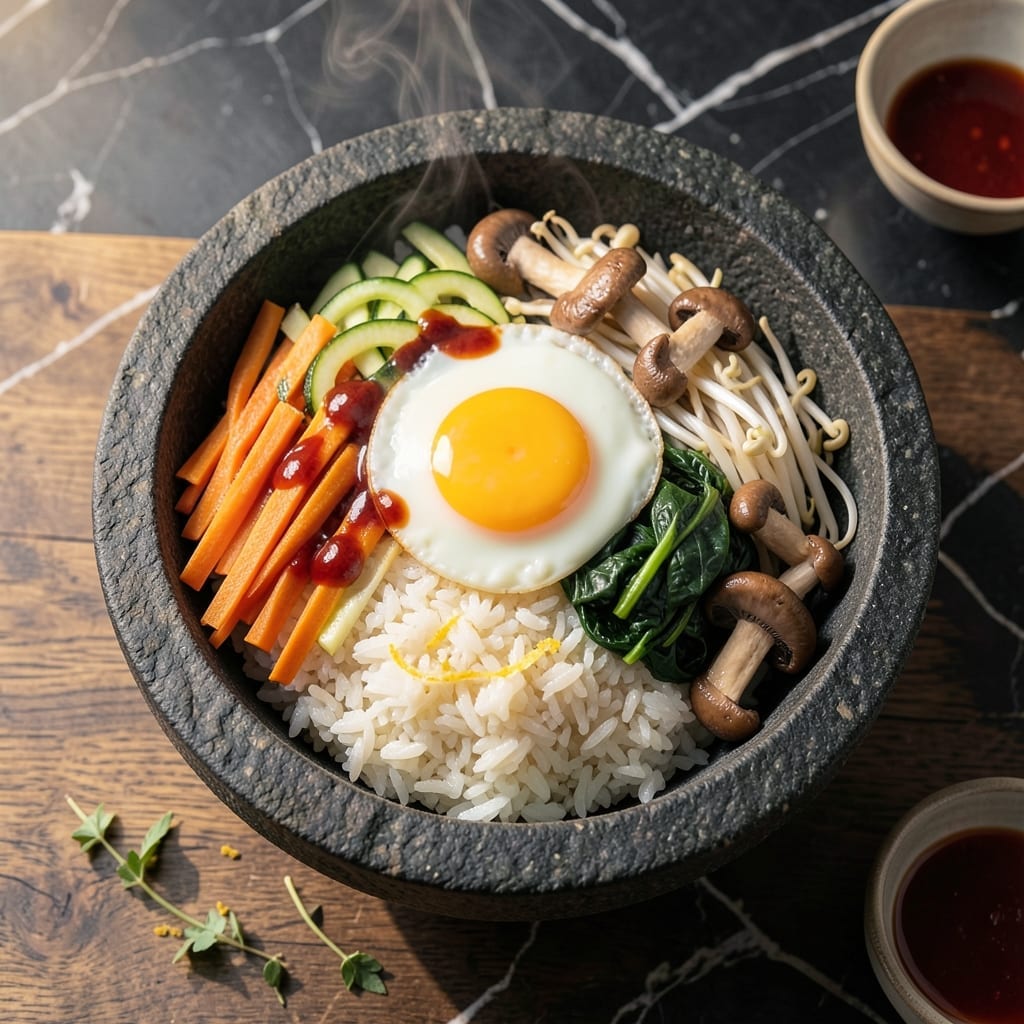
This vibrant Korean dish brings together steamed rice, fresh vegetables, and savory proteins in one satisfying bowl. The key is balancing textures and flavors—crunchy, tender, spicy, and umami all in each bite.
I perfected this method by cooking each vegetable separately to maintain its distinct character. The gochujang sauce ties everything together with its signature sweet-spicy depth. Proper rice preparation is essential for that sticky, slightly chewy foundation.
Traditional bibimbap features crispy rice at the bottom, achieved by using a stone bowl heated to 400°F. The sizzle when served adds drama and enhances the experience.
Arrange the toppings artfully and let diners mix their own portions. This dish is as beautiful as it is delicious.
Ingredients for Korean Bibimbap Rice Bowl
Fresh vegetables, savory proteins, and bold Korean flavors come together beautifully in this dish.
| Ingredient | Amount | Notes |
|---|---|---|
| Short-Grain White Rice 🍚 | 2 cups | Rinsed until water runs clear |
| Carrots 🥕 | 2 whole | Julienned for even cooking |
| Zucchini 🥒 | 1 whole | Cut into matchsticks |
| Spinach 🥬 | 4 cups | Fresh, washed and drained |
| Bean Sprouts 🌱 | 2 cups | Blanched for crunch |
| Shiitake Mushrooms 🍄 | 4 whole | Fresh, thinly sliced |
| Ground Beef 🥩 | ½ lb | Lean variety preferred |
| Eggs 🥚 | 4 whole | Sunny-side up for topping |
| Gochujang 🌶️ | ¼ cup | Korean chili paste |
| Soy Sauce 🫙 | 2 tbsp | Low-sodium recommended |
| Sesame Oil 🫒 | 1 tbsp | Toasted for aroma |
| Garlic Cloves 🧄 | 3 cloves | Minced finely |
| Sugar 🍚 | 1 tbsp | White granulated |
| Rice Vinegar 🍯 | 1 tbsp | For sauce balance |
| Sesame Seeds 🌰 | 1 tbsp | Toasted for garnish |
The rice is the foundation—short-grain white rice like Calrose is essential for that sticky, slightly chewy texture. Korean markets often carry the best varieties, but Whole Foods or Asian grocery stores are reliable. For the gochujang, Sempio or Chung Jung One brands deliver authentic flavor. The ground beef should be lean (85/15) to avoid excess grease in the bowl.
Vegetable swaps are easy—substitute yellow squash for zucchini or shredded cabbage for spinach. No gochujang? Miso paste plus sriracha at a 1:1 ratio gives a similar umami-spicy profile. For a vegetarian version, tofu or tempeh replaces the beef beautifully. The sesame oil must be toasted—Kadoya is a trusted brand.
Cooked components keep in the fridge for 3-4 days. Store the gochujang sauce separately—it thickens when chilled. Reheat rice with a splash of water to restore moisture. The crispy rice effect only works fresh, but leftovers still taste great. Freezes well for up to 3 months.
Why You’ll Love This Recipe
- One-Pot Wonder: I love that I can prep all the veggies while the rice cooks—carrots and zucchini soften fast, and the spinach wilts in seconds.
- Umami Bomb: That first bite with the crisp-tender bean sprouts and the sticky sweet rice? I make it just to chase that flavor.
- Weeknight Hero: Honestly, it’s my Tuesday lifesaver—leftovers taste even better the next day straight from the fridge.
- Budget Stretcher: A bag of rice and whatever veggies are on sale fill us up without breaking the bank.
Step-by-Step Instructions for Korean Bibimbap Rice Bowl
Master the technique of building this colorful dish with perfectly cooked components and balanced flavors.
Step 1: Prepare and Cook the Short-Grain Rice
Rinse the 2 cups Short-Grain White Rice under cold water until the water runs completely clear. This removes excess starch and prevents a gummy texture. Use a fine-mesh strainer for best results.
Cook the rice according to package instructions, typically using a 1:1.25 rice-to-water ratio. Bring to a boil, then reduce to a simmer, cover, and cook for 15-18 minutes until all water is absorbed and the grains are tender. Let it rest covered for 10 minutes to steam and achieve that ideal sticky consistency.
Step 2: Blanch and Sauté the Vegetables
Bring a pot of salted water to a boil. Blanch the 2 cups Bean Sprouts for 2-3 minutes until just tender but still crisp. Drain and shock in ice water to preserve their bright color and crunch.
In a separate pan, heat 1 tbsp Sesame Oil over medium-high heat. Sauté the 2 whole Carrots (julienned), 1 whole Zucchini (cut into matchsticks), and 4 whole Shiitake Mushrooms (thinly sliced) separately for 3-4 minutes each until tender-crisp and lightly caramelized. Season each vegetable with a pinch of salt. For the 4 cups Spinach, wilt quickly in the same pan for 1-2 minutes until just softened.
Step 3: Cook the Seasoned Ground Beef
In a skillet over medium-high heat, cook the 0.5 lb Ground Beef until browned, breaking it into small pieces with a wooden spoon. Drain excess fat if necessary, then add the 3 cloves Garlic Cloves (minced) and cook for 30 seconds until fragrant.
Stir in 2 tbsp Soy Sauce, 1 tbsp Sugar, and 1 tbsp Rice Vinegar. Cook for another 2 minutes until the liquid reduces slightly and the beef is fully coated in the savory-sweet glaze. Remove from heat and set aside.
Step 4: Prepare the Gochujang Sauce and Assemble
In a small bowl, combine the 0.25 cup Gochujang with 1 tbsp Sesame Oil and 1 tbsp Rice Vinegar. Mix until smooth, adjusting consistency with a splash of water if needed. The sauce should be glossy and pourable but thick enough to cling to the rice.
Divide the cooked rice among four bowls. Arrange the sautéed vegetables and seasoned beef in sections on top of the rice, creating a vibrant, colorful display. The presentation should be as appealing as the flavors are balanced.
Step 5: Finish with Sunny-Side Up Eggs and Garnish
Fry the 4 whole Eggs sunny-side up in a nonstick skillet over medium-low heat for 3-4 minutes until the whites are set but the yolks remain runny. The yolk should be bright orange and jiggly in the center.
Place one egg on top of each bowl. Drizzle generously with the gochujang sauce, ensuring every component gets a touch of its spicy-sweet depth. Sprinkle with 1 tbsp Sesame Seeds for a nutty crunch and visual contrast. Serve immediately, instructing diners to mix everything together thoroughly before eating.
Pro Tips For Making Korean Bibimbap Rice Bowl
- Salt the Spinach: Blanch the spinach in boiling salted water for 30 seconds—it keeps the bright green color and removes bitterness. I learned this the hard way when my first few batches tasted like grass.
- Julienne the Veggies: Cut the carrots and zucchini into matchsticks, about 2 inches long and 1/8 inch thick. Uniform pieces cook evenly and make the dish look as good as it tastes.
- Skip Soggy Rice: Use day-old, cold rice or spread freshly cooked rice on a tray to cool and dry slightly. This prevents the bibimbap from turning into a mushy mess when you mix everything together.
- Prep Ahead: Marinate the spinach and bean sprouts while you cook the other veggies—it saves 10 minutes and lets the flavors develop. After burning dinner twice trying to do it all at once, I finally figured out this timing trick.
Health Benefits of This Recipe
Nutrient-Rich Foundation
Short-grain white rice provides complex carbohydrates for sustained energy, while the colorful vegetables deliver a spectrum of vitamins. Carrots and spinach alone offer over 200% of your daily vitamin A needs in a single serving. 💪
Protein Powerhouse
The 0.5 lb ground beef contributes high-quality protein, about 20 grams per serving, plus iron and zinc. The sunny-side up eggs add another 6 grams of protein each, along with choline for brain health.
Fiber and Digestive Health
Bean sprouts and mushrooms are excellent sources of dietary fiber, supporting digestion and gut health. One bowl provides roughly 8-10 grams of fiber, about a third of your daily needs. This keeps you feeling full and satisfied.
Antioxidant Boost
The combination of zucchini, carrots, and spinach delivers powerful antioxidants like beta-carotene and vitamin C. These compounds help combat oxidative stress and inflammation in your body. 🥕
Healthy Fats
Sesame oil and seeds contribute heart-healthy unsaturated fats, including sesamin, a compound with anti-inflammatory properties. The gochujang sauce adds capsaicin from chili peppers, which may boost metabolism.
Balanced Nutrition
This dish offers a complete nutritional profile: carbs from rice, protein from beef and eggs, fiber from veggies, and healthy fats from sesame. It’s a well-rounded meal that satisfies both your taste buds and your body’s needs. 💛
Nutrition Facts
Frequently Asked Questions
Can I make this ahead of time?
Yes, prep all components separately up to a day ahead. Store cooked rice and vegetables in airtight containers in the fridge. Reheat rice with a splash of water to restore moisture. Assemble and add fresh eggs just before serving for best texture.
What can I use instead of gochujang?
Mix 1 tbsp miso paste with 1 tbsp sriracha for a similar umami-spicy flavor. Alternatively, blend 2 tbsp ketchup with 1 tsp chili flakes and 1 tsp soy sauce in a pinch.
How do I get crispy rice at the bottom?
Use a stone bowl heated to 400°F for 10 minutes before adding rice. Cook the rice in the hot bowl with 1 tbsp sesame oil, then let it sit undisturbed for 5 minutes to form a golden crust.
Is this dish gluten-free?
Substitute tamari for soy sauce and ensure your gochujang is gluten-free (some brands contain wheat). All other ingredients are naturally gluten-free. Always check labels to be certain.

- Mujadara Rice and Lentils Recipe: Earthy Spiced Lentils With Caramelized Onions - November 1, 2026
- Naija Fried Rice Recipe: Street-Style Spice With Veggie Crunch - November 1, 2026
- Mushy Rice Recipe: Fluffy Grains Transformed in Minutes - November 1, 2026