
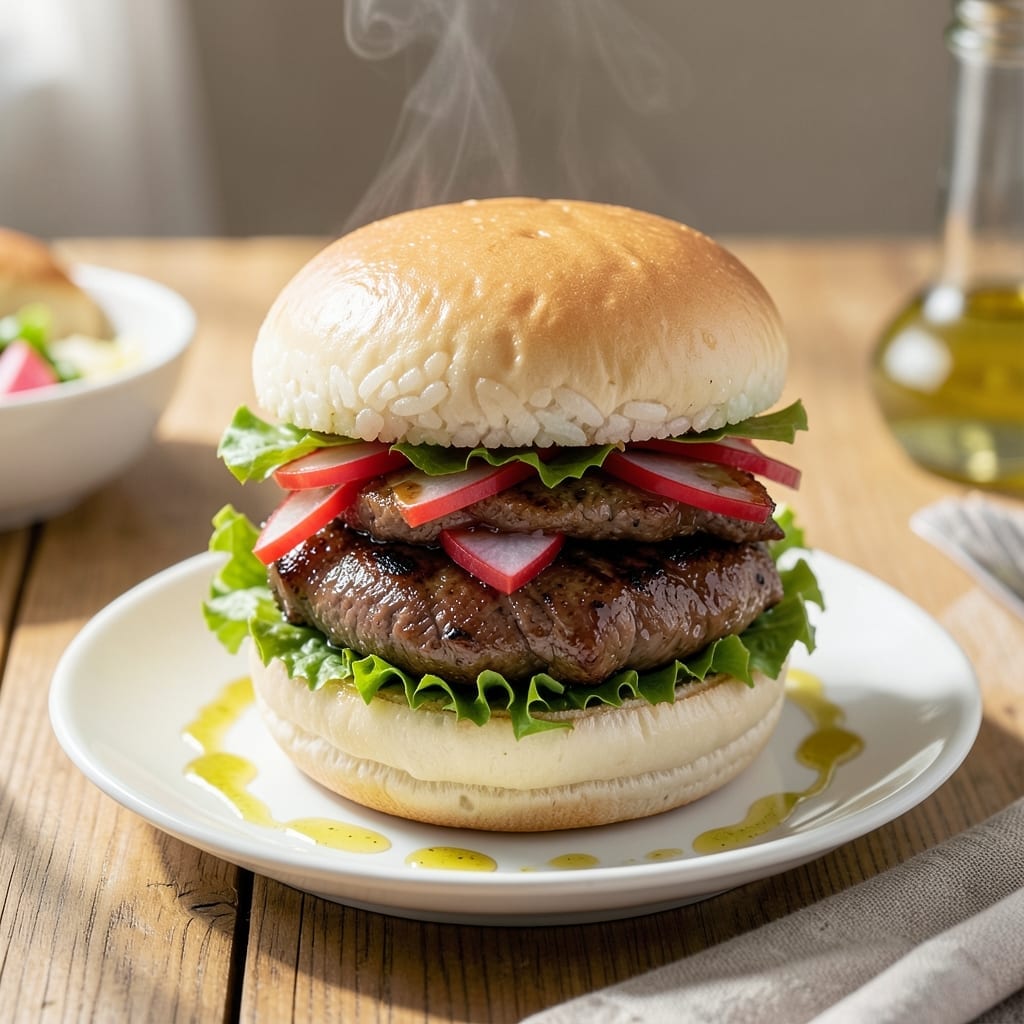
I’ve perfected the art of Korean rice burgers, delivering crispy edges and tender centers every time. The key is using sushi rice seasoned just right, pressed into patties, and pan-fried to golden perfection.
These burgers are more than just a trend—they’re a delicious fusion of texture and flavor. Fill them with your favorite savory ingredients, from bulgogki beef to spicy kimchi, for a satisfying bite.
What sets this recipe apart is the contrast: the outside stays crispy while the inside remains soft and slightly chewy. It’s a balance that makes every mouthful irresistible.
Simple ingredients, precise technique, and a touch of creativity come together to create a dish that’s as fun to make as it is to eat.
Ingredients for Korean Rice Burger
Short list. Big flavor. Crispy outside, tender inside every time.
| Ingredient | Amount | Notes |
|---|---|---|
| Sushi Rice 🍚 | 2 cups | Short-grain, rinsed well |
| Water 💧 | 2 ½ cups | For cooking rice |
| Rice Vinegar 🍶 | 3 tbsp | For seasoning rice |
| Granulated Sugar 🍬 | 1 tbsp | Dissolved in vinegar |
| Salt 🧂 | 1 tsp | For seasoning rice |
| Bulgogi Beef 🥩 | 1 lb | Thinly sliced, pre-marinated |
| Kimchi 🥬 | 1 cup | Chopped, well-fermented |
| Neutral Oil 🫒 | ¼ cup | For pan-frying patties |
| Sesame Oil 🫒 | 1 tsp | For finishing patties |
| Sesame Seeds 🌰 | 1 tbsp | Toasted, for garnish |
| Soy Sauce 🍶 | 2 tbsp | For marinated beef |
| Brown Sugar 🍬 | 1 tbsp | For bulgogi marinade |
| Garlic Cloves 🧄 | 3 cloves | Minced for marinade |
| Green Onions 🧅 | 4 whole | Thinly sliced for topping |
The rice is everything for crispy edges. Short-grain sushi rice is non-negotiable—jasmine or basmati won’t hold the patty shape. Most Asian markets carry it in bulk, but the 10-pound bags at Costco are perfect for frequent cooks (I go through one a month). Rinse until the water runs clear—this removes excess starch so the patties hold together better.
No bulgogi beef? Thinly sliced chicken thighs marinated in soy, garlic, and sesame oil work great. Swap kimchi for spicy pickled radish if you want less heat. The rice vinegar can be apple cider vinegar in a pinch, though the flavor shifts slightly. For the oil, avocado or vegetable oil handles the high heat better than olive oil—peanut oil is traditional in Korean cooking.
Cooked rice patties keep in the fridge for 2 days—press them flat between parchment paper to prevent sticking. The bulgogi beef freezes beautifully for 3 months. Assemble burgers just before serving so the rice stays crispy.
Why You’ll Love This Recipe
- 5-Minute Assembly: Honestly, the longest part is waiting for the rice to cook—after that, it’s just shaping and filling.
- Sweet-Tangy Bite: The rice vinegar and sugar give that signature sticky-sweet kick that makes every bite addictive.
- Picnic or Lunchbox: I pack these for school lunches or park picnics, and they hold up better than any sandwich.
- Pennywise Portions: Sushi rice stretches far, so a small bag makes a dozen burgers—my wallet loves it.
Step-by-Step Instructions for Korean Rice Burgers
Master these steps to achieve golden, crispy rice patties with perfectly seasoned fillings.
Step 1: Cook and Season the Sushi Rice
Rinse the 2 cups sushi rice thoroughly until the water runs clear to remove excess starch. Combine the drained rice with 2.5 cups water in a rice cooker or pot and cook until tender and all liquid is absorbed.
In a small bowl, whisk together the 3 tbsp rice vinegar, 1 tbsp granulated sugar, and 1 tsp salt until the sugar and salt dissolve completely. Fold this mixture into the warm rice while it’s still hot. This seasoning is crucial for flavor and helps the rice hold its shape. Let the seasoned rice cool to room temperature before forming patties.
Step 2: Form and Pan-Fry the Rice Patties
With wet hands (to prevent sticking), divide the seasoned rice into 8 equal portions and shape each into a ½-inch thick round patty. Press firmly but gently to compact the rice without crushing the grains.
Heat 0.25 cup neutral oil in a non-stick skillet over medium heat. When the oil shimmers, carefully add the rice patties in a single layer, working in batches if needed. Cook for 4-5 minutes per side until golden brown and crispy. The edges should be deeply browned and slightly crisp when ready to flip. Transfer to a paper towel-lined plate to drain excess oil.
Step 3: Warm the Bulgogi Beef and Kimchi
In a separate pan, warm the 1 lb bulgogi beef over medium-low heat for 3-4 minutes, stirring occasionally, until heated through. The beef should be glossy and fragrant from its marinade. Push the beef to one side of the pan and add the 1 cup kimchi to warm through for 2 minutes.
This step enhances the flavors of both fillings and ensures they’re at the perfect serving temperature. The kimchi should sizzle slightly and release its tangy aroma. Keep the heat gentle to prevent the beef from drying out or the kimchi from becoming too soft.
Step 4: Assemble and Finish the Rice Burgers
Place a crispy rice patty on a serving plate and top with a generous portion of the warmed bulgogi beef. Add a spoonful of kimchi on top of the beef, then crown with another rice patty to form a burger. Press down gently to compress the layers slightly.
Drizzle each burger with 1 tsp sesame oil and sprinkle with 1 tbsp sesame seeds and the 4 whole green onions, thinly sliced. Serve immediately while the rice patties are still crispy. The contrast of warm, savory fillings with the crispy rice edges is what makes this dish special.
Pro Tips For Making Korean Rice Burger
- Rinse the Rice: Wash the sushi rice until the water runs clear—this removes excess starch so your rice burger holds its shape instead of turning into a sticky mess.
- Season While Warm: Mix the rice vinegar, sugar, and salt into the rice while it’s still hot so the flavors absorb evenly, rather than sitting on top like a sad afterthought.
- Don’t Overwork It: Press the rice into the burger mold firmly but gently—pack it too tight and it’ll turn dense, but too loose and it’ll crumble when you pick it up.
- Chill Before Frying: Pop the shaped rice patties in the fridge for 15-20 minutes before cooking so they keep their form and don’t fall apart in the pan—I learned this the hard way after my first three burgers turned into rice pancakes.
Regional Styles of This Recipe
Seoul Street Style
In bustling Seoul markets, these rice burgers often feature extra-crispy rice patties pressed thin for maximum crunch. Vendors use a special cast-iron press to create perfectly uniform shapes. The filling is typically just spicy pork bulgogi and kimchi, keeping it simple but packed with flavor. 🗺️
Busan Seafood Twist
Coastal Busan adds a seafood flair with spicy tuna salad or imitation crab mixed with mayo, cucumber, and a touch of gochujang. The rice patties are sometimes mixed with finely chopped nori for an umami boost. This version is lighter but equally satisfying.
Jeonju Royal Style
Jeonju’s royal cuisine elevates the dish with premium ingredients like marinated galbi (beef short ribs) and ssamjang instead of plain kimchi. The rice is often seasoned with a hint of perilla oil for a nutty aroma. It’s a more luxurious take on the classic.
Modern Fusion
In trendy Seoul cafes, you’ll find fusion versions with cheese-stuffed rice patties or avocado and egg salad fillings. The rice is sometimes dyed with natural ingredients like beet juice or matcha powder for vibrant colors. These are popular with younger crowds.
Vegan Seoul
Vegan adaptations replace bulgogi with marinated mushrooms or tofu bulgogi. The rice patties might include black sesame seeds or chopped veggies for added texture. These versions are just as crispy and flavorful, proving the versatility of this dish.
Nutrition Facts
Frequently Asked Questions
Can I use a different type of rice?
Stick with short-grain sushi rice for best results. Long-grain varieties like jasmine won’t hold the patty shape as well.
Why do my patties fall apart when frying?
Make sure your rice is fully cooled before shaping and press firmly but gently. Using wet hands prevents sticking and helps maintain structure.
Can I make these ahead of time?
Cooked rice patties keep in the fridge for 2 days. Press them flat between parchment paper to prevent sticking. Assemble just before serving.
What can I use instead of bulgogi beef?
Try thinly sliced chicken thighs marinated in soy, garlic, and sesame oil. For a vegetarian option, use marinated mushrooms or tofu.

- Mujadara Rice and Lentils Recipe: Earthy Spiced Lentils With Caramelized Onions - November 1, 2026
- Naija Fried Rice Recipe: Street-Style Spice With Veggie Crunch - November 1, 2026
- Mushy Rice Recipe: Fluffy Grains Transformed in Minutes - November 1, 2026