
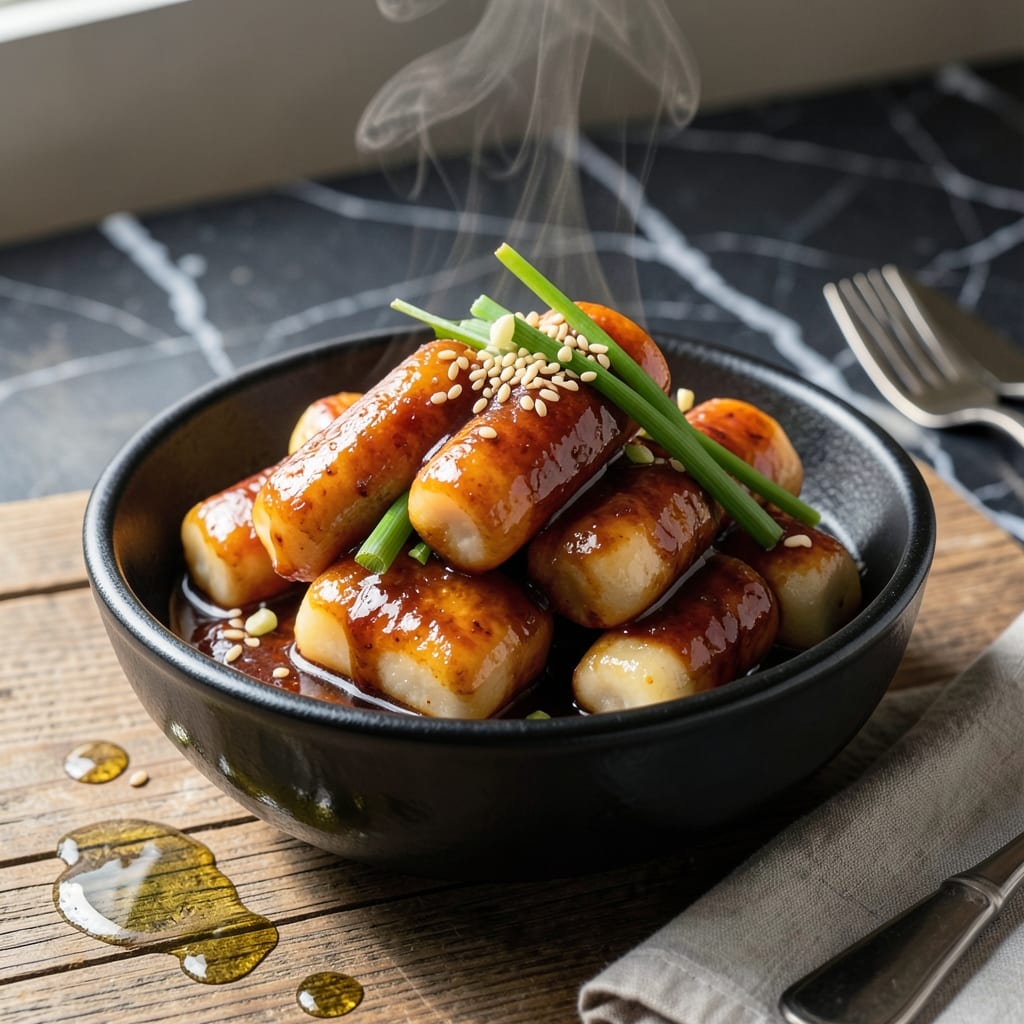
I first tried tteokbokki at a bustling Seoul street market, where the vendor’s version was both fiery and subtly sweet.
This dish features soft rice cakes soaked in a glossy, spicy-sweet sauce made with gochujang and a touch of sugar. It comes together in under 20 minutes with minimal effort, making it ideal for a quick yet authentic Korean meal.
The rice cakes transform from firm to chewy as they simmer, absorbing the deep, savory sauce. A sprinkle of sesame seeds and green onions adds freshness to balance the heat.
Serve it as a main or alongside your favorite banchan for a satisfying, traditional experience. Here’s how to make it at home.
Ingredients for Korean Rice Cake Tteokbokki
These chewy rice cakes soak up a fiery, sweet sauce made with pantry staples.
| Ingredient | Amount | Notes |
|---|---|---|
| Korean Rice Cakes 🍙 | 1 lb | Tube or cylinder shape preferred |
| Gochujang 🌶️ | ½ cup | Korean red pepper paste |
| Sugar 🍚 | 3 tbsp | Adjust to taste preference |
| Soy Sauce 🫒 | 2 tbsp | Low-sodium preferred |
| Garlic Cloves 🧄 | 4 cloves | Minced or pressed |
| Green Onions 🧅 | 4 whole | Thinly sliced, separated |
| Sesame Seeds 🌰 | 1 tbsp | Toasted for garnish |
| Sesame Oil 🫒 | 1 tsp | For finishing touch |
| Water 💧 | 2 cups | For simmering sauce |
| Fish Cakes 🍤 | 4 pieces | Optional protein addition |
| Hard-Boiled Eggs 🥚 | 2 whole | Optional garnish |
| Gochugaru 🌶️ | 1 tbsp | Korean red pepper flakes |
| Corn Syrup 🧈 | 1 tbsp | For glossy texture |
The rice cakes are everything here. Look for tube-shaped tteok in the refrigerated section of H Mart or Korean grocery stores—fresh tastes best but frozen works (thaw first). Gochujang brands vary wildly; Sempio or CJ are reliable. For the fish cakes, check the freezer aisle at Trader Joe’s if you’re adding them. Always buy more rice cakes than you think—you’ll want leftovers.
No gochujang? Mix 3 tbsp sriracha with 1 tbsp miso paste for a passable substitute (not identical but works). Out of fish cakes? Tofu or boiled eggs add protein. Sugar can be swapped for honey or corn syrup. Gochugaru is the secret to that classic Korean heat—skip the cayenne. The sauce should be glossy, so don’t skimp on the corn syrup or sugar.
Leftovers keep 2-3 days in the fridge, but the rice cakes firm up—reheat with a splash of water. Freeze sauce separately for 1 month. Best eaten fresh though (the texture changes). I always double the sauce recipe—it’s that good.
Why You’ll Love This Recipe
- One Pot Wonder: I just dump the rice cakes, gochujang, and garlic into a pan with water—no fancy techniques, just 15 minutes of simmering.
- Sweet-Spicy Kick: The gochujang and sugar balance is pure magic—spicy, sweet, and deeply savory with that garlic punch.
- Weeknight Savior: Between us, this is my Tuesday night hero when I need dinner fast but want something exciting.
- Budget Stretcher: A pound of rice cakes costs pennies, and the sauce ingredients last for multiple batches—I’ll be real, it’s my cheapest crowd-pleaser.
Step-by-Step Instructions for Spicy-Sweet Rice Cakes
Here’s the method I use to achieve that perfect chewy texture with a glossy, fiery sauce.
Step 1: Soak and Prepare the Rice Cakes
If using frozen Korean rice cakes, soak them in cold water for 20-30 minutes to thaw and soften. Drain thoroughly and rinse under cold water to remove excess starch. This prevents them from sticking together during cooking.
I always check that the rice cakes are plump and slightly springy to the touch—this ensures they’ll cook evenly. Set them aside while you prepare the sauce. If using fresh rice cakes, skip the soaking step but give them a quick rinse.
Step 2: Create the Spicy-Sweet Sauce Base
In a large pan or shallow pot, combine the 0.5 cup Gochujang, 3 tbsp Sugar, 2 tbsp Soy Sauce, 1 tbsp Gochugaru, and 1 tbsp Corn Syrup. Pour in the 2 cups Water and whisk until smooth. The corn syrup gives the sauce that signature glossy finish.
Add the minced 4 cloves Garlic Cloves and bring to a gentle simmer over medium heat. Stir frequently to prevent sticking. You’ll notice the sauce darken slightly and thicken as it heats—this takes about 3-4 minutes.
Step 3: Cook the Rice Cakes and Fish Cakes
Add the drained 1 lb Korean Rice Cakes to the simmering sauce. Stir to coat evenly. If using, add the 4 pieces Fish Cakes now—they’ll soak up the flavors beautifully. Cook for 5-7 minutes, stirring occasionally.
The rice cakes are done when they’re tender throughout but still chewy, and the sauce has thickened enough to cling to them. If the sauce reduces too much, add a splash of water. I always taste at this point and adjust the sweetness or spice level if needed.
Step 4: Finish and Garnish
Remove from heat and stir in the 1 tsp Sesame Oil. This adds a nutty aroma that complements the spiciness perfectly. Transfer to serving bowls and garnish with the sliced 4 whole Green Onions and 1 tbsp Sesame Seeds.
For the full experience, top with halved 2 whole Hard-Boiled Eggs. The creamy yolks contrast wonderfully with the spicy sauce. Serve immediately while hot—the rice cakes are best when fresh and piping hot.
Pro Tips For Making Korean Rice Cake Tteokbokki
- Soak the Rice Cakes: If using frozen or vacuum-packed rice cakes, soak them in warm water for 10-15 minutes before cooking—this prevents that gummy, undercooked center I learned this the hard way after serving a batch that was still rock-hard inside.
- Bloom the Gochujang: Cook the gochujang with a little oil for 1-2 minutes before adding liquids. Sounds weird, but it works: it deepens the flavor and removes that raw, pasty taste.
- Skip the Cold Water: Never add cold water to the sauce while cooking—it shocks the rice cakes and makes them tough. Use warm or hot water to keep everything tender.
- Add Sugar Last: Stir in the sugar at the very end, after the sauce has thickened. My grandmother swore by this, and she was right: it balances the heat without making the sauce syrupy.
Dietary Considerations for This Dish
Gluten-Free Option
This dish is naturally gluten-free if you use certified gluten-free rice cakes and tamari instead of soy sauce. I recommend Kikkoman Gluten-Free Soy Sauce or San-J Tamari for the best flavor. Always check labels carefully. 🌱
Vegan Adaptation
To make this vegan, simply omit the fish cakes and use toasted tofu or shitake mushrooms for protein. Replace honey with agave syrup if using it instead of sugar. The flavors remain authentic and just as satisfying.
Spice Level Control
For mild heat, reduce gochujang to ¼ cup and omit gochugaru. For extra spicy, add 1 additional tbsp gochugaru or include ½ tsp cayenne pepper. I often adjust based on who I’m serving.
Low-Sodium Version
Use low-sodium soy sauce and reduce to 1 tbsp. You can also decrease the gochujang slightly and compensate with extra gochugaru for heat without the sodium. Taste as you go to find your perfect balance.
Nut Allergy Note
While this dish contains no nuts, some gochujang brands may be processed in facilities with nuts. I trust Sempio and CJ brands for their allergy-safe practices. Always verify packaging if allergies are a concern.
Egg-Free Garnish
Skip the hard-boiled eggs and add extra green onions or sesame seeds for garnish. For protein, try pan-fried tofu or grilled chicken instead. The dish remains delicious and visually appealing. 💡
Nutrition Facts
Frequently Asked Questions
Can I use fresh rice cakes instead of frozen?
Fresh rice cakes don’t need soaking—just rinse them briefly. They cook faster too, often ready in 3-5 minutes once added to the sauce.
How do I make it less spicy for kids?
Cut the gochujang in half and skip the gochugaru entirely. Add 1 extra tbsp sugar or honey to balance the heat. The sauce will still be flavorful but much milder.
What if my sauce is too thick?
Thin it with ¼ cup water at a time until it reaches your preferred consistency. The rice cakes will absorb some liquid as they cook, so don’t overcorrect.
How long does it keep in the fridge?
Store leftovers in an airtight container for up to 2 days. Reheat with a splash of water to restore the sauce’s glossy texture.

- Jollof Rice Sauce Recipe: West African Tomato and Spice Infusion - September 25, 2026
- Japanese Rice Soup Recipe: Umami-Rich Comfort in a Bowl - September 25, 2026
- Homemade Cream Of Rice Recipe: Silk-Smooth Breakfast in Minutes - September 25, 2026