
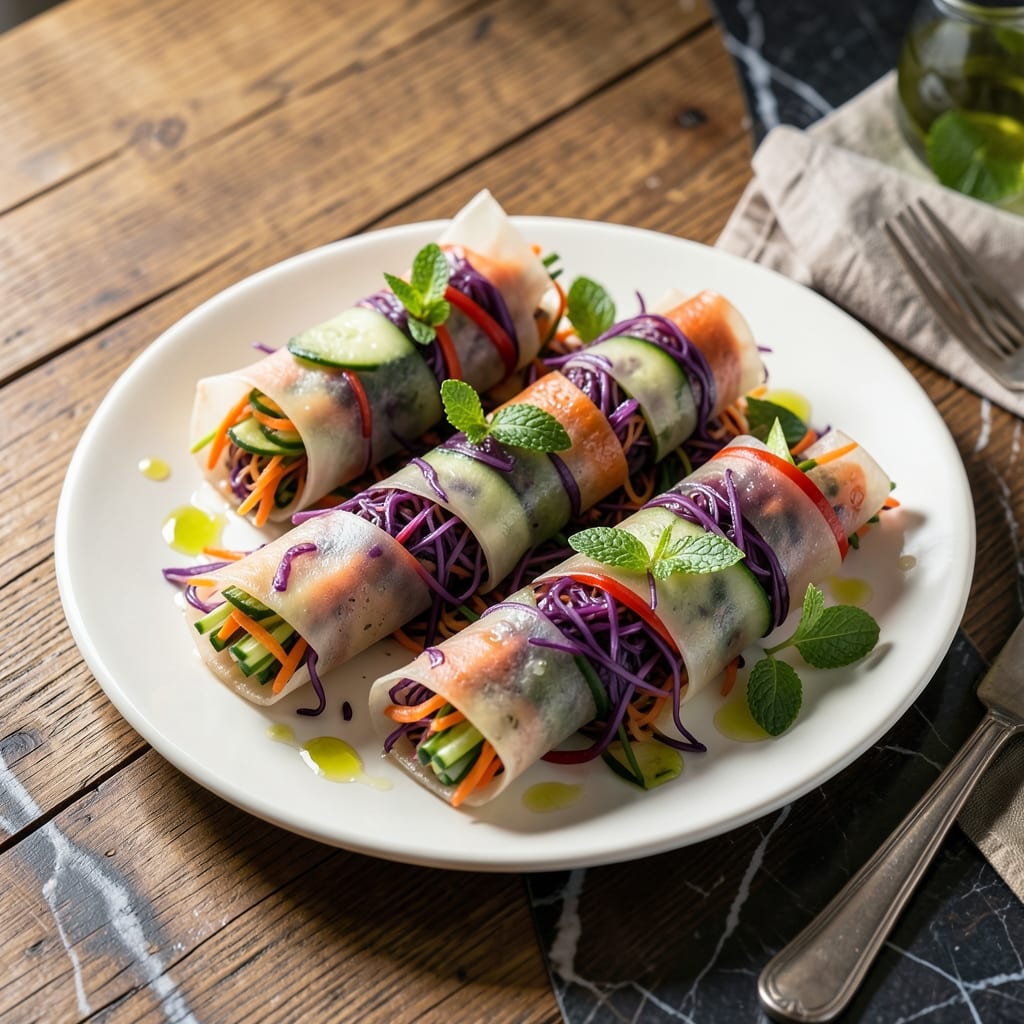
I discovered the secret to achieving crispy Korean rice paper wraps through precise hydration and timing. These delicate sheets transform into the perfect texture when briefly dipped in warm water.
This method ensures each wrap maintains its structure while holding fresh fillings. The contrast between the slightly chewy exterior and crisp edges creates an irresistible bite every time.
You’ll achieve restaurant-quality results with just a few simple steps. The key is working quickly once the paper softens to prevent over-saturation.
Serve immediately for the best texture, as the wraps continue to soften slightly over time. This technique delivers consistent crispiness with every batch.
Ingredients for Korean Rice Paper
Crispy, fresh, and vibrant—these ingredients create restaurant-quality Korean rice paper wraps at home.
| Ingredient | Amount | Notes |
|---|---|---|
| Rice Paper Wrappers 🥟 | 8 sheets | 22 cm diameter, spring roll variety |
| Carrots 🥕 | 2 whole | Julienned into matchsticks |
| English Cucumber 🥒 | 1 whole | Seeds removed, julienned |
| Red Bell Pepper 🌶️ | 1 whole | Thinly sliced into strips |
| Purple Cabbage 🥬 | 1 cup | Finely shredded for color |
| Fresh Mint Leaves 🌿 | ½ cup | Loosely packed, stems removed |
| Fresh Cilantro 🍃 | ½ cup | Roughly chopped leaves |
| Vermicelli Rice Noodles 🍜 | 3 oz | Cooked according to package |
| Tofu 🧈 | 12 oz | Extra-firm, pressed and sliced thin |
| Soy Sauce 🫒 | 2 tbsp | Low-sodium preferred for balance |
| Rice Vinegar 💧 | 1 tbsp | Unseasoned for acidity |
| Sesame Oil 🫒 | 1 tsp | Toasted for depth of flavor |
| Agave Nectar 🍯 | 1 tsp | Or substitute maple syrup |
| Sriracha Sauce 🌶️ | 1 tbsp | Adjust to preferred heat level |
| Peanut Butter 🥜 | 2 tbsp | Creamy, unsweetened preferred |
The rice paper is non-negotiable—look for spring roll wrappers (22 cm) at Asian markets or the international aisle at Whole Foods. Avoid the thicker varieties meant for Vietnamese summer rolls; they won’t crisp properly. For the tofu, extra-firm pressed holds its shape best. Trader Joe’s carries great organic options if you’re short on time. Fresh herbs make a difference here, so grab the bunches that look the most vibrant.
No mint? Thai basil (if you can find it) or regular basil works in a pinch. Out of agave? Maple syrup or coconut sugar brings the same sweetness. For the peanut sauce, almond butter or tahini can swap in at a one-to-one ratio. The sriracha is flexible—use gochujang for Korean heat or omit entirely if you’re sensitive to spice. Baby carrots (shredded) can replace the matchsticks.
Wrap fillings separately and store in airtight containers for 2-3 days. The rice paper itself keeps indefinitely in a cool, dry place. Assemble just before serving—these are best fresh. Leftovers? Not ideal, but they’ll hold for 1 day in the fridge (re-crisp in a dry skillet).
Why You’ll Love This Recipe
- No Cook Needed: This comes together with just soaking and rolling—no stove, no stress.
- Crunch in Every Bite: The purple cabbage and cucumber give it that fresh, satisfying snap.
- Lunchbox Hero: I pack these for work and they stay crisp for hours in the fridge.
- Pantry Friendly: Honestly, the veggies last forever and rice paper is cheap to stock up on.
Step-by-Step Instructions for Korean Rice Paper Wraps
Master the technique for achieving that signature crispy-soft texture with vibrant fresh fillings.
Step 1: Prepare and Soften the Rice Paper Wrappers
Fill a large, shallow dish with warm water (about 85-90°F). Immerse one rice paper wrapper at a time for 10-15 seconds until pliable but still slightly firm—this prevents tearing when you add the fillings.
Remove the wrapper and lay it flat on a clean, damp kitchen towel. The surface should glisten but not be soggy. If it feels too stiff, dip for 5 more seconds. Repeat with remaining 8 sheets rice paper wrappers as you assemble each wrap to maintain the perfect texture.
Step 2: Cook and Season the Vermicelli Noodles and Tofu
Cook the 3 oz vermicelli rice noodles according to package instructions until tender. Drain and rinse under cold water to stop cooking. In a bowl, toss the noodles with 1 tsp sesame oil, 1 tbsp rice vinegar, and 1 tsp agave nectar for a balanced sweet-savory base.
In a separate pan, quickly sear the 12 oz tofu slices over medium-high heat for 2-3 minutes per side until golden brown. Drizzle with 2 tbsp soy sauce and 1 tbsp sriracha sauce during the last minute for a bold, spicy finish.
Step 3: Julienne and Arrange the Fresh Vegetables
Slice the 2 whole carrots into matchsticks, the 1 whole english cucumber (seeds removed) into thin strips, and the 1 whole red bell pepper into narrow ribbons. Finely shred the 1 cup purple cabbage for a pop of color.
Arrange these alongside the 0.5 cup fresh mint leaves and 0.5 cup fresh cilantro on a platter. The key is uniformity in size—this ensures every bite has a harmonious mix of textures and flavors.
Step 4: Assemble the Wraps with Precision
Place a portion of the seasoned vermicelli rice noodles and seared tofu near the bottom third of a softened rice paper wrapper. Layer with a handful of the prepared vegetables and herbs, leaving the top third bare for folding.
Fold the sides inward, then roll tightly from the bottom up, similar to a burrito. The wrap should feel snug but not burst. For extra crispiness, pan-fry the assembled wraps for 1-2 minutes per side until golden and slightly blistered.
Step 5: Serve with Peanut Dipping Sauce
Whisk together the 2 tbsp peanut butter with 1 tbsp rice vinegar, 1 tsp agave nectar, and a splash of warm water until smooth. This creamy, tangy sauce complements the crispy-soft texture of the wraps.
Slice each wrap in half diagonally for presentation. The contrast of the crunchy exterior, tender fillings, and rich dipping sauce delivers the promised crispy-soft experience in every bite.
Pro Tips For Making Korean Rice Paper
- Soak Rice Paper Briefly: Dip the rice paper in warm water for exactly 5-7 seconds—any longer and it turns to mush, any shorter and it stays stiff. I learned this the hard way after ruining a whole batch by letting them sit too long.
- Julienne Your Veggies: Cut the carrots, cucumber, bell pepper, and cabbage into thin, even matchsticks (about 2 inches long). Uniform pieces roll neatly and cook evenly when you pan-fry them later.
- Skip Overstuffing: Resist the urge to pack too many fillings into one wrapper—stick to 3-4 strips per sheet. Overstuffing makes them burst open, and nobody wants a torn rice paper roll.
- Use a Damp Towel: Cover the soaked rice paper wrappers with a damp kitchen towel while you work. Sounds weird, but it keeps them from drying out and turning brittle before you can roll them.
Common Mistakes When Making This Recipe
Over-Soaking the Paper
Dipping rice paper for too long is the most common mistake. It should soften in 10-15 seconds in 85-90°F water—any longer and it becomes gummy and tears easily. I learned this the hard way with my first few soggy attempts. 💡
Skipping the Drying Step
After removing from water, let each sheet rest on a towel for 5-10 seconds to absorb excess moisture. This prevents slipping fillings and ensures a better crisp when pan-fried. A damp towel works best for this.
Overfilling the Wraps
Less is more with these delicate sheets. Use ¼ cup total fillings per wrap max. Overfilling causes bursting during rolling or frying. I aim for a 2-inch border at the top for secure folding.
Wrong Water Temperature
Cold water won’t soften the paper enough, while boiling water can cook it. Stick to warm water—test with your wrist like a baby bottle. 90°F is the sweet spot for consistent results.
Not Working Fast Enough
Rice paper dries quickly. Prepare all fillings before starting and work one wrap at a time. I keep my ingredients in small bowls within reach. If it stiffens, just re-dip briefly.
Frying Too Soon
Pan-fry only after assembling all wraps. Frying too early makes them soggy from steam. Use medium-high heat with 1 tbsp neutral oil for 1-2 minutes per side to achieve that perfect crisp. 🔥
Nutrition Facts
Frequently Asked Questions
What’s the ideal water temperature for softening?
Use warm water between 85-90°F. This softens the paper quickly without making it too fragile. Test with your wrist—it should feel like warm bathwater.
Can I use a different dipping sauce?
Swap peanut sauce for gochujang-mayo or sweet chili sauce. For a lighter option, try soy sauce with lime and a touch of honey.
How do I store leftovers?
Store unassembled fillings in airtight containers for 2-3 days. Assemble just before serving. Avoid refrigerating finished wraps—they’ll lose crispness.
Why do my wraps tear when rolling?
Likely over-soaked or overfilled. Dip for only 10-15 seconds and use ¼ cup fillings max. Keep a 2-inch border for secure folding.

- Mujadara Rice and Lentils Recipe: Earthy Spiced Lentils With Caramelized Onions - November 1, 2026
- Naija Fried Rice Recipe: Street-Style Spice With Veggie Crunch - November 1, 2026
- Mushy Rice Recipe: Fluffy Grains Transformed in Minutes - November 1, 2026