
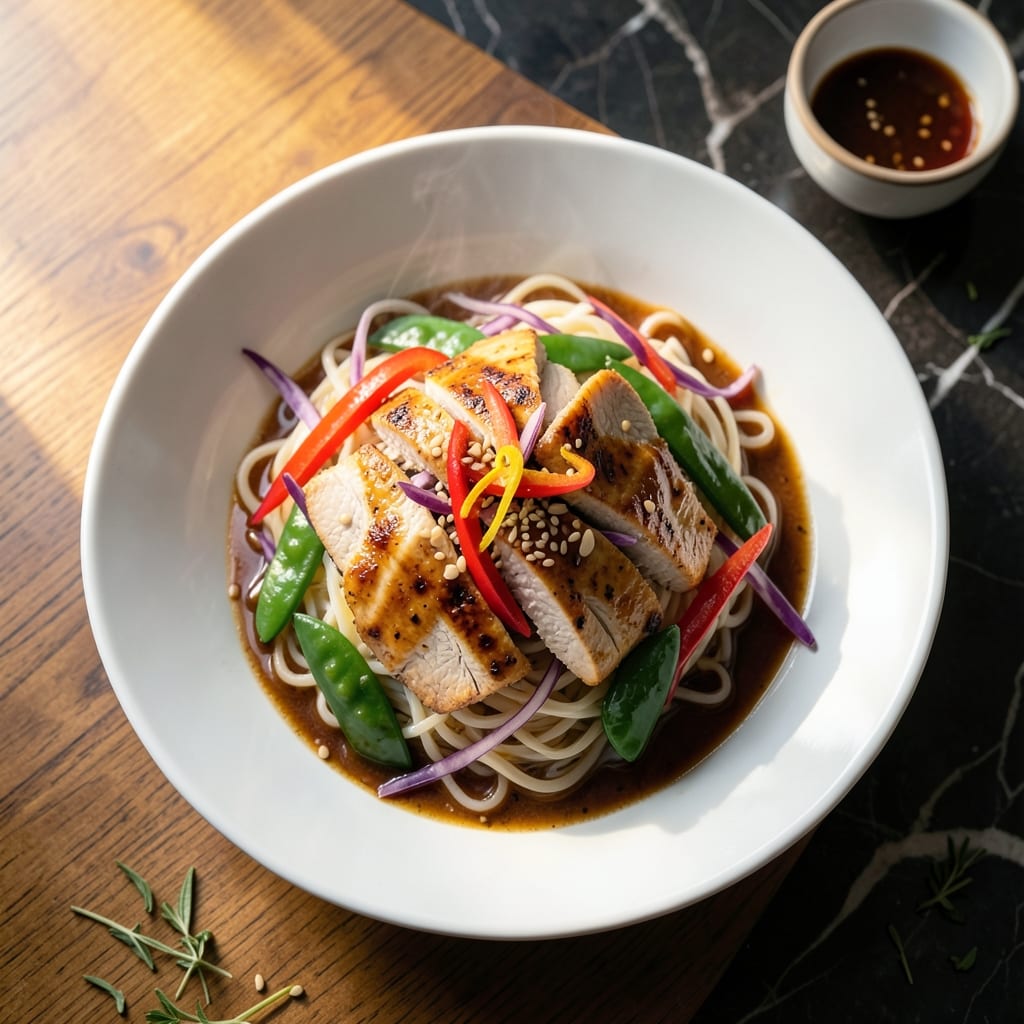
This one-pan wonder brings restaurant-quality stir-fry to your home kitchen with minimal cleanup. I developed this technique while working the line at The Smoky Pig, where efficiency and flavor had to coexist.
The secret lies in prepping all ingredients before heating the pan and using high heat to achieve that signature wok-seared taste. Rice noodles soak up the garlicky sauce while maintaining their delicate texture.
You’ll end up with tender chicken, crisp vegetables, and perfectly cooked noodles all coated in a savory sauce. The entire dish comes together in under 30 minutes with basic kitchen tools.
Serve immediately for the best texture. Here’s how to make it happen.
Ingredients for Rice Noodles with Chicken and Vegetables
Everything for restaurant-quality stir-fry at home with one pan and zero fuss.
| Ingredient | Amount | Notes |
|---|---|---|
| Rice Noodles 🍜 | 8 oz | Dried, flat or vermicelli style |
| Boneless Skinless Chicken Breast 🍗 | 1 ¼ lb | Thinly sliced against grain |
| Soy Sauce 🫒 | ⅓ cup | Low-sodium preferred for control |
| Oyster Sauce 🫒 | 2 tbsp | Essential for depth of flavor |
| Sesame Oil 🫒 | 1 tbsp | Toasted variety for aroma |
| Garlic Cloves 🧄 | 4 cloves | Minced for maximum flavor infusion |
| Fresh Ginger 🌿 | 1 tbsp | Peeled and finely grated |
| Red Bell Pepper 🌶️ | 1 whole | Thinly sliced into strips |
| Broccoli Crowns 🥦 | 2 cups | Cut into small florets |
| Carrot 🥕 | 1 whole | Julienned or thinly sliced |
| Green Onions 🧅 | 3 whole | Sliced, green parts only |
| Cornstarch 🌾 | 1 tbsp | For velvety sauce thickening |
| Neutral Cooking Oil 🫒 | 3 tbsp | High smoke point for stir-frying |
| Chicken Broth 💧 | ½ cup | Low-sodium for seasoning control |
| Brown Sugar 🍚 | 1 tbsp | Balances savory flavors |
The noodles are non-negotiable—look for rice stick noodles in the Asian aisle at Kroger or H-Mart. Width matters: go for 1/8-inch flat noodles if you want that classic pad thai texture. For the chicken, thighs stay juicier than breasts, but breasts work if that’s what you’ve got (just don’t overcook). The oyster sauce is the flavor backbone here—Lee Kum Kee is the gold standard, but any brand works in a pinch.
Out of oyster sauce? Hoison plus a splash of fish sauce gets you 80% there. No fresh ginger? Ground ginger at half the amount works, but fresh is worth the effort. Swap bell peppers for snap peas or cabbage if that’s what’s in your crisper. The soy sauce can be tamari for gluten-free, but taste as you go—Brands vary wildly in sodium content. And hey, frozen veggies are fine (don’t thaw first).
Cooked noodles stick together fast. Rinse with cold water after soaking, then toss with a little oil. Leftovers? 2-3 days max in the fridge—the noodles get gummy. Doesn’t freeze well. Always serve immediately for that perfect chewy texture (the intro wasn’t kidding about this).
Why You’ll Love This Recipe
- One Pot Wonder: I love that everything cooks together in a single pan—just toss the noodles, chicken, and veggies with those sauces and walk away.
- Umami Bomb: The soy and oyster sauce combo with sesame oil gives this dish a deep, savory richness that’s honestly addictive.
- Feeds the Crew: It’s my go-to when friends drop by unexpectedly—this recipe stretches easily and pleases everyone.
- Lunch All Week: Leftovers taste even better the next day, so I make a big batch and pack it for work.
Step-by-Step Instructions for Rice Noodles With Chicken and Vegetables
Here’s the method. Straightforward, tested, works every time.
Step 1: Soak Rice Noodles and Prep Vegetables
Cover the 8 oz Rice Noodles with hot water in a large bowl and let them soak while you prep the rest. They should soften in 10-15 minutes but remain slightly firm—this prevents them from turning mushy during stir-frying.
Meanwhile, thinly slice the 1.25 lb Boneless Skinless Chicken Breast against the grain into bite-sized pieces. Julienne the 1 whole Carrot and thinly slice the 1 whole Red Bell Pepper into strips. Separate the 2 cups Broccoli Crowns into small florets. Slice the 3 whole Green Onions, using only the green parts.
Step 2: Create the Sauce and Marinate Chicken
In a small bowl, whisk together the 0.33 cup Soy Sauce, 2 tbsp Oyster Sauce, 1 tbsp Sesame Oil, 0.5 cup Chicken Broth, 1 tbsp Brown Sugar, and 1 tbsp Cornstarch until smooth. This sauce delivers the perfect balance of savory, sweet, and umami flavors.
Place the sliced chicken in a separate bowl and pour half of the sauce over it. Toss to coat evenly and let it marinate for 10 minutes. The cornstarch in the sauce will help the chicken retain moisture and develop a velvety texture during cooking.
Step 3: Stir-Fry Chicken and Aromatics
Heat 2 tbsp Neutral Cooking Oil in a wok or large skillet over high heat until shimmering. Add the marinated chicken in a single layer—don’t overcrowd the pan. Cook undisturbed for 2-3 minutes until the edges turn opaque and golden brown.
Flip the chicken and cook for another 2 minutes, then remove it to a plate. In the same pan, add the remaining 1 tbsp Neutral Cooking Oil, then stir in the minced 4 cloves Garlic Cloves and grated 1 tbsp Fresh Ginger. Sauté for 30 seconds until fragrant—don’t let them burn.
Step 4: Cook Vegetables and Combine Everything
Add the carrot, red bell pepper, and broccoli to the pan. Stir-fry for 4-5 minutes until the vegetables are tender-crisp but still vibrant in color. The broccoli should be bright green and the carrots slightly softened.
Return the chicken to the pan along with any accumulated juices. Drain the rice noodles and add them to the pan. Pour in the remaining sauce and toss everything together for 2-3 minutes until the noodles are fully cooked and coated in the glossy sauce.
Step 5: Finish and Serve Immediately
Stir in the green onions and cook for 30 seconds just to wilt them slightly. The sauce should thicken enough to cling to the noodles and vegetables, creating a glossy, restaurant-quality finish.
Remove from heat and serve immediately while hot. The noodles should be tender but still have a slight chew, the chicken juicy and flavorful, and the vegetables crisp-tender with a vibrant color. Garnish with extra green onions if desired.
Pro Tips For Making Rice Noodles With Chicken And Vegetables
- Soak Noodles First: Cover rice noodles in warm water for 10-15 minutes before cooking—this prevents them from turning to mush when stir-fried. I learned this the hard way after serving gummy noodles to guests.
- Slice Chicken Thin: Cut the chicken breast into ¼-inch strips against the grain. It cooks in 2-3 minutes and stays tender instead of chewy.
- Resist Over-Saucing: Start with 1 tablespoon each of soy and oyster sauce, then adjust. It’s easier to add more than to fix a soggy, overly salty stir-fry.
- Finish With Sesame Oil: Drizzle the sesame oil in at the very end, off the heat. It keeps the aroma bright and prevents it from turning bitter.
Common Mistakes When Making rice noodles with chicken and vegetables
Over-Soaking Noodles
Soaking rice noodles too long turns them to mush. I follow the 10-15 minute rule—just until pliable but still firm. Drain immediately and rinse with cold water to stop the cooking process. Honestly, this is where most home cooks go wrong.
Low Heat Cooking
Stir-frying requires high heat to achieve that signature wok-seared flavor. If your pan isn’t hot enough, you’ll end up with steamed, soggy ingredients. I use a wok on my gas stove’s highest setting. Electric stoves may need a heavy skillet instead. 🔥
Overcrowding the Pan
Cooking all the chicken at once lowers the pan’s temperature. Work in batches if needed—2-3 minutes per side for perfect browning. The same goes for vegetables: give them space to sear, not steam.
Skipping the Marinade
The 10-minute marinade in half the sauce makes a huge difference. It tenderizes the chicken and builds flavor layers. Don’t rush this step—your taste buds will thank you later.
Under-Seasoning
Taste your sauce before combining everything. Low-sodium soy sauce means you control the salt, but you must adjust. I often add an extra pinch of brown sugar or splash of oyster sauce at the end.
Delaying Service
Rice noodles absorb sauce and turn gummy as they sit. Plate immediately after combining all ingredients. The intro wasn’t kidding—this dish waits for no one. 💡
Nutrition Facts
Frequently Asked Questions
Can I use chicken thighs instead of breasts?
Thighs stay juicier and are more forgiving if slightly overcooked. Just trim excess fat and slice them thinly against the grain for even cooking.
What if I don’t have oyster sauce?
Substitute with 1 tbsp hoisin sauce plus 1 tsp fish sauce. It won’t be identical but delivers similar depth. Adjust sweetness with a pinch of brown sugar if needed.
How do I prevent the noodles from sticking?
Rinse soaked noodles with cold water and toss with a little oil before adding to the pan. Use high heat and keep them moving constantly during stir-frying.
Can I make this dish ahead of time?
Not recommended. Rice noodles absorb sauce and become gummy when stored. For best results, cook and serve immediately.

- Jollof Rice Sauce Recipe: West African Tomato and Spice Infusion - September 25, 2026
- Japanese Rice Soup Recipe: Umami-Rich Comfort in a Bowl - September 25, 2026
- Homemade Cream Of Rice Recipe: Silk-Smooth Breakfast in Minutes - September 25, 2026