
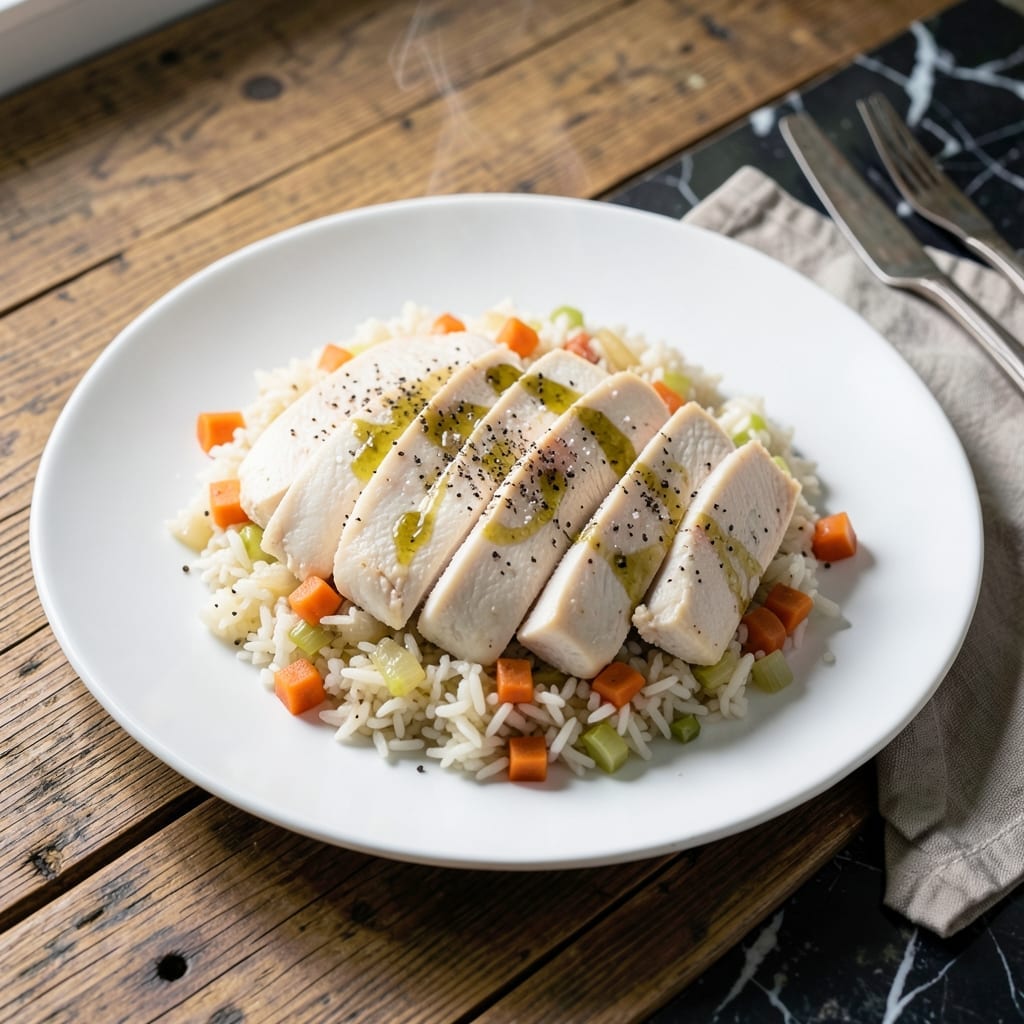
When digestive comfort is a priority, this one-pan chicken and rice delivers both nutrition and ease. The dish focuses on gentle ingredients like skinless chicken breast and well-cooked white rice, creating a meal that’s easy on the system without sacrificing flavor.
I developed this method after working with diners who needed reliable, low-fiber options. The key is cooking the rice until fully tender, ensuring it breaks down easily. The chicken stays moist through a simple poaching technique in the same pan.
What emerges is a soothing, balanced dish with soft textures and mild seasoning. It’s designed to be both nourishing and approachable, whether for recovery or everyday meals.
Perfect for meal prep, this recipe holds well and reheats gently. Here’s how to make it.
Ingredients for Low Fiber Chicken and Rice
Gentle ingredients for a soothing one-pan meal that’s easy on digestion.
| Ingredient | Amount | Notes |
|---|---|---|
| Skinless Chicken Breast 🍗 | 1 ½ lb | Boneless, cut into bite-sized pieces |
| White Rice 🍚 | 1 ½ cups | Long-grain or jasmine variety |
| Chicken Broth 🍲 | 3 cups | Low-sodium preferred for control |
| Olive Oil 🫒 | 2 tbsp | Light or extra-light for mild flavor |
| Salt 🧂 | 1 tsp | Divided, adjust to taste |
| Black Pepper 🌶️ | ¼ tsp | Freshly ground for best flavor |
| Garlic Cloves 🧄 | 2 cloves | Minced for subtle flavor |
| Dried Thyme 🌿 | ½ tsp | Mild herb for gentle seasoning |
| Carrots 🥕 | 2 whole | Peeled and finely diced |
| Celery Stalks 🌿 | 2 whole | Finely diced for soft texture |
| Onion 🧅 | ½ whole | Finely diced, yellow or white |
| Bay Leaf 🍃 | 1 whole | For subtle aroma, remove before serving |
The chicken should be skinless, boneless breast—thighs have more fat and fiber. Whole Foods or Trader Joe’s carry pre-cut options if you’re short on time. For the rice, long-grain white breaks down the easiest, but jasmine also works well. The broth is key for flavor and moisture—low-sodium lets you control the salt content. Always check labels for hidden fiber sources.
No chicken breast? Ground chicken (skinless) works but may need less cooking time. For the rice, avoid brown or wild varieties—too much fiber. If you’re out of fresh veggies, frozen diced carrots and celery (thawed) are fine. The thyme can be swapped for dried marjoram at the same amount, but avoid stronger herbs like rosemary.
This keeps beautifully for 4-5 days in the fridge and reheats gently in the microwave. For longer storage, freeze portions for up to 3 months. The rice will soften further over time, which is perfect for this dish’s purpose.
Why You’ll Love This Recipe
- One Pot Wonder: I just toss the chicken, rice, and broth in a pot and let it simmer—no fancy steps.
- Simple Comfort: The chicken broth infuses the rice with a cozy, savory depth that feels like a hug.
- Meal Prep Hero: I make a big batch on Sunday and it reheats beautifully all week.
- Budget Friendly: Skinless chicken breast and white rice stretch far without breaking the bank.
Step-by-Step Instructions for Chicken and Rice
This one-pan method ensures perfectly cooked rice and tender chicken with minimal effort.
Step 1: Sauté the Aromatics and Chicken
Heat the 2 tbsp olive oil in a large pot or deep skillet over medium heat. Add the finely diced carrots, celery stalks, and 0.5 whole onion. Cook for 5 minutes, stirring occasionally, until the vegetables soften and the onion becomes translucent.
Stir in the minced 2 cloves garlic cloves and cook for an additional 30 seconds until fragrant. Add the 1.5 lb skinless chicken breast pieces, the 0.5 tsp dried thyme, ½ tsp salt, and 0.25 tsp black pepper. Sauté for 5-6 minutes until the chicken turns white on all sides and is no longer pink.
Step 2: Toast the Rice and Deglaze the Pan
Once the chicken is no longer pink, add the 1.5 cups white rice to the pot. Stir to coat the rice with the oil and combine it with the chicken and vegetables. Cook for 2 minutes, stirring constantly, to lightly toast the rice—this step enhances the nutty flavor and prevents gummy texture.
Add the 1 whole bay leaf and pour in the 3 cups chicken broth. Stir well, scraping the bottom of the pot to release any browned bits. These bits add depth of flavor to the dish, so don’t skip this step.
Step 3: Simmer Until Rice and Chicken Are Cooked
Increase the heat to medium-high and bring the mixture to a boil. Once boiling, reduce the heat to low, cover the pot, and let it simmer for 18-20 minutes. Do not stir the rice during this time to avoid breaking the grains, but check occasionally to ensure it’s not sticking.
After 18 minutes, remove the lid and check if the rice is tender and the liquid has been absorbed. The chicken should reach an internal temperature of 165°F. If the rice is still firm or liquid remains, cover and cook for an additional 2-3 minutes.
Step 4: Rest and Serve
Once the rice is tender and the chicken is cooked through, turn off the heat. Remove and discard the bay leaf. Let the dish rest, covered, for 5 minutes—this allows the flavors to meld and the rice to steam evenly.
Fluff the rice gently with a fork and adjust seasoning if needed, adding the remaining ½ tsp salt if desired. Serve warm, ensuring each portion includes both chicken and rice for a balanced, gentle meal.
Pro Tips For Making Low Fiber Chicken And Rice
- Poach the Chicken: Simmer the skinless chicken breast in the chicken broth instead of boiling—keeps it tender and adds flavor without extra fat. I learned this the hard way after ending up with dry, rubbery chicken too many times.
- Rinse the Rice: Give the white rice a quick rinse under cold water before cooking to remove excess starch. Sounds tedious, but it prevents that gummy texture low-fiber dishes can sometimes have.
- Skip Overcooking Rice: White rice only needs about 15-18 minutes in simmering broth—any longer and it turns mushy. Use a timer, because it’s easy to walk away and forget.
- Use Warm Broth: Heat the chicken broth before adding it to the rice. Cold broth slows down cooking and can leave the rice underdone in spots, even if the chicken is perfect.
Troubleshooting This Dish
Rice Too Firm
If your rice is still undercooked after 20 minutes, check your liquid ratio first. For 1.5 cups rice, you need exactly 3 cups broth. I often see this when using a wide, shallow pan—switch to a heavy pot with a tight lid. 💡
Chicken Overcooked
The chicken should reach 165°F just as the rice finishes. If it’s drying out, reduce initial sauté time to 3-4 minutes instead of 5-6 minutes. The residual heat will finish cooking it during the simmer.
Sticky Bottom
Prevent burning by using a heavy-bottomed pot—I swear by my Lodge cast iron. If you see sticking, immediately lower the heat and add ¼ cup hot broth to deglaze. Stir gently to avoid breaking the rice grains.
Bland Flavor
Low-fiber doesn’t mean low-flavor. Boost taste by using homemade broth or adding ½ tsp more salt at the end. A pinch of white pepper adds depth without fiber. I learned this trick at Charleston markets early in my career.
Mushy Texture
Overcooked rice often comes from lifting the lid too soon. Keep it covered for the full 18-20 minutes. If it’s already mushy, stir in ½ cup cooked white rice to absorb excess moisture.
Vegetables Not Soft
For this dish, the veggies must be finely diced (⅛-inch pieces). If they’re still firm, cook them for 2-3 extra minutes before adding the chicken. My Georgia grandma always said the smaller the cut, the gentler the texture. ✨
Nutrition Facts
Frequently Asked Questions
Can I use chicken thighs instead of breast?
Stick with skinless breast for lowest fiber. Thighs have more connective tissue, which increases fiber content. If you must use thighs, remove all skin and visible fat before cooking.
What rice works best for easy digestion?
White long-grain or jasmine rice are ideal. They break down completely when cooked 18-20 minutes. Avoid brown, wild, or whole-grain varieties as they contain more fiber.
How can I make this dish ahead of time?
Cook as directed, then store in an airtight container for up to 4 days. The rice will soften further, which is perfect for gentle digestion. Reheat gently with a splash of broth.
Why does my rice turn out mushy?
Lifting the lid too early releases steam. Keep it covered for the full 18-20 minutes. If it’s already mushy, stir in ½ cup cooked white rice to fix the texture.

- Jollof Rice Sauce Recipe: West African Tomato and Spice Infusion - September 25, 2026
- Japanese Rice Soup Recipe: Umami-Rich Comfort in a Bowl - September 25, 2026
- Homemade Cream Of Rice Recipe: Silk-Smooth Breakfast in Minutes - September 25, 2026