
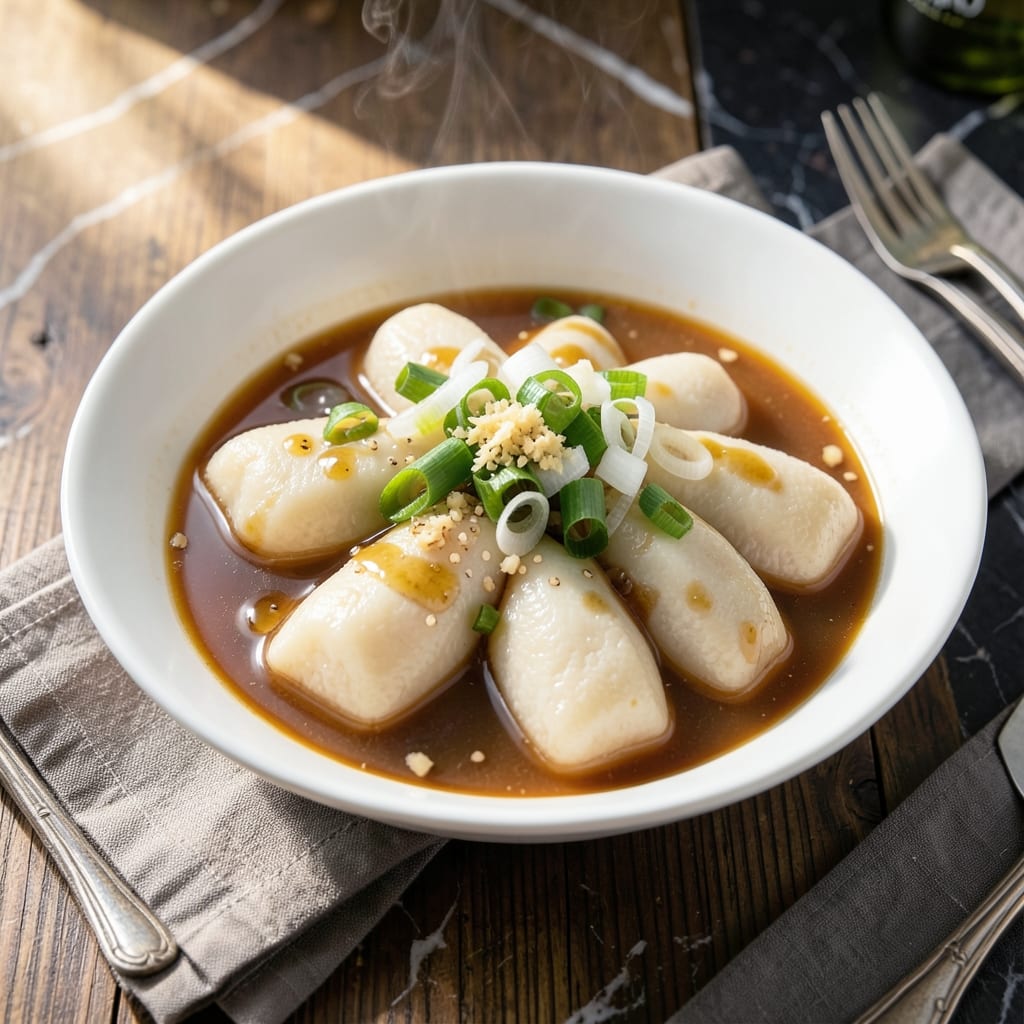
There’s a gentle comfort in Korean rice cakes that transcends spice—this version delivers soft, pillowy bites in a delicate, mild broth.
I’ve refined this recipe to highlight the natural sweetness of rice flour while keeping the flavors approachable. The key is a light soy-based broth that enhances without overwhelming.
The texture is the star: chewy rice cakes absorb the subtle savory notes, creating a dish that’s satisfying yet soothing. No heat, just pure, balanced flavor.
Perfect for those who prefer milder profiles but still crave the hearty essence of traditional Korean cooking. Let’s begin.
Ingredients for Korean Rice Cake Recipe Not Spicy
Soft rice cakes, delicate broth, and fresh vegetables create this soothing Korean inspired dish.
| Ingredient | Amount | Notes |
|---|---|---|
| Korean Rice Cakes (Tteok) 🍚 | 1 lb | Cylindrical or sliceable variety |
| Rice Flour 🌾 | ½ cup | For thickening broth if needed |
| Vegetable Stock 🥫 | 4 cups | Low-sodium preferred for control |
| Light Soy Sauce 🫒 | ⅓ cup | Essential for mild umami base |
| Garlic Cloves 🧄 | 4 cloves | Minced for aromatic depth |
| Fresh Ginger Root 🌿 | 1 tbsp | Grated to release full flavor |
| Green Onions 🧅 | 4 whole | Thinly sliced, white and green parts |
| Sesame Oil 🫒 | 1 tbsp | Toasted variety for nutty aroma |
| Sugar 🍚 | 1 tsp | Balances savory elements |
| Mushroom Variety 🍄 | 1 cup | Shiitake or enoki, sliced |
| Carrot 🥕 | 1 whole | Julienned for color and texture |
| Zucchini 🥒 | 1 whole | Sliced into thin half-moons |
| Toasted Sesame Seeds 🌰 | 1 tsp | Garnish for visual appeal |
| Salt 🧂 | ½ tsp | Adjust to taste at end |
The rice cakes are non-negotiable—look for Korean grocery stores or the Asian aisle at Whole Foods. Fresh rice cakes (often vacuum-sealed) have a better texture than frozen, but frozen works in a pinch (thaw first). The soy sauce should be light, not dark—Kikkoman or a quality import. For the vegetables, organic carrots and zucchini add natural sweetness that complements the mild broth beautifully.
No light soy sauce? Tamari at half the amount works, but reduce the salt. Fresh ginger is ideal, but ground ginger at a quarter the amount can substitute. For mushrooms, cremini or button work if shiitake aren’t available. The sesame oil must be toasted—Kadoya or Ottogi brands are reliable. If avoiding gluten, use tamari instead of soy sauce and certified GF rice cakes.
Rice cakes absorb liquid as they sit, so serve immediately or store broth separately. Keeps in the fridge for 3-4 days—reheat gently to avoid turning them mushy. Freezing isn’t recommended, as the texture changes dramatically. Garnish with sesame seeds just before serving for maximum crunch.
Why You’ll Love This Recipe
- One-Pot Wonder: I toss everything in a single pan—tteok, garlic, soy sauce—and let it soak up the stock. Cleanup’s a breeze.
- Garlicky Comfort: The slow-cooked garlic cloves turn sweet, and the light soy sauce gives it that deep, savory warmth without any heat.
- Meal Prep Star: I make a big batch on Sunday and reheat portions all week. The rice cakes actually get better as they sit.
- Budget Stretcher: Honestly, a bag of tteok and pantry staples feed my family for days. No fancy ingredients, just pure, cozy flavor.
Step-by-Step Instructions for Korean Rice Cakes Not Spicy
Here is the method to achieve perfectly tender rice cakes in a mild, savory broth.
Step 1: Prepare the Aromatics and Vegetables
Thinly slice the 4 whole Green Onions, separating white and green parts. Mince the 4 cloves Garlic Cloves finely and grate the 1 tbsp Fresh Ginger Root to release its full flavor. These aromatics form the foundation of your broth’s depth.
Julienne the 1 whole Carrot into thin matchsticks and slice the 1 whole Zucchini into half-moons. Slice the 1 cup Mushroom Variety uniformly—shiitake or enoki work particularly well for texture contrast against the soft rice cakes.
Step 2: Bloom the Aromatics in Sesame Oil
Heat the 1 tbsp Sesame Oil in a large pot over medium heat until it shimmers. Add the minced garlic and grated ginger, stirring constantly for 30-45 seconds until fragrant but not browned. This blooming process unlocks their essential oils.
Add the white parts of the green onions and cook for an additional 1 minute. You’ll notice the aroma transform from raw to deeply savory. Be careful not to let the garlic burn—it will impart bitterness to your mild broth.
Step 3: Build the Mild Broth Base
Pour in the 4 cups Vegetable Stock and 0.33 cup Light Soy Sauce. Add the 1 tsp Sugar and 0.5 tsp Salt, stirring until both dissolve completely. The sugar is crucial here—it balances the savory elements without adding sweetness.
Bring the mixture to a gentle simmer over medium-high heat, then reduce to medium-low. Add the carrots and mushrooms, cooking for 5-7 minutes until they begin to soften but retain a slight bite. This creates a textured base for your rice cakes.
Step 4: Cook the Rice Cakes to Perfection
Add the 1 lb Korean Rice Cakes (Tteok) to the simmering broth. If using cylindrical rice cakes, cut them into 1-inch pieces first for even cooking. Stir gently to prevent sticking—rice cakes release starch as they cook, which will slightly thicken the broth naturally.
Cook for 8-10 minutes, stirring occasionally, until the rice cakes are tender and have absorbed some of the broth. They should be soft and pillowy with no hard center. If the broth becomes too thick, add a splash of water and adjust seasoning with more salt if needed.
Add the zucchini and cook for an additional 2-3 minutes until just tender. The zucchini should retain vibrant color and a slight crispness to contrast with the soft rice cakes.
Step 5: Finish and Serve
Taste the broth and adjust seasoning with additional salt if necessary. The flavors should be balanced—savory from the soy sauce, aromatic from the ginger and garlic, with a subtle sweetness in the background. If you prefer a thicker broth, mix the 0.5 cup Rice Flour with a little cold water and stir it in gradually.
Ladle the rice cakes and broth into bowls, garnishing with the green parts of the green onions and the 1 tsp Toasted Sesame Seeds. The sesame seeds add a nutty aroma and visual contrast. Serve immediately while hot, as the rice cakes continue to absorb broth as they sit.
Pro Tips For Making Korean Rice Cake Recipe Not Spicy
- Soak the Tteok: I learned this the hard way—if your rice cakes are hard or frozen, soak them in warm water for 10-15 minutes until soft. Skipping this leaves them chewy and undercooked, no matter how long you simmer.
- Use Fresh Garlic: After burning a batch with old, bitter garlic, I now always use freshly minced cloves. It adds a sweet, aromatic depth that powder or pre-minced just can’t match.
- Simmer, Don’t Boil: Keep the heat at a gentle simmer once the rice cakes are in—boiling vigorously turns them mushy. A slow, steady cook lets them absorb the stock and soy sauce evenly.
- Thicken at the End: I skip thickening earlier and wait until the last 5 minutes to stir in rice flour slurry. This way, the sauce coats the tteok perfectly without turning gluey.
Storing and Reheating This Dish
Refrigerator Storage
Let your rice cakes cool for no more than 2 hours before storing. Transfer to airtight containers with a bit of broth to keep them moist. They’ll stay fresh in the fridge at 40°F or below for up to 3-4 days. ❄️
Broth Separation Tip
For best texture, store the broth and rice cakes separately. The rice cakes will absorb liquid and become mushy if left submerged. I use mason jars for the broth and shallow containers for the rice cakes to maintain their shape.
When ready to eat, combine and reheat gently. This method preserves the pillowy texture you worked so hard to achieve.
Stovetop Reheating
Gently reheat on the stovetop over medium-low heat for 5-7 minutes, stirring occasionally. Add a splash of water or vegetable stock if the mixture looks dry. This prevents the rice cakes from sticking to the pot. 🔥
Microwave Method
For quick meals, microwave covered portions on 70% power for 2-3 minutes. Stir halfway through and add a little water if needed. Be careful—microwaves can make rice cakes rubbery if overdone.
Nutrition Facts
Frequently Asked Questions
Can I use frozen rice cakes for this?
Yes, but thaw them completely in cold water first. Frozen rice cakes can be chewier, so soak for 15-20 minutes before cooking.
Why does my broth taste too salty?
Use low-sodium vegetable stock and adjust soy sauce gradually. Taste as you go—you can always add more, but can’t take it out.
How do I make the broth creamier?
Mix 1 tbsp rice flour with cold water, then stir into simmering broth. This adds a silky texture without dairy.
Can I add protein to this?
Try tofu or shredded chicken. Add cooked protein at the end to avoid overcooking.

- Mujadara Rice and Lentils Recipe: Earthy Spiced Lentils With Caramelized Onions - November 1, 2026
- Naija Fried Rice Recipe: Street-Style Spice With Veggie Crunch - November 1, 2026
- Mushy Rice Recipe: Fluffy Grains Transformed in Minutes - November 1, 2026