
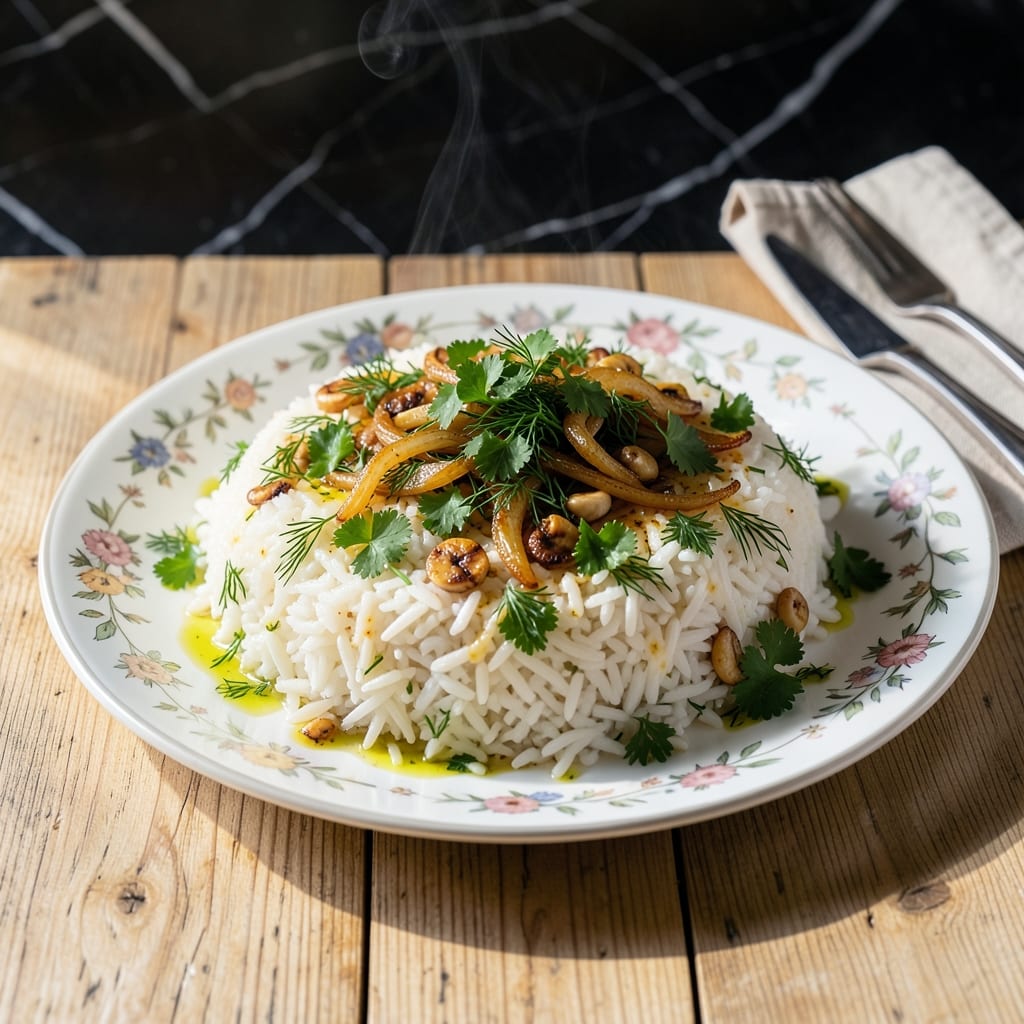
This traditional Persian rice dish transforms simple ingredients into a perfect fragrant masterpiece. The secret lies in the careful layering of parboiled rice with fresh dill and other herbs.
I’ve refined this method over years to ensure the rice cooks evenly, developing a golden crust at the bottom while staying fluffy throughout. The aroma alone will transport you to a Persian kitchen.
The combination of fresh herbs creates a vibrant green speckled appearance that’s as beautiful as it is delicious. Each grain of rice absorbs the herb flavors without becoming mushy.
Serve this with grilled meats or stews for an authentic Persian experience. The technique is straightforward but delivers restaurant-quality results every time.
Ingredients for Iranian Dill Rice
Transform simple rice and fresh herbs into this fragrant Persian masterpiece with careful layering.
| Ingredient | Amount | Notes |
|---|---|---|
| Basmati Rice 🌾 | 2 cups | Rinsed until water runs clear |
| Fresh Dill 🌿 | 1 ½ cups | Finely chopped, packed |
| Fresh Parsley 🍃 | ¾ cup | Finely chopped, flat-leaf preferred |
| Fresh Cilantro 🌿 | ½ cup | Finely chopped, stems removed |
| Garlic Cloves 🧄 | 4 cloves | Minced for maximum flavor |
| Yellow Onion 🧅 | 1 whole | Finely diced, medium size |
| Ground Turmeric 🌶️ | ½ tsp | For color and earthy depth |
| Ground Cumin 🌿 | ½ tsp | Toasted briefly for warmth |
| Sea Salt 🧂 | 1 ½ tsp | Divided for seasoning layers |
| Black Pepper 🌶️ | ½ tsp | Freshly ground for best results |
| Saffron Threads 🌼 | ¼ tsp | Optional, steeped in hot water |
| Olive Oil 🫒 | ¼ cup | For sautéing aromatics |
| Butter 🧈 | 2 tbsp | Unsalted, for crust formation |
The rice quality is paramount for authentic texture. Basmati rice from Indian or Middle Eastern markets offers superior length and aroma compared to standard grocery store varieties. Look for aged basmati (it’ll say so on the package) for grains that stay distinct. Fresh herbs must be vibrant—avoid wilted or yellowing bunches. The dill should be fragrant enough to perfume your kitchen when chopped.
Substitutions require caution to preserve the dish’s integrity. No fresh dill? Dried dill at one-third the quantity works in a pinch (soak briefly to rehydrate). Parsley and cilantro can be swapped for other fresh herbs like green onions or tarragon, but maintain the total volume. Saffron is traditional but expensive—a pinch of turmeric adds color if omitted. For a vegan version, replace butter with coconut oil.
Store uncooked rice in an airtight container for up to 2 years. Fresh herbs last 5-7 days wrapped in damp paper towels in the fridge. Cooked rice keeps 4-5 days refrigerated or freezes for 3 months. The golden crust is best enjoyed fresh but reheats well with a sprinkle of water.
Why You’ll Love This Recipe
- One Pot Wonder: I toss everything in a single pot—basmati, herbs, and garlic—and let it steam to perfection.
- Herb Explosion: The dill, parsley, and cilantro pack every bite with bright, fresh flavor that’s impossible to resist.
- Feeds a Crowd: Honestly, it’s my go-to for family dinners or potlucks, and everyone always asks for the recipe.
- Budget Friendly: A handful of affordable ingredients stretches into a hearty side that tastes like a restaurant dish.
Step-by-Step Instructions for Iranian Dill Rice
Master this technique for a fragrant pilaf with perfectly fluffy grains and a golden crust.
Step 1: Prepare and Parboil the Rice
Rinse the 2 cups Basmati Rice in several changes of cold water until the water runs completely clear. This removes excess starch and ensures fluffy, separate grains. Soak the rice in lukewarm water with 1 tsp Sea Salt for 30 minutes to soften the grains evenly.
Drain the rice and parboil in salted boiling water for 5-6 minutes until the grains are slightly softened but still firm to the bite. You’ll notice the grains turn from opaque to slightly translucent at the edges. Drain immediately in a colander and rinse with cool water to stop the cooking process.
Step 2: Sauté the Aromatics and Herbs
In a large nonstick pot, heat the 0.25 cup Olive Oil with 2 tbsp Butter over medium heat. Add the finely diced Yellow Onion and sauté for 8-10 minutes until golden brown and sweet. The onions should be deeply caramelized but not burnt.
Add the minced Garlic Cloves, 0.5 tsp Ground Turmeric, and 0.5 tsp Ground Cumin, stirring constantly for 1 minute until fragrant. Immediately add the 1.5 cups Fresh Dill, 0.75 cup Fresh Parsley, and 0.5 cup Fresh Cilantro, cooking for 2-3 minutes until the herbs darken slightly and release their aroma.
Step 3: Layer and Steam the Rice
Sprinkle 0.5 tsp Sea Salt and 0.5 tsp Black Pepper over the parboiled rice and gently fold to distribute. In the pot with the herb mixture, create a layer by adding half the rice, then spreading evenly. For the golden crust (tahdig), press a layer of rice firmly into the bottom of the pot with the back of a spoon.
Top with the remaining rice, shaping it into a pyramid. Poke several holes through the rice to the bottom with the handle of a wooden spoon—this allows steam to circulate evenly. Drizzle any remaining Olive Oil over the top.
Step 4: Cook Low and Slow with Saffron
If using, steep the 0.25 tsp Saffron Threads in 2 tbsp hot water for 5 minutes to release its color and flavor. Drizzle this saffron water over the rice pyramid. Cover the pot with a clean kitchen towel and secure the lid tightly on top—this absorbs excess steam and prevents soggy rice.
Cook over low heat for 40-45 minutes. You’ll know it’s ready when you smell the fragrant herbs and see steam escaping from the edges of the lid. Resist the urge to peek during cooking, as this releases valuable steam and can cause uneven cooking.
Step 5: Serve with the Golden Crust
Remove from heat and let rest, covered, for 5 minutes. To serve, invert the pot onto a serving platter to reveal the golden tahdig crust on top. If it doesn’t release easily, run a thin spatula around the edges to loosen it.
Gently fluff the rice with a fork, taking care not to break the grains. The finished dish should have distinct, fluffy grains throughout with a crisp, golden bottom layer. Serve immediately while hot, with the herb-infused rice and crust as the star.
Pro Tips For Making Iranian Dill Rice
- Parboil the Rice: Soak basmati rice for 30 minutes, then parboil for 5-7 minutes until slightly al dente—this prevents mushiness when you layer it with herbs.
- Chop Herbs Finely: I learned this the hard way—chop the dill, parsley, and cilantro as fine as possible so they distribute evenly and don’t overpower a bite.
- Skip Packed Rice: Resist the urge to press down on the rice after layering with herbs; it steams unevenly and turns gummy.
- Use Garlic Sparingly: Sounds weird, but it works: mince just 2-3 cloves per cup of rice—too much overpowers the fresh herbs.
Flavor Customization for This iranian dill rice
Herb Intensity Adjustments
For a bolder herb flavor, increase the fresh dill to 2 cups and add 1 tbsp dried dill to the sautéed aromatics. I find this works well when serving with mild main dishes. The extra dill creates a more pronounced Persian profile.
Citrus Brightness Boost
Add 1 tbsp lemon zest with the herbs during sautéing for a bright, fresh note. A squeeze of 2 tbsp lemon juice over the finished dish just before serving adds a tangy contrast that cuts through the richness. 🍋
Spice It Up
For heat lovers, mix ½ tsp red pepper flakes into the sautéed onions or add 1 minced jalapeño with the garlic. The spice complements the earthy herbs beautifully without overpowering them. I prefer the jalapeño for its fresh, green heat.
Nutty Texture Addition
Toast ¼ cup slivered almonds or pistachios in 1 tsp butter until golden, then sprinkle over the finished rice. This adds a satisfying crunch and visual appeal. The nuts pair especially well with the golden crust.
Golden Color Enhancement
Increase the ground turmeric to 1 tsp for a deeper golden hue. For extra vibrancy, add ½ tsp ground cardamom with the cumin. These warm spices complement the herbs while enhancing the visual appeal.
Vegan Adaptation
Replace butter with coconut oil for the crust and sautéing. Use vegetable broth instead of water for parboiling. The coconut oil adds a subtle sweetness that works well with the herbs. 💛
Nutrition Facts
Frequently Asked Questions
Can I use dried herbs instead of fresh?
Use 1/3 the amount of dried herbs, as they’re more concentrated. Soak them in warm water for 10 minutes to rehydrate before adding to the rice. Fresh herbs give the best flavor though.
Why did my rice turn out mushy?
This usually happens from overcooking during parboiling or not draining well. Stick to 5-6 minutes for parboiling and rinse with cool water immediately after draining.
How do I get a crispier crust?
Press the bottom rice layer firmly into the pot and cook for the full 40-45 minutes on low heat. Adding 1 tbsp more butter to the bottom helps too.
Can I make this ahead of time?
The rice tastes best fresh but keeps well for 2 days refrigerated. Reheat in a pot with a splash of water, covered, on low heat for 5-10 minutes.

- Mujadara Rice and Lentils Recipe: Earthy Spiced Lentils With Caramelized Onions - November 1, 2026
- Naija Fried Rice Recipe: Street-Style Spice With Veggie Crunch - November 1, 2026
- Mushy Rice Recipe: Fluffy Grains Transformed in Minutes - November 1, 2026