
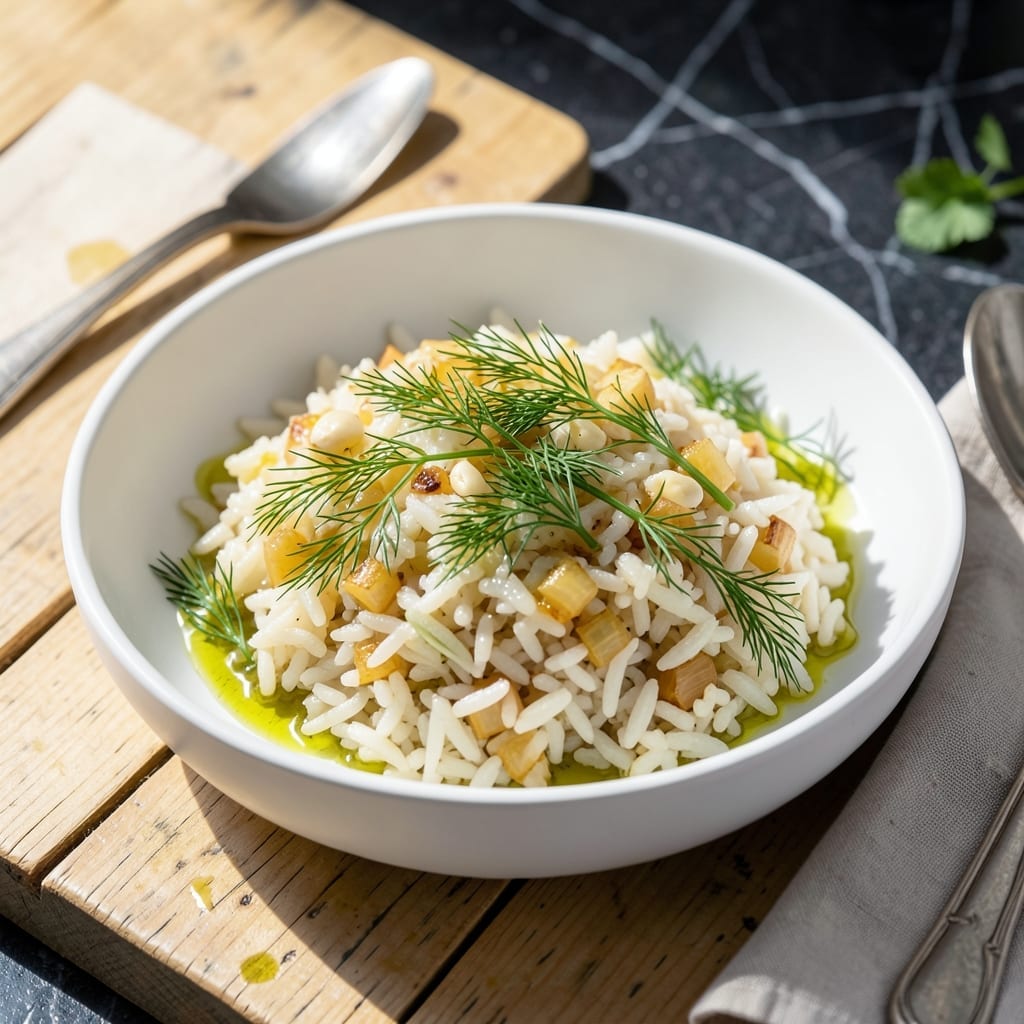
This rice dish transforms simple ingredients into something extraordinary with fresh dill’s bright, aromatic flavor. The key is using long-grain rice and infusing it with dill at just the right moment to preserve its vibrant taste.
With minimal effort and 20 minutes of cooking time, you’ll have fluffy, herb-infused grains that pair perfectly with grilled meats, fish, or roasted vegetables. The result is light, fragrant, and full of freshness.
Ingredients for Fresh Dill Rice
Bright, herbaceous grains start with fresh dill and a few pantry staples for extraordinary results.
| Ingredient | Amount | Notes |
|---|---|---|
| Long-Grain White Rice 🍚 | 2 cups | Rinsed until water runs clear |
| Fresh Dill 🌿 | ½ cup | Finely chopped, stems removed |
| Water 💧 | 4 cups | Or vegetable broth for extra flavor |
| Extra-Virgin Olive Oil 🫒 | 2 tbsp | For sautéing and finishing |
| Yellow Onion 🧅 | 1 whole | Finely diced, medium size |
| Garlic Cloves 🧄 | 3 cloves | Minced for aromatic base |
| Sea Salt 🧂 | 1 ½ tsp | Adjust to taste preference |
| Freshly Ground Black Pepper 🌶️ | ½ tsp | Coarse grind preferred |
| Lemon Zest 🍋 | 1 tbsp | From one medium lemon |
| Lemon Juice 🍋 | 2 tbsp | Freshly squeezed for brightness |
| Vegetable Broth 🥕 | 1 cup | Low-sodium for control |
| Green Onions 🌱 | ¼ cup | Thinly sliced for garnish |
The rice quality is paramount for this dish. Basmatis or jasmine long-grain produce the fluffiest results, available at any Whole Foods or standard grocery store. Select fresh dill with vibrant green leaves and sturdy stems—avoid any bunches with yellowing or wilt. The vegetable broth should be low-sodium to allow precise seasoning control as the rice absorbs the liquid.
No fresh dill on hand? Dried dill at one-third the amount works, though the flavor will be more muted. For a citrus variation, substitute half the dill with fresh parsley. The lemon can be swapped for lime if that’s what you have. If skipping the vegetable broth, use water with an extra pinch of salt. Pre-minced garlic in jars is acceptable here (don’t tell the purists).
Leftover rice keeps beautifully for 4-5 days in an airtight container. The dill flavor actually intensifies overnight. For longer storage, freeze in portions for up to 3 months. Reheat with a splash of water to restore fluffiness (microwave works fine, but stovetop is gentler).
Why You’ll Love This Recipe
- One Pot Wonder: Honestly, it’s just rice, dill, and a few pantry staples—no fancy techniques, no stress.
- Bright & Fresh: The fresh dill and onion give it that herby, slightly sharp kick that makes plain rice taste alive.
- Meal Prep Hero: I make a big batch Sunday and it pairs with everything—grilled chicken, fish, or even just a fried egg.
- Budget Stretcher: A handful of rice and a bunch of dill feed my family for pennies. Leftovers? Even better the next day.
Step-by-Step Instructions for Fresh Dill Rice
Here’s the method. Straightforward, tested, works every time.
Step 1: Sauté Aromatics in Olive Oil
Heat the 2 tbsp extra-virgin olive oil in a medium saucepan over medium heat. Add the finely diced 1 whole yellow onion and cook, stirring occasionally, for 4-5 minutes until translucent and softened.
Add the minced 3 cloves garlic cloves and cook for an additional 30-60 seconds until fragrant. Be careful not to let the garlic burn—it should turn just light golden at the edges. This builds your flavor foundation.
Step 2: Toast the Rice and Add Liquids
Stir in the rinsed 2 cups long-grain white rice and cook for 1-2 minutes, stirring constantly. You’ll notice the grains become slightly opaque and fragrant—this toasting step enhances the nutty flavor of the rice.
Pour in the 4 cups water and 1 cup vegetable broth. Add the 1.5 tsp sea salt and 0.5 tsp freshly ground black pepper. Stir well to combine and bring the mixture to a boil over high heat.
Step 3: Simmer with Dill and Lemon
Once boiling, reduce heat to low, cover the pot with a tight-fitting lid, and let it simmer for 15 minutes. After this time, remove from heat and quickly stir in the 0.5 cup fresh dill, 1 tbsp lemon zest, and 2 tbsp lemon juice.
Cover again and let it steam off-heat for 10 minutes. The rice should be tender and the liquid fully absorbed. The dill will infuse the grains with its bright, herbal aroma while the lemon adds a fresh, zesty note.
Step 4: Rest and Finish with Green Onions
Let the rice rest, covered, for an additional 5 minutes. This allows the grains to firm up and absorb any remaining moisture. Fluff the rice gently with a fork to separate the grains.
Fold in the 0.25 cup green onions, reserving a small handful for garnish if desired. The green onions add a mild, oniony bite and a pop of color. Taste and adjust seasoning if needed—though the salt from earlier should be sufficient.
Pro Tips For Making Fresh Dill Rice
- Rinse the Rice: Always rinse your long-grain white rice until the water runs clear—this removes excess starch and prevents a gummy texture. I learned this the hard way after serving sticky rice more than once.
- Sauté the Onion: Cook the yellow onion in olive oil until soft and translucent, about 5-7 minutes. Skipping this step leaves the rice with a raw, sharp onion flavor that overpowers the dill.
- Add Dill Last: Stir in the fresh dill after the rice is cooked and off the heat. Adding it too early dulls its bright, grassy flavor—sounds weird, but it works.
- Use a 1:2 Ratio: Stick to a 1:2 ratio of rice to water for perfect long-grain rice every time. My grandmother swore by this, and she was right: it guarantees fluffy, separate grains.
Storing and Reheating This Recipe
Refrigerator Storage
Let your creation cool completely before transferring to an airtight container. It’ll keep in the fridge at 40°F or below for up to 4-5 days. I love how the dill flavor deepens overnight. ❄️
Freezer Storage
For longer storage, portion into freezer-safe bags or containers. It freezes beautifully for up to 3 months without losing texture. Squeeze out excess air to prevent freezer burn.
Stovetop Reheating
My preferred method: heat in a saucepan with 2-3 tbsp water over low-medium heat for 5-7 minutes, stirring occasionally. Add a drizzle of olive oil to revive the fluffiness.
Microwave Reheating
For quick meals, microwave covered portions on 50% power for 2-3 minutes, stirring halfway. Add a splash of water if it seems dry.
Reviving Flavor
A fresh squeeze of lemon juice and sprinkle of chopped dill after reheating brings back that bright, fresh taste. The green onions add a nice color pop too.
Nutrition Facts
Frequently Asked Questions
Can I use dried dill instead of fresh?
Yes, but reduce the amount to 1-2 tablespoons since dried herbs are more concentrated. The flavor won’t be as bright, so consider adding a pinch of lemon zest to compensate.
Why add dill at the end instead of with the rice?
Fresh dill loses its delicate flavor when cooked too long. Adding it after simmering preserves its vibrant, aromatic notes. This timing ensures every bite bursts with freshness.
What if my rice turns out mushy?
This usually happens from too much liquid or stirring during cooking. Use a tight-fitting lid and avoid peeking until the 15-minute simmer is complete. Let it rest undisturbed.
Can I make this in a rice cooker?
Sauté the aromatics first, then add everything to the cooker. Use the standard 2:1 liquid-to-rice ratio and stir in dill after cooking completes.

- Fried Rice Mix Recipe: Customizable Pantry Staple for Quick Meals - October 6, 2026
- Fruit Loop Rice Crispy Treats Recipe: Colorful Crunch With Marshmallow Magic - October 6, 2026
- Erewhon Rice Balls Recipe: Copycat Crispy and Creamy Bites - October 6, 2026