
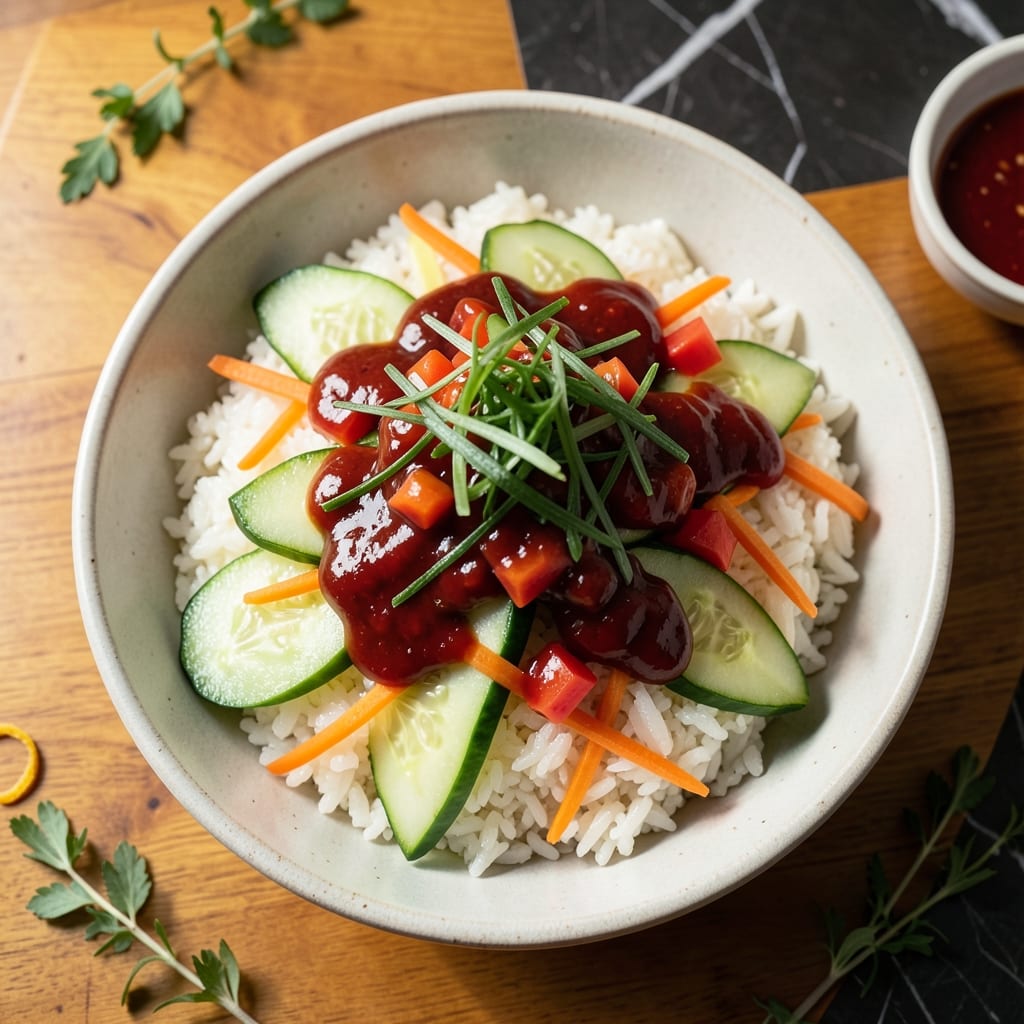
This vibrant dish brings traditional Korean flavors to your table with minimal effort. The combination of cool rice, crisp vegetables, and a tangy gochujang dressing creates a refreshing yet bold salad.
Perfect for meal prep, it stays fresh for days. The dressing ties everything together, balancing heat, sweetness, and umami in every bite.
Ingredients for Korean Rice Salad
Cool rice meets crisp veggies and a bold dressing. Simple, fresh, and packed with flavor.
| Ingredient | Amount | Notes |
|---|---|---|
| Short-Grain White Rice 🍚 | 2 cups | Rinsed until water runs clear |
| English Cucumber 🥒 | 1 whole | Thinly sliced, unpeeled |
| Carrots 🥕 | 2 whole | Julienned or matchstick cut |
| Red Bell Pepper 🌶️ | 1 whole | Finely diced for texture |
| Green Onions 🌱 | 4 whole | Thinly sliced, green parts only |
| Gochujang 🌶️ | 3 tbsp | Korean red chili paste |
| Rice Vinegar 💧 | 2 tbsp | Unseasoned variety preferred |
| Toasted Sesame Oil 🫒 | 1 tbsp | For dressing depth |
| Soy Sauce 🥢 | 2 tbsp | Low-sodium recommended |
| Honey 🍯 | 1 ½ tbsp | Balances gochujang heat |
| Sesame Seeds 🌰 | 2 tbsp | Toasted for garnish |
| Vegetable Oil 🫒 | 1 tbsp | Neutral flavor for cooking |
| Garlic Cloves 🧄 | 2 cloves | Minced for dressing |
| Salt 🧂 | ½ tsp | Adjust to taste |
| Black Pepper 🌶️ | ¼ tsp | Freshly ground preferred |
The rice is everything here. Short-grain white gives that sticky, chewy texture Korean dishes need. Rinse it well—until the water runs completely clear—to avoid gummy results. I grab mine from H Mart or any Asian grocery, but standard supermarket brands work too. For the veggies, English cucumbers have fewer seeds and thinner skin, so no peeling needed (worth the extra buck).
No gochujang? Sriracha mixed with a little miso paste gets you close—won’t be identical, but still tasty. Out of rice vinegar? Apple cider vinegar at the same amount works in a pinch. The sesame oil is non-negotiable though—it adds that nutty depth. For the honey, agave or maple syrup are solid swaps (use one-for-one). Want extra crunch? Toss in some shredded cabbage or bean sprouts.
This keeps beautifully—honestly better the next day as the rice soaks up the dressing. Stays fresh for 4-5 days in the fridge. Make it on Sunday, eat it all week. The sesame seeds toast fast (30 seconds in a dry pan), so do that right before serving to keep them crisp.
Why You’ll Love This Recipe
- No Cook Chopping: I just dice the cucumber, carrots, and bell pepper—no stove required until the rice.
- Bright and Fresh: The crisp veggies with sticky short-grain rice hit that sweet-savory Korean flavor I crave.
- Lunchbox Hero: Honestly, it tastes even better the next day, so I pack leftovers for work all week.
- Budget Stretch: Between us, a big batch costs pennies per serving and uses pantry staples I already have.
Step-by-Step Instructions for Korean Rice Salad
Here’s the method. Straightforward, tested, works every time.
Step 1: Prepare and Cook the Short-Grain White Rice
Rinse the 2 cups short-grain white rice under cold water until the water runs clear. This removes excess starch and prevents the grains from becoming gummy. I use a fine-mesh strainer for this step—it makes the process much easier.
Combine the rinsed rice with 2½ cups of water in a saucepan. Bring to a boil over high heat, then reduce to low, cover, and simmer for 15 minutes until all the water is absorbed and the grains are tender. Turn off the heat and let it sit, covered, for an additional 10 minutes. This resting period allows the rice to steam and become perfectly fluffy.
Step 2: Chop and Prepare All Vegetables
While the rice cooks, slice the 1 whole English cucumber thinly, leaving the skin on for color and texture. I use a mandoline for perfectly even slices, but a sharp knife works just as well. Place the cucumber slices in a colander and sprinkle with the 0.5 tsp salt, then let them drain for 10 minutes to remove excess moisture.
Julienne or cut the 2 whole carrots into matchsticks for a satisfying crunch. Finely dice the 1 whole red bell pepper, and thinly slice the 4 whole green onions, using only the green parts. The variety in textures will make every bite of this dish exciting.
Step 3: Whisk Together the Gochujang Dressing
In a small bowl, combine the 3 tbsp gochujang, 2 tbsp rice vinegar, 1 tbsp toasted sesame oil, 2 tbsp soy sauce, and 1.5 tbsp honey. Whisk until the mixture is smooth and well integrated. The gochujang provides a spicy, umami depth, while the honey balances it with sweetness.
Mince the 2 cloves garlic cloves and add them to the dressing along with the 0.25 tsp black pepper. Stir well and let the dressing sit for at least 5 minutes to allow the flavors to meld together. This step ensures the garlic infuses the dressing with its aromatic punch.
Step 4: Assemble and Finish the Salad
In a large bowl, combine the cooked and slightly cooled short-grain white rice with the drained English cucumber, carrots, red bell pepper, and green onions. Gently fold everything together to avoid breaking the rice grains.
Pour the dressing over the rice and vegetables. Add the 2 tbsp sesame seeds and toss lightly to coat everything evenly. The sesame seeds add a nutty crunch that complements the soft textures of the salad. Serve immediately at room temperature, or chill for 30 minutes to let the flavors deepen before serving.
Pro Tips For Making Korean Rice Salad
- Rinse the Rice: Use cold water and rinse your short-grain rice until it runs clear—I learned this the hard way after ending up with gummy rice that stuck together.
- Salt the Cucumber: After slicing the English cucumber, toss it with ½ teaspoon of salt and let it sit for 10 minutes to draw out excess water, then pat it dry.
- Julienne the Carrots: Cut the carrots into thin, even matchsticks so they soften just enough when mixed with the warm rice, rather than staying crunchy or turning mushy.
- Cool the Rice Completely: Spread the cooked rice on a tray and let it cool to room temperature before mixing—it prevents the veggies from wilting and keeps the salad fresh longer.
Pro Cooking Tips for Great korean rice salad
Rice Perfection
Rinsing short-grain rice until the water runs clear removes excess starch, preventing a gummy texture. I use a fine-mesh strainer for efficiency. Cook with a 1:1.25 rice-to-water ratio for ideal stickiness.
Veggie Prep
Salt and drain English cucumber slices for 10 minutes to remove excess moisture. Use a mandoline for perfectly even slices. Julienne carrots and finely dice red bell pepper for varied textures.
Dressing Secrets
Whisk the gochujang dressing vigorously to fully emulsify the toasted sesame oil. Let it rest for 5 minutes so the minced garlic infuses its aromatic punch into every bite.
Mixing Technique
Fold the rice and veggies gently to avoid breaking the grains. I use a large, shallow bowl for easy mixing. Add the dressing gradually to control the coating intensity.
Serving Temperature
This dish shines at room temperature, but chilling for 30 minutes lets the flavors meld beautifully. The rice soaks up the dressing, creating a more cohesive salad. 💡
Garnish Timing
Toast the sesame seeds in a dry pan for just 30 seconds right before serving. This keeps them crisp and maximizes their nutty aroma. Sprinkle them on top just before eating.
Nutrition Facts
Frequently Asked Questions
What type of rice works best?
Use short-grain white rice for authentic texture. It’s sticky and slightly chewy, perfect for absorbing the dressing. Rinse it well to avoid gumminess.
Can I make this ahead of time?
Yes! It actually tastes better the next day as the rice soaks up the dressing. Store in an airtight container for up to 4-5 days in the fridge.
Is there a substitute for gochujang?
Mix sriracha with miso paste for a similar flavor. It won’t be identical but still adds heat and umami. Adjust to taste!
How do I keep the sesame seeds crisp?
Toast them in a dry pan for 30 seconds right before serving. Add them last to maintain crunch.

- Jollof Rice Sauce Recipe: West African Tomato and Spice Infusion - September 25, 2026
- Japanese Rice Soup Recipe: Umami-Rich Comfort in a Bowl - September 25, 2026
- Homemade Cream Of Rice Recipe: Silk-Smooth Breakfast in Minutes - September 25, 2026