
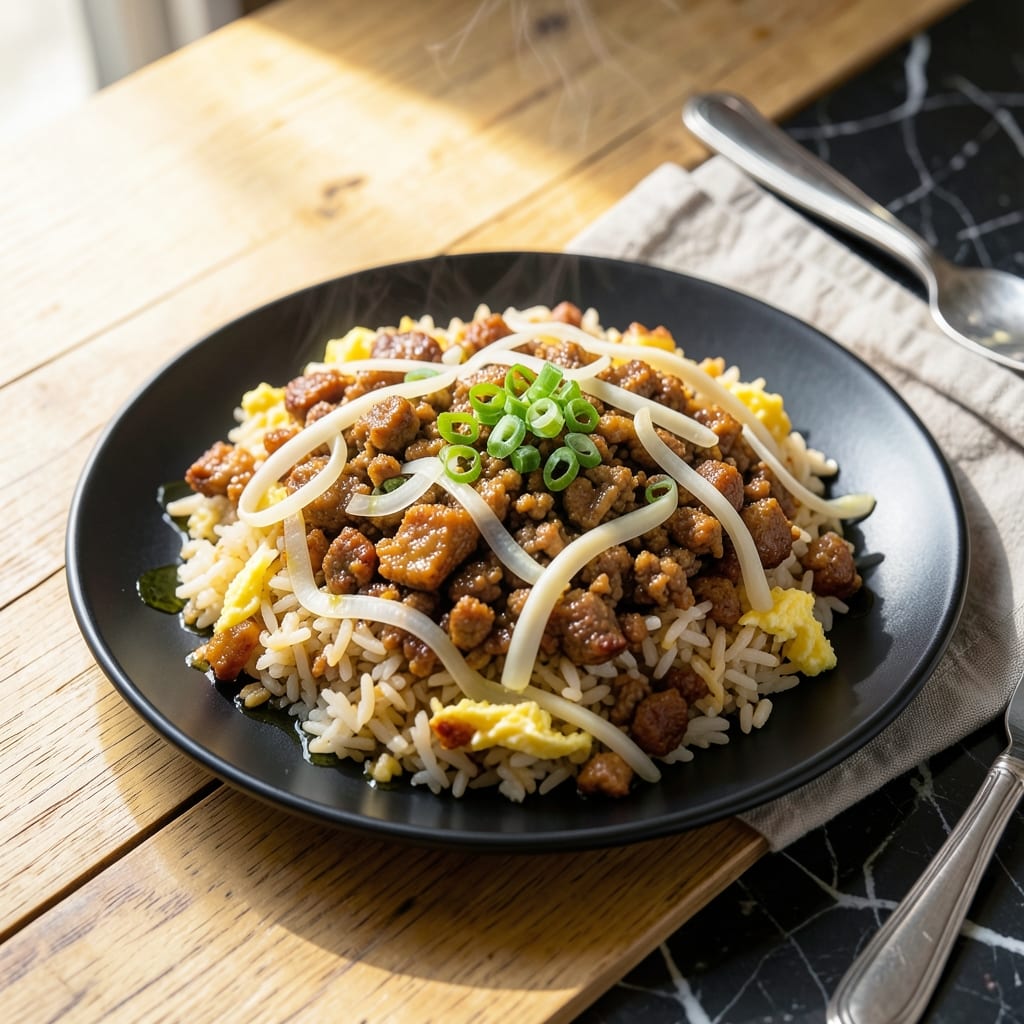
This Cantonese-style fried rice transforms humble ingredients into something extraordinary through precise wok technique. The key is cooking minced pork until deeply browned, then layering in aromatics and rice for maximum flavor absorption.
I developed this method after years of restaurant testing, focusing on the perfect balance between tender pork and crispy rice texture. Toasting the garlic and shallots first creates a fragrant base that infuses every grain.
What emerges is a dish with distinct wok hei—the breath of the wok—that separates good fried rice from great. Each bite delivers savory pork, fragrant aromatics, and rice with just the right amount of chew.
Serve hot with a drizzle of soy sauce for the full experience. The technique makes all the difference.
Ingredients for Minced Pork Fried Rice
Simple ingredients with bold Cantonese flavors. Wok-ready staples for a restaurant-worthy dish.
| Ingredient | Amount | Notes |
|---|---|---|
| Ground Pork 🥩 | ¾ lb | Minced or finely ground |
| Jasmine Rice 🍚 | 3 cups | Day-old, cooked and chilled |
| Shallots 🧅 | 2 whole | Finely diced for base |
| Garlic Cloves 🧄 | 4 cloves | Minced for aromatic depth |
| Large Eggs 🥚 | 2 whole | Beaten for scrambling |
| Light Soy Sauce 🫒 | 2 tbsp | For savory seasoning |
| Dark Soy Sauce 🫒 | 1 tsp | For color and depth |
| Oyster Sauce 🫒 | 1 tbsp | Optional but recommended |
| Sesame Oil 🫒 | 1 tsp | Toasted, for finishing |
| Green Onions 🧅 | 3 whole | Thinly sliced for garnish |
| Neutral Oil 🫒 | 3 tbsp | For high-heat wok cooking |
| White Pepper 🌶️ | ½ tsp | Freshly ground preferred |
| Salt 🧂 | ½ tsp | Adjust to taste |
The pork is everything here. Ground pork shoulder (about 20% fat) gives the best texture—avoid lean cuts as they dry out. Most Asian markets sell pre-minced pork, which saves prep time. For the rice, jasmine is ideal—its fragrant, slightly sticky grains hold up to high heat. Use day-old rice (the good stuff, not the pre-shredded kind) to prevent mushiness.
No oyster sauce? Vegetarian oyster sauce works, or use 1 tbsp hoisin plus 1 tsp soy. Dark soy can be swapped for 1 tsp regular soy plus 1/2 tsp sugar. The shallots are non-negotiable for authentic flavor, but yellow onions in a pinch. White pepper is traditional, but black pepper (freshly ground) is fine too.
Cooked rice keeps in the fridge for 2-3 days before using—perfect for meal prep. The pork can be prepped ahead and stored separately for 1 day. Leftovers reheat well, though the texture softens slightly. Best eaten fresh for that authentic wok hei experience.
Why You’ll Love This Recipe
- One Pan Magic: I toss everything—the pork, rice, and eggs—into one wok and it’s done in 15 minutes flat.
- Umami Bomb: The shallots and garlic fry into the pork, giving every bite that deep, savory richness.
- Weeknight Hero: Honestly, it’s my 8 p.m. “what’s for dinner?” lifesaver on busy nights.
- Stretches Far: A pound of pork and leftover jasmine rice feeds four, with enough for tomorrow’s lunch.
Step-by-Step Instructions for Minced Pork Fried Rice
Master the wok technique with these precise steps for perfectly textured Cantonese-style fried rice.
Step 1: Prepare and Cook the Aromatics
Heat 2 tbsp Neutral Oil in a wok over high heat until shimmering. Add the 2 whole Shallots and stir-fry for 1-2 minutes until translucent and just beginning to brown at the edges. The oil should ripple across the surface when ready.
Add the 4 cloves Garlic Cloves and cook for 30 seconds until fragrant. I keep the garlic moving constantly to prevent burning—burnt garlic adds bitterness that overpowers the dish. The shallots and garlic should release their aromas without darkening too much.
Step 2: Brown the Ground Pork
Push the aromatics to one side of the wok and add the 0.75 lb Ground Pork. Break it up with your spatula and cook for 4-5 minutes until no pink remains and the pork begins to brown lightly. You want small, even crumbles throughout.
Incorporate the shallots and garlic into the pork as it cooks. Season with 0.5 tsp Salt and 0.5 tsp White Pepper. The pork should be fully cooked but not dry—it will continue cooking slightly when combined with the rice.
Step 3: Scramble the Eggs
Create a well in the center of the wok and add the remaining 1 tbsp Neutral Oil. Pour in the 2 whole Large Eggs and scramble quickly with your spatula until just set but still slightly runny. This takes about 45-60 seconds.
Break the eggs into small pieces as they cook. The residual heat from the wok will finish cooking the eggs once mixed with the other ingredients. Don’t overcook them at this stage or they’ll become rubbery in the final dish.
Step 4: Combine with Rice and Sauces
Add the 3 cups Jasmine Rice to the wok, breaking up any clumps with your spatula. Stir-fry for 2-3 minutes until the rice is heated through and begins to crisp slightly in spots. The grains should separate easily and take on a slightly toasted aroma.
Drizzle the 2 tbsp Light Soy Sauce, 1 tsp Dark Soy Sauce, and 1 tbsp Oyster Sauce evenly over the rice. Toss everything together for another 1-2 minutes until the rice is uniformly coated and the sauces are fully incorporated.
Step 5: Finish and Garnish
Remove from heat and stir in the 1 tsp Sesame Oil. The sesame oil should add a nutty fragrance without overpowering the other flavors. Taste and adjust seasoning if needed.
Transfer to a serving dish and garnish with the 3 whole Green Onions, thinly sliced. The green onions add freshness and color contrast to the finished dish. Serve immediately while hot for the best texture.
Pro Tips For Making Minced Pork Fried Rice
- Use Day-Old Rice: Fresh rice turns to mush in the wok—spread last night’s jasmine rice on a tray to dry out for 30 minutes before frying. I learned this the hard way after making soggy fried rice more times than I’d like to admit.
- Cook Pork First: Brown the ground pork completely before adding anything else, breaking it into small crumbles. Skipping this step leaves you with gray, steamed meat instead of flavorful, caramelized bits.
- Scramble Eggs Separately: Push the pork and aromatics to one side, add a little extra oil, then scramble the eggs in the empty space. Sounds like extra work, but it’s the only way to get those soft, distinct egg curds instead of rubbery streaks.
- High Heat Only: Crank the burner to max and work in batches if needed—overcrowding the pan steams the rice instead of frying it. After burning three batches, I finally figured out that patience and heat are non-negotiable here.
Dietary Considerations for These Flavors
Gluten-Free Option
This recipe is naturally gluten-free if you use tamari instead of regular soy sauces. I recommend San-J Tamari for its rich flavor. Also verify your oyster sauce is gluten-free—Kikkoman makes a reliable version. Always check labels for hidden wheat.
Lower-Sodium Version
Reduce the light soy sauce to 1 tbsp and use low-sodium oyster sauce. Boost flavor with 1 tsp fish sauce or ½ tsp msg if desired. The dish will still taste rich without the salt overload. I often add extra garlic for depth.
Pescatarian Adaptation
Swap the pork for ½ lb minced shrimp or scallops. Cook the seafood first until just opaque, then remove and set aside. Add it back at the end with the rice to prevent overcooking. The technique remains identical.
Vegetarian Variation
Replace pork with ½ lb crumbled firm tofu or mushrooms. Press tofu 30 minutes first for better texture. Use vegetarian oyster sauce and add 1 tsp sugar to balance flavors. 💪
Egg-Free Alternative
Simply omit the eggs—the pork and sauces provide enough richness. For extra protein, add ½ cup diced firm tofu when cooking the aromatics. The dish will still have great texture and flavor.
Allergy Considerations
For nut allergies, ensure your sesame oil is processed in a nut-free facility. Kadoya brand is a safe choice. For soy allergies, use coconut aminos instead of soy sauces. 💡
Nutrition Facts
Frequently Asked Questions
What type of pork works best?
Use ground pork shoulder with 20% fat for juicy texture. Avoid lean cuts—they dry out quickly over high heat. Pre-minced pork from Asian markets saves prep time.
Can I use fresh rice instead of day-old?
Day-old rice is ideal as it’s drier and fries better. If using fresh, spread it on a tray for 30 minutes to remove excess moisture before cooking. This prevents a mushy result.
How do I prevent the eggs from getting rubbery?
Scramble eggs in a well with 1 tbsp oil for just 45-60 seconds. Remove from heat while slightly runny—residual heat will finish cooking them perfectly.
What can I substitute for oyster sauce?
Use 1 tbsp hoisin plus 1 tsp soy sauce, or vegetarian oyster sauce. These maintain the sweet-savory balance without overpowering the dish.

- Jollof Rice Sauce Recipe: West African Tomato and Spice Infusion - September 25, 2026
- Japanese Rice Soup Recipe: Umami-Rich Comfort in a Bowl - September 25, 2026
- Homemade Cream Of Rice Recipe: Silk-Smooth Breakfast in Minutes - September 25, 2026