
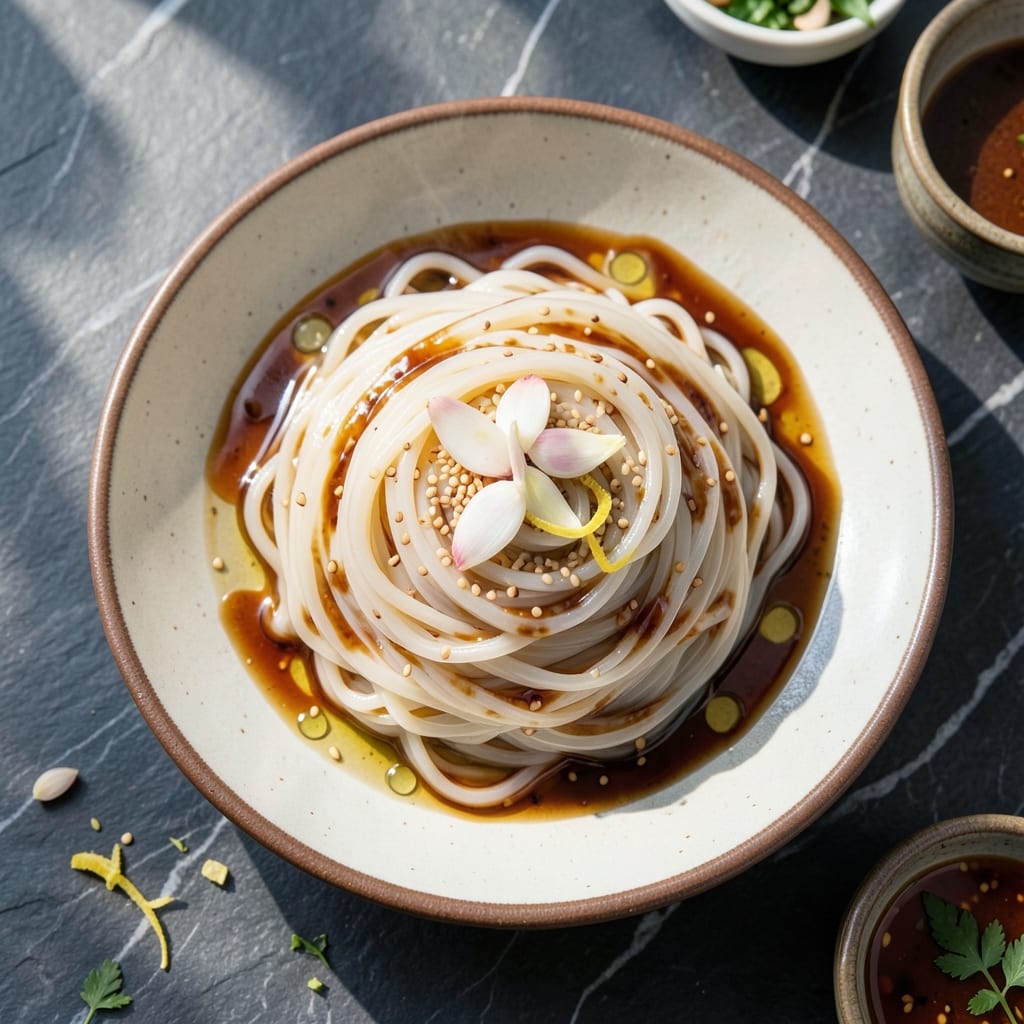
This Korean rice vermicelli delivers an authentic taste of home cooking with its signature chewy texture and subtle nutty flavor. The dish transforms simple ingredients into something extraordinary through precise preparation.
What sets this recipe apart is the careful soaking and cooking process that ensures the noodles maintain their ideal bite. A light seasoning enhances the natural rice flour taste without overpowering it.
The result is a versatile side that pairs perfectly with grilled meats, vegetables, or as a base for hearty stews. Its neutral yet satisfying flavor profile makes it a staple in Korean households.
Mastering this technique means achieving consistently perfect texture every time. The method is straightforward yet yields professional-quality results.
Ingredients for Korean Rice Vermicelli
Simple ingredients transform into authentic Korean noodles with chewy texture and nutty depth.
| Ingredient | Amount | Notes |
|---|---|---|
| Dried Rice Vermicelli Noodles 🍜 | 8 oz | Korean brand preferred, soaked before cooking |
| Water 💧 | 8 cups | For boiling noodles, divided |
| Sesame Oil 🫒 | 1 tbsp | Toasted variety for depth |
| Soy Sauce 🥢 | 2 tbsp | Low-sodium or regular, vegan |
| Rice Vinegar 🍚 | 1 tbsp | Mild acidity balances flavors |
| Garlic Cloves 🧄 | 3 cloves | Minced finely for even distribution |
| Scallions 🌱 | 4 whole | Thinly sliced, green parts only |
| Toasted Sesame Seeds 🌰 | 1 tbsp | For garnish and crunch |
| Salt 🧂 | ½ tsp | Kosher or sea salt preferred |
| Sugar 🍚 | 1 tsp | Balances saltiness, optional |
| Red Pepper Flakes 🌶️ | ½ tsp | Adjust to heat preference |
| Vegetable Oil 🫒 | 1 tbsp | Neutral flavor for cooking |
The rice vermicelli is non-negotiable—look for Korean brands like Sempio or Ottogi at H Mart or Korean grocery stores. These noodles have the right starch content for that signature bite. Avoid substituting with wheat or mung bean noodles, as they won’t deliver the same texture. For the soy sauce, vegan-certified brands like Kikkoman or San-J ensure no hidden animal products.
No rice vinegar? Apple cider vinegar at half the amount works in a pinch. Out of sesame oil? Peanut oil offers a similar nuttiness, though the flavor won’t be as pronounced. If you’re avoiding sugar, a pinch of maple syrup or agave can stand in. The scallions can be swapped for chives (though less traditional), but don’t skip the sesame seeds—they’re key for texture.
Store dried noodles in a cool, dry place for up to 1 year. Once cooked, the dish keeps in the fridge for 3-4 days in an airtight container. The flavors deepen overnight, making leftovers even better. Freezing isn’t recommended—rice noodles can turn mushy when thawed.
Why You’ll Love This Recipe
- One-Pot Wonder: I just boil the noodles, drain, then toss with soy sauce and sesame oil—no extra pans, no fuss.
- Umami Bomb: The mix of soy sauce and rice vinegar hits that perfect sweet-savory balance I crave.
- Meal Prep MVP: Honestly, these noodles keep beautifully in the fridge for days and taste just as good cold.
- Budget Stretch: A pound of rice vermicelli costs pennies and feeds my family twice, with leftovers for lunch.
Step-by-Step Instructions for Korean Rice Vermicelli
Master the technique and timing for perfectly chewy noodles with balanced, aromatic flavor.
Step 1: Soak the Noodles Properly
Place the 8 oz dried rice vermicelli noodles in a large bowl and cover completely with 4 cups of the 8 cups water. I always use hot tap water—it softens the noodles more effectively than cold. Let them soak for 10-12 minutes until pliable but still slightly firm to the bite.
This step is crucial—under-soaked noodles remain hard in the center, while over-soaked ones turn mushy during cooking. You’ll notice they expand significantly and turn from opaque white to translucent. Drain and rinse briefly with cold water to stop the soaking process.
Step 2: Cook the Noodles Al Dente
Bring the remaining 4 cups water to a boil in a large pot. Add the soaked noodles and stir immediately to prevent sticking. Cook for 2-3 minutes until they float to the surface and become fully translucent.
Test a strand—it should be tender but still offer slight resistance. Drain immediately and rinse under cold water to halt cooking. This ensures they retain a satisfying chew. Toss with the 1 tbsp sesame oil to prevent clumping while you prepare the sauce.
Step 3: Prepare the Aromatic Sauce Base
In a small bowl, whisk together the 2 tbsp soy sauce, 1 tbsp rice vinegar, 1 tsp sugar, 0.5 tsp salt, and 0.5 tsp red pepper flakes. The sugar balances the saltiness, while the vinegar adds the necessary brightness to cut through the richness.
Heat the 1 tbsp vegetable oil in a large skillet over medium heat. Add the 3 cloves garlic cloves (minced) and sauté for 30 seconds until fragrant but not browned. Pour in the sauce mixture and let it simmer for 1 minute to meld the flavors.
Step 4: Combine and Finish with Fresh Aromatics
Add the cooked noodles to the skillet and toss gently to coat evenly with the sauce. Cook for 1-2 minutes, stirring constantly, until the noodles absorb the flavors and the sauce reduces slightly. The noodles should glisten with a thin, even layer of sauce.
Remove from heat and stir in the 4 whole scallions (thinly sliced). The residual heat will soften them just enough to take the edge off without losing their fresh, crisp texture. This final addition brightens the dish with a pop of color and a mild oniony bite.
Step 5: Garnish and Serve Immediately
Transfer the noodles to a serving platter or individual bowls. Sprinkle with the 1 tbsp toasted sesame seeds for a nutty crunch and visual contrast. The seeds should be evenly distributed so every bite includes their aromatic depth.
Serve while hot—these noodles are best enjoyed immediately, as they continue to absorb flavors and soften upon standing. The ideal texture is chewy yet tender, with every strand coated in a glossy, well-balanced sauce.
Pro Tips For Making Korean Rice Vermicelli
- Soak the Noodles: Cover the rice vermicelli in warm water for exactly 5-7 minutes—any longer and they’ll turn mushy. I learned this the hard way after ending up with a gluey mess.
- Heat the Oil First: Get your pan screaming hot before adding sesame oil, then toss in the noodles immediately. After burning a few batches, I realized the oil needs to shimmer to prevent sticking.
- Skip the Over-Salting: Soy sauce is already salty, so go easy—start with half the amount you think you need and adjust. My grandmother swore by this, and she was right.
- Rinse with Cold Water: After soaking, drain and rinse the noodles under cold water to stop the cooking process. Sounds weird, but it works—it keeps them firm and separate.
Troubleshooting Perfect Results
Mushy Noodles
Over-soaking is the most common culprit. Stick to 10-12 minutes maximum in hot water, then test for that slight firmness. If already mushy, rinse immediately under cold water to stop cooking, then drain well before proceeding. 💡
Sticky Clumps
Always rinse after boiling and toss with 1 tbsp sesame oil to prevent sticking. If clumps form, use your fingers to gently separate the strands under running water while they’re still warm.
Bland Flavor
Don’t skimp on the sauce simmering time. Let the garlic infuse for 1 full minute in the sauce before combining. If flavor seems weak, finish with an extra ½ tsp soy sauce or a pinch of salt.
Undercooked Center
This happens with cold water soaking. Use hot tap water and ensure noodles are fully translucent before boiling. If you cut into a strand and see white, return to boiling water for 1 more minute.
Sauce Too Thick
Add 1-2 tbsp water to thin the sauce if it clings too heavily. The noodles should glisten, not sit in a pool. Toss over medium heat until the consistency is even and glossy.
Sesame Overpowering
If the sesame flavor dominates, balance with ½ tsp rice vinegar or a pinch of sugar. Remember, toasted sesame oil is potent—measure carefully and taste as you go. 🌟
Nutrition Facts
Frequently Asked Questions
Can I use cold water for soaking?
No, always use hot tap water for soaking. Cold water won’t soften the noodles enough, leading to an undercooked center.
How do I prevent the noodles from sticking?
Rinse them thoroughly after boiling, then toss with 1 tbsp sesame oil. This creates a protective coating that keeps strands separate.
What if my sauce tastes too strong?
Balance intense flavors with ½ tsp rice vinegar or a pinch of sugar. Taste as you adjust to avoid overcorrection.
Can I make this ahead of time?
Yes, but texture changes. Store cooked noodles in an airtight container for up to 3-4 days. Reheat gently with a splash of water.

- Mujadara Rice and Lentils Recipe: Earthy Spiced Lentils With Caramelized Onions - November 1, 2026
- Naija Fried Rice Recipe: Street-Style Spice With Veggie Crunch - November 1, 2026
- Mushy Rice Recipe: Fluffy Grains Transformed in Minutes - November 1, 2026