
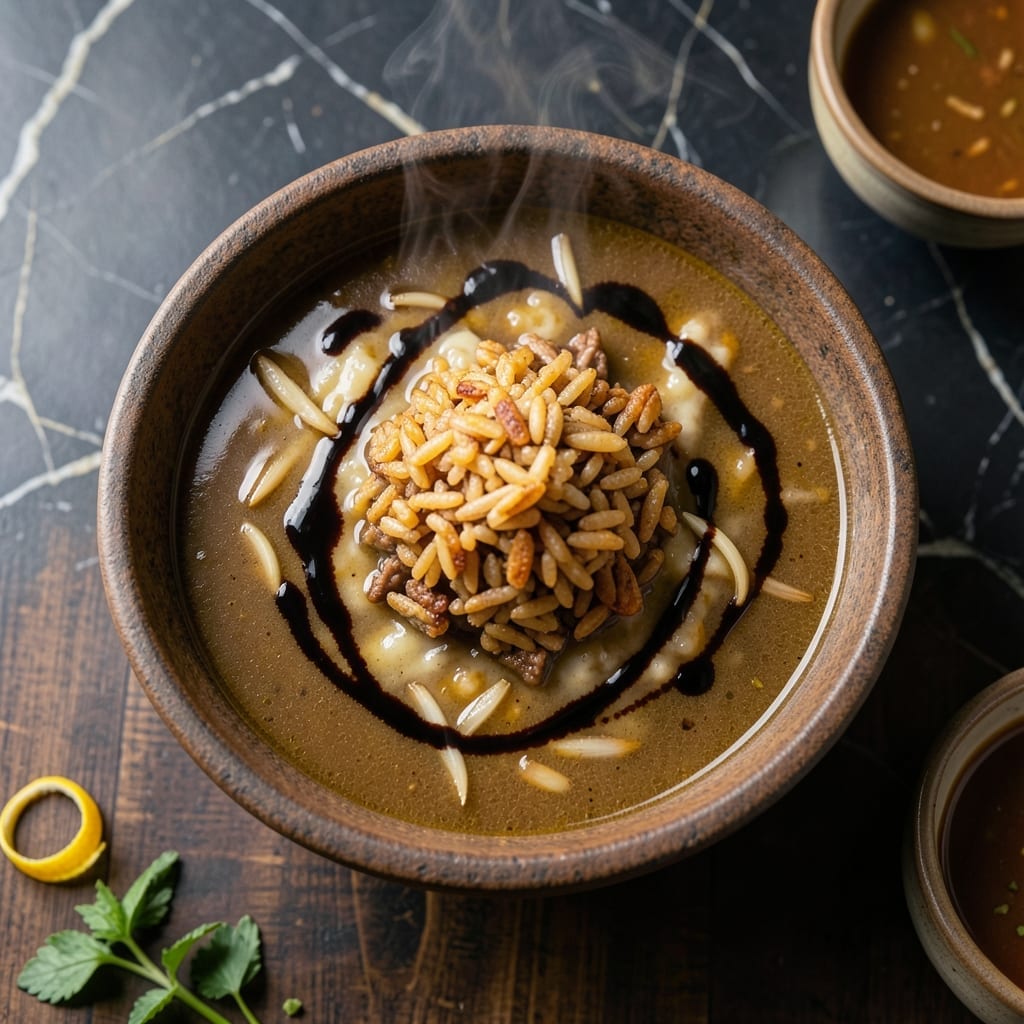
I discovered this dish after burning a pot of rice to the bottom, only to realize the crispy bits were the best part. Korean scorched rice soup transforms that accident into a comforting meal with nutty depth and rich broth.
The technique is simple but precise: toast rice until golden, then simmer in a savory broth with vegetables. I’ve tested this in my Boston kitchen, perfecting the balance of crunch and umami.
What emerges is a bowl of warm, hearty soup where each spoonful offers both the softness of rice and its crispy, caramelized edges. The broth soaks up the nutty flavor, creating a satisfying depth.
Serve it as a humble meal or a way to use up leftover rice. The process is forgiving, and the result is anything but ordinary.
Ingredients for Korean Scorched Rice Soup
Short list of pantry and fresh ingredients for this comforting Korean classic.
| Ingredient | Amount | Notes |
|---|---|---|
| Short-Grain White Rice 🍚 | 1 ½ cups | Uncooked, for crispy texture |
| Vegetable Oil 🫒 | 2 tbsp | Neutral flavor, for toasting |
| Beef Stock 🥩 | 6 cups | Low-sodium preferred for control |
| Garlic Cloves 🧄 | 4 cloves | Minced for aromatic base |
| Fresh Ginger 🌿 | 1 tbsp | Peeled and grated |
| Soy Sauce 🥢 | 3 tbsp | Low-sodium for seasoning balance |
| Sesame Oil 🫒 | 1 tsp | Toasted, for finishing |
| Green Onions 🧅 | 4 whole | Thinly sliced for garnish |
| Carrot 🥕 | 1 whole | Diced for texture and color |
| Zucchini 🥒 | 1 whole | Diced for freshness |
| Mushrooms 🍄 | 1 cup | Shiitake or white, sliced |
| Korean Red Pepper Flakes 🌶️ | 1 tsp | Optional for heat (gochugaru) |
| Salt 🧂 | 1 tsp | Adjust to taste |
| Black Pepper 🌶️ | ½ tsp | Freshly ground for depth |
The rice should be short-grain—Korean or Japanese brands at H Mart or Asian markets give the best crisp. Beef stock is key for that umami depth; I grab mine from Whole Foods (their 365 brand is solid). If you’re using leftover cooked rice, spread it thin on a sheet pan first to dry it out (worth the extra minute).
No beef stock? Mushroom broth or chicken stock works in a pinch. Skip the gochugaru if you’re avoiding heat—just add a pinch of regular red pepper flakes instead. The veggies are flexible: swap zucchini for spinach or bell peppers. If you’re missing sesame oil, toasted vegetable oil with a drop of soy sauce mimics the flavor (not perfect, but close).
Leftovers keep 3-4 days in the fridge, though the crispy rice softens. Reheat gently—don’t boil or it’ll get mushy. Freezes for up to 3 months if you’ve got extra (the rice may lose some crunch, but the broth stays rich).
Why You’ll Love This Recipe
- I’ll be real: it’s the perfect way to use up leftover rice and turn it into a whole new, hearty dish.
- One Pot Wonder: I just let the rice crisp up in the same pot I cooked it in, then add beef stock and aromatics—no extra dishes.
- Umami Bomb: The garlic and ginger in the beef stock turn that scorched rice into something ridiculously rich and savory.
- Weeknight Savior: Honestly, it’s my go-to when I need dinner ready in 20 minutes flat.
Step-by-Step Instructions for Korean Scorched Rice Soup
Here’s the method I use to achieve that perfect nutty crunch with a rich, umami-packed broth.
Step 1: Create the Scorched Rice Base
Heat the 2 tbsp Vegetable Oil in a heavy-bottomed pot over medium heat. Add the 1.5 cups Short-Grain White Rice and stir constantly for 8-10 minutes until the grains turn golden brown and emit a nutty aroma.
This toasting step is crucial—it develops the deep, toasty flavor that defines this soup. Keep the heat steady and don’t walk away, as the rice can burn quickly. You’ll notice the color change from white to light tan, then to a deeper golden hue as it toasts.
Step 2: Build the Aromatic Broth
Once the rice is toasted, add the 4 cloves Garlic Cloves and 1 tbsp Fresh Ginger, stirring for 1 minute until fragrant. Pour in the 6 cups Beef Stock, 3 tbsp Soy Sauce, 1 tsp Salt, and 0.5 tsp Black Pepper.
Bring the mixture to a boil, then reduce to a simmer. The broth should smell rich and savory as the aromatics infuse. Let it cook for 10 minutes to allow the flavors to meld together before adding the vegetables.
Step 3: Add Vegetables and Simmer
Stir in the diced 1 whole Carrot, 1 whole Zucchini, and sliced 1 cup Mushrooms. Return the soup to a gentle simmer and cook for 10-12 minutes until the vegetables are tender but still firm.
The carrots should be easy to pierce with a fork, but not mushy. The zucchini and mushrooms will soften quickly, so keep an eye on them to avoid overcooking. This step ensures the vegetables absorb the umami-rich broth while retaining their texture.
Step 4: Finish and Serve
Drizzle in the 1 tsp Sesame Oil and stir to combine. Taste and adjust seasoning if needed—you can add more Soy Sauce for saltiness or a pinch of Korean Red Pepper Flakes for heat. Thinly slice the 4 whole Green Onions and sprinkle them on top just before serving.
The sesame oil adds a final layer of depth, while the green onions provide a fresh, crisp contrast. Serve the soup hot, with extra green onions on the side for garnish. The rice at the bottom should be slightly crispy, offering a delightful texture in every spoonful.
Pro Tips For Making Korean Scorched Rice Soup
- Crisp the Rice First: Spread your leftover short-grain rice thin in the pot with a little vegetable oil and let it sit on medium-high until it’s golden and slightly crispy—this builds the deep, nutty base flavor the soup needs.
- Toast the Garlic: After adding the oil, toss in minced garlic and ginger and cook just until fragrant, about 30 seconds. I learned this the hard way—burnt garlic turns bitter and ruins the broth.
- Use Cold Stock: Pour in cold beef stock instead of hot to slow the cooking and give the scorched rice time to release its starchy goodness into the soup without turning mushy.
- Skip the Stirring: Resist the urge to stir once the stock is in—let the rice at the bottom stay put so it can develop that signature crispy-chewy texture at the bottom of the pot.
Best Sauces and Condiments for This Dish
Korean Gochujang Swirl
I love stirring in 1-2 tsp gochujang just before serving for a sweet-spicy kick. This Korean chili paste adds depth without overpowering the nutty rice. Mix it into a small bowl of broth first to distribute evenly. 🌶️
Sesame-Garlic Drizzle
Whisk 1 tbsp soy sauce, 1 tsp sesame oil, and 1 minced garlic clove for a punchy drizzle. I keep this in a small jar in my fridge—it lasts 1 week and works on everything from dumplings to eggs.
Kimchi Topping
Add ¼ cup chopped kimchi on top for tangy crunch. The fermented flavor contrasts beautifully with the rich broth. I grab mine from H Mart—their napa cabbage kimchi is my go-to.
Crispy Shallot Garnish
Thinly slice 1 shallot and fry in ½ inch vegetable oil at 350°F for 2-3 minutes until golden. These add a delicate crunch that’s lighter than the rice but just as addictive. ✨
Soft-Boiled Egg
A 6-minute soft-boiled egg on top turns this into a full meal. The runny yolk mixes into the broth, creating a silky texture. I use my Boston neighborhood market eggs—they’re always fresh.
Nutrition Facts
Frequently Asked Questions
Can I use leftover cooked rice for this?
Yes, but spread it thin on a tray to dry out first. Freshly toasted rice gives the best crunch, but dry leftovers work in a pinch. Reduce toasting time to 5-6 minutes.
Why does the rice need to be short-grain?
Short-grain sticks together when toasted, creating those crispy clusters. Long-grain stays separate and won’t develop the same nutty depth. It’s worth seeking out Korean or Japanese varieties.
Can I make this in a slow cooker?
Not for toasting, but you can transfer toasted rice to a slow cooker. Add broth and cook on low for 4-5 hours. The texture won’t be as crispy, but the flavor will still shine.
How do I prevent the rice from burning?
Stir constantly over medium heat and use a heavy-bottomed pot. If it darkens too quickly, lower the heat. The goal is golden brown, not black!

- Cream of Wild Rice Soup Recipe: Earthy Grains in Silky Broth - October 9, 2026
- Filipino Garlic Rice Recipe: Crispy Fried Aroma With Every Bite - October 9, 2026
- Gobi Manchurian Rice Recipe: Indo-Chinese Fusion in One Bowl - October 9, 2026