
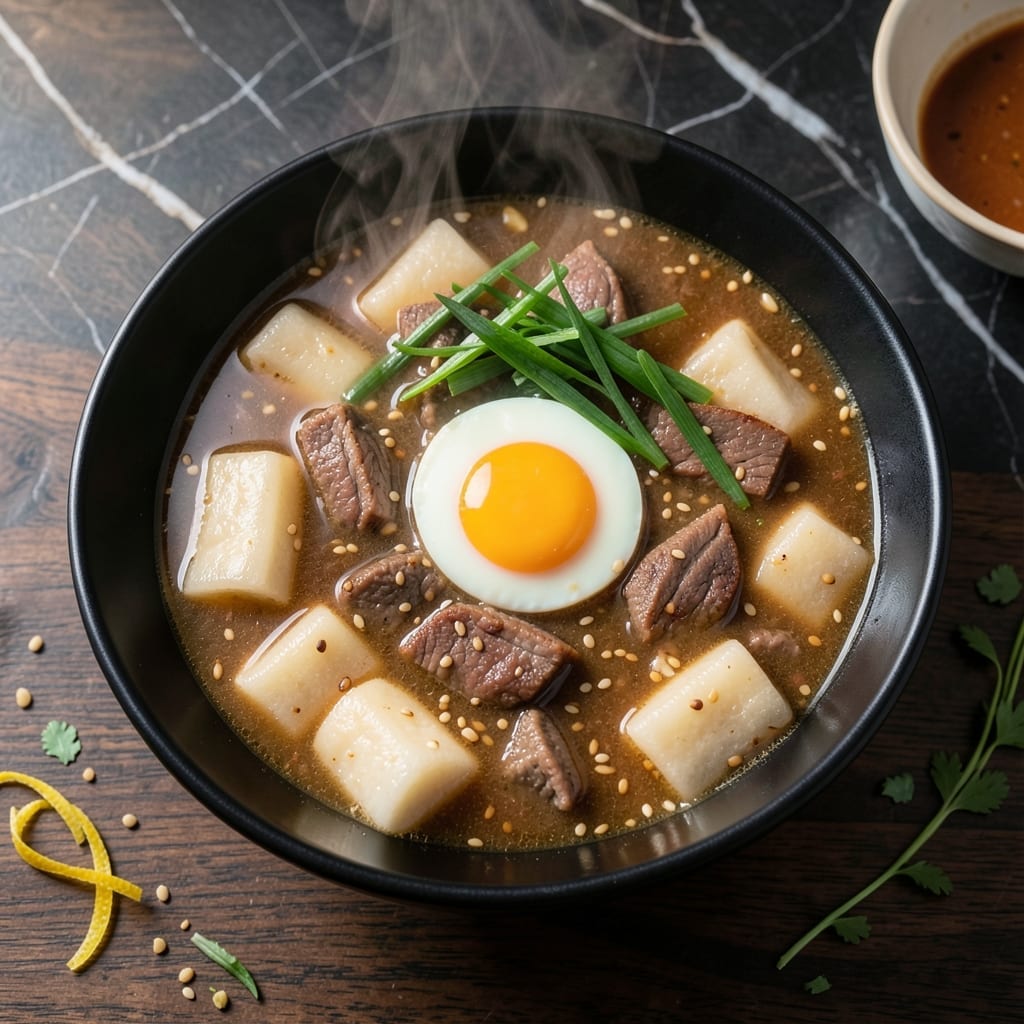
There’s something deeply comforting about a steaming bowl of Korean rice cake soup, where chewy rice cakes float in a rich, savory broth. This traditional dish, often served during celebrations, brings warmth and satisfaction with every spoonful.
The key to authentic flavor lies in the broth, built from beef or anchovy stock and seasoned with soy sauce and garlic. The rice cakes, soft yet slightly chewy, absorb the broth’s depth, creating a harmonious balance of textures and tastes.
I’ve perfected this recipe to ensure the broth is deeply flavorful while keeping the rice cakes tender. Garnished with thinly sliced eggs and green onions, it’s a dish that feels both special and deeply nourishing.
Perfect for cold days or festive occasions, this soup is a celebration of simplicity and tradition. Here’s how to make it at home.
Ingredients for Korean Rice Cake Soup
Every ingredient here builds that deep, comforting broth and perfect rice cake texture.
| Ingredient | Amount | Notes |
|---|---|---|
| Korean Rice Cakes 🍚 | 1 lb | Cylindrical or oval shape preferred |
| Beef Stock 🥩 | 8 cups | Or substitute anchovy stock |
| Soy Sauce 🫒 | ¼ cup | Low-sodium preferred for control |
| Garlic Cloves 🧄 | 6 cloves | Minced for depth of flavor |
| Green Onions 🧅 | 4 whole | Thinly sliced for garnish |
| Large Eggs 🥚 | 2 whole | Thinly sliced for topping |
| Sesame Oil 🫒 | 1 tbsp | Toasted for nutty aroma |
| Gochugaru 🌶️ | 1 tbsp | Korean red pepper flakes optional |
| Salt 🧂 | 1 tsp | Adjust to taste after simmering |
| Black Pepper 🌶️ | ½ tsp | Freshly ground preferred |
| Dried Seaweed 🌊 | 2 sheets | Optional for garnish |
| Tofu 🧈 | ½ lb | Soft or firm, cubed |
| Vegetable Oil 🫒 | 1 tbsp | For sautéing aromatics |
The rice cakes are non-negotiable for authenticity. Look for cylindrical or oval shapes at Korean markets—they hold up better than flat ones. Beef stock is traditional, but anchovy stock gives a lighter, seafood-forward base. I use Kikkoman soy sauce for consistency, but any low-sodium brand works. The garlic should be fresh—no pre-minced stuff from jars.
No gochugaru? Skip it or use a pinch of cayenne for heat. Vegetarian? Swap beef stock for mushroom or kelp stock. The eggs can be omitted, but they add richness. If using tofu, press it first to remove excess water. Seaweed is optional but adds that classic Korean touch—find it at H Mart or any Asian grocery.
Rice cakes keep in the freezer for 3 months if unopened. Once opened, use within 1 week or they dry out. Broth tastes even better the next day—make extra and freeze for up to 3 months. Slice garnishes fresh when serving.
Why You’ll Love This Recipe
- One Pot Wonder: I toss everything in—rice cakes, stock, garlic—and let it simmer while I set the table. Honestly, cleanup’s just a single pot.
- Umami Bomb: The soy sauce and beef stock create this deep, savory broth that soaks right into the chewy rice cakes.
- New Year’s Tradition: I make this every Seollal, but it’s just as good for a lazy Sunday when I crave comfort.
- Stretches Far: A batch lasts us two meals, and the leftovers taste even better the next day with a splash of extra soy.
Step-by-Step Instructions for Korean Rice Cake Soup
Master this comforting dish with a clear method that ensures perfectly tender rice cakes in a rich, flavorful broth.
Step 1: Soak and Prep the Rice Cakes
Place the 1 lb Korean Rice Cakes in a bowl of cold water and let them soak for 15-20 minutes. This step softens them and removes excess starch, which prevents them from turning gummy during cooking.
If using frozen rice cakes, soak them in warm water for 30 minutes to thaw completely. Drain and rinse under cold water once more before cooking. This preparation is essential for achieving the signature chewy texture.
Step 2: Sauté Aromatics and Build the Broth Base
Heat the 1 tbsp Vegetable Oil in a large pot over medium heat. Add the 6 cloves Garlic Cloves and sauté for 1-2 minutes until fragrant but not browned.
Pour in the 8 cups Beef Stock, 0.25 cup Soy Sauce, 1 tbsp Gochugaru, 1 tsp Salt, and 0.5 tsp Black Pepper. Stir well and bring to a gentle boil. This creates a deeply savory foundation with a subtle kick of heat.
Step 3: Simmer Rice Cakes and Tofu
Add the drained rice cakes and 0.5 lb Tofu (cubed) to the pot. Reduce heat to medium-low and let the soup simmer for 10-12 minutes, stirring occasionally.
You’ll notice the rice cakes plump up and become tender. Taste one to check for doneness—it should be soft and chewy, not hard in the center. The tofu will absorb the broth’s flavors, adding heartiness to each bite.
Step 4: Finish with Eggs and Garnishes
Drizzle the 1 tbsp Sesame Oil into the pot and stir. Thinly slice the 2 whole Large Eggs and add them to the soup. Cook for an additional 2-3 minutes until the egg ribbons are just set.
Remove from heat and garnish with the 4 whole Green Onions (thinly sliced). For an authentic touch, tear the 2 sheets Dried Seaweed into small pieces and sprinkle on top. Serve hot, with extra green onions on the side for freshness.
Pro Tips For Making Korean Rice Cake Soup
- Soak the Rice Cakes: I learned this the hard way—dry rice cakes turn gummy. Soak them in cold water for 15-20 minutes before adding to the broth, or they’ll absorb all your stock and leave you with a thick, uneven mess.
- Skim the Stock: After simmering beef stock for the base, skim off the foam and fat that rises to the top. It makes a real difference in getting that clean, rich flavor that defines a good tteokguk.
- Add Soy Sauce Late: Sounds weird, but it works: hold off on the soy sauce until the last 10 minutes of cooking. Adding it too early can make the rice cakes tough and the broth overly salty as it reduces.
- Char the Garlic: Instead of mincing raw garlic, lightly char the cloves in a dry pan first—just until fragrant and slightly blackened. It deepens the aroma without overpowering the soup, and my grandmother swore by this method.
Troubleshooting Great korean rice cake soup
Rice Cakes Too Hard
If your rice cakes stay hard after simmering, they likely weren’t soaked long enough. Return them to warm water for 10-15 minutes, then add back to the broth. Older rice cakes may need 5 extra minutes of simmering. 💡
Broth Too Bland
Boost flavor by adding 1-2 tbsp soy sauce or a pinch of MSG. For depth, stir in 1 tbsp fish sauce or simmer with a dried kelp piece for 10 minutes. Taste as you go to avoid over-salting.
Rice Cakes Gummy
Gummy texture usually means you skipped the soak or overcooked them. Rinse soaked rice cakes in cold water before adding to broth. Simmer gently—vigorous boiling breaks them down too fast.
Egg Ribbons Tough
To prevent rubbery eggs, slice them thinly and add to the soup during the last 2-3 minutes of cooking. Use room-temperature eggs for even cooking. Stir gently to keep ribbons intact.
Broth Too Salty
Dilute with 1-2 cups water or unsalted stock. Add 1 sliced potato to absorb excess salt while simmering for 10 minutes, then remove. Avoid adding more soy sauce or salt until you’ve corrected the balance.
Tofu Falls Apart
Press tofu for 15 minutes before cubing to remove excess water. Add cubes to the soup during the last 5 minutes of cooking. Firm tofu holds shape better than soft for this dish. 🌟
Nutrition Facts
Frequently Asked Questions
Can I use fresh rice cakes instead of frozen?
Yes, but reduce the soaking time to 10 minutes. Fresh rice cakes soften faster and may fall apart if soaked too long. Handle gently when adding to the broth.
Why does the broth turn cloudy?
Cloudiness often comes from starch released by the rice cakes. To minimize this, rinse soaked rice cakes thoroughly and avoid vigorous boiling. A clear broth isn’t essential for flavor.
Can I make this soup vegetarian?
Certainly! Replace beef stock with mushroom or kelp stock. Skip the gochugaru if avoiding meat-based ingredients. The tofu and eggs add plenty of protein.
How long can I store leftovers?
Store in an airtight container in the fridge for up to 3 days. The rice cakes will absorb more broth over time but remain tender when reheated gently.

- Gambia Jollof Rice Recipe: West African One-Pot Spice Fusion - October 5, 2026
- Cream of Wild Rice Soup Recipe Minnesota: Northwoods Creaminess With Foraged Grains - October 5, 2026
- Frozen Cauliflower Fried Rice Recipe: Quick Low-Carb Wok Magic - October 5, 2026