
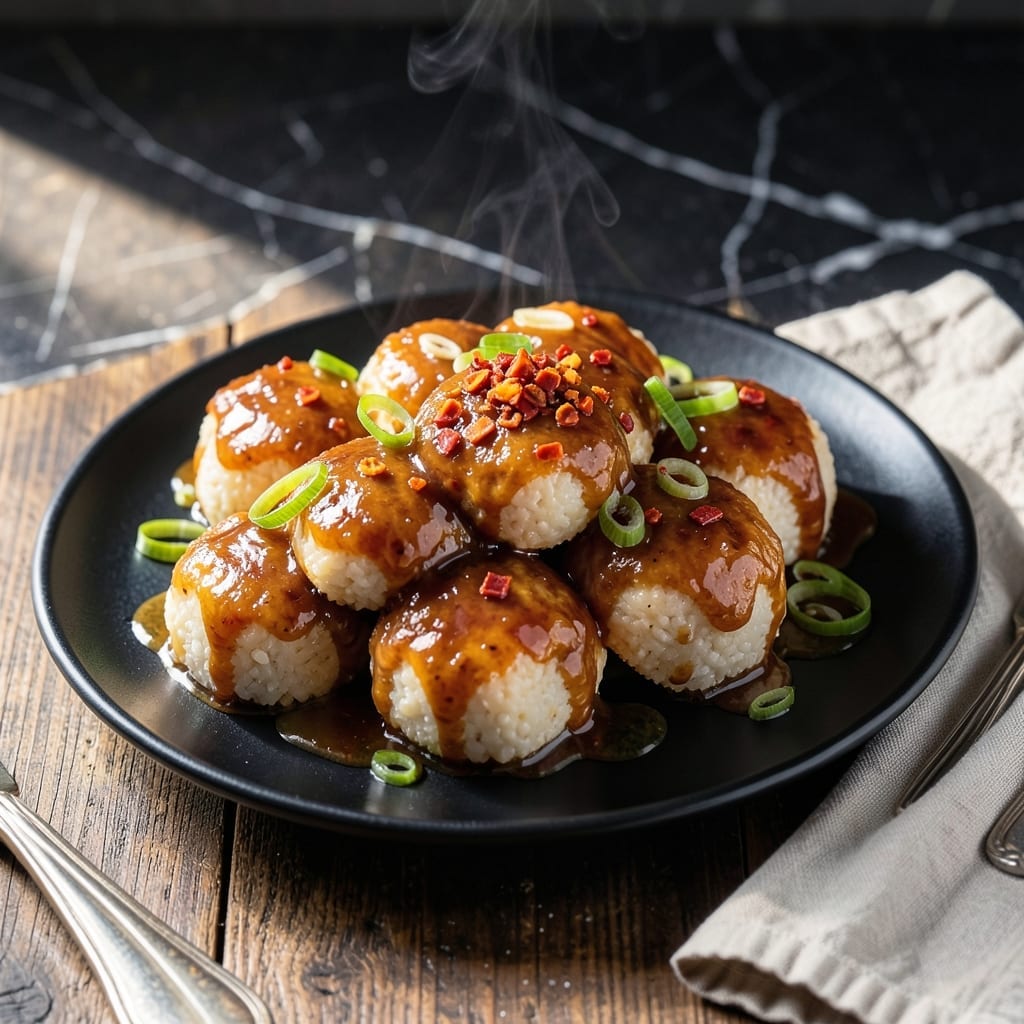
This Korean-inspired dish transforms simple rice cakes into crispy, addictive bites with a fiery kick. The secret lies in the perfect balance between heat and texture, achieving that signature Buldak flavor at home.
With just a few pantry staples and careful timing, you’ll create a snack or side that’s impossible to resist. The key is maintaining high heat to ensure each piece develops that crispy exterior while staying tender inside.
Ingredients for Buldak Rice Cake
Transform simple rice cakes into crispy, spicy bites with these Korean pantry essentials.
| Ingredient | Amount | Notes |
|---|---|---|
| Korean Rice Cakes 🍚 | 1 lb | Cylindrical, fresh or thawed |
| Gochujang 🌶️ | 3 tbsp | Korean red chili paste |
| Gochugaru 🌶️ | 1 tbsp | Korean chili flakes |
| Soy Sauce 🫙 | 2 tbsp | Low-sodium preferred |
| Brown Sugar 🍚 | 1 ½ tbsp | Light or dark variety |
| Honey 🍯 | 1 tbsp | For balancing heat |
| Minced Garlic 🧄 | 4 cloves | Freshly minced preferred |
| Ginger 🌿 | 1 tbsp | Freshly grated |
| Sesame Oil 🫒 | 1 tbsp | Toasted for aroma |
| Vegetable Oil 🫒 | ½ cup | For high-heat frying |
| Toasted Sesame Seeds 🌿 | 1 tsp | For garnish |
| Green Onions 🧅 | ½ cup | Thinly sliced |
| Rice Vinegar 🍚 | 1 tbsp | For acidity |
| Salt 🧂 | ½ tsp | Adjust to taste |
Korean rice cakes are essential here—look for cylindrical tteok at an Asian market or in the freezer section of well-stocked grocers like H Mart or Whole Foods. Fresh rice cakes fry up crispier than frozen, but both work. For gochujang and gochugaru, Sempio or Kochukaru brands deliver authentic flavor. Avoid substitutes; these chili products define the dish’s signature heat and depth.
No gochujang? Sriracha mixed with miso paste gets you close but won’t be the same. Gochugaru can be swapped with half the amount of cayenne, though the flavor profile shifts. For a gluten-free version, use tamari instead of soy sauce. Brown sugar and honey balance the heat—agave or maple syrup work for vegan adaptations. The sesame oil is non-negotiable for that nutty finish.
Leftover rice cakes soak up moisture quickly—store them in an airtight container with parchment between layers. The sauce keeps for up to 1 week refrigerated. For best results, fry the rice cakes just before serving to maintain that crispy texture. Reheating in an air fryer revives them nicely.
Why You’ll Love This Recipe
- One Pot Wonder: I toss everything in a pan and let the gochujang and brown sugar work their magic while I set the table.
- Sweet Heat Fix: That first bite of chewy rice cakes coated in spicy-sweet sauce? I make it weekly just for that.
- Lunchbox Hero: Cold leftovers taste even better the next day—my kids beg me to pack it for school.
- Pantry MVP: Five ingredients I always have on hand, and it still feels like a restaurant meal. Honestly, it’s my budget savior.
Step-by-Step Instructions for Spicy Korean Rice Cakes
This method delivers the signature crispy texture and fiery flavor that defines this popular dish.
Step 1: Soak and Prepare the Rice Cakes
If using frozen Korean rice cakes, soak them in warm water for 10-15 minutes until they become pliable and slightly expanded. This softening step prevents them from remaining hard in the center during cooking. Drain thoroughly and pat completely dry with a clean towel—excess moisture will cause splattering in the hot oil.
I recommend cutting the cylindrical rice cakes into 1-inch pieces for even cooking and better sauce absorption. Keep them covered with a damp towel if not using immediately to prevent them from drying out and becoming brittle.
Step 2: Create the Spicy Sauce Base
In a mixing bowl, combine the 3 tbsp gochujang, 1 tbsp gochugaru, 2 tbsp soy sauce, 1.5 tbsp brown sugar, and 1 tbsp honey. Whisk vigorously until the mixture becomes smooth and the sugar fully dissolves. The gochujang provides the base heat while the brown sugar and honey balance the spiciness with sweetness.
Add the 4 cloves minced garlic, 1 tbsp ginger, 1 tbsp rice vinegar, and 0.5 tsp salt to the bowl. The vinegar adds necessary acidity to cut through the richness, while the garlic and ginger provide aromatic depth. Mix thoroughly to create a uniform sauce.
Step 3: Pan-Fry the Rice Cakes to Crispy Perfection
Heat the 0.5 cup vegetable oil in a large skillet over medium-high heat until it shimmers but does not smoke. Add the prepared Korean rice cakes in a single layer, working in batches if necessary to avoid overcrowding. Cook undisturbed for 3-4 minutes until the bottoms turn deep golden brown and crispy.
Flip the rice cakes and cook for another 3-4 minutes until all sides are evenly crisped. Use a slotted spoon to transfer them to a paper towel-lined plate to drain excess oil. The crispy texture is essential for this dish, so ensure they are well-browned before removing from the oil.
Step 4: Coat and Finish the Dish
In a clean wok or large skillet, heat the 1 tbsp sesame oil over medium heat. Add the prepared spicy sauce and cook for 1-2 minutes, stirring constantly, until it thickens slightly and becomes glossy. The sesame oil adds a nutty aroma that complements the other flavors perfectly.
Add the crispy rice cakes to the skillet and toss gently to coat them evenly in the sauce. Cook for an additional 1-2 minutes, stirring occasionally, until the rice cakes are fully saturated with the spicy mixture and heated through. The sauce should cling to each piece without making them soggy.
Transfer to a serving dish and garnish with the 0.5 cup green onions and 1 tsp toasted sesame seeds. Serve immediately while the rice cakes are still crispy and the sauce is hot and fragrant.
Pro Tips For Making Buldak Rice Cake
- Soak the Rice Cakes: I learned this the hard way—dry rice cakes stay rock-hard. Soak them in warm water for 15-20 minutes before cooking, or they’ll never absorb that spicy-sweet sauce properly.
- Bloom the Gochugaru: Toast the gochugaru in a dry pan for 30 seconds before adding liquids. Sounds weird, but it deepens the flavor and cuts the raw chili powder taste.
- Low and Slow Sauce: After combining gochujang, soy sauce, and brown sugar, simmer the sauce for 3-4 minutes on low heat—this mellows the harsh edges and lets the flavors meld.
- Skip the Overcrowding: Cook the rice cakes in batches if needed. Piling them all in at once steams them instead of letting them caramelize in that sticky, spicy glaze.
Essential Equipment for Perfect Results
High-Quality Skillet
A heavy-bottomed stainless steel or cast iron skillet is essential for even heat distribution. I use my 12-inch Lodge cast iron—it retains heat beautifully and gives the rice cakes that perfect crisp. Avoid non-stick for this recipe; you need high heat.
Deep-Fry Thermometer
Precision matters with hot oil. A candy or deep-fry thermometer (I like Taylor’s) helps maintain 350-375°F for optimal crispiness. Without one, test the oil by dropping in a small rice cake piece—it should sizzle immediately.
Slotted Spoon
For safe handling of hot, crispy rice cakes, a stainless steel slotted spoon is my go-to. It lets oil drain while transferring pieces to paper towels. Look for one with a long handle to keep your hands away from the heat. 🔥
Mixing Bowls
Use a medium glass or stainless steel bowl for the sauce—plastic can absorb odors. I prefer Pyrex for its durability and easy pouring. The bowl should hold at least 4 cups to accommodate all sauce ingredients with room for whisking.
Paper Towels
Keep a roll of high-quality paper towels (like Bounty) nearby for draining fried rice cakes. Regular towels work, but the select-a-size sheets are more efficient. This step prevents soggy rice cakes when you add the sauce.
Wok for Sauce
A carbon steel wok (I use Joyce Chen’s) is ideal for the final sauce tossing. Its high sides make coating the rice cakes easier. If you don’t have one, a large skillet works—just be prepared to toss more carefully.
Nutrition Facts
Frequently Asked Questions
Can I use fresh rice cakes instead of frozen?
Fresh rice cakes work perfectly and often yield a better texture. Skip the soaking step and pat them dry before frying. They crisp up faster than frozen, so reduce frying time to 2-3 minutes per side.
How do I adjust the spice level?
For milder heat, reduce gochujang to 2 tbsp and add 1 tbsp more honey. For extra fire, increase gochugaru to 2 tbsp or add 1 tsp cayenne. Always taste the sauce before coating.
Why did my rice cakes turn out soggy?
This usually happens if they weren’t dried thoroughly before frying or if the oil wasn’t hot enough. Fry in small batches at 350-375°F and drain on paper towels immediately.
What’s the best way to store leftovers?
Store in an airtight container in the fridge for up to 3 days. Reheat in an air fryer at 375°F for 3-4 minutes to revive crispiness. Avoid microwaving.

- Jollof Rice Sauce Recipe: West African Tomato and Spice Infusion - September 25, 2026
- Japanese Rice Soup Recipe: Umami-Rich Comfort in a Bowl - September 25, 2026
- Homemade Cream Of Rice Recipe: Silk-Smooth Breakfast in Minutes - September 25, 2026