
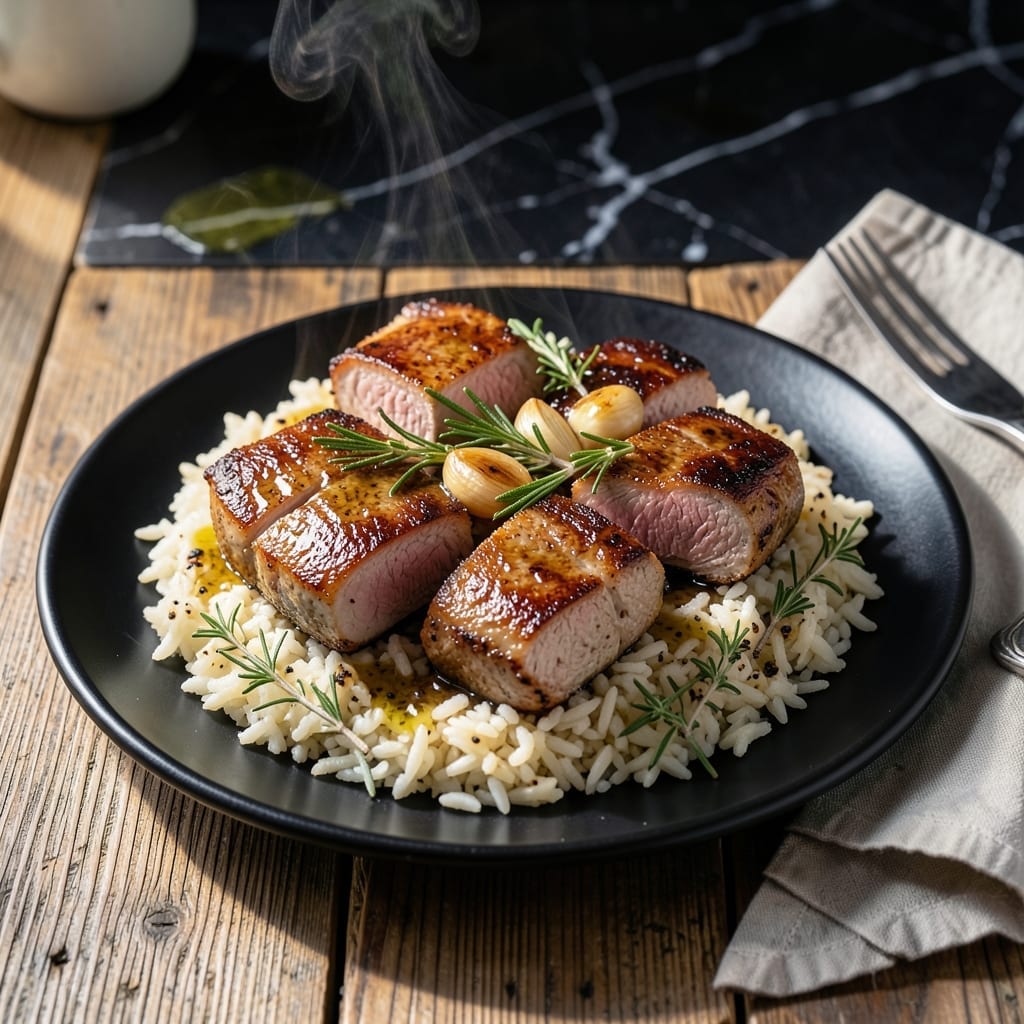
This one-pan method revolutionizes weeknight cooking by combining tender pork chops with perfectly cooked rice in a single vessel. The technique ensures every grain absorbs the garlic-herb flavors while the pork develops a golden crisp exterior.
I developed this approach to eliminate extra dishes without sacrificing quality. The pork sears first, creating fond that infuses the rice as it cooks. A tight-fitting lid traps steam, allowing both components to finish simultaneously.
What emerges is juicy pork with a caramelized crust atop fluffy, aromatic rice. The garlic and herbs create a cohesive flavor profile that elevates both elements beyond their simple ingredients.
This streamlined process delivers restaurant-quality results with minimal cleanup. The method proves that convenience and excellence can coexist in home cooking.
Ingredients for One Pan Pork Chop and Rice
A handful of quality ingredients come together for this one-pan meal with restaurant-grade results.
| Ingredient | Amount | Notes |
|---|---|---|
| Bone-In Pork Chops 🍖 | 4 whole | 1-inch thick, bone-in preferred |
| Long-Grain White Rice 🍚 | 1 ½ cups | Rinsed until water runs clear |
| Chicken Stock 🥣 | 2 ½ cups | Low-sodium preferred for control |
| Garlic Cloves 🧄 | 6 cloves | Minced for maximum flavor infusion |
| Fresh Rosemary 🌿 | 2 tbsp | Finely chopped, stems discarded |
| Fresh Thyme Leaves 🍃 | 2 tbsp | Stripped from stems for ease |
| Olive Oil 🫒 | 2 tbsp | Divided for searing and finishing |
| Unsalted Butter 🧈 | 2 tbsp | For basting pork chops |
| Yellow Onion 🧅 | 1 whole | Medium-sized, finely diced |
| Kosher Salt 🧂 | 1 ½ tsp | Diamond Crystal preferred for texture |
| Freshly Ground Black Pepper 🌶️ | 1 tsp | Coarse grind for visible specks |
| Dry White Wine 🍷 | ¼ cup | Optional for deglazing fond |
| Bay Leaf 🍃 | 1 whole | Removed before serving |
The pork chops are the foundation—opt for bone-in, 1-inch thick cuts from a trusted butcher or Whole Foods for consistent cooking and superior flavor. Long-grain white rice provides the ideal texture to absorb the garlic-herb infusion, while the chicken stock should be low-sodium to allow precise seasoning control. Fresh herbs are non-negotiable here; organic rosemary and thyme from the produce section deliver the vibrant aroma essential to this dish.
Substitutions are minimal here for optimal results, but boneless pork chops can work if reduced to 3/4-inch thickness to prevent drying. Brown rice requires additional liquid and time—adjust with 1/2 cup more stock and 20 extra minutes. No fresh herbs? Dried at one-third the quantity works in a pinch, though the flavor profile will be less bright. Skip the wine if needed, but deglaze with an extra 1/4 cup stock to capture all the fond.
Store pork chops in their original packaging on a tray for up to 3 days in the fridge, or freeze for 3 months. Fresh herbs wrapped in damp paper towels last about 1 week. The rice absorbs flavors best immediately, but leftovers reheat well for 4-5 days with a splash of stock to revive moisture.
Why You’ll Love This Recipe
- One Pan Wonder: I just throw everything in, let the pork chops sear while the rice soaks up all the garlic and rosemary flavor—no extra pots, no fuss.
- Rosemary-Garlic Magic: That first bite with the crispy pork edge and fragrant rice? Here’s what sold me—it tastes like a fancy meal without the effort.
- Weeknight MVP: Honestly, it’s my go-to for busy evenings. Works for family dinners or when I need leftovers for lunch the next day.
- Budget-Friendly Feast: Bone-in pork chops stay juicy and cost less, and a bag of rice stretches this into multiple meals. I’ll be real: it saves me money and time.
Step-by-Step Instructions for One Pan Pork Chop and Rice
Master this technique for perfectly seared pork and fragrant rice in a single pan.
Step 1: Sear the Bone-In Pork Chops to Golden Perfection
Pat the 4 whole bone-in pork chops completely dry with paper towels. This removes surface moisture that prevents proper browning. Season both sides generously with 1.5 tsp kosher salt and 1 tsp freshly ground black pepper.
Heat 1 tbsp olive oil in a large, heavy skillet over medium-high heat until shimmering. Add the pork chops and sear undisturbed for 4-5 minutes per side until they develop a deep golden-brown crust and reach 145°F internally. Add 2 tbsp unsalted butter during the last minute and baste the chops by spooning the foaming butter over them continuously.
Transfer the seared pork chops to a plate and tent with foil to keep warm. Pour off all but 1 tbsp of the rendered fat from the skillet, reserving the flavorful fond for the next steps.
Step 2: Sauté Aromatics and Toast the Rice
Reduce heat to medium and add the remaining 1 tbsp olive oil to the same skillet. Add the finely diced yellow onion and cook for 3-4 minutes until softened and just beginning to brown at the edges.
Add the minced 6 cloves garlic cloves, 2 tbsp fresh rosemary, and 2 tbsp fresh thyme leaves to the skillet. Stir constantly for 30 seconds until the herbs release their fragrance. Immediately add the 1.5 cups long-grain white rice and stir to coat the grains in the aromatic oil.
Toast the rice for 1-2 minutes until the edges appear slightly translucent. This step enhances the nutty flavor of the rice and prevents it from becoming mushy during the cooking process.
Step 3: Deglaze and Simmer with Chicken Stock
Pour in the 0.25 cup dry white wine and scrape the bottom of the skillet with a wooden spoon to release all the browned bits from the seared pork. Let the wine simmer for 1-2 minutes until reduced by half.
Add the 2.5 cups chicken stock and 1 whole bay leaf to the skillet. Stir well and bring to a gentle boil. Once boiling, reduce heat to low, cover with a tight-fitting lid, and simmer for 15-18 minutes until the rice is tender and most of the liquid has been absorbed.
Step 4: Rest and Serve the Complete Dish
Return the pork chops to the skillet, nestling them into the rice. Cover and let everything rest for 5 minutes off the heat. This allows the pork juices to redistribute and the rice to finish absorbing any remaining liquid.
Remove the bay leaf and discard. Fluff the rice gently with a fork and adjust seasoning if needed. Serve the pork chops atop the fragrant garlic-herb rice, ensuring each portion includes some of the crispy fond from the bottom of the pan.
Pro Tips For Making One Pan Pork Chop And Rice
- Sear Hot, Finish Low: Crank the pan to medium-high for the initial sear on pork chops, then drop to low once you add the rice and stock—I learned this the hard way after burning the garlic twice.
- Pat Dry the Chops: Blot the pork chops with a paper towel before seasoning; even a little moisture prevents that golden crust from forming, and I skip this when I’m lazy but always regret it.
- Double the Rosemary: Fresh rosemary loses some punch when simmered, so use twice what you think you need—my grandmother swore by this, and the rice absorbs the flavor beautifully.
- Rest Before Serving: Let the pork chops rest 5 minutes under foil after cooking; it keeps them juicy while the rice finishes absorbing the stock, and I used to rush this part and wondered why my chops were dry.
Common Mistakes When Making Great one pan pork chop and rice
Skipping the Dry
Never skip patting the pork chops dry with paper towels. Wet meat steams instead of searing, preventing that golden crisp crust we want. I use 3-4 paper towels per chop to ensure complete dryness before seasoning. 💡
Overcrowding the Pan
Cook the pork chops in batches if your skillet isn’t large enough. Crowding lowers the pan temperature, causing meat to steam rather than sear. A 12-inch skillet comfortably fits 2 chops at a time with space between them.
Under-Seasoning the Rice
The rice needs seasoning too! After toasting, add ½ tsp salt to the rice before adding liquid. Taste the cooking liquid before covering—it should taste slightly over-seasoned since the rice will absorb most of the salt.
Peeking While Cooking
Resist lifting the lid while the rice simmers. Each time you peek, you release steam that’s crucial for even cooking. The rice needs that trapped heat to cook through properly in 15-18 minutes. ⏰
Overcooking the Pork
Pork chops continue cooking while resting. Pull them at 140-145°F internal temperature—they’ll reach 145°F during the 5-minute rest. Use an instant-read thermometer for accuracy.
Skipping the Fond
That browned residue is pure flavor! When deglazing, scrape aggressively with a wooden spoon to lift every bit. The ¼ cup white wine helps dissolve these flavor bombs that will infuse your rice beautifully.
Nutrition Facts
Frequently Asked Questions
What kind of pan works best?
A heavy 12-inch skillet with a tight-fitting lid is ideal. Cast iron or stainless steel distributes heat evenly for searing pork and cooking rice. Avoid nonstick pans as they don’t develop fond as well.
Can I use boneless pork chops instead?
Yes, but reduce thickness to 3/4-inch to prevent drying. They cook faster, so sear for 3 minutes per side and monitor temperature closely. Bone-in adds more flavor to the dish.
How do I know when the rice is done?
The rice is ready when liquid is absorbed and grains are tender after 15-18 minutes. If it’s still firm, add 1/4 cup hot stock and cook covered for 5 more minutes.
What if my pork chops finish early?
Tent them with foil and keep warm in a 200°F oven while rice cooks. This prevents overcooking. Return to the pan during the final 5-minute rest to reheat slightly.

- Japanese Rice Sauce Recipe: Umami-Rich Glaze for Sushi and Bowls - September 25, 2026
- Homemade Tomato Rice Soup Recipe: Rustic Simmered Goodness in a Bowl - September 25, 2026
- Korean Sliced Rice Cake Recipe: Chewy Pillows with Bold Spicy Sauce - September 25, 2026