
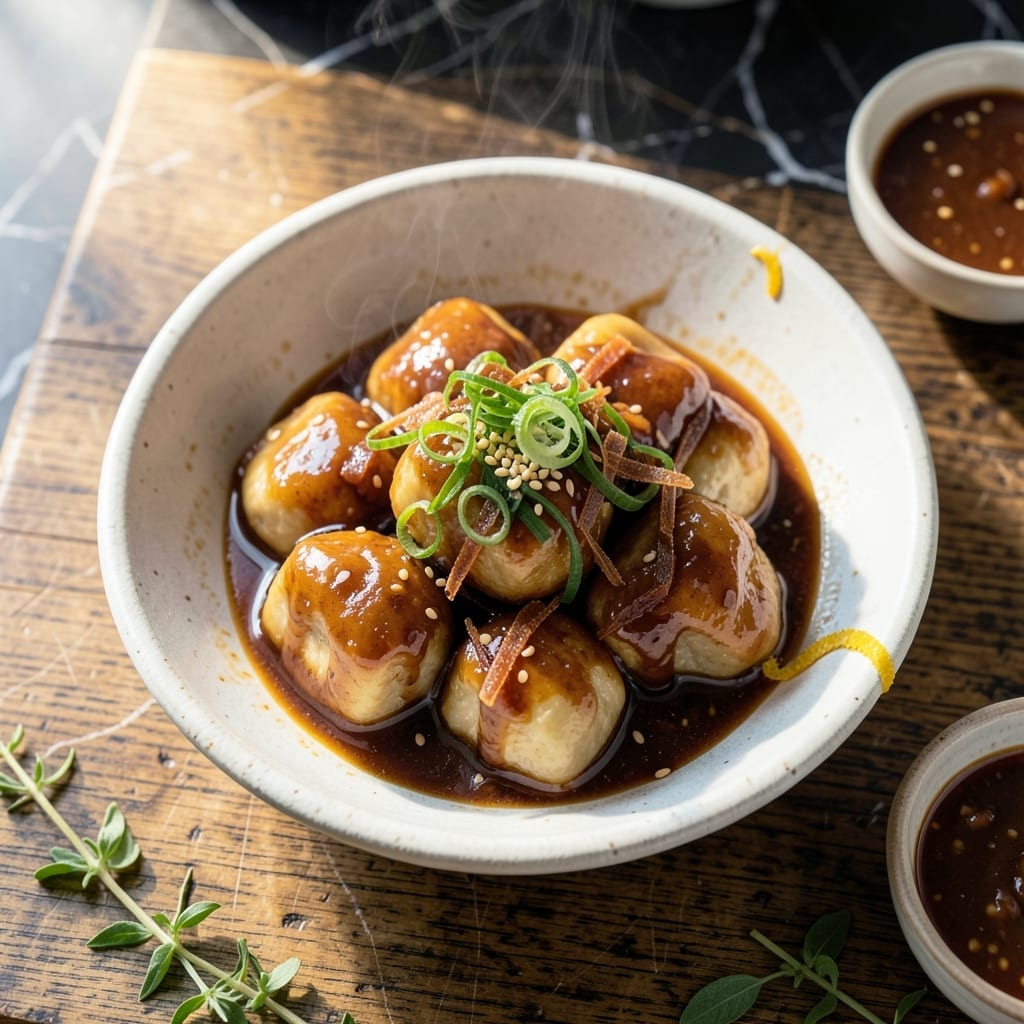
There’s a reason Korean sliced rice cakes have become a global comfort food favorite. This dish transforms simple rice flour into chewy pillows that soak up every bit of the bold, spicy-sweet sauce.
The magic lies in the texture contrast—soft rice cakes against the thick, sticky sauce. I’ve refined this method to ensure the cakes stay tender while developing deep flavor from the first bite to the last.
What you’ll get is a dish that’s both satisfying and deeply flavorful. The sauce clings perfectly to each piece, delivering heat balanced with sweetness and umami in every mouthful.
Whether you’re new to Korean cuisine or a longtime fan, this version delivers authentic taste with straightforward techniques. The results speak for themselves.
Ingredients for Korean Sliced Rice Cake
Simple pantry staples transform into chewy rice cakes with bold, spicy-sweet sauce. Nothing exotic here.
| Ingredient | Amount | Notes |
|---|---|---|
| Rice Flour 🌾 | 2 cups | Short-grain for chewy texture |
| Water 💧 | 1 ½ cups | Warm, for dough activation |
| Salt 🧂 | ½ tsp | Fine sea salt preferred |
| Gochujang 🌶️ | ½ cup | Korean red pepper paste |
| Soy Sauce 🥫 | 3 tbsp | Low-sodium or regular |
| Brown Sugar 🍚 | 2 tbsp | Light or dark variety |
| Garlic Cloves 🧄 | 4 cloves | Minced for sauce depth |
| Sesame Oil 🫒 | 1 tbsp | Toasted for nutty aroma |
| Rice Vinegar 🍋 | 1 tbsp | For sauce tanginess |
| Green Onions 🧅 | 4 whole | Thinly sliced for garnish |
| Sesame Seeds 🌰 | 1 tbsp | Toasted for garnish |
| Vegetable Oil 🫒 | 2 tbsp | For pan-frying rice cakes |
| Gochugaru 🌶️ | 1 tsp | Korean chili flakes optional |
| Mushroom Stock 🍄 | ½ cup | Vegetarian umami base |
The rice flour is non-negotiable—short-grain only for that signature chew. I get mine from H Mart or any Asian grocery (the bags labeled ‘sweet rice flour’ work too). The gochujang is the soul of the sauce, so Sempio or Annie Chun’s are solid brands. Freshness matters with gochujang—check the date on the jar. For the mushroom stock, Better Than Bouillon is my go-to (the vegetarian version, obviously).
No gochujang? Miso paste plus sriracha gets you close but won’t be the same (add a pinch of sugar too). Swap brown sugar for honey or maple syrup if that’s what’s in your pantry. Fresh garlic is ideal, but jarred minced works in a pinch. If you’re skipping the gochugaru, add extra gochujang for heat. The sesame oil can’t be substituted—it’s essential for that nutty finish.
Rice cakes keep in the fridge for 2-3 days in an airtight container (they firm up, so reheat with a splash of water). The sauce actually improves overnight. Freeze cooked rice cakes for up to 1 month—reheat from frozen in a skillet with a little oil to revive the texture.
Why You’ll Love This Recipe
- Minimal Ingredients: I only need rice flour, water, salt, and a couple of pantry staples like gochujang and soy sauce—no fancy shopping required.
- Spicy-Sweet Kick: The gochujang gives that perfect balance of heat and sweetness, while soy sauce adds a deep umami punch.
- Meal Prep Hero: I make a big batch on Sunday and toss them into stir-fries or soups all week long.
- Budget Stretcher: Honestly, rice flour is dirt cheap, and a little gochujang goes a long way—feeds my family for pennies per serving.
Step-by-Step Instructions for Korean Sliced Rice Cake
Here’s the method. It’s straightforward, tested, and delivers perfect chewy texture every time.
Step 1: Create the Rice Cake Dough
In a large bowl, whisk together the 2 cups Rice Flour and 0.5 tsp Salt until fully combined. I like to use short-grain rice flour here as it creates that signature chewy texture we’re after.
Gradually pour in the 1.5 cups Water while stirring continuously with a wooden spoon. The water should be warm to help activate the dough properly. You’ll know it’s ready when the mixture forms a smooth, slightly sticky batter that clings to the back of the spoon.
Step 2: Steam the Rice Cake Base
Transfer the batter to a greased heatproof dish that fits inside your steamer. I use a 9-inch round cake pan for this. Smooth the top with a spatula and cover the dish with a piece of parchment paper to prevent water from dripping onto the batter.
Steam over boiling water for 20-25 minutes until the rice cake is firm to the touch and a toothpick inserted in the center comes out clean. The surface should look matte and slightly translucent. Don’t rush this step—proper steaming ensures the rice cake holds its shape when sliced.
Step 3: Prepare the Spicy Sauce
While the rice cake steams, make the sauce by combining the 0.5 cup Gochujang, 3 tbsp Soy Sauce, 2 tbsp Brown Sugar, 1 tbsp Rice Vinegar, and 0.5 cup Mushroom Stock in a saucepan over medium heat. Stir until the sugar dissolves completely.
Add the 4 cloves Garlic Cloves (minced) and 1 tsp Gochugaru, then simmer for 3-4 minutes until the sauce thickens slightly and becomes glossy. The aroma should be rich and slightly sweet with a spicy kick. Remove from heat and stir in the 1 tbsp Sesame Oil.
Step 4: Pan-Fry and Coat the Rice Cakes
Once cool enough to handle, slice the steamed rice cake into ½-inch thick rectangles. Heat the 2 tbsp Vegetable Oil in a large skillet over medium-high heat. Add the rice cake pieces in a single layer and pan-fry for 2-3 minutes per side until they develop a light golden crust.
Pour the prepared sauce over the rice cakes and toss gently to coat evenly. Cook for an additional 1-2 minutes until the sauce bubbles and clings to the rice cakes. The texture should be chewy with a slightly crispy exterior from the pan-frying.
Step 5: Garnish and Serve Immediately
Transfer the saucy rice cakes to a serving platter. Sprinkle with the 4 whole Green Onions (thinly sliced) and 1 tbsp Sesame Seeds (toasted) for freshness and crunch. The green onions add a bright contrast to the rich, spicy sauce.
Serve hot, as the rice cakes are best when fresh and piping hot. The sauce should be thick enough to coat each piece without pooling at the bottom of the plate. Each bite should deliver that perfect balance of chewy rice cake and bold, spicy-sweet sauce.
Pro Tips For Making Korean Sliced Rice Cake
- Boil Then Simmer: Start the rice cake slices in boiling water for 2-3 minutes, then drop to a gentle simmer—I learned this the hard way after ending up with mushy, broken pieces from keeping it at a rolling boil.
- Use Hot Water: Mix the rice flour with hot (not boiling) water, about 170°F, to avoid lumps and get that smooth, elastic texture my grandmother always insisted on.
- Salt the Water: Add a full teaspoon of salt to the cooking water, even if the sauce is salty—it seasons the rice cakes from within and keeps them from tasting bland.
- Toast the Gochujang: Sauté the gochujang and soy sauce together for 1-2 minutes before adding to the dish—sounds weird, but it deepens the flavor and removes that raw, harsh edge.
Common Mistakes When Making Great korean sliced rice cake
Wrong Flour Choice
Using long-grain rice flour instead of short-grain ruins the texture. I learned this the hard way—my first batch turned out gummy rather than chewy. Short-grain is non-negotiable for that perfect bounce. 💡
Sauce Too Thin
If your sauce looks watery, you likely added too much stock. Simmer it longer until it thickens and coats the back of a spoon. Remember, it needs to cling to those rice cakes, not pool at the bottom of the pan.
Overcooking the Dough
Steaming past 25 minutes makes the rice cake dense and hard. Check at 20 minutes—it should be firm but still slightly springy. Over-steamed cakes won’t absorb the sauce properly.
Skipping the Pan-Fry
This step adds the essential crispy exterior that contrasts with the chewy interior. Without it, you’ll miss that satisfying texture. Use medium-high heat and don’t crowd the pan.
Cold Water for Dough
Using cold water prevents the rice flour from activating properly. Always use warm water to ensure the batter comes together smoothly. This small detail makes a huge difference in texture.
Uneven Slicing
Cutting the steamed cake into inconsistent sizes leads to uneven cooking. Aim for ½-inch thick rectangles so each piece cooks at the same rate. A sharp knife helps make clean cuts. ✨
Nutrition Facts
Frequently Asked Questions
Can I make these without a steamer?
Yes! Use a colander or sieve over a pot of boiling water. Cover with a lid to trap steam. The key is maintaining consistent heat for 20-25 minutes to set the texture properly.
How do I adjust the spice level?
Reduce or omit the gochugaru and use less gochujang for milder heat. Balance with extra brown sugar for sweetness. Start with half the amount, taste, then adjust.
Can I use pre-made rice cakes?
but texture differs. Store-bought versions are firmer. Soak them in warm water for 10 minutes before pan-frying to soften. The sauce will still cling beautifully.
Why did my rice cakes turn out hard?
Over-steaming is the usual culprit. Check at 20 minutes—they should be firm but springy. Also, use warm water for the dough to activate the flour properly.

- Korean Sliced Rice Cake Recipe: Chewy Pillows with Bold Spicy Sauce - September 25, 2026
- Vegan Lemon Rice Soup Recipe: Bright Citrus and Creamy Comfort - September 25, 2026
- Quaker Rice Cake Copycat Recipe: Crunchy Homemade Delight - September 25, 2026