
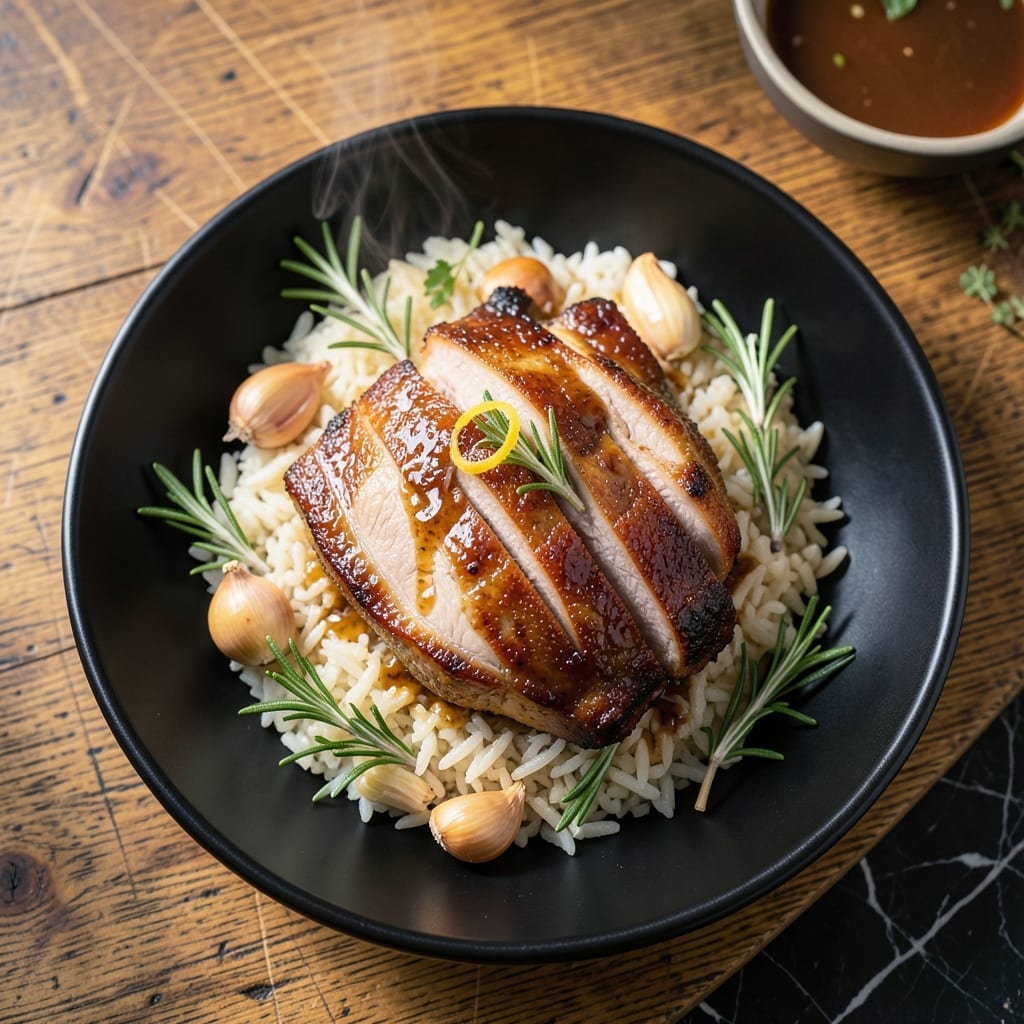
This roast pork and rice dish delivers a complete meal with tender meat and perfectly cooked grains. The pork develops a savory crust while staying juicy inside, and the rice absorbs all the rich flavors.
I’ve refined this method over time to ensure the pork roasts evenly and the rice cooks to fluffy perfection. The key is timing the pork’s rest period so both components finish together, hot and ready to serve.
What you’ll get is succulent pork with a caramelized exterior served over light, separate rice grains. The combination creates a satisfying balance of textures and flavors that feels like a restaurant-quality meal at home.
This recipe works for weeknight dinners or special occasions with minimal active cooking time.
Ingredients for Roast Pork and Rice
Tender pork meets fluffy rice with a short list of pantry staples and fresh herbs.
| Ingredient | Amount | Notes |
|---|---|---|
| Pork Shoulder 🍖 | 2 lb | Boneless, skin-on for crust |
| Kosher Salt 🧂 | 1 ½ tsp | Plus more to taste |
| Black Pepper 🌶️ | 1 tsp | Freshly ground preferred |
| Garlic Cloves 🧄 | 6 cloves | Minced for rub |
| Fresh Rosemary 🌿 | 2 tbsp | Chopped, stems discarded |
| Olive Oil 🫒 | 2 tbsp | Divided for searing and rice |
| Long-Grain White Rice 🍚 | 1 ½ cups | Rinsed until water runs clear |
| Chicken Broth 🥣 | 3 cups | Low-sodium preferred |
| Yellow Onion 🧅 | 1 whole | Finely diced for rice |
| Carrots 🥕 | 2 whole | Peeled and diced small |
| Bay Leaf 🍃 | 1 whole | For rice aroma |
| Dijon Mustard 🟡 | 1 tbsp | For pork rub |
| Apple Cider Vinegar 💧 | 1 tbsp | Balances richness |
The pork shoulder is non-negotiable here—bone-in or boneless both work, but the fat cap renders down for that savory crust mentioned in the intro. Look for pieces with good marbling at Whole Foods or your local butcher. The skin-on version gives the best crackling, but skinless works if that’s what’s available. Fresh rosemary makes a difference; dried loses too much aroma in the long cook.
No pork shoulder? Pork butt is identical—just a different name for the same cut. Swap the Dijon for whole-grain mustard if that’s what you’ve got. For the rice, jasmine or basmati can replace long-grain, but adjust water slightly (they’re thirstier). The broth can be vegetable if avoiding meat entirely. Apple cider vinegar? White wine vinegar works in a pinch.
Leftovers keep 4-5 days tightly sealed in the fridge. The pork actually improves overnight as flavors meld. Reheat gently with a splash of broth to restore moisture. For longer storage, freeze the pork and rice separately for up to 3 months.
Why You’ll Love This Recipe
- One Pan Meal: I love that I can roast the pork and rice together in the same pan—minimal cleanup, maximum flavor.
- Garlic-Rosemary Magic: The pork shoulder soaks up the garlic and fresh rosemary, making every bite rich and aromatic.
- Feeds a Crowd: This dish is my go-to for family dinners or meal prepping lunches for the week.
- Budget Friendly: Pork shoulder is affordable, and it stretches far with rice—honestly, it’s a wallet-friendly win.
Step-by-Step Instructions for Roast Pork and Rice
This method ensures tender pork with crispy skin served over perfectly cooked rice every time.
Step 1: Prepare and Season the Pork Shoulder
Pat the 2 lb Pork Shoulder dry with paper towels to ensure a good sear. In a small bowl, combine the 1.5 tsp Kosher Salt, 1 tsp Black Pepper, 6 cloves minced Garlic Cloves, 2 tbsp chopped Fresh Rosemary, 1 tbsp Dijon Mustard, and 1 tbsp Apple Cider Vinegar to create a flavorful rub.
Rub this mixture all over the pork shoulder, coating it evenly. Let it sit at room temperature for 20-30 minutes to allow the flavors to penetrate the meat. This step ensures every bite is packed with savory, aromatic goodness.
Step 2: Sear the Pork for a Crispy Crust
Heat 1 tbsp Olive Oil in a large Dutch oven or heavy pot over medium-high heat. Once hot, add the pork shoulder and sear on all sides for about 4-5 minutes per side until deeply browned. You want to see a rich, caramelized crust forming—this is where much of the flavor develops.
Resist the urge to move the pork around too much during searing. Let it sit undisturbed so it develops that perfect golden-brown crust. Once seared, remove the pork from the pot and set it aside temporarily.
Step 3: Sauté Vegetables and Toast the Rice
In the same pot, add the remaining 1 tbsp Olive Oil if needed. Add the finely diced Yellow Onion and peeled, diced Carrots, and sauté for 4-5 minutes until softened. Stir in the 1.5 cups Long-Grain White Rice and cook for 1-2 minutes, stirring frequently, until the rice is lightly toasted and fragrant.
Toasting the rice enhances its nutty flavor and helps it absorb the cooking liquid more effectively. Be careful not to let it brown too much—just a light golden color is perfect.
Step 4: Cook the Rice and Pork Together
Return the seared pork shoulder to the pot, placing it on top of the rice and vegetables. Pour in the 3 cups Chicken Broth and add the 1 whole Bay Leaf. Bring the mixture to a boil, then reduce the heat to low, cover, and let it simmer gently for 45-50 minutes.
Cook until the pork is fork-tender and the rice has absorbed all the liquid. Check occasionally to ensure the liquid hasn’t evaporated too quickly; if it has, add a splash of water or broth. The pork should be falling apart easily, and the rice should be fluffy and fully cooked.
Step 5: Rest and Serve
Once the pork and rice are done, remove the pot from the heat and let it rest, covered, for 10 minutes. This resting period allows the juices in the pork to redistribute, ensuring it stays moist and flavorful when sliced.
Discard the bay leaf before serving. To plate, fluff the rice with a fork and place a portion on each plate. Slice or pull apart the pork and arrange it over the rice. Serve immediately while hot, with any accumulated juices spooned over the top for extra flavor.
Pro Tips For Making Roast Pork And Rice
- Score the Fat: Cut 1/4-inch slits in the pork shoulder fat cap so the salt, garlic, and rosemary penetrate deep—I learned this the hard way after my first few roasts tasted seasoned only on the surface.
- Low and Slow: Start at 450°F for 30 minutes to crisp the skin, then drop to 300°F for the remaining 3-4 hours; anything hotter dries out the meat.
- Crush the Garlic: Smash the garlic cloves with the side of your knife before stuffing them into the slits—this releases way more flavor than whole cloves.
- Rest Before Carving: Let the pork rest 15-20 minutes under foil after roasting, or all the juices will end up on the cutting board instead of in the meat.
Common Mistakes When Making Great roast pork and rice
Skipping the Rest
I’ve ruined many a pork shoulder by slicing too soon. That 10-minute rest is non-negotiable—it lets juices redistribute so each bite stays moist. Skipping it means dry meat, no matter how perfectly you timed the cook. 💡
Overcrowding the Pot
Your Dutch oven needs room for the pork to sear properly. If it’s too crowded, the meat steams instead of browns. Use a pot that’s at least 5-6 quarts to give the pork space to develop that savory crust we’re after.
Under-Toasting the Rice
Lightly toasting the rice in olive oil before adding liquid is key. It enhances the nutty flavor and prevents mushiness. Don’t rush this step—1-2 minutes of stirring until fragrant makes all the difference.
Lifting the Lid
Every time you peek, you release steam and lower the temperature, which can turn your rice gluey. Keep the lid on tight during the 45-50 minute simmer. Trust the process—it’s working even if you can’t see it.
Wrong Liquid Ratio
The 2:1 ratio of chicken broth to rice is perfect for fluffy grains. If your rice is undercooked, add ¼ cup more broth and let it steam 5 more minutes. If it’s too soft, you’ve likely lifted the lid too often.
Neglecting the Bay Leaf
That single bay leaf might seem small, but it infuses the rice with subtle depth. Don’t skip it—it’s the quiet hero of this dish. Remove it before serving, though, or you’ll have an unwelcome surprise on someone’s plate.
Nutrition Facts
Frequently Asked Questions
Can I use a different cut of pork?
Yes, pork butt works the same as shoulder. For leaner options, try pork loin, but reduce cooking time to 30-35 minutes to prevent drying. The fat content affects the final texture significantly.
How do I prevent the rice from getting mushy?
Toast the rice in oil for 1-2 minutes before adding liquid, and never lift the lid during cooking. Use the exact 2:1 broth-to-rice ratio and let it steam undisturbed for perfect results.
What if my pork isn’t tender after cooking?
If it’s not fork-tender after 45-50 minutes, add ½ cup more broth and cook 10-15 minutes longer. Pork shoulder needs time to break down the collagen for that melt-in-your-mouth texture.

- Roast Pork and Rice Recipe: Savory Meat Over Fluffy Grains - September 25, 2026
- Rice and Egg Recipe Japanese: Fluffy Grains With Silky Custard Topping - September 25, 2026
- Lobia Rice Recipe: Spiced Black-Eyed Peas and Fragrant Rice - September 25, 2026