
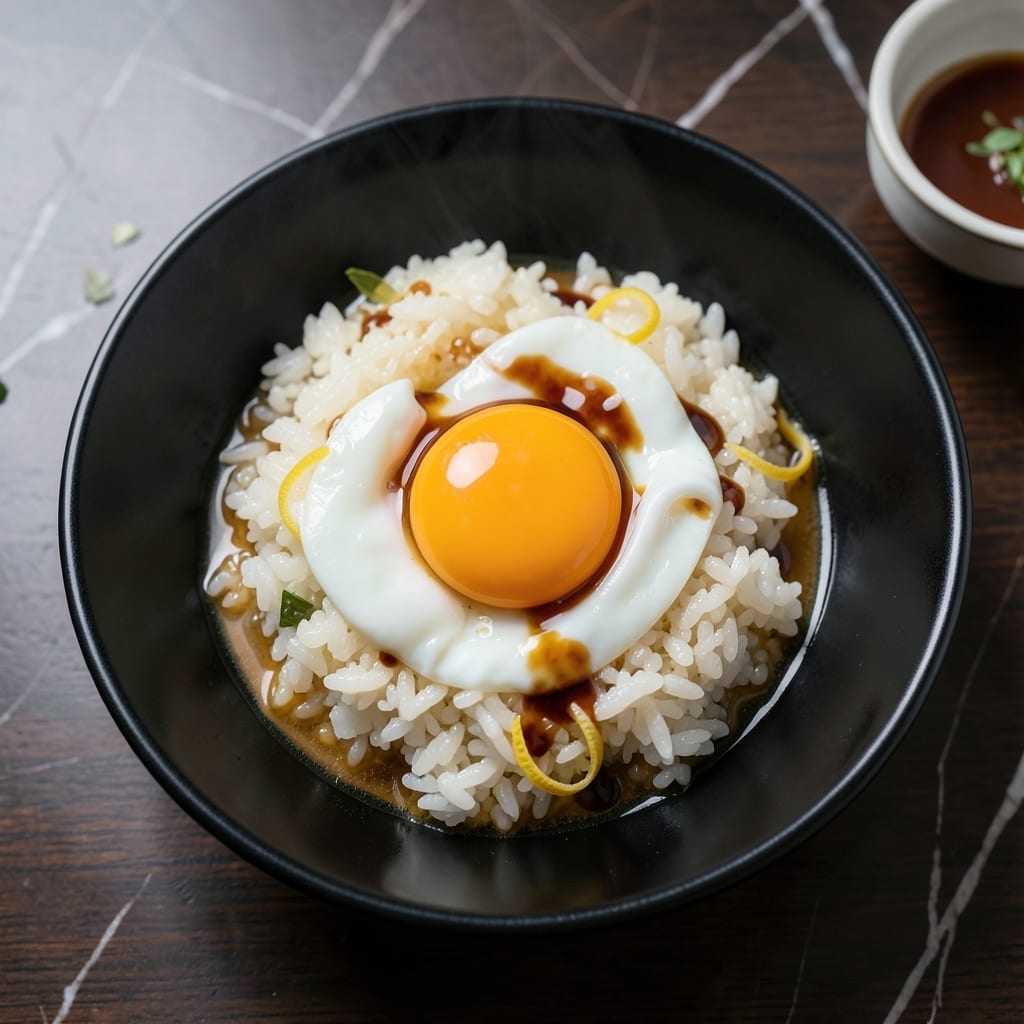
This Japanese-inspired dish transforms simple ingredients into something extraordinary. The combo of fluffy rice and silky egg custard creates a comforting meal with minimal effort.
Mastering the timing and temperature ensures the eggs set perfectly over the warm rice. It is a foolproof method that delivers restaurant-quality results every time.
Ingredients for Rice and Egg Recipe Japanese
Transform humble rice and eggs into an extraordinary Japanese-inspired dish with these ingredients.
| Ingredient | Amount | Notes |
|---|---|---|
| Japanese Short-Grain Rice 🍚 | 2 cups | Rinsed until water runs clear |
| Water 💧 | 2 ½ cups | For cooking rice |
| Large Eggs 🥚 | 4 whole | Room temperature preferred |
| Dashi Stock 🍲 | 1 cup | Or substitute chicken stock |
| Soy Sauce 🫒 | 2 tbsp | Low-sodium preferred |
| Mirin 🍶 | 1 tbsp | Sweet rice wine essential |
| Sugar 🍚 | 1 tsp | Granulated white sugar |
| Salt 🧂 | ½ tsp | Divided for rice and eggs |
| Neutral Oil 🛢️ | 1 tbsp | Vegetable or canola oil |
| Green Onions 🧅 | 2 whole | Thinly sliced for garnish |
| Sesame Seeds 🌾 | 1 tsp | Toasted for garnish |
| Nori Seaweed Sheets 🌊 | 1 sheet | Cut into strips optional |
The rice is non-negotiable—Japanese short-grain (like Koshihikari or Nishiki) delivers that sticky, fluffy texture essential for this dish. Find it at Asian markets or the international aisle of Whole Foods. Dashi stock adds umami depth; Kikkoman brand is widely available and reliable. For the eggs, use the freshest you can find—they’ll set into a custard so silky it’ll rival any restaurant’s tamagoyaki.
No dashi? Chicken or vegetable stock works in a pinch (though the flavor profile shifts slightly). Mirin can be swapped with 1 tbsp sugar + 1 tbsp water, but the real stuff is worth hunting down. If you’re avoiding gluten, use tamari instead of soy sauce. The green onions and sesame seeds are flexible—skip or swap for furikake if you’re feeling fancy.
Cooked rice holds well for 2-3 days in the fridge, but the egg topping is best fresh. Leftovers? Reheat gently with a splash of water to revive the texture. The dashi and mirin keep for months unopened, 1 month refrigerated after opening.
Why You’ll Love This Recipe
- One Pot Meal: I throw everything in a single pan—rice, dashi, soy—and the eggs just nestle right in. No extra bowls, no fuss.
- Umami Bomb: The dashi and soy sauce turn simple rice and eggs into something deep and savory. Honestly, I could eat this every morning.
- Feeds the Fam: Breakfast, lunch, or a late-night snack, it’s filling enough for my picky eaters and fast enough for me.
- Leftovers Win: Tastes even better the next day, and it’s cheap—just rice, eggs, and pantry staples. I’ll be real: it’s my go-to when the fridge looks sad.
Step-by-Step Instructions for Rice and Egg Japanese
Master this technique for perfectly fluffy grains topped with a silky custard every time.
Step 1: Prepare and Cook the Japanese Short-Grain Rice
Rinse the 2 cups Japanese Short-Grain Rice under cold water until the water runs completely clear. This removes excess starch that could make the rice gummy. I use a fine-mesh strainer for this process and find it takes 4-5 rinses to achieve the desired clarity.
Drain the rice thoroughly, then combine it with the 2.5 cups Water and ¼ tsp Salt in a rice cooker or heavy-bottomed pot. Cook according to your rice cooker’s instructions or bring to a boil, then reduce to low heat for 15 minutes, covered, until all water is absorbed. The rice should be tender with distinct grains when done.
Step 2: Make the Silky Egg Custard Mixture
In a mixing bowl, whisk together the 4 whole Large Eggs, 1 cup Dashi Stock, 2 tbsp Soy Sauce, 1 tbsp Mirin, 1 tsp Sugar, and remaining ¼ tsp Salt until no streaks remain. The mixture should be completely homogeneous with a pale yellow color.
Strain the egg mixture through a fine-mesh sieve into another bowl. This crucial step removes any lumps and ensures an ultra-smooth custard texture. I find this takes about 30 seconds of gentle stirring with a spatula to pass everything through the sieve.
Step 3: Steam the Custard Over Rice
Once the rice is cooked, keep it warm in the pot. Heat the 1 tbsp Neutral Oil in a large skillet over medium heat. Pour the strained egg mixture into the skillet and let it cook undisturbed for 2-3 minutes until the edges begin to set.
Carefully transfer the partially set custard mixture over the hot rice in the pot. Cover immediately with a tight-fitting lid and steam for 8-10 minutes on low heat. The custard is done when it’s fully set but still jiggly in the center, like a soft custard.
Step 4: Garnish and Serve
Remove from heat and let it sit covered for 5 minutes. This allows the custard to finish setting and the flavors to meld together. Using a rice paddle or spatula, gently fluff the rice while keeping the custard layer intact.
Thinly slice the 2 whole Green Onions and sprinkle over the top along with the 1 tsp Sesame Seeds. For added authenticity, cut the 1 sheet Nori Seaweed Sheets into thin strips and arrange on top. Serve immediately while the custard is still warm and silky.
Pro Tips For Making Rice And Egg Recipe Japanese
- Use Room-Temp Eggs: Cracking cold eggs into hot rice can make them seize up—sit them in warm water for 5 minutes first. I learned this the hard way after too many rubbery egg bits in my bowl.
- Cook Rice Slightly Firmer: For tamago kake gohan, your rice should be a touch underdone so it soaks up the egg and dashi without turning to mush. About 2 minutes less than usual does the trick.
- Whisk Eggs Vigorous: Beat the eggs until they’re pale and frothy—about 30 seconds with a fork. Sounds weird, but it works: the texture is silkier and mixes better with the hot rice.
- Add Dashi First: Pour the dashi stock into the rice before the eggs so the heat tempers the liquid. Skipping this can leave you with scrambled eggs instead of that creamy sauce you want.
Best Sauces and Condiments for This rice and egg recipe japanese
Classic Japanese Sauces
For authentic flavor, drizzle 1-2 tsp soy sauce over each serving. I love using Kikkoman low-sodium to control saltiness. Mirin can also be brushed lightly on the custard before serving for extra sweetness. 🥢
Spicy Condiments
Add a kick with sriracha or chili crisp—just ½ tsp per bowl transforms the dish. Lao Gan Ma brand chili crisp adds crunchy texture. Start small; you can always add more heat.
Umami Boosters
Enhance depth with 1 tsp dashi powder sprinkled on top or a drizzle of okonomiyaki sauce. I keep Honda brand dashi in my pantry for instant umami. These small additions make a big difference.
Fresh Garnish Sauces
Mix 1 tbsp mayo with ½ tsp soy sauce for a creamy topping. Or blend 2 tbsp ponzu with 1 tsp honey for a tangy-sweet glaze. Both pair beautifully with the silky eggs. 💛
Quick Pickled Toppings
Serve with pickled ginger or quick-pickled red onions for acidity. Thinly slice ¼ red onion, soak in 2 tbsp rice vinegar for 10 minutes. The brightness cuts through the richness perfectly.
Nutrition Facts
Frequently Asked Questions
Can I use long-grain rice instead?
No, Japanese short-grain is essential for the sticky texture. Long-grain won’t absorb the custard properly and will result in a dry dish.
Why strain the egg mixture?
Straining removes lumps for an ultra-smooth custard. This step takes 30 seconds but makes a huge difference in texture.
What if my custard doesn’t set?
Ensure the rice is hot when adding the eggs and steam for the full 8-10 minutes. If still runny, cover and cook 2-3 minutes longer on low heat.
Can I make this ahead?
Cook the rice ahead, but add the custard just before serving. The eggs are best fresh and silky. Store leftovers for 2 days max.

- Jollof Rice Sauce Recipe: West African Tomato and Spice Infusion - September 25, 2026
- Japanese Rice Soup Recipe: Umami-Rich Comfort in a Bowl - September 25, 2026
- Homemade Cream Of Rice Recipe: Silk-Smooth Breakfast in Minutes - September 25, 2026