
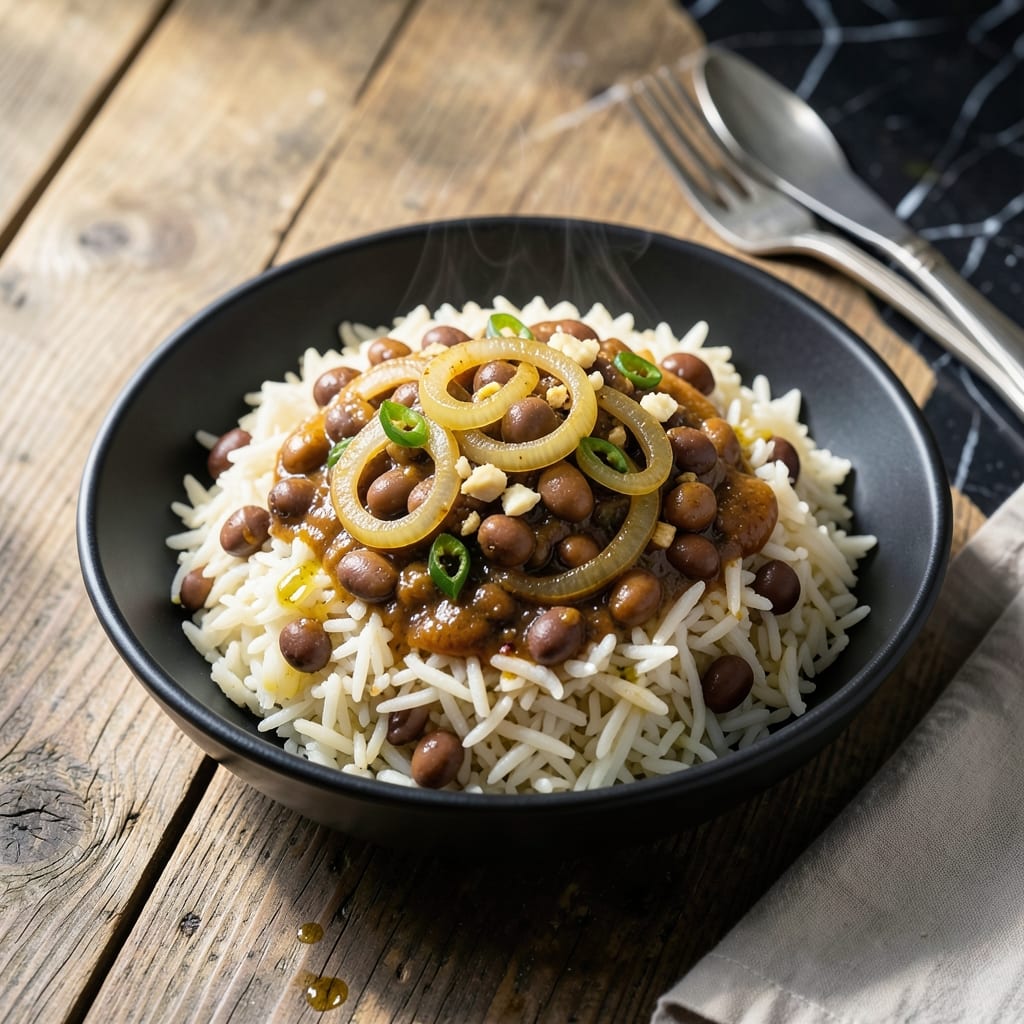
This dish brings together fragrant rice and spiced black-eyed peas in a way that’s both hearty and deeply satisfying. The combination of earthy lobia and perfectly cooked grains makes it a complete meal in one pot.
I’ve refined this method to balance bold flavors without overwhelming the natural taste of the ingredients. The spices are toasted just enough to release their aromas, creating layers of warmth in every bite.
The result is a dish with tender peas and fluffy rice, each grain infused with subtle spice. It’s a meal that feels traditional yet effortless to prepare.
Simple ingredients, a single pot, and a little patience yield a dish that’s both comforting and flavorful. This is home cooking at its best.
Ingredients for Lobia Rice
Fragrant basmati and spiced lobia create a hearty, one-pot meal with layers of warmth.
| Ingredient | Amount | Notes |
|---|---|---|
| Dried Black-Eyed Peas 🫛 | 1 ½ cups | Rinsed and soaked overnight |
| Basmati Rice 🍚 | 1 ½ cups | Rinsed until water runs clear |
| Yellow Onion 🧅 | 1 whole | Finely diced for base |
| Garlic Cloves 🧄 | 4 cloves | Minced for aromatic depth |
| Fresh Ginger 🌿 | 1 tbsp | Peeled and grated |
| Green Chilies 🌶️ | 2 whole | Finely chopped, seeds removed |
| Cumin Seeds 🌿 | 1 tsp | Toasted until fragrant |
| Ground Coriander 🌿 | 1 tbsp | Freshly ground preferred |
| Ground Turmeric 🟡 | ½ tsp | For golden color |
| Garam Masala 🌶️ | 1 tsp | Added at the end |
| Fresh Cilantro 🌿 | ½ cup | Chopped for garnish |
| Vegetable Oil 🫒 | 3 tbsp | Neutral flavor preferred |
| Tomatoes 🍅 | 2 whole | Diced, juicy variety |
| Water 💧 | 4 cups | For cooking peas and rice |
| Salt 🧂 | 1 ½ tsp | Adjust to taste |
The black-eyed peas are non-negotiable here. Dried is best—canned lacks texture and absorbs flavor differently. Look for bob’s Red Mill or Goya at Whole Foods or Indian grocery stores. Soaking overnight cuts cooking time in half. Basmati rice, aged at least six months, delivers the fluffiest grains. Tilda or Daawat are reliable brands. Rinse until the water runs clear to remove excess starch.
No garam masala? Curry powder at half the amount works in a pinch. Fresh ginger can be swapped for ground ginger at one-quarter the quantity. For heat, cayenne pepper replaces green chilies—use sparingly. Cilantro haters can omit it or sub fresh parsley. The tomatoes? Canned diced tomatoes are fine, but drain them well to avoid a watery dish.
Lobia rice improves overnight as the flavors meld. Stores in the fridge for 4-5 days and freezes for up to 3 months. Reheat gently with a splash of water to restore moisture. Always bring to room temperature before freezing to prevent ice crystals.
Why You’ll Love This Recipe
- One Pot Wonder: I love that everything cooks together—just soak the black-eyed peas, toss in rice and aromatics, and let it simmer.
- Aromatic Comfort: The ginger, garlic, and onions bloom in the oil, filling the kitchen with a smell that’s pure cozy.
- Meal Prep Hero: I make a big batch on Sunday and it reheats beautifully for lunches all week.
- Pantry Friend: Dried peas and basmati rice are cheap, shelf-stable, and always in my cupboard for a quick, filling meal.
Step-by-Step Instructions for Lobia Rice
This method ensures perfectly cooked peas and rice with balanced spices every time.
Step 1: Sauté the Aromatic Base
Heat the 3 tbsp vegetable oil in a heavy-bottomed pot over medium heat. Add the 1 tsp cumin seeds and allow them to sizzle for 20-30 seconds until they turn golden brown and release their fragrance.
Immediately add the finely diced 1 whole yellow onion and cook for 5-6 minutes, stirring occasionally, until the onion becomes translucent and lightly golden. This builds the flavor foundation for the dish.
Stir in the minced 4 cloves garlic cloves, 1 tbsp fresh ginger, and finely chopped 2 whole green chilies. Cook for 1-2 minutes until the raw aroma of the ginger and garlic dissipates. Be careful not to let the garlic burn, as it can turn bitter.
Step 2: Incorporate Spices and Tomatoes
Add the 1 tbsp ground coriander and 0.5 tsp ground turmeric to the pot. Stir continuously for 30 seconds to toast the spices, which enhances their depth and aroma.
Next, add the diced 2 whole tomatoes and 1.5 tsp salt. Cook for 5-6 minutes until the tomatoes soften and break down, creating a thick, fragrant masala. The oil should begin to separate slightly at the edges of the pot.
Step 3: Cook the Black-Eyed Peas
Drain the soaked 1.5 cups dried black-eyed peas and add them to the pot along with the 4 cups water. Stir well to combine with the spiced onion-tomato mixture. Bring to a boil, then reduce the heat to low.
Cover the pot and let the peas simmer for 25-30 minutes, stirring occasionally, until they are tender but still hold their shape. If the water level drops too low, add a little more to keep the peas submerged.
Step 4: Add Rice and Finish Cooking
Rinse the 1.5 cups basmati rice until the water runs clear, then add it to the pot. Stir gently to distribute the rice evenly. Increase the heat to medium and bring to a gentle boil.
Once boiling, reduce the heat to low, cover, and cook for 15-18 minutes until the rice is fluffy and fully cooked and the liquid has been absorbed. Avoid stirring too much to prevent breaking the rice grains.
Turn off the heat and let the lobia rice sit, covered, for 5-10 minutes. This allows the flavors to meld and the rice to steam to perfection.
Step 5: Garnish and Serve
Sprinkle the 1 tsp garam masala over the top and gently fold it in. This final spice addition brightens the dish with its warm, aromatic notes.
Garnish with the chopped 0.5 cup fresh cilantro just before serving. The cilantro adds a pop of freshness and color. Serve hot with a side of yogurt or a simple salad for a complete meal.
Pro Tips For Making Lobia Rice
- Soak the Lobia: Cover dried black-eyed peas in warm water for at least 4 hours—this cuts cooking time in half and prevents that dreaded chalky texture.
- Toast the Spices: After sautéing onion, garlic, and ginger, let the whole spices sizzle for 30 seconds until fragrant; I learned this the hard way when my rice tasted flat without it.
- Use the Right Ratio: For perfectly fluffy basmati, stick to 1.5 parts water to 1 part rice—any more and you’ll end up with a mushy mess.
- Rest Before Serving: Let the lobia rice sit covered for 10 minutes off the heat; this lets the flavors meld and the rice finish steaming—sounds weird, but it works.
Essential Equipment for This Dish
Heavy-Bottomed Pot
I always use my 5.5-quart Le Creuset Dutch oven for this dish. Its thick walls distribute heat evenly, preventing hot spots that could scorch the spices or burn the rice. A heavy pot also maintains steady low heat for the long simmer. 🔥
Wooden Spoon
A wooden spoon is my tool of choice for stirring. It won’t scratch your pot and gently folds ingredients without crushing the peas. I keep one dedicated to Indian cooking—it’s absorbed the flavors of countless spiced dishes over the years.
Fine-Mesh Strainer
Rinsing the basmati rice and black-eyed peas thoroughly is key. My OXO fine-mesh strainer catches every grain while letting water flow through easily. Soaking the peas overnight? This strainer makes draining and rinsing effortless.
Sharp Chef’s Knife
Precision matters with the aromatics. I use my 8-inch Wüsthof to finely dice the onion and mince the garlic. A sharp blade ensures clean cuts, which means even cooking and better texture in every bite.
Measuring Cups
Accurate ratios are everything here. I rely on my stainless steel measuring cups from Cuisinox for the 1.5 cups rice and 1.5 cups peas. Consistency in measurements means consistent results every time.
Tight-Fitting Lid
Steam is what transforms this from good to great. My Dutch oven’s tight-fitting lid traps just enough moisture to cook the rice perfectly. If your lid doesn’t seal well, place a damp kitchen towel between the pot and lid to lock in steam. ✨
Nutrition Facts
Frequently Asked Questions
Can I use canned black-eyed peas instead of dried?
Yes, but texture will differ. Drain and rinse 4 cups canned peas, then add them with the rice in Step 4 to prevent mushiness. Skip the initial 25-30 minutes simmer.
Why do I need to soak the peas overnight?
Soaking reduces cooking time by half and ensures even tenderness. Without soaking, dried peas may remain hard in the center even after 45 minutes of cooking. It also helps remove some starch for better digestion.
What if my rice turns out mushy?
This usually means too much water or stirring. Use exactly 4 cups water for 1.5 cups rice and avoid stirring after adding rice. Let it steam undisturbed for 5-10 minutes after cooking.
Can I make this in a rice cooker?
Yes! Sauté aromatics in the pot first, then add all ingredients and cook on the standard rice setting. Check at 15 minutes and add 1/4 cup water if needed. Let it rest 10 minutes before serving.

- Jollof Rice Sauce Recipe: West African Tomato and Spice Infusion - September 25, 2026
- Japanese Rice Soup Recipe: Umami-Rich Comfort in a Bowl - September 25, 2026
- Homemade Cream Of Rice Recipe: Silk-Smooth Breakfast in Minutes - September 25, 2026