
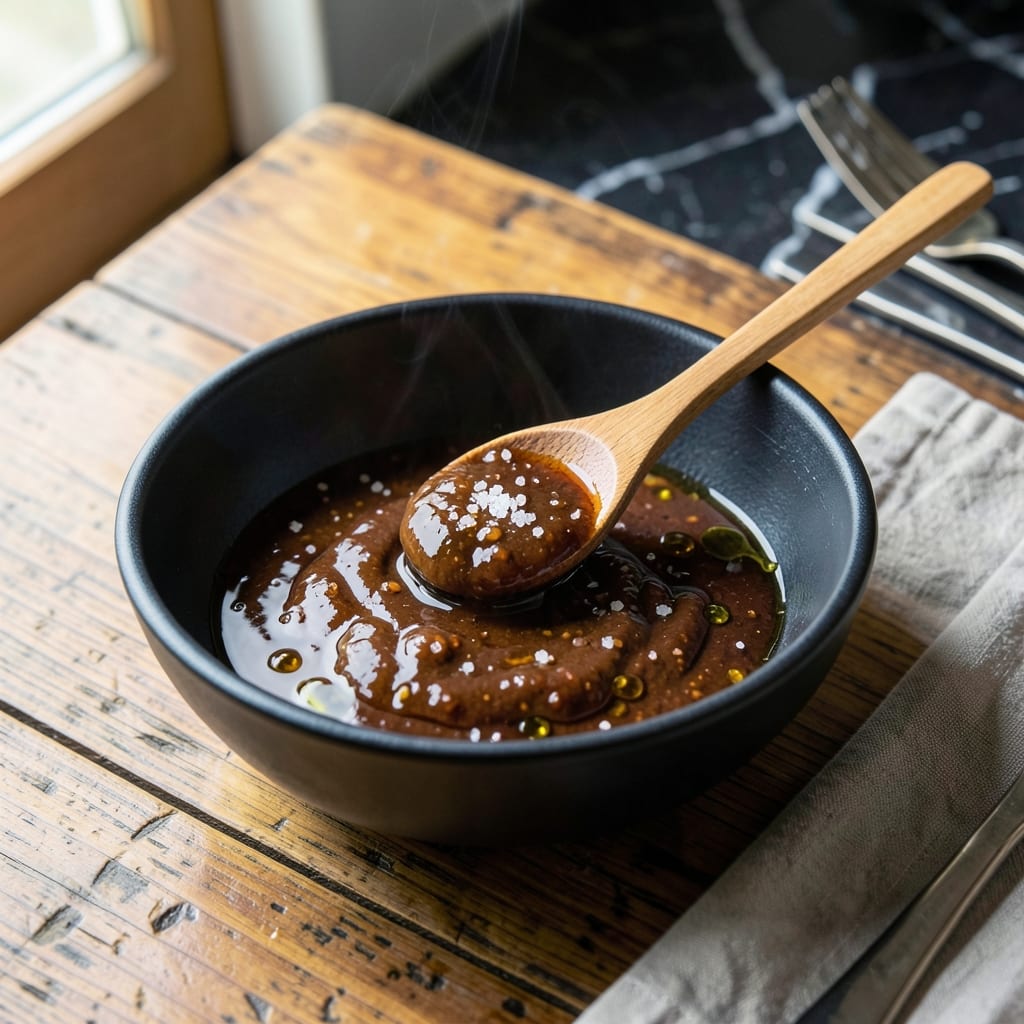
This glaze transforms ordinary sushi into restaurant-quality dishes with its perfect balance of sweet and salty flavors. I’ve refined this method to ensure a smooth, glossy finish every time.
Made with rice vinegar as the base, it adds depth while keeping the sauce light and versatile. Store in an airtight container for up to two weeks, and use it to elevate sushi, grilled meats, or even as a dipping sauce.
Ingredients for Eel Sauce Recipe with Rice Vinegar
These eight ingredients create that signature sweet-salty glaze for sushi nights at home.
| Ingredient | Amount | Notes |
|---|---|---|
| Rice Vinegar 💧 | ½ cup | Unseasoned variety preferred |
| Soy Sauce 🫒 | ½ cup | Low-sodium for better control |
| Granulated Sugar 🍚 | ½ cup | White sugar for clean sweetness |
| Mirin 🍶 | ¼ cup | Sweet rice wine essential |
| White Sugar 🍬 | ¼ cup | Dissolves smoothly in liquid |
| Cornstarch 🌾 | 1 tbsp | For thickening the glaze |
| Water 💧 | 2 tbsp | To mix with cornstarch |
| Dashi Stock 🍲 | 2 tbsp | Optional for depth of flavor |
Rice vinegar is the foundation here. Look for unseasoned—it’s cleaner and lets you control the sweetness. Kikkoman soy sauce is the standard for consistency, but any quality brand works. Mirin is non-negotiable for authenticity; Eden or Takara brands are widely available at Asian markets or the international aisle. The sugar needs to dissolve completely, so fine granulated works best.
Need a substitute for mirin? Dry sherry or sweet white wine plus a pinch of sugar gets close. No rice vinegar? Apple cider vinegar at half the amount works in a pinch. The cornstarch slurry is what gives this sauce its signature gloss—don’t skip it. For a deeper umami kick, add a splash of dashi if you have it on hand.
This keeps beautifully in the fridge for up to 2 weeks. Store in a clean airtight container—a glass jar works perfectly. The flavors meld and intensify over time, so it often tastes even better after a day or two.
Why You’ll Love This Recipe
- 5-Minute Magic: I just stir rice vinegar, soy sauce, and sugars in a saucepan—no fancy techniques, and it’s ready before the rice finishes cooking.
- Sweet-Tangy Balance: The rice vinegar cuts through the mirin’s sweetness, giving that restaurant-quality glaze I crave on sushi or grilled meats.
- Drizzle on Everything: Honestly, I keep a jar in the fridge for quick marinades, stir-fries, or even drizzling over roasted veggies.
- Budget-Friendly Staple: A batch costs pennies compared to store-bought, and it lasts weeks in the fridge. I’ll be real: I’ve stopped buying the bottled stuff.
Step-by-Step Instructions for Eel Sauce With Rice Vinegar
This method ensures a balanced glaze with the perfect consistency for drizzling or dipping.
Step 1: Combine the Liquids and Sugars
In a medium saucepan, add the 0.5 cup Rice Vinegar, 0.5 cup Soy Sauce, 0.5 cup Granulated Sugar, 0.25 cup Mirin, and 0.25 cup White Sugar. Stir well to combine, ensuring the sugars begin to dissolve in the liquid mixture.
Place the saucepan over medium heat and bring to a gentle simmer. You’ll see small bubbles forming around the edges—this indicates the sugars are dissolving and the mixture is heating evenly. Avoid high heat at this stage to prevent burning.
Step 2: Simmer Until Sugars Fully Dissolve
Continue simmering for 3-5 minutes, stirring occasionally with a wooden spoon or silicone spatula. The mixture will appear slightly frothy as the sugars melt and integrate into the liquids.
Watch for the point where the liquid becomes smooth and slightly syrupy. The sugars should be completely dissolved, with no visible grains remaining. This step builds the foundation of the sauce’s sweet-salty flavor profile.
Step 3: Create the Cornstarch Slurry
In a small bowl, whisk together the 1 tbsp Cornstarch and 2 tbsp Water until smooth and free of lumps. The slurry should be thin but opaque, with the cornstarch fully suspended in the water.
If you prefer deeper umami flavor, add the 2 tbsp Dashi Stock to the slurry and mix well. This step is optional but enhances the sauce’s complexity, making it ideal for pairing with sushi or grilled dishes.
Step 4: Thicken the Sauce to Glaze Consistency
Slowly pour the cornstarch slurry into the simmering saucepan while stirring constantly. The mixture will begin to thicken almost immediately—this is the cornstarch activating in the heat.
Continue cooking for 1-2 minutes until the sauce reaches your desired thickness. It should coat the back of a spoon with a glossy sheen and drip slowly in thick ribbons. Remove from heat as soon as it thickens to avoid over-cooking, which can make the sauce too stiff.
Step 5: Cool and Store for Optimal Use
Let the sauce cool to room temperature. As it cools, it will thicken slightly more but remain pourable. Transfer to an airtight container or jar for storage.
The sauce can be served warm or at room temperature. For best results, drizzle over sushi rolls, grilled eel, or use as a dipping sauce. It keeps in the refrigerator for up to 2 weeks, though the flavor is freshest within the first few days.
Pro Tips For Making Eel Sauce Recipe With Rice Vinegar
- Simmer Low and Slow: Keep the heat at a gentle simmer—too high and the sugars in the mirin and white sugar will caramelize too fast, leaving you with a bitter, uneven sauce. I learned this the hard way after ruining a batch by cranking the heat to rush it.
- Use Both Sugars: Don’t skip the granulated sugar just because you’ve got white sugar on hand. The combo of both gives the sauce a deeper, more balanced sweetness that pairs perfectly with the rice vinegar’s tang.
- Skip the Boil: Resist the urge to let the sauce reach a rolling boil. It can cause the soy sauce to reduce too quickly, making the flavor overly salty and the texture too thick.
- Strain for Smoothness: After cooking, give the sauce a quick strain through a fine-mesh sieve. Sounds fussy, but it removes any undissolved sugar or bits from the mirin, guaranteeing a silky finish.
Health Benefits of This Recipe
Rich in Antioxidants
Rice vinegar in this sauce provides acetic acid, which has been shown to support digestive health and may help regulate blood sugar levels. The soy sauce contributes fermented compounds that act as natural antioxidants, combating oxidative stress in the body. 💪
Low-Calorie Flavor Boost
This sauce adds bold flavor without excessive calories—just 20-30 calories per tablespoon. It’s an excellent way to enhance dishes like sushi or grilled proteins while keeping meals light and balanced. I use it to satisfy cravings without guilt.
Supports Gut Health
Fermented ingredients like mirin and soy sauce introduce beneficial probiotics that promote a healthy gut microbiome. These contribute to better digestion and may even strengthen your immune system over time.
Natural Energy Source
The granulated sugar and white sugar provide quick carbohydrates for energy, while the vinegar helps moderate blood sugar spikes. This makes the sauce a smarter choice than many store-bought alternatives loaded with high-fructose corn syrup.
Umami-Rich Benefits
If you add dashi stock, you’ll get a boost of glutamates, which enhance flavor and may support brain health. These compounds are known to stimulate taste receptors, making meals more satisfying with smaller portions. ✨
Versatile Nutrient Delivery
Drizzling this over veggies or lean proteins turns simple dishes into nutrient-packed meals. The rice vinegar base also aids in nutrient absorption from other foods, maximizing the benefits of your entire meal.
Nutrition Facts
Frequently Asked Questions
Can I substitute apple cider vinegar for rice vinegar?
Yes, but use half the amount since it’s stronger. The flavor will be slightly different, but it works in a pinch.
How do I fix sauce that’s too thick?
Stir in 1-2 tbsp warm water until it reaches your desired consistency. Heat gently while stirring.
What’s the best way to store leftover sauce?
Keep it in a clean airtight container in the fridge for up to 2 weeks. The flavor deepens over time.
Can I make this sauce sugar-free?
Yes, replace sugar with 1:1 monk fruit sweetener. The texture may vary slightly but works well.

- Jollof Rice Sauce Recipe: West African Tomato and Spice Infusion - September 25, 2026
- Japanese Rice Soup Recipe: Umami-Rich Comfort in a Bowl - September 25, 2026
- Homemade Cream Of Rice Recipe: Silk-Smooth Breakfast in Minutes - September 25, 2026