
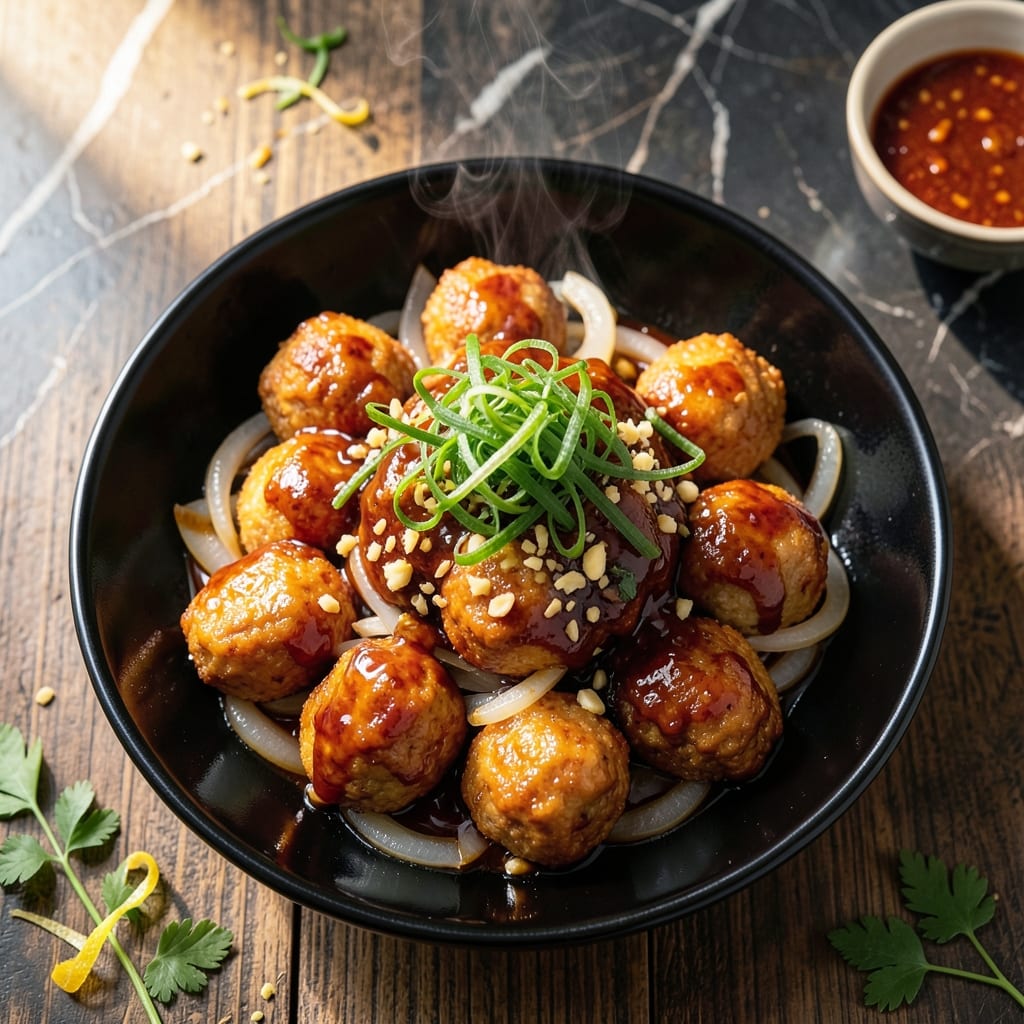
These chewy rice cakes transform into bold, fiery bites with just a few simple ingredients and a hot wok.
Wok-tossing ensures each piece absorbs the spicy sauce evenly, delivering restaurant-quality heat and texture in every mouthful.
Ingredients for Spicy Rice Cake
Transform simple rice cakes into fiery, restaurant-quality bites with these essential ingredients.
| Ingredient | Amount | Notes |
|---|---|---|
| Rice Cakes 🍚 | 12 pieces | Chewy Korean variety preferred |
| Gochujang 🌶️ | 3 tbsp | Korean red chili paste |
| Soy Sauce 🫒 | 2 tbsp | Low-sodium or tamari |
| Maple Syrup 🍁 | 1 tbsp | For balancing sweetness |
| Rice Vinegar 🍶 | 1 tbsp | Unseasoned variety |
| Sesame Oil 🫒 | 1 tbsp | Toasted for depth |
| Garlic Cloves 🧄 | 4 cloves | Minced for maximum flavor |
| Fresh Ginger 🌿 | 1 tbsp | Grated, peeled first |
| Green Onions 🧅 | 4 whole | Thinly sliced, white and green parts |
| Vegetable Oil 🫒 | 2 tbsp | High smoke point for wok frying |
| Toasted Sesame Seeds 🌰 | 1 tsp | For garnish |
| Red Pepper Flakes 🌶️ | ½ tsp | Adjust for heat preference |
The rice cakes are non-negotiable here. Korean-style chewy rice cakes (often labeled as tteok) are essential—regular rice cakes won’t absorb the sauce properly. H Mart or Korean markets carry them fresh or frozen. Thaw frozen ones completely before cooking. The gochujang is your heat source, so look for a brand without added sugar if you prefer cleaner heat. Sempio and Kochukara are reliable choices.
No gochujang? Sriracha plus a bit of miso paste can approximate the flavor, though the texture will differ. Tamari works as a gluten-free soy sauce alternative. Agave nectar at a 1:1 ratio replaces maple syrup. If you’re missing rice vinegar, apple cider vinegar works in a pinch (just reduce by half). The sesame oil is key—Kadoya is a trusted brand available at most Asian grocers.
Store unused rice cakes wrapped tightly in plastic—they dry out fast. Gochujang and sesame oil keep indefinitely at room temperature. The sauce itself holds in the fridge for 5 days, though it’s best fresh. Freeze cooked rice cakes for up to 3 months if making ahead.
Why You’ll Love This Recipe
- One Pot Wonder: I just dump everything in a pan—rice cakes, gochujang, soy sauce—and let the flavors meld while I set the table.
- Sweet Heat Balance: The maple syrup cuts through the gochujang’s spice in a way that’s dangerously addictive.
- Weeknight Hero: Honestly, it’s my go-to when I need dinner ready before the kids start asking what’s for dinner.
- Stretches Further: Leftovers taste even better the next day, and it’s cheap to make a big batch.
Step-by-Step Instructions for Spicy Rice Cakes
Master the technique for achieving perfectly coated, chewy rice cakes with balanced heat and sweetness.
Step 1: Prepare the Aromatics and Sauce Base
Mince the 4 cloves Garlic Cloves and grate the 1 tbsp Fresh Ginger until you have a fine paste. Thinly slice the 4 whole Green Onions, keeping white and green parts separate for layered flavor.
In a small bowl, whisk together the 3 tbsp Gochujang, 2 tbsp Soy Sauce, 1 tbsp Maple Syrup, 1 tbsp Rice Vinegar, and 0.5 tsp Red Pepper Flakes until smooth. This creates the bold, complex sauce base that will cling beautifully to the rice cakes.
Step 2: Soak the Rice Cakes for Optimal Texture
Place the 12 pieces Rice Cakes in a bowl of warm water for 10-15 minutes until they soften slightly but retain their shape. This step prevents them from becoming overly hard during cooking while maintaining their signature chew.
Drain thoroughly and pat dry with a clean towel. If any rice cakes are particularly thick, you can slice them in half horizontally for more even cooking and better sauce coverage.
Step 3: Stir-Fry the Aromatics and Rice Cakes
Heat the 2 tbsp Vegetable Oil in a large wok or skillet over medium-high heat until shimmering. Add the minced garlic, grated ginger, and white parts of the green onions. Stir-fry for 30-45 seconds until fragrant but not browned.
Add the soaked rice cakes in a single layer if possible. Cook undisturbed for 2-3 minutes until the bottoms develop a light golden crust. This creates textural contrast against the chewy interior.
Step 4: Coat and Caramelize with Sauce
Pour the prepared sauce mixture over the rice cakes. Add the green onion tops and 1 tbsp Sesame Oil. Stir everything together gently but thoroughly to ensure each piece is evenly coated.
Continue cooking for 4-5 minutes, stirring occasionally, until the sauce thickens and creates a glossy coating on the rice cakes. The edges should look slightly caramelized, and the sauce should cling rather than pool in the pan.
Step 5: Finish and Garnish for Service
Remove from heat and let rest for 1 minute to allow the sauce to set slightly. Transfer to a serving platter and sprinkle with the 1 tsp Toasted Sesame Seeds for visual appeal and nutty aroma.
Serve immediately while hot. The rice cakes should be tender with a slight chew, each bite delivering the perfect balance of spicy, sweet, and umami flavors from the sauce. The green onions add freshness to cut through the richness.
Pro Tips For Making Spicy Rice Cake
- Soak the Rice Cakes: I learned this the hard way—dry rice cakes stay rock-hard. Soak them in warm water for 10-15 minutes before cooking, or they’ll never absorb the spicy gochujang sauce properly.
- Bloom the Gochujang: Cook the gochujang in a little oil for 1-2 minutes before adding liquids. This deepens its flavor and removes the raw, pasty taste—sounds weird, but it works.
- Balance the Sweetness: Maple syrup can overpower the dish if you’re heavy-handed. Start with half the amount you think you need, then adjust—you can always add more, but you can’t take it out.
- Reduce the Sauce: After combining all the sauce ingredients, simmer it for 3-4 minutes before adding the rice cakes. This thickens it just enough to cling better and intensify the flavors.
Pro Cooking Tips for spicy rice cake
Wok Selection
Use a carbon steel wok for best heat distribution—I swear by my 14-inch Made In wok. It heats evenly and develops a natural non-stick surface over time. A well-seasoned cast iron skillet works too if you don’t have a wok. 🔥
High Heat Control
Maintain medium-high to high heat throughout cooking. Your wok should be hot enough that a drop of water sizzles and evaporates immediately. If your rice cakes steam instead of sear, your heat is too low.
Sauce Timing
Don’t add the sauce too early—wait until the rice cakes have developed a light golden crust. This prevents them from absorbing too much liquid and becoming mushy. I typically add sauce after 2-3 minutes of cooking.
Stir-Fry Technique
Use a spatula with a long handle for easy tossing. The goal is constant motion—keep the rice cakes moving to prevent sticking and ensure even coating. I find a wooden spatula works better than metal for this dish.
Sauce Consistency
If your sauce thickens too much before the rice cakes are done, add 1-2 tbsp water to loosen it. The perfect consistency should coat the back of a spoon but still drip slowly. This ensures every piece gets that glossy finish.
Resting Time
Let the dish rest for 1 minute off heat before serving. This allows the sauce to set slightly and the flavors to meld. I notice the heat balances better after this brief rest, making each bite more enjoyable. ✨
Nutrition Facts
Frequently Asked Questions
Can I use regular rice cakes instead of Korean ones?
Korean rice cakes are essential for the right texture. Regular rice cakes won’t absorb the sauce properly and may fall apart. Look for tteok at Korean markets or online.
How do I adjust the spice level?
Start with ½ tsp red pepper flakes and taste before adding more. For milder heat, reduce gochujang to 2 tbsp and add 1 tsp sugar to balance.
Why did my rice cakes turn mushy?
Over-soaking or adding sauce too early causes mushiness. Soak for 10-15 minutes max and cook rice cakes until golden before adding sauce.
Can I make this ahead of time?
Cook and store in an airtight container for up to 3 days. Reheat in a skillet with 1 tbsp water to restore texture.

- Jollof Rice Sauce Recipe: West African Tomato and Spice Infusion - September 25, 2026
- Japanese Rice Soup Recipe: Umami-Rich Comfort in a Bowl - September 25, 2026
- Homemade Cream Of Rice Recipe: Silk-Smooth Breakfast in Minutes - September 25, 2026