
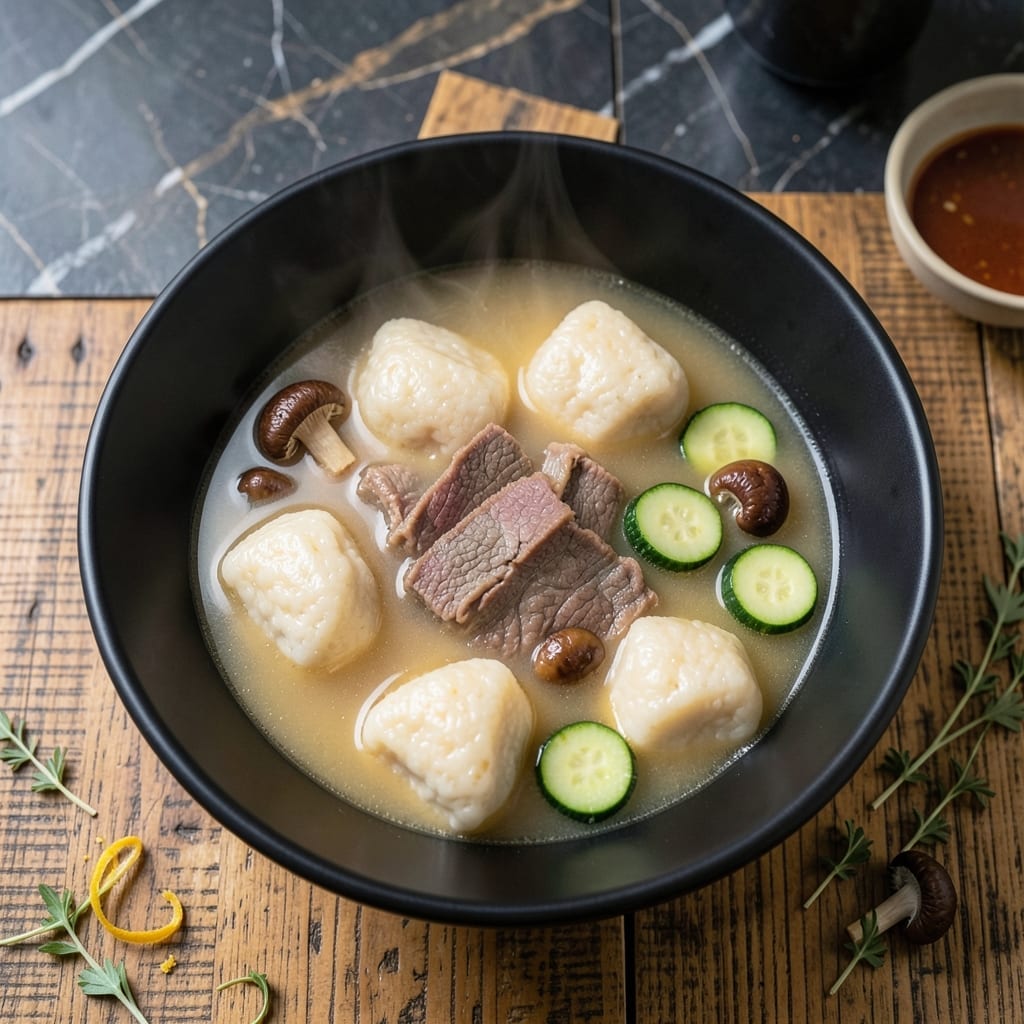
There’s something deeply comforting about a steaming bowl of rice cake soup that warms you from the inside out.
This Korean classic combines chewy rice cakes with a rich, savory broth that’s both nourishing and satisfying. I’ve perfected this recipe to deliver that authentic taste without complicated techniques.
The secret lies in the broth, built with simple ingredients that create layers of umami depth. Each spoonful delivers tender rice cakes and a flavorful base that feels like a hug in a bowl.
Perfect for chilly evenings or when you need a taste of home, this soup comes together with minimal effort for maximum comfort.
Ingredients for Rice Cake Soup
Simple ingredients build rich, comforting layers in this classic Korean bowl.
| Ingredient | Amount | Notes |
|---|---|---|
| Korean Rice Cakes 🍚 | 12 oz | Cylindrical or flat variety |
| Beef 🥩 | ½ lb | Thinly sliced for broth |
| Anchovy Stock 🐟 | 4 cups | Or substitute vegetable stock |
| Garlic Cloves 🧄 | 4 cloves | Minced for depth |
| Fresh Ginger 🌿 | 1 tbsp | Grated for brightness |
| Soy Sauce 🫒 | 3 tbsp | Low-sodium preferred |
| Sesame Oil 🫒 | 1 tbsp | Toasted for aroma |
| Green Onions 🧅 | 4 whole | Thinly sliced for garnish |
| Zucchini 🥒 | 1 whole | Thinly sliced optional veggie |
| Shiitake Mushrooms 🍄 | 4 whole | Fresh or dried, sliced |
| Red Pepper Flakes 🌶️ | 1 tsp | Adjust to spice preference |
| Salt 🧂 | 1 tsp | To taste for seasoning |
| Black Pepper 🌶️ | ½ tsp | Freshly ground preferred |
| Eggs 🥚 | 2 whole | Optional for garnish |
The rice cakes are everything here. Look for the cylindrical kind (tteok) at Korean markets—H Mart or Assi Plaza usually have them. If you’re in a pinch, Trader Joe’s carries them frozen too. The beef should be thinly sliced (freeze for 20 minutes first for easier cutting). For the stock, anchovy-based is traditional but vegetable works in a pinch (just add a dash of fish sauce if you have it).
No rice cakes? Substitute with udon noodles—similar chew. Out of anchovy stock? Chicken or beef stock plus soy sauce gets you close. The shiitake mushrooms can be swapped for enoki or oyster mushrooms. For a spicier kick, add gochujang paste (start with 1 tsp). The eggs are optional but add that classic homestyle touch—soft-boiled is ideal (6 minutes in boiling water).
Broth tastes even better the next day once flavors meld. Keeps 3-4 days in the fridge, freezes for 2 months. Soak rice cakes in cold water 10 minutes before cooking—they’ll cook more evenly and won’t turn to mush. Leftovers reheat beautifully, just add a splash of water to thin the broth.
Why You’ll Love This Recipe
- I’ll be real: it tastes even better the next day when the rice cakes soak up all that garlicky goodness.
- One Pot Wonder: I toss everything in and let the anchovy stock do its magic—minimal cleanup, maximum flavor.
- Deep Umami Bomb: The beef and ginger simmering in that rich broth? Honestly, it’s the kind of taste that lingers all afternoon.
- Crowd-Pleasing Comfort: Between us, it’s the only thing my picky nephew and foodie sister both beg for.
Step-by-Step Instructions for Rice Cake Soup
Here’s the method that delivers that comforting, steaming bowl you’re craving every time.
Step 1: Prepare the Broth Base
In a large pot, combine the 4 cups Anchovy Stock with 0.5 lb Beef, 4 cloves Garlic Cloves, 1 tbsp Fresh Ginger, 3 tbsp Soy Sauce, 1 tsp Red Pepper Flakes, 1 tsp Salt, and 0.5 tsp Black Pepper.
Bring to a boil over medium-high heat, then reduce to medium-low and simmer for 20-25 minutes until the beef is tender and the broth becomes rich and fragrant. Skim off any foam that rises to the surface for a clean, clear broth.
Step 2: Add the Rice Cakes and Vegetables
Once the broth is ready, add the 12 oz Korean Rice Cakes, 4 whole Shiitake Mushrooms, and 1 whole Zucchini (thinly sliced). Stir gently to combine and return to a gentle simmer.
Cook for 8-10 minutes until the rice cakes are soft and chewy, and the zucchini is tender but still holds its shape. I like to taste a rice cake to check for doneness—it should be fully heated through and slightly springy.
Step 3: Finish with Sesame Oil and Green Onions
Stir in the 1 tbsp Sesame Oil for a nutty aroma. Add the 4 whole Green Onions (thinly sliced) and let them soften in the hot broth for 1-2 minutes.
This is when the soup really comes together. The sesame oil adds depth, while the green onions bring freshness. Taste and adjust seasoning if needed—sometimes I add a touch more soy sauce for saltiness.
Step 4: Optional Egg Garnish and Serve
If using, crack the 2 whole Eggs into small ramekins and gently slide them into the simmering soup. Poach for 3-4 minutes until the whites are set but yolks are still runny.
Ladle the soup into deep bowls, ensuring each serving has a share of rice cakes, beef, and vegetables. Serve immediately while steaming hot. The runny yolk from the poached egg adds a luxurious texture that takes this dish to the next level.
Pro Tips For Making Rice Cake Soup
- Soak the Rice Cakes: I learned this the hard way—if you skip soaking the rice cakes in cold water for 15-20 minutes, they’ll stay rock-hard in the soup. Sounds tedious, but it’s non-negotiable for that soft, chewy texture.
- Sear the Beef First: After burning a few batches, I finally figured out that browning the beef in a hot pan before adding the stock locks in way more flavor. Use about 1 tablespoon of oil and don’t crowd the pan.
- Strain the Anchovy Stock: My grandmother swore by this, and she was right: always strain the anchovy stock through a fine-mesh sieve to remove bits—otherwise, your soup will have an unpleasantly gritty texture.
- Add Ginger Late: Sounds weird, but it works: add the fresh ginger slices in the last 10 minutes of cooking. If you put it in too early, the flavor turns bitter and overpowering.
Storing and Reheating rice cake soup
Fridge Storage
Let your soup cool for no more than 2 hours before transferring to airtight containers. I use glass containers with snap-tight lids to maintain freshness. Store in the fridge at 40°F or below for up to 3-4 days. ❄️
Freezer Storage
For longer storage, freeze in quart-sized freezer bags or airtight plastic containers. Leave 1 inch of headspace for expansion, and squeeze out excess air to prevent freezer burn. It keeps well for 2 months without losing flavor.
Stovetop Reheating
Pour the soup into a pot and heat over medium-low heat for 10-15 minutes, stirring occasionally. Add ¼ cup water or broth if it looks too thick. This method preserves the rice cakes’ texture best.
Microwave Reheating
For single servings, microwave in 1-minute intervals at 70% power, stirring between each. Cover with a damp paper towel to prevent drying. Heat until it reaches 165°F.
Pro Tips
Soak rice cakes in cold water for 10 minutes before reheating if they’ve absorbed too much broth. If using frozen rice cakes, thaw them in the fridge overnight first. 💡
Nutrition Facts
Frequently Asked Questions
Can I use frozen rice cakes instead of fresh?
Yes, but thaw them in cold water for 10 minutes first. This prevents them from turning mushy when cooked.
Why did my rice cakes become hard?
They likely weren’t soaked before cooking. Always soak rice cakes in cold water for 10 minutes to ensure even cooking.
What can I use instead of anchovy stock?
Chicken or beef stock works well. Add 1 tsp fish sauce for that authentic umami depth.
How do I make it spicier?
Add 1-2 tsp gochujang paste or extra red pepper flakes to taste. Start small and adjust.

- Gambia Jollof Rice Recipe: West African One-Pot Spice Fusion - October 5, 2026
- Cream of Wild Rice Soup Recipe Minnesota: Northwoods Creaminess With Foraged Grains - October 5, 2026
- Frozen Cauliflower Fried Rice Recipe: Quick Low-Carb Wok Magic - October 5, 2026