
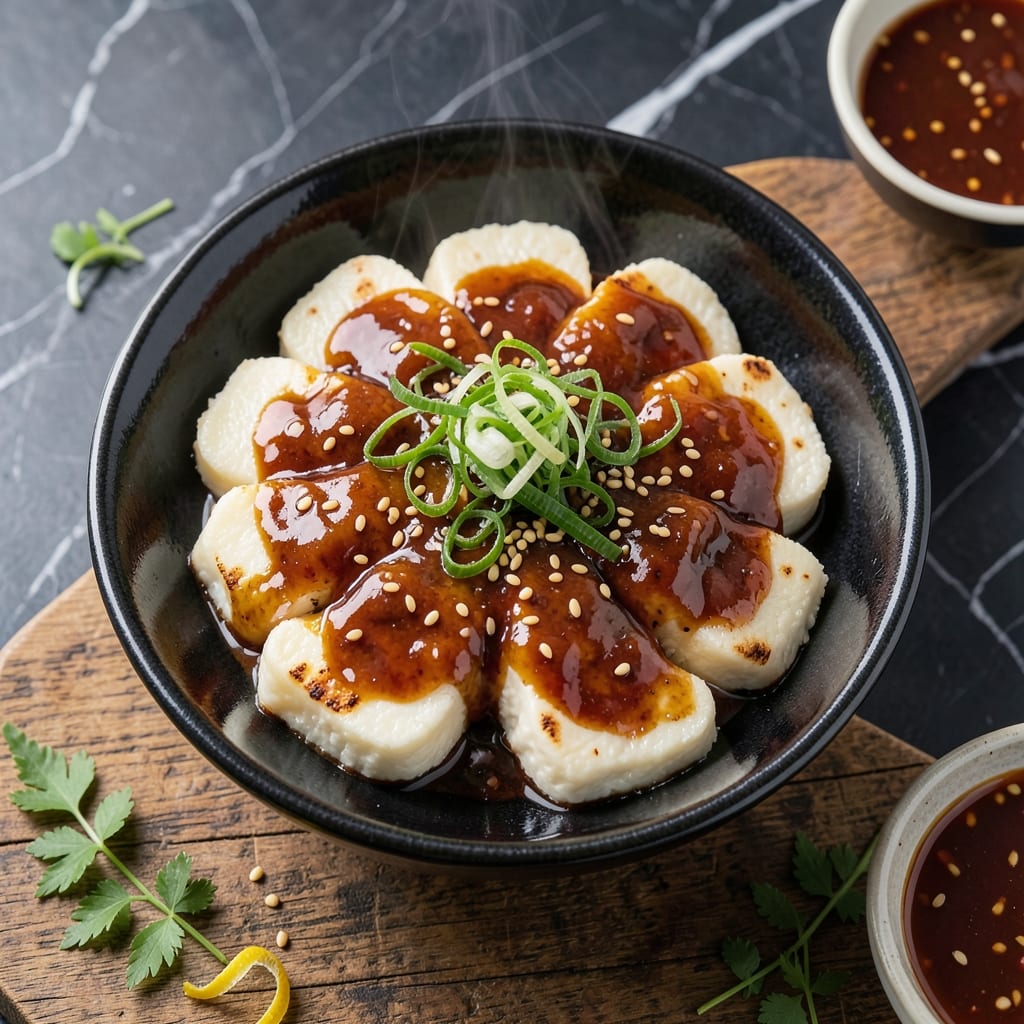
There’s something special about the way pan-toasted Korean rice cakes develop a crispy exterior while staying chewy inside. This method transforms simple ingredients into a dish with complex textures and bold flavors.
The key lies in the two-step cooking process: first pan-frying the rice cake slices to achieve that coveted crispness, then tossing them in a spicy gochujang sauce that coats every piece. The sauce balances heat with sweetness, creating an addictive glaze.
What results is a dish that satisfies on multiple levels – the initial crunch gives way to a soft, stretchy interior, all enrobed in that vibrant red sauce. The aroma of sizzling rice cakes and gochujang will have everyone gathering around the table.
Serve immediately while the rice cakes are still warm and at their most addictive. The contrast between the crispy edges and chewy centers makes every bite memorable.
Ingredients for Korean Rice Cake Slices
Transform humble rice cakes into a crispy-chewy masterpiece with bold, spicy-sweet flavors.
| Ingredient | Amount | Notes |
|---|---|---|
| Korean Rice Cakes 🍚 | 1 lb | Sliced into 1/2-inch pieces |
| Gochujang 🌶️ | ½ cup | Korean red pepper paste |
| Soy Sauce 🫒 | 3 tbsp | Low-sodium preferred |
| Honey 🍯 | 2 tbsp | Substitute maple syrup if needed |
| Rice Vinegar 🍶 | 1 tbsp | Balances sweetness and heat |
| Sesame Oil 🫒 | 1 tbsp | Toasted, for finishing |
| Garlic Cloves 🧄 | 4 cloves | Minced finely |
| Ginger Root 🌿 | 1 tbsp | Freshly grated |
| Green Onions 🧅 | 4 whole | Thinly sliced for garnish |
| Vegetable Oil 🫒 | 3 tbsp | For pan-frying rice cakes |
| Sesame Seeds 🌾 | 1 tbsp | Toasted, for garnish |
| Sugar 🧂 | 1 tbsp | Adjust to taste |
| Red Pepper Flakes 🌶️ | ½ tsp | Optional for extra heat |
The rice cakes are everything here. H Mart or Korean markets sell them fresh in the refrigerated section—look for cylindrical tubes labeled ‘tteok’ or ‘rice cakes.’ Avoid the pre-sliced versions if possible; they dry out faster. Fresh rice cakes should be slightly tacky to the touch, not rock-hard. For the gochujang, Sempio or CJ brands are widely available and consistently good.
No gochujang? Sriracha mixed with 1 tbsp miso paste gets you close (use 3 tbsp Sriracha + 1 tbsp miso). Swap honey for maple syrup or agave if you need a vegan version. Fresh ginger is non-negotiable for that bright, zingy kick—powdered won’t cut it. The rice vinegar can be apple cider vinegar in a pinch, but it’s subtly different.
Fresh rice cakes keep in the fridge for 1 week or freeze for 1 month. Once sliced, use them within 2 days or they’ll dry out. The sauce actually improves overnight—store it in an airtight container for up to 5 days.
Why You’ll Love This Recipe
- One Pan Magic: I just dump everything in—gochujang, honey, soy sauce—and let the rice cakes soak up that sticky, sweet-spicy glaze.
- Sweet Heat Balance: The honey mellows the gochujang’s kick while rice vinegar adds this bright tang that keeps me reaching for more.
- Meal Prep Hero: I make a big batch Sunday and toss it in lunches all week—holds up great and tastes even better cold.
- Budget Stretcher: A pound of rice cakes costs pennies and swells up in the sauce, feeding my family for days without breaking the bank.
Step-by-Step Instructions for Korean Rice Cake Slices
Master the technique for achieving perfectly toasted rice cakes with balanced sweet and spicy flavors.
Step 1: Soak and Prepare the Korean Rice Cakes
Begin by soaking the 1 lb Korean Rice Cakes (sliced into 1/2-inch pieces) in warm water for 10-15 minutes until they become pliable but still retain some chew. This step prevents them from becoming overly hard during pan-frying.
Drain thoroughly and pat dry with a clean kitchen towel. Any excess moisture will cause the vegetable oil to splatter during cooking. You want the surface to be just barely damp to ensure even browning without steaming.
Step 2: Create the Gochujang Sauce Base
In a mixing bowl, combine the 0.5 cup Gochujang, 3 tbsp Soy Sauce, 2 tbsp Honey, 1 tbsp Rice Vinegar, and 1 tbsp Sugar. Whisk vigorously until the mixture becomes smooth and homogeneous.
Add the 4 cloves Garlic Cloves (minced finely) and 1 tbsp Ginger Root (freshly grated) to the sauce. Stir well to incorporate, ensuring the aromatics are evenly distributed. This sauce will coat the rice cakes with layers of umami, sweetness, and heat.
Step 3: Pan-Fry the Rice Cakes to Golden Perfection
Heat 3 tbsp Vegetable Oil in a large non-stick skillet over medium-high heat until it shimmers. Add the soaked and drained Korean rice cakes in a single layer, working in batches if necessary to avoid overcrowding.
Cook undisturbed for 3-4 minutes until the bottoms develop a deep golden-brown crust. Flip each piece carefully and cook for another 2-3 minutes until all sides are evenly toasted. The rice cakes should be crisp on the outside while maintaining a chewy interior.
Step 4: Toss with Sauce and Finish
Reduce the heat to medium-low and pour the prepared gochujang sauce over the toasted rice cakes. Toss gently but thoroughly to ensure every piece is evenly coated. Cook for an additional 1-2 minutes, stirring constantly, until the sauce thickens slightly and clings to the rice cakes.
The sauce should glaze the rice cakes without becoming sticky or burnt. If the mixture seems too thick, add a splash of water to loosen it slightly. This step marries the crispy texture with the rich, savory-sweet sauce.
Step 5: Garnish and Serve Immediately
Transfer the saucy rice cakes to a serving plate. Drizzle with 1 tbsp Sesame Oil (toasted) for added depth and aroma. Sprinkle with 4 whole Green Onions (thinly sliced), 1 tbsp Sesame Seeds (toasted), and 0.5 tsp Red Pepper Flakes for an extra kick of heat and visual appeal.
Serve immediately while the rice cakes are still hot and crispy. The contrast between the chewy interior, crispy exterior, and the glossy, flavorful sauce makes this dish irresistible. This recipe serves 4 generously.
Pro Tips For Making Korean Rice Cake Slices
- Soak the Rice Cakes: Cover them in warm water for 10-15 minutes if they feel hard—I learned this the hard way after ruining a batch with chewy, undercooked centers.
- Bloom the Gochujang: Heat it in the pan with a little oil for 30 seconds before adding liquids; it deepens the flavor and removes that raw, pasty edge.
- Skip the Overcrowding: Cook the rice cakes in a single layer or they’ll steam instead of caramelize, and nobody wants sad, soggy slices.
- Balance the Sauce: Taste before serving and adjust with a splash of rice vinegar if it’s too sweet or an extra drizzle of honey if the gochujang overpowers.
Wine and Beer Pairings for This korean rice cake slices
Korean Beer Pairings
I love pairing this dish with a crisp Hite or Cass Korean lager—their light, clean profiles cut through the spicy gochujang beautifully. The effervescence refreshes your palate between bites of the crispy-chewy rice cakes. 🍺
Soju Options
Jinro or Chum Churum soju works wonderfully, especially when served ice-cold. The smooth, slightly sweet flavor complements the heat without overwhelming it. Try mixing with beer for a somaek if you want a stronger kick.
Wine Choices
A chilled Riesling with its natural sweetness balances the spice perfectly. I prefer a German Kabinett for its light body and citrus notes. The acidity matches the vinegar in the sauce while cooling the heat.
Non-Alcoholic Pairings
For a non-alcoholic option, Korean barley tea (boricha) is my go-to. Its nutty, toasted flavor enhances the dish’s savory elements. Serve it iced for a refreshing contrast to the warm, spicy rice cakes. ❄️
Cocktail Alternative
A yuja soda (Korean citron) offers a sweet-tart contrast that’s incredibly refreshing. The citrus notes lift the richness of the sauce while taming the heat. I keep a few bottles in my fridge for exactly this purpose.
Nutrition Facts
Frequently Asked Questions
Can I use frozen rice cakes for this?
Yes, but thaw them completely in warm water first. Frozen rice cakes need extra soaking time (20-25 minutes) to become pliable. Skipping this step may result in hard, unevenly cooked pieces.
Why is my sauce too thick?
Thin it with 1-2 tbsp water while warming. The sauce thickens as it cooks due to the honey and sugar. Adjust consistency before tossing with the rice cakes for even coating.
How do I prevent sticking during pan-frying?
Use a non-stick skillet and ensure rice cakes are fully dry after soaking. Heat the 3 tbsp oil until shimmering before adding them, and avoid moving them for 3-4 minutes to develop a crust.
What if I don’t have gochujang?
Mix 3 tbsp sriracha with 1 tbsp miso paste as a substitute. While not identical, this blend provides similar heat and umami depth to balance the dish.

- Jollof Rice Sauce Recipe: West African Tomato and Spice Infusion - September 25, 2026
- Japanese Rice Soup Recipe: Umami-Rich Comfort in a Bowl - September 25, 2026
- Homemade Cream Of Rice Recipe: Silk-Smooth Breakfast in Minutes - September 25, 2026