
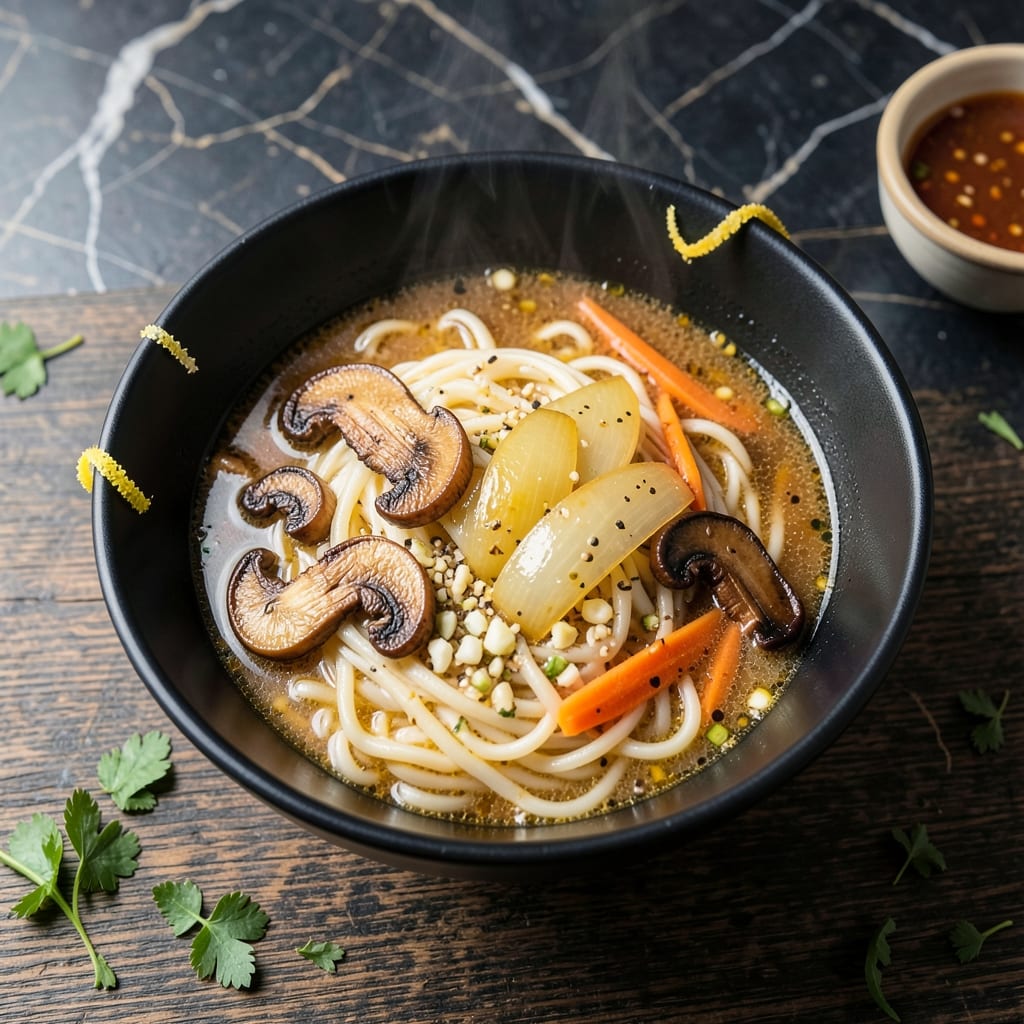
This rice noodle ramen delivers umami-rich depth in every bowl without the traditional wheat noodles. I developed this version to capture the soul of ramen while accommodating gluten-free needs.
The broth is built layer by layer—aromatic vegetables, garlic, and ginger create the base, then enhanced with soy and miso for that signature savory punch. Each component is simple but intentional.
What sets this apart is the texture. The rice noodles stay springy and absorbs the broth beautifully, while remaining gluten-free. The result is a bowl that satisfies like classic ramen.
Ready in 30 minutes, this delivers complex flavor with straightforward technique. The balance of salty, savory, and slightly sweet broth makes it irresistible.
Ingredients for Rice Noodle Ramen
Layered broth and springy rice noodles create authentic ramen depth gluten-free style.
| Ingredient | Amount | Notes |
|---|---|---|
| Rice Noodles 🍜 | 8 oz | Dried, flat pad thai style |
| Chicken Broth 🍲 | 8 cups | Low-sodium preferred |
| Shiitake Mushrooms 🍄 | 6 pieces | Dried, for umami depth |
| Garlic Cloves 🧄 | 6 cloves | Minced for aromatic base |
| Fresh Ginger 🌿 | 1 tbsp | Grated, peeled first |
| Yellow Onion 🧅 | 1 whole | Medium, thinly sliced |
| Carrots 🥕 | 2 whole | Julienned for texture |
| Soy Sauce 🫒 | ¼ cup | Low-sodium or tamari |
| White Miso Paste 🍛 | 2 tbsp | Fermented, unpasteurized |
| Sesame Oil 🫒 | 1 tbsp | Toasted for finishing |
| Soft-Boiled Eggs 🥚 | 4 whole | Halved for topping |
| Green Onions 🧅 | 4 whole | Thinly sliced for garnish |
| Baby Spinach 🥬 | 2 cups | Fresh, for serving |
| Sriracha 🌶️ | 1 tbsp | Optional, for heat |
| Salt 🧂 | 1 tsp | Fine sea salt or kosher |
The broth foundation demands quality. Dried shiitake mushrooms at an Asian market deliver concentrated umami—fresh work too but require longer simmering. Low-sodium chicken broth allows precise seasoning control. For the miso, white miso paste from Whole Foods or Miso Master brands offers the cleanest flavor profile without overpowering the delicate balance.
Substitutions maintain integrity here. Tamari replaces soy sauce beautifully for gluten-free needs. No miso paste? Red miso at half the quantity works, though it deepens the color. Fresh ginger is non-negotiable for that bright note, but ground ginger at one-quarter the amount saves time. The rice noodles must be flat pad thai style—vermicelli lacks the chew this dish requires.
Broth keeps 5 days refrigerated or 3 months frozen. Reheat gently to preserve the aromatic compounds. Cooked noodles soften when stored—prepare fresh when possible. The shiitake mushrooms can be dried and reused for future batches (they rehydrate beautifully).
Why You’ll Love This Recipe
- One Pot Wonder: I toss everything—the broth, noodles, mushrooms—into a single pot and walk away until the aromas pull me back.
- Umami Bomb: The shiitake mushrooms soak up the garlic and ginger in the broth, making every slurp ridiculously rich.
- Weeknight Hero: Honestly, it’s my Tuesday night lifesaver—ready before the kids finish arguing over who gets the last dumpling.
- Stretches Further: Leftovers taste even better the next day, and the ingredients cost less than my old takeout habit.
Step-by-Step Instructions for Rice Noodle Ramen
Master the technique for building layers of flavor in this satisfying bowl.
Step 1: Prepare the Aromatic Broth Base
In a large pot, combine the 8 cups Chicken Broth, 6 pieces Shiitake Mushrooms, 1 whole Yellow Onion, 2 whole Carrots, 6 cloves Garlic Cloves, and 1 tbsp Fresh Ginger. Bring to a boil over medium-high heat, then reduce to a gentle simmer.
Simmer uncovered for 20-25 minutes until the vegetables soften and the broth develops a rich, golden color. The shiitake mushrooms will infuse the liquid with deep umami notes. Skim any foam that rises to the surface during this process.
Step 2: Build the Umami Profile
Strain the broth through a fine-mesh sieve into a clean pot, discarding the solids. Return the broth to medium heat and whisk in the 2 tbsp White Miso Paste until fully dissolved. This step transforms the base into a complex, savory foundation.
Add the 0.25 cup Soy Sauce and 1 tsp Salt, then taste and adjust seasoning if needed. The broth should be robust and slightly salty, as the rice noodles will absorb some flavor. Maintain a gentle simmer to keep the miso from separating.
Step 3: Cook the Rice Noodles
Soak the 8 oz Rice Noodles in warm water for 10-12 minutes until pliable but still slightly firm. Drain and rinse under cold water to stop the cooking process. This prevents them from becoming mushy when added to the hot broth.
Divide the noodles among four serving bowls. The noodles should be springy and separate easily when lifted with tongs. Their slightly chewy texture will contrast beautifully with the silky broth.
Step 4: Assemble and Garnish
Ladle the hot broth over the noodles in each bowl, ensuring every serving gets an equal share. The broth should completely submerge the noodles, allowing them to finish cooking in the residual heat while soaking up flavor.
Top each bowl with 1 halved Soft-Boiled Egg from the 4 whole Soft-Boiled Eggs, a handful of 2 cups Baby Spinach divided equally, and thinly sliced 4 whole Green Onions. Drizzle each serving with 1 tbsp Sesame Oil divided among bowls and add 1 tbsp Sriracha if desired for heat. Serve immediately while the broth is piping hot.
Pro Tips For Making Rice Noodle Ramen
- Soak the Noodles: I learned this the hard way—rice noodles need a 5-10 minute soak in warm water before cooking, or they’ll stay stubbornly hard no matter how long you simmer them.
- Sear the Mushrooms: Skip the raw shiitakes and give them a quick sear in a dry pan first to deepen their flavor before adding to the broth.
- Simmer the Aromatics: Don’t just toss the garlic and ginger in—let them simmer in the broth for at least 10 minutes so their flavors fully infuse.
- Use Hot Broth: Pouring hot chicken broth over the noodles instead of cold ensures they cook evenly and absorb the flavor faster.
Health Benefits of This rice noodle ramen
Gluten-Free Advantage
Using rice noodles makes this dish naturally gluten-free while delivering that satisfying chewy texture. This is perfect for anyone with celiac disease or gluten sensitivity who misses traditional ramen. The noodles absorb the umami-rich broth just as well as wheat versions. 💪
Nutrient-Packed Broth
The shiitake mushrooms and ginger in the broth provide immune-boosting properties. Shiitakes contain beta-glucans for heart health, while ginger aids digestion. A single bowl delivers nutrients without heavy calories.
Protein Boost
Each serving contains about 20g of protein from the chicken broth and soft-boiled eggs. This helps keep you full and supports muscle maintenance. The eggs also add healthy fats and choline for brain health.
Low-Calorie Comfort
At approximately 350 calories per bowl, this ramen satisfies without weighing you down. The broth is flavorful but light, and the rice noodles provide energy without excess carbs.
Rich in Antioxidants
The garlic, ginger, and spinach are packed with antioxidants that combat inflammation. These ingredients support overall health while adding depth to the dish. 🌱
Balanced Macros
This meal offers a good balance of carbs from noodles, protein from broth and eggs, and healthy fats from sesame oil. The combination provides steady energy without blood sugar spikes.
Nutrition Facts
Frequently Asked Questions
Can I use different noodle types?
Flat pad thai rice noodles work best for texture. Avoid thin vermicelli as they’ll turn mushy. For variety, try brown rice noodles, but soak them 5 minutes longer for proper softening.
How do I store leftovers?
Broth keeps 5 days refrigerated or 3 months frozen. Store noodles and toppings separately to prevent sogginess. Reheat broth gently and assemble fresh noodles when serving.
What if my broth isn’t flavorful enough?
Boost umami with extra 1 tbsp miso or 1 tsp soy sauce. Simmering dried shiitakes longer also intensifies depth. Always taste before serving and adjust gradually.
Can I make it vegan?
Swap chicken broth for vegetable broth and use tofu instead of eggs. Ensure miso and soy sauce are vegan-certified. The rice noodles and veggies remain unchanged.

- Jollof Rice Sauce Recipe: West African Tomato and Spice Infusion - September 25, 2026
- Japanese Rice Soup Recipe: Umami-Rich Comfort in a Bowl - September 25, 2026
- Homemade Cream Of Rice Recipe: Silk-Smooth Breakfast in Minutes - September 25, 2026